

It’s a common sight that sparks curiosity: why do birds sit on power lines without getting electrocuted? The answer lies in physics – they don’t complete a circuit. Beyond safety, birds choose power lines for excellent vantage points, protection from predators, thermal comfort, and as crucial social gathering spots, making these elevated wires much more than just a place to rest.
Why Do Birds Sit on Power Lines?
You’ve seen it countless times, haven’t you? A long row of birds, perfectly spaced, perched serenely on a power line, seemingly unfazed by the thousands of volts coursing just beneath their tiny feet. It’s a truly common sight in both urban and rural landscapes, a natural tableau that often sparks a simple, yet profound question: “Why do birds sit on power lines without getting shocked?” It’s a question that delves into the fascinating intersection of physics, avian behavior, and environmental adaptation.
This isn’t just about a bird finding a convenient place to rest; it’s a brilliant display of natural ingenuity and a perfect example of how wildlife adapts to the human-made world around it. From a purely practical standpoint to complex social dynamics, there are many compelling reasons why birds choose these elevated, humming strands of wire as their temporary homes. Let’s unravel the mystery and discover the clever science and compelling behavioral traits behind this everyday phenomenon.
Key Takeaways
- Physics of Safety: Birds don’t get electrocuted on a single power line because they don’t complete a circuit between two wires with different electrical potentials or between a wire and the ground. There’s no significant voltage difference across their small bodies.
- Strategic Vantage Points: Power lines offer birds an elevated, unobstructed view of their surroundings, perfect for spotting food, predators, and potential mates.
- Predator Protection: Sitting high above the ground provides a safe haven from many ground-based predators, giving birds a critical advantage in terms of security.
- Thermal Regulation: The wires can act as natural heating pads on cold days or offer a cool, shady spot during hot weather, helping birds regulate their body temperature.
- Social Hubs: Power lines serve as important social gathering places where birds can communicate, establish territories, engage in courtship rituals, and rest together in flocks.
- Potential Dangers: Despite the benefits, power lines pose risks like electrocution (especially for larger birds spanning multiple wires), collisions, and nesting hazards, leading to conservation efforts to mitigate these issues.
- Adaptability and Ingenuity: The widespread use of power lines has inadvertently created a new, valuable habitat for many bird species, showcasing their incredible adaptability to human-altered environments.
Quick Answers to Common Questions
Can birds get shocked if they touch a power line and a phone line at the same time?
Yes, if a bird were to simultaneously touch a high-voltage power line and a telephone line (which is grounded or has a different electrical potential), it would complete a circuit, leading to electrocution.
Do all types of birds sit on power lines?
While many bird species, especially smaller perching birds and some raptors, commonly sit on power lines, not all do. Waterfowl, ground-dwelling birds, or those that prefer dense forest canopy are less likely to use them.
Are power lines dangerous for birds, even if they don’t get shocked?
Yes, power lines pose other dangers besides electrocution, primarily collisions with the wires during flight, which can be fatal. Nests built on power poles can also cause hazards for both birds and electrical infrastructure.
How do utility companies try to protect birds from power lines?
Utility companies implement various measures, including installing bird diverters to make wires more visible, insulating power poles and components, adding wider cross-arms to increase spacing, and providing safe perching or nesting platforms.
What’s the safest way for birds to sit on power lines?
The safest way for a bird to sit on a power line is to perch on a single wire without touching anything else (like another wire, a grounded pole, or the ground itself), ensuring no electrical circuit is completed across its body.
📑 Table of Contents
- The Marvel of Physics: Why Birds Don’t Get Shocked
- Prime Real Estate: Why Power Lines Are So Appealing
- Thermal Regulation: Sunbathing and Keeping Warm
- The Social Network: Birds, Power Lines, and Communication
- The Downside: Risks and Environmental Concerns
- What About Other Animals? Why Don’t Squirrels Get Shocked?
- Conclusion: A Harmony of Nature and Technology
The Marvel of Physics: Why Birds Don’t Get Shocked
Let’s tackle the biggest question first: how can birds sit on power lines, often high-voltage ones, without turning into a crispy critter? It’s not magic, but rather a clever trick of physics that protects them. Understanding this comes down to two key concepts: electrical circuits and potential difference.
Understanding Current and Voltage
Electricity always wants to flow in a complete circuit. Think of it like water flowing through a pipe: it needs an entry point and an exit point to move. For electricity, current (the flow of electrons) needs a path from a high electrical potential (voltage) to a lower one. When you plug in an appliance, it completes a circuit, allowing electricity to flow through it and power it.
The “Circuit” Concept: No Path to Ground
When a bird lands on a single power line, it’s essentially just touching one part of a live circuit. For current to flow through the bird, it would need to create a “potential difference” across its body. This means one part of its body would need to be at a significantly higher voltage than another part, creating a path for the electrons to travel.
Imagine a bird perched on just one wire. Both of its feet are touching the same wire, which is at the same electrical potential. There’s no pathway for the electricity to go *through* the bird because there’s nowhere for it to go *from*. It’s like standing on a single rung of a ladder – you’re up high, but you’re not completing a path to the ground. If the bird were to touch another wire with a different voltage, or touch the wire and the ground simultaneously, then it would complete a circuit, and that’s when trouble would start.
Insulation and Dry Feathers
While the primary reason birds don’t get shocked is the lack of a circuit, other factors contribute. A bird’s dry feathers and relatively small body offer some natural resistance to electrical flow. However, this is a secondary defense. The main protection is simply not providing a path for the current to travel through its body. If a bird were soaking wet, or if it were large enough to bridge the gap between two wires of different potentials, the outcome would be very different. That’s why you sometimes hear about larger birds, like eagles or owls, getting electrocuted when their wingspan accidentally connects two lines or a line and a grounded pole.
Prime Real Estate: Why Power Lines Are So Appealing
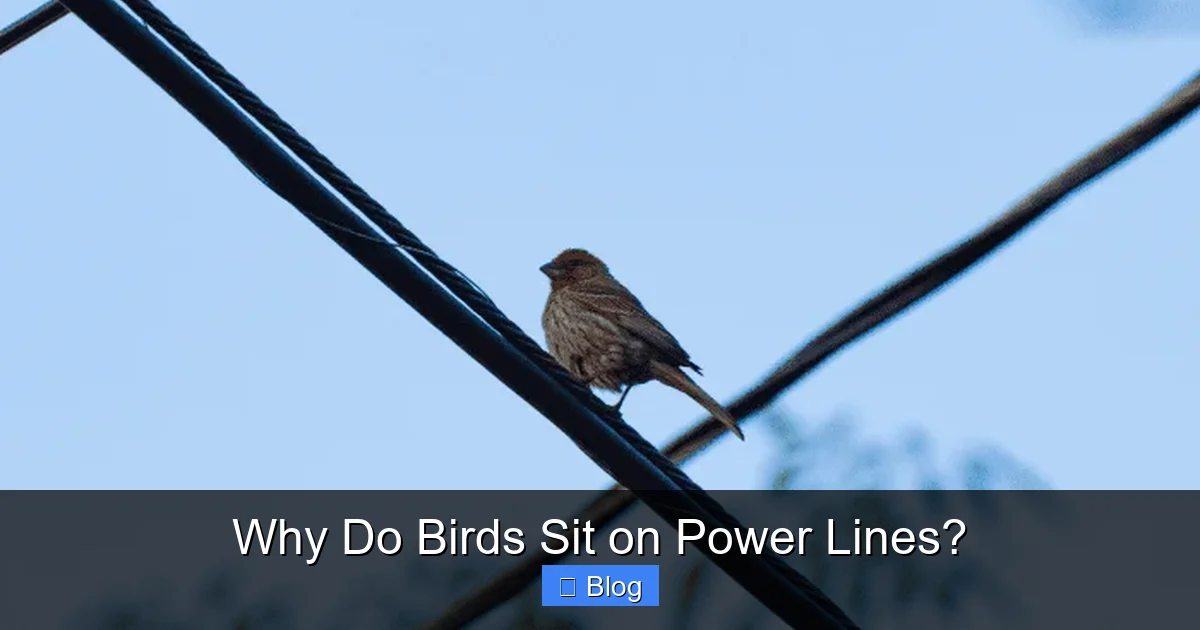
Visual guide about Why Do Birds Sit on Power Lines?
Image source: birdsphere.com
Beyond the physics of safety, why do birds actively choose power lines as their perching spots? It turns out these seemingly dangerous wires offer a wealth of advantages that make them incredibly attractive to many bird species.
Excellent Vantage Points
Think about it from a bird’s perspective. Power lines are typically high up, giving them an unparalleled, unobstructed view of the surrounding landscape. This elevated position is crucial for several reasons:
- Hunting: For raptors like hawks or smaller insect-eating birds, a high perch offers a fantastic viewpoint to spot prey on the ground or in the air. They can quickly swoop down when they see a meal.
- Predator Detection: Being high allows birds to spot potential dangers, whether it’s a stalking cat, a snake, or another bird of prey, from a distance, giving them ample time to react and escape.
- Territory Monitoring: Birds use these perches to survey their territory, looking for rivals or potential mates.
Safety from Ground Predators
Ground-dwelling predators like cats, foxes, raccoons, and even snakes pose a significant threat to birds, especially smaller species. By sitting on power lines, birds are generally out of reach. There’s no easy way for these predators to climb up and surprise them, offering a relatively safe haven from many common dangers. This sense of security allows them to rest, preen, and observe their surroundings without constant worry.
Resting and Roosting
Birds spend a lot of time and energy flying, foraging, and caring for their young. They need places to rest and conserve energy. Power lines, particularly in open areas where natural perches like trees might be scarce, offer a convenient and comfortable spot to take a break. At dusk, you’ll often see flocks gathering on power lines before heading to their communal roosting sites for the night. These lines provide a sturdy, stable platform for both short rests and longer periods of sleep.
Social Hubs and Meeting Points
For many social bird species, power lines act as gathering places. You might observe dozens or even hundreds of birds congregating on a single line. This serves several social functions:
- Communication: Birds can chirp, call, and interact with each other, sharing information about food sources, predators, or potential mates.
- Flocking Behavior: Before migrating or moving to a new feeding ground, birds often gather in large flocks on power lines, coordinating their movements.
- Courtship Displays: Sometimes, power lines become stages for courtship rituals, where birds display to attract a mate.
Thermal Regulation: Sunbathing and Keeping Warm
Birds, like all warm-blooded animals, need to maintain a consistent body temperature. Power lines can surprisingly assist them in this vital task, acting as passive thermal aids.
Warming Up on Cold Days
On chilly mornings, especially after a cold night, birds need to warm up to get their metabolism going. The sun’s rays can warm the power lines, turning them into a kind of natural heating pad. Birds perched on these slightly warmer wires can absorb residual heat, helping them raise their body temperature more efficiently than if they were exposed to just the ambient air. It’s a bit like sunbathing, but with an added boost from the warm metal.
Cooling Down in the Shade
Conversely, during scorching summer days, the wires themselves can offer a small strip of shade, or more importantly, the elevated position allows for better air circulation. Birds can face away from the sun, puff out their feathers, and allow cooler breezes to pass around them, helping to dissipate body heat. While perhaps less impactful than direct sun exposure, the subtle thermal benefits of power lines are not to be underestimated.
The Social Network: Birds, Power Lines, and Communication
It’s not just about individual comfort or safety; power lines often become bustling avian communities. These elevated stages facilitate a wide range of social behaviors that are vital for many species.
Flocking Behavior
Many bird species are highly social, especially outside of breeding season. They form flocks for safety in numbers, more efficient foraging, and collective decision-making, particularly during migration. Power lines are ideal rallying points. You’ll often see large groups of swallows, starlings, or blackbirds congregating on wires before a mass movement. The lines provide a clear, linear space for them to gather, communicate, and prepare for their next journey.
Courtship and Pair Bonding
For some species, power lines can even play a role in courtship. Males might perch prominently to display their plumage or sing their territorial songs, attracting potential mates. Once paired, the wires can serve as shared perching spots for bonded couples, allowing them to remain close and reinforce their partnership. It’s a simple, elevated stage for the complex dance of avian romance.
Territory Marking and Sentinel Duty
A bird singing from a power line isn’t just making noise; it’s often proclaiming its territory. The high vantage point ensures its song carries further and its presence is visible to rivals. Other birds might take turns being “sentinels” – watching for danger while the rest of the flock forages or rests. The power line serves as a perfect watchtower for these vital roles, contributing to the overall safety and cohesion of the group.
The Downside: Risks and Environmental Concerns
While power lines offer many benefits, they aren’t without their dangers. For some birds, especially larger species or those with specific behaviors, these human-made structures can pose significant risks.
Electrocution Risks
As mentioned earlier, electrocution typically occurs when a bird completes a circuit. This is particularly a problem for larger birds like eagles, owls, and storks, which have wider wingspans. If their wings accidentally touch two wires with different potentials, or a wire and a grounded utility pole simultaneously, a lethal circuit is created. This is a significant cause of mortality for many raptor species worldwide.
- Mitigation Efforts: Utility companies and conservationists often work together to install “bird-friendly” power poles. These might include adding insulated covers to critical components, installing wider cross-arms to increase spacing between wires, or providing alternative safe perching platforms above the dangerous parts of the pole.
Collisions with Wires
Another major hazard is direct collision with the wires, especially during periods of low visibility (fog, rain, dawn, dusk) or for birds flying quickly. The thin, often difficult-to-see wires can be nearly invisible to birds in flight, leading to fatal impacts. This is a particular problem for fast-flying species or large, heavy birds that have difficulty maneuvering quickly.
- Visibility Enhancements: To address this, “bird diverters” or “flappers” are sometimes installed on power lines. These are brightly colored, reflective spirals or shapes that make the wires more visible to flying birds, helping them avoid collisions.
Nesting Hazards
While some smaller birds might successfully build nests directly on power lines (which can cause power outages), larger nests built on utility poles or cross-arms can be problematic. Nests can interfere with electrical equipment, pose fire risks, and, most tragically, electrocute young birds or parents if nesting material (like sticks) creates an electrical bridge.
- Safe Nesting Platforms: To deter birds from nesting in dangerous spots, utility companies might install predator guards or, more constructively, erect separate, safe nesting platforms nearby, encouraging birds to use those instead.
Human-Wildlife Conflicts
Sometimes, the sheer number of birds congregating on power lines can create nuisance issues for humans, such as excessive droppings on cars or property below, or localized power outages if bird activity causes short circuits. These conflicts can lead to calls for deterrents, which need to be carefully managed to ensure they don’t harm the birds.
What About Other Animals? Why Don’t Squirrels Get Shocked?
The question of “why do birds sit on power lines?” naturally extends to other animals we see on wires, particularly squirrels. Do the same rules apply? Mostly, yes, but with some key differences.
Squirrels and Power Lines
Squirrels, like birds, are generally safe on a single power line because they don’t complete a circuit. However, their behavior makes them more prone to electrocution than birds. Squirrels are agile climbers and often travel along wires to reach trees or buildings.
- Increased Risk: A squirrel is at risk if it bridges the gap between two wires of different voltages, or between a live wire and a grounded component (like a transformer casing or a utility pole). Their four paws, and their tail, increase the chance of making these dangerous connections. They also often chew on insulation, which can expose live wires.
- Mitigation: Utility companies often install “squirrel guards” or “animal guards” on transformers and other equipment to prevent squirrels from accessing dangerous parts or creating short circuits.
Larger Birds and Electrocution
As previously mentioned, larger birds are particularly vulnerable. Their greater size means their wingspan can easily create a bridge between wires or between a wire and a grounded structure. This is a major concern for conservation efforts, especially for endangered raptor species. Understanding this specific vulnerability is key to designing effective mitigation strategies.
Conclusion: A Harmony of Nature and Technology
The sight of birds perched on power lines is a testament to nature’s incredible adaptability and a beautiful example of how species can integrate human infrastructure into their survival strategies. It’s a delicate balance of risks and rewards, where the clever physics of electricity meets the intricate behaviors of the avian world.
From providing an unbeatable vantage point for hunting and predator avoidance, to serving as cozy thermal regulators and bustling social hubs, power lines offer much more than just a place to rest. They are an accidental, yet invaluable, part of many birds’ daily lives. So, the next time you see a line of feathered friends silhouetted against the sky, take a moment to appreciate the complex reasons behind this common sight. It’s a silent, buzzing harmony between the wild world and our electrified one, reminding us of the constant interplay between nature and the environment we build.
🎥 Related Video: Why Can Birds Sit On Power Lines?
📺 SciBytes
Ever wondered why birds can sit on high-voltage power lines without getting zapped? It seems like a dangerous stunt, but they do …
Frequently Asked Questions
Why don’t birds get shocked when they sit on power lines?
Birds don’t get shocked because they only touch one power line. For electricity to flow through their body, they would need to complete an electrical circuit, which requires touching two points with a significant difference in electrical potential. Since both feet are on the same wire, there’s no potential difference across their body.
Do birds use power lines for shelter from the elements?
While power lines don’t provide physical shelter from rain or wind, they can offer thermal benefits. Birds might use them to warm up on a cold, sunny day by absorbing heat from the wire, or find a slightly cooler, breezy spot on a hot day due to their elevated position.
Are power lines a natural habitat for birds?
No, power lines are not a natural habitat, but birds have adapted to use them as an artificial one. They exploit the lines for vantage points, safety from predators, social interaction, and resting opportunities, effectively incorporating human infrastructure into their natural behaviors.
Why do birds sometimes gather in large groups on power lines?
Birds gather in large groups on power lines for various social reasons, including communication, safety in numbers against predators, and coordinating movements before foraging or migration. These lines act as convenient, elevated meeting points for many social species.
Can smaller birds also get electrocuted on power lines?
While less common than for larger birds, smaller birds can still be electrocuted if they manage to bridge the gap between two live wires or between a live wire and a grounded object. However, their small size generally makes it more difficult for them to complete such a circuit.
What role do power lines play in bird migration?
Power lines often serve as important stopover points or staging areas for migratory birds. Flocks can gather on the wires to rest, socialize, and coordinate their departure, making them crucial infrastructure in the migratory journey for many species.