

Birds chirp for a multitude of vital reasons, acting as their primary mode of communication in the avian world. These diverse vocalizations serve crucial functions such as attracting mates, defending territory, warning others of predators, signaling food sources, and strengthening social bonds within their flocks. Understanding these complex chirps and songs offers a window into the rich, intricate lives of our feathered friends.
Why Do Birds Chirp? Unlocking the Secrets of Avian Communication
Have you ever woken up to the beautiful symphony of birds chirping just as dawn breaks? Or perhaps you’ve heard a lone bird’s persistent call from a treetop during the day? That chorus of chirps, tweets, trills, and songs isn’t just background noise; it’s a rich, complex language, a vital form of communication that birds rely on for almost every aspect of their lives.
For us humans, these sounds are often a pleasant addition to our environment, a sign of nature thriving. But for the birds themselves, each chirp, warble, or song carries a specific message, a purpose as important as any spoken word for us. It’s their way of interacting with the world, of surviving, thriving, and ensuring the continuation of their species. So, if you’ve ever found yourself wondering, “Why do birds chirp?”, you’re about to embark on a fascinating journey into the sophisticated world of avian vocalizations.
Understanding why birds chirp can deepen our appreciation for these incredible creatures. It’s not just about making noise; it’s about life, love, danger, food, and family. From the tiniest hummingbird to the largest eagle, every bird has a voice, and they use it constantly to navigate their busy lives. Let’s peel back the layers and discover the many compelling reasons behind their endless chatter.
Key Takeaways
- Communication is Key: Bird chirping is their primary way of communicating essential information to other birds.
- Attracting a Mate: Many chirps and elaborate songs are specifically designed to attract a partner for breeding.
- Defending Territory: Birds use calls to declare ownership of their space and warn off rival birds, protecting resources.
- Alarm Signals: Specific chirps alert other birds to the presence of predators, acting as a vital warning system.
- Food and Resources: Some calls help birds find food sources or communicate the discovery of a good meal.
- Social Bonding: Chirps help maintain contact within a flock, keep families together, and reinforce social structures.
- Learning and Development: Young birds learn to chirp and sing by listening to adults, practicing these crucial skills over time.
Quick Answers to Common Questions
Do all birds chirp?
While most birds produce some form of vocalization, not all birds “chirp” in the way songbirds do. Some birds hoot, caw, squawk, or make other types of sounds. However, nearly all birds use vocalizations for communication.
Why do birds chirp so much in the morning?
The dawn chorus is primarily driven by male birds singing to attract mates and defend their territories. The low light conditions at dawn might make visual displays less effective, increasing the importance of vocal communication.
Can birds understand other species’ chirps?
Yes, often they can! While the specifics of a song might be species-specific, many birds recognize and respond to universal alarm calls from other species, understanding that a general threat is present.
Do birds chirp at night?
Most birds are diurnal and sleep at night, but some nocturnal birds like owls hoot at night. Certain migratory birds also make contact calls during night flights, and some species, like nightingales, are famous for their beautiful night songs, especially during breeding season.
Is chirping the same as singing for birds?
Not exactly. “Chirping” often refers to shorter, simpler calls used for practical communication (like alarm or contact calls). “Singing” typically refers to longer, more complex, and often more musical vocalizations primarily used by males to attract mates and defend territory.
📑 Table of Contents
- The Symphony of Survival: A Bird’s Essential Language
- Attracting a Mate: Love Songs in the Air
- Defending Their Home: “This is My Territory!”
- The Alarm System: Danger Ahead!
- Finding Food and Sharing News: “Dinner’s Ready!”
- Family Matters: From Nest to Fledgling
- The Ever-Changing Language: Why Birds Chirp All Year Round
The Symphony of Survival: A Bird’s Essential Language
Imagine a world without spoken words, without text messages, without any way to tell your friends where you are, if you’ve found something delicious, or if danger is lurking. That’s essentially the world birds would inhabit without their chirps and songs. Their vocalizations are their lifeline, an intricate system of communication honed over millions of years.
Birds produce sounds using an organ called the syrinx, which is unique to them. Unlike our larynx, the syrinx has two independent sides, allowing some birds to produce two different sounds simultaneously! This incredible ability contributes to the complexity and beauty of their songs. But beyond the mechanics, understanding the various functions of these sounds is key to answering the fundamental question: “Why do birds chirp?” It’s a multi-faceted answer, encompassing everything from finding a partner to warning of predators.
Calls vs. Songs: What’s the Difference?
Before we dive deeper, it’s helpful to distinguish between “calls” and “songs.”
- Calls: These are typically shorter, simpler sounds, often made by both male and female birds. They serve immediate, practical purposes like signaling danger, locating flock members, or begging for food. Think of them as individual words or short phrases.
- Songs: These are usually longer, more complex, and often more musical sequences of notes. Songs are predominantly made by male birds, particularly during the breeding season, and primarily serve to attract mates and defend territory. Think of them as full sentences or even entire paragraphs of communication.
While we often use “chirp” generally, many of these “chirps” fall under the category of calls, whereas the more elaborate melodies are songs. Both are crucial elements of why birds chirp.
Attracting a Mate: Love Songs in the Air
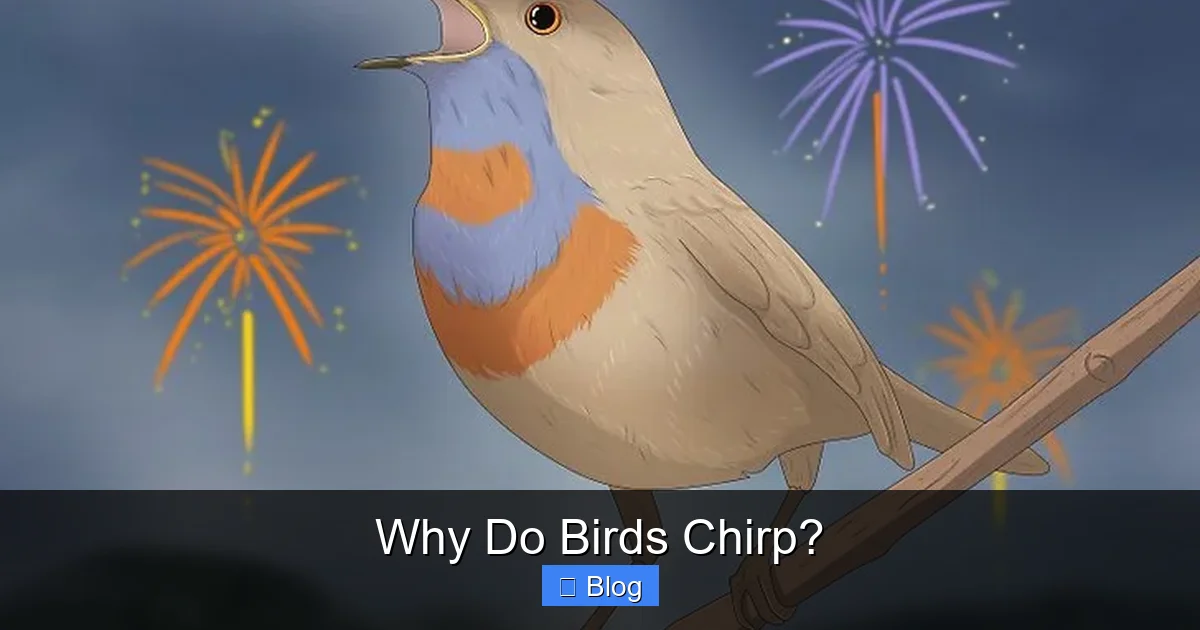
Visual guide about Why Do Birds Chirp?
Image source: wikihow.com
One of the most powerful and well-known reasons why birds chirp, especially with elaborate songs, is to find a partner. The dawn chorus, that magnificent explosion of sound as the sun rises, is largely a massive advertising campaign by male birds, proclaiming their presence and prowess.
The Elaborate Display of Song
For many bird species, particularly songbirds, the male’s ability to sing a complex, varied, and loud song is a direct indicator of his health, fitness, and genetic quality. Females listen carefully, assessing potential mates based on their vocal performance. A bird that can sing longer, louder, and more intricately might be signaling that he’s strong, healthy, has a good territory, and is capable of providing for offspring. It’s evolution in action, where the best singers often get the best mates.
Think of a male House Wren, known for its rapid, bubbly song, or a Northern Mockingbird, famous for its ability to mimic other birds’ calls and string them into a complex medley. These impressive vocal displays are not just for show; they are vital tools in the relentless pursuit of reproduction. Without these “love songs,” finding a mate would be significantly more challenging, which is a major reason why birds chirp with such dedication during the breeding season.
“Here I Am, Ready to Mingle!”
Beyond attracting a mate, songs also serve to announce a bird’s availability and readiness to breed. It’s a clear signal to potential partners that they are established, healthy, and looking for a relationship. For species where males compete directly, a stronger, more vibrant song can also intimidate rivals, indirectly helping secure a mate by warding off competition. The energy expended in singing is substantial, further emphasizing the importance of this reason for why birds chirp so much during spring and early summer.
Defending Their Home: “This is My Territory!”
Another crucial reason why birds chirp is to establish and defend their territory. Just like we might put up a fence or a “No Trespassing” sign, birds use their voices to mark their property. A territory provides essential resources: food, nesting sites, and protection from predators.
Marking Boundaries with Sound
A male bird will often sing from prominent perches within his chosen territory, sending out an auditory message to other males of the same species: “This spot is taken!” By singing consistently from various points, he essentially draws an invisible fence around his area. The louder and more frequent the singing, the stronger the message. This acoustic fencing is a very efficient way to manage space, often preventing direct, costly physical confrontations.
Warning Off Intruders
If another male bird dares to enter an occupied territory, the resident bird will intensify his chirping and singing. These warnings can escalate from standard territorial songs to more aggressive calls, sometimes accompanied by visual displays like puffed-up feathers or agitated postures. The aim is to deter the intruder without having to resort to a physical fight, which carries risks of injury or expending too much energy. Why do birds chirp so aggressively at times? Because their livelihood—and that of their potential family—depends on controlling their patch of land. It’s all about protecting their valuable resources from rivals.
The Alarm System: Danger Ahead!
Imagine a bird suddenly bursting into a rapid, sharp series of chirps, and moments later, every other bird in the vicinity dives for cover. This isn’t a coincidence; it’s an alarm call, a vital part of their collective survival strategy. One of the most critical reasons why birds chirp is to warn others about danger.
Universal Distress Signals
Many alarm calls are relatively simple and universally understood by various bird species, not just their own. A sharp “chip” or “seet” call might indicate an aerial predator like a hawk, prompting all listening birds to freeze or seek dense cover. A different, more frantic call might signal a ground predator, like a cat or a snake, leading birds to mob the threat or fly to higher branches.
The specific characteristics of an alarm call are often tailored to the type of threat. For example, a “seet” call, used for aerial predators, is high-pitched and difficult for a predator to pinpoint, giving the warning bird a better chance of not being located. Conversely, a louder, broader-frequency call might be used for a perched predator, allowing other birds to mob it more effectively. This incredible sophistication in their alarm system highlights just how crucial these specific chirps are.
Specific Predator Warnings
Some birds have even more nuanced alarm calls. Chickadees, for instance, are known to have alarm calls that vary with the size and threat level of a predator. Their “chick-a-dee-dee-dee” call can have more “dee” notes when a more dangerous predator is present, providing incredibly detailed information to their flock mates. This complex system ensures that why birds chirp in alarm isn’t just a general warning, but often a precise one, allowing other birds to respond appropriately to the specific threat.
Finding Food and Sharing News: “Dinner’s Ready!”
Chirping isn’t only about romance and danger; it’s also about the everyday necessities of life, like finding food. Birds often use specific calls to communicate about food sources, both to attract others to a good find or to coordinate foraging efforts.
Locating Grub Together
Think of a flock of sparrows pecking around in your garden. They might emit soft, continuous contact calls as they move, helping them stay together and letting others know where they are. If one bird finds a particularly rich patch of seeds, it might emit a slightly different call, attracting other flock members to the bounty. This communal approach can be safer, as more eyes mean more vigilance for predators, and more mouths can uncover food faster.
Contact Calls for Cohesion
Beyond specific food calls, “contact calls” are a continuous low-level chirping that birds use to simply stay in touch with their group, especially when foraging in dense vegetation or during migration. These calls ensure that individuals don’t get separated and that the flock maintains its cohesion. For many flocking species, one of the main reasons why birds chirp almost constantly while moving is to keep tabs on each other. It’s a comforting, reassuring sound that reinforces their social bonds and makes foraging more efficient and safer for everyone.
Family Matters: From Nest to Fledgling
The family unit is a cornerstone of avian life, and communication within that unit is paramount. From tiny nestlings begging for food to parents teaching their fledglings, chirping plays a vital role in raising the next generation.
Begging for Food: The Nestling Chorus
If you’ve ever watched a bird’s nest, you’ve likely heard the incessant, high-pitched chirps of hungry nestlings. These “begging calls” are designed to grab the attention of their parents, signaling their hunger and demanding food. The louder and more persistent the chirps, the more likely the parent is to deliver a meal to that particular chick. It’s a highly effective, if sometimes irritating, communication strategy that ensures survival. As the chicks grow, these chirps may become louder and more insistent, leading parents to work even harder to satisfy their growing appetites.
Building Bonds and Learning
Parent birds also use chirps to communicate with their young. They might use soft “brooding calls” to reassure chicks in the nest or “leading calls” to guide fledglings as they take their first clumsy flights and learn to forage for themselves. These gentle chirps help to reinforce the parent-offspring bond and teach the young birds essential survival skills.
Young birds also learn to chirp and sing by listening to their parents and other adults in their environment. This learning process, often involving practice and refinement, is crucial for developing the complex vocalizations they will need later in life to attract mates and defend territory. So, why do birds chirp when they’re young? To survive, to learn, and to grow into capable adults who will one day carry on the tradition of avian song and communication.
The Ever-Changing Language: Why Birds Chirp All Year Round
While the breeding season is undoubtedly the peak time for elaborate bird songs, chirping doesn’t stop once the chicks have flown the nest. Birds continue to communicate throughout the year, adapting their vocalizations to different needs and seasons.
During migration, contact calls become vital for keeping flocks together over long distances. In winter, birds might use chirps to locate food sources, share warmth in communal roosts, or simply maintain social cohesion during challenging times. Even in quieter seasons, subtle chirps and calls are constantly exchanged, providing a continuous stream of information that helps birds survive and thrive.
The reasons why birds chirp are as varied and complex as the birds themselves. From the simple “chip” of a sparrow to the intricate melody of a nightingale, each sound serves a purpose, weaving together the fabric of their lives. It’s a language of survival, love, warning, and connection, a constant reminder of the vibrant, intelligent life that surrounds us.
Next time you hear a bird chirping, take a moment to listen. You might just start to decipher a small part of their amazing world.
🎥 Related Video: Why Do Birds Sing in the Morning?
📺 SciShow
You’re having a dream, and for some reason that giant rabbit that’s about to eat you starts to sing like a bird. You wake up to find …
Frequently Asked Questions
What’s the difference between a bird’s call and a bird’s song?
Bird calls are generally short, simple vocalizations used for immediate, practical purposes like signaling danger, locating flock members, or begging for food. Bird songs are typically longer, more complex, and often musical sequences of notes, primarily used by male birds to attract mates and defend territory during the breeding season.
Why do birds chirp louder sometimes?
Birds might chirp louder to ensure their message is heard over ambient noise, to project their territorial claims over a larger area, or to signal a more urgent alarm. Loudness can also be a display of fitness to potential mates or a way to intimidate rivals.
Do young birds chirp differently than adult birds?
Yes, young birds, especially nestlings, often have distinct begging calls that are high-pitched and insistent. As they fledge, they start to practice and refine their vocalizations, often making imperfect or “subsong” versions of adult calls and songs before mastering them.
How do birds learn to chirp and sing?
Many songbirds learn their songs through a combination of innate predispositions and observation. They listen to their parents and other adult birds, practicing and refining their vocalizations during a critical learning period, similar to how human babies learn language.
Is bird chirping affected by weather conditions?
Yes, weather can influence bird chirping. Birds may be less vocal during heavy rain or strong winds, as sounds don’t travel as well, and they might conserve energy. Conversely, clear, calm mornings often lead to the most intense dawn choruses.
Why do birds stop chirping suddenly?
A sudden cessation of bird chirping often indicates the presence of a predator. Birds go silent and still to avoid detection, acting as an informal alarm system for anyone who notices the abrupt quiet. Once the perceived threat has passed, the chirping usually resumes.