
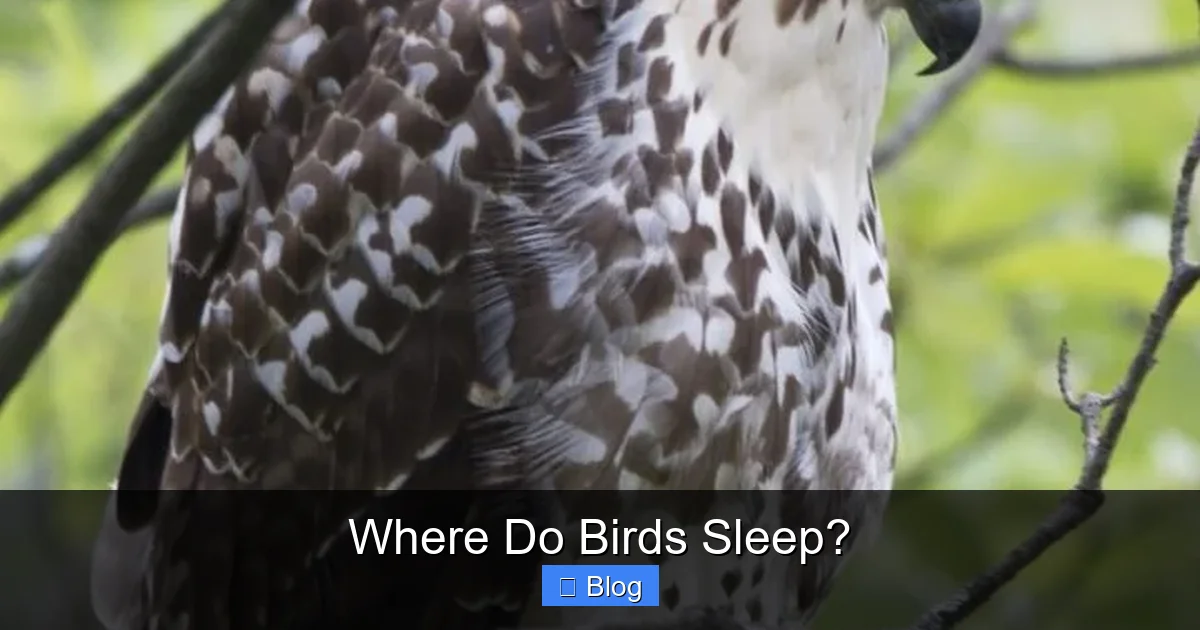
Birds don’t actually sleep in nests every night after they’ve grown past the fledgling stage. Instead, they choose a fascinating variety of safe, sheltered locations, known as roosting spots, adapting their choices based on species, season, and predator threat. Their nightly sleeping habits are a marvel of natural adaptation, prioritizing safety, warmth, and energy conservation.
Have you ever watched a bird flitting about your garden, singing its heart out, and then wondered, “Where do birds sleep when the sun goes down?” It’s a question many of us ponder, often with a romantic image of tiny birds tucked snugly in their nests. But here’s a little secret: that image, while sweet, isn’t entirely accurate for adult birds!
The truth is far more diverse and fascinating than you might imagine. Birds are incredible creatures, masters of survival, and their sleeping habits are no exception. They’ve developed ingenious ways to stay safe, warm, and hidden through the night, adapting to their environment with remarkable precision. So, let’s pull back the curtain and explore the real nighttime world of our feathered friends.
From bustling city parks to tranquil forest canopies, birds select their nightly retreats with extreme care. Their choices are a complex interplay of instinct, survival, and the ever-present need for safety. Get ready to discover the secret bedrooms of the avian world and gain a whole new appreciation for the cleverness of birds!
Key Takeaways
- Nests are for babies, not adults: Contrary to popular belief, most adult birds do not sleep in their breeding nests. Nests are primarily built for raising chicks.
- Diversity in roosting spots: Birds utilize a wide array of locations for sleep, including dense foliage, tree cavities, utility poles, birdhouses, cliff ledges, and even urban buildings.
- Safety is paramount: A bird’s choice of sleeping spot is heavily influenced by the need for protection from predators, harsh weather conditions, and maintaining body warmth.
- Seasonal adaptations: Roosting habits change with the seasons. Birds might huddle together in groups during cold winters for warmth, but prefer solitary or smaller group roosts in warmer months.
- Torpor for energy conservation: Some small bird species, like hummingbirds, enter a state of torpor (a controlled hypothermia) at night, significantly slowing their metabolism to conserve energy during cold nights.
- Species-specific preferences: Different bird species have evolved unique roosting behaviors tailored to their size, diet, habitat, and vulnerability, making “where do birds sleep” a question with many answers.
- Human impact: Providing suitable backyard habitats, such as dense native shrubs and roosting boxes, can offer vital sleeping places for local bird populations.
Quick Answers to Common Questions
Do birds sleep in their nests?
No, adult birds generally do not sleep in their nests. Nests are primarily built and used for raising young chicks. Once the chicks fledge, adult birds find other, safer locations to roost.
Do birds sleep standing up?
Many birds do sleep standing up, particularly those that roost on branches or ledges. They have a specialized tendon locking mechanism in their legs that allows their feet to grip tightly without muscular effort, preventing them from falling.
How do birds not fall off branches when sleeping?
Birds possess a unique anatomical feature called a “perching reflex.” When a bird crouches to sleep, its body weight automatically tightens tendons in its legs, causing its toes to lock around the branch. This requires no conscious effort and keeps them securely anchored.
Do birds sleep with their eyes open?
Some birds can engage in unihemispheric slow-wave sleep (USWS), meaning one half of their brain sleeps while the other remains awake and its corresponding eye stays open. This allows them to stay vigilant for predators while still getting some rest.
Do all birds sleep at night?
Most bird species are diurnal, meaning they are active during the day and sleep at night. However, nocturnal birds, such as owls and nightjars, are active at night and sleep during the day.
📑 Table of Contents
Beyond the Nest: The True Roosting Story
Why Nests Aren’t Nighttime Homes for Adult Birds
The most common misconception about where birds sleep involves their nests. While nests are indeed central to a bird’s life, they are primarily nurseries. Think of them as cribs for baby birds, not permanent bedrooms for the adults. Once the chicks fledge (leave the nest), the nest’s purpose is largely served. It often becomes unsanitary due to accumulated waste and attracts predators who can easily locate it.
For adult birds, sleeping in a nest would actually be quite risky. A stationary nest, especially one that has been used, is a known location to potential predators. Moreover, nests are often flimsy structures, designed for a temporary period of raising young, not for enduring nightly use by adults over an extended time. So, if you’re asking “where do birds sleep,” the answer is almost never “in their old nest.”
The Concept of Roosting: A Bird’s Nighttime Sanctuary
Instead of sleeping in nests, adult birds “roost.” Roosting is the term used to describe where birds settle down for the night, or even for a rest during the day. A roosting spot is chosen for specific reasons: safety from predators, protection from harsh weather (like wind, rain, or extreme cold), and the opportunity to conserve energy.
The choice of a roosting spot is dynamic. It can change based on the season, the availability of resources, and the immediate perceived threat level. Some birds roost communally, huddling together for warmth and safety in numbers, while others prefer solitary, secluded spots. This adaptability is key to their survival.
Diverse Bedrooms: Where Birds Find Their Sleep
So, if nests are out, where exactly do birds sleep? The answer is as varied as the birds themselves. Each species has evolved specific preferences, utilizing the natural and sometimes even urban environment to their advantage.
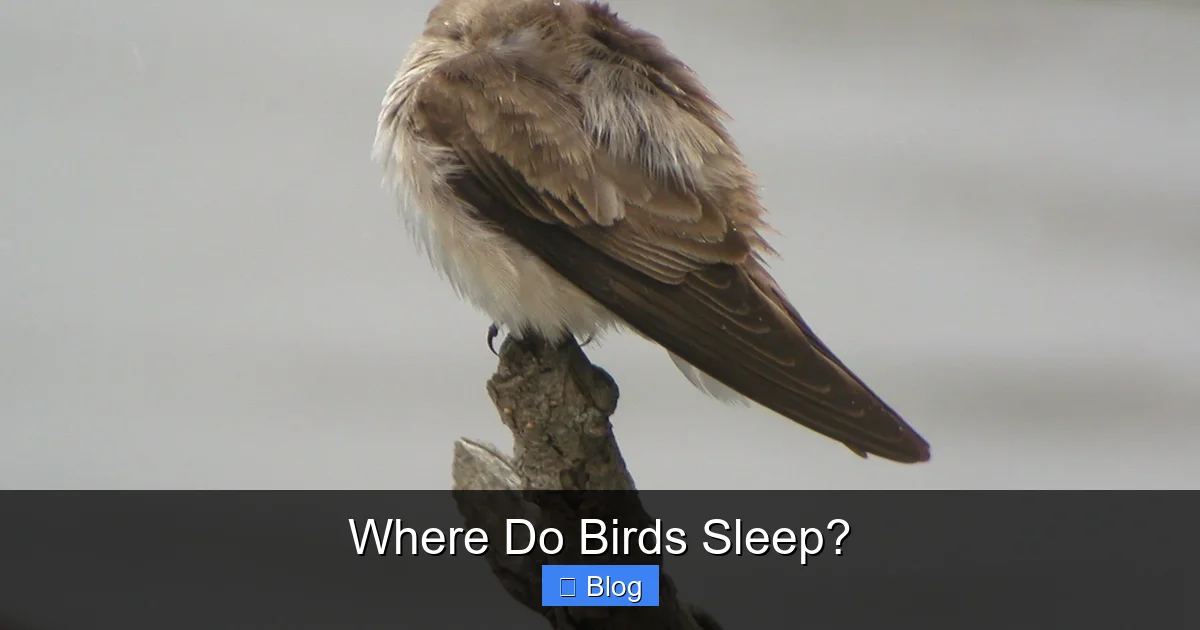
Visual guide about Where Do Birds Sleep?
Image source: birds.cornell.edu
Hidden in Plain Sight: Dense Foliage and Thickets
Many small songbirds, like sparrows, finches, and robins, opt for the ultimate in natural camouflage: dense bushes, thick shrubs, or evergreen trees. These locations offer multiple layers of branches and leaves, creating a natural fortress against aerial and ground predators. The thick cover also provides insulation from wind and rain, helping birds stay warmer and drier.
Imagine a tiny wren burrowing deep into a thorny rose bush; it’s virtually invisible and inaccessible to a prowling cat or an owl. These spots allow birds to blend in with their surroundings, becoming just another shadow in the night. It’s an effective and widely used strategy for where do birds sleep.
Cozy Cavities: Tree Holes and Nest Boxes
For birds that naturally nest in cavities, such as woodpeckers, owls, bluebirds, and some chickadees, tree holes are often their preferred sleeping quarters. These natural hollows in tree trunks provide excellent insulation against cold and offer robust protection from predators. Some birds might even excavate a new roosting cavity if suitable ones are scarce.
Humans can assist these cavity-dwelling species by providing artificial roosting boxes. These are similar to birdhouses but are designed specifically for sleeping, often with a single entrance hole and no perch, mimicking natural cavities. A roosting box can be a lifesaver, especially during harsh winter nights, providing a critical shelter for where do birds sleep.
High Ground: Branches and Ledges
Larger birds, particularly raptors like hawks and eagles, often choose tall, sturdy branches high in trees. These elevated perches offer an expansive view, allowing them to detect potential threats from a distance. Their size and powerful grip (thanks to specialized tendons that lock their feet onto a branch) prevent them from falling while they sleep.
Cliff-dwelling birds, such as some swallows or gulls, might roost on narrow ledges, often in large colonies. The sheer height and inaccessibility of these locations provide excellent protection from ground predators. These birds utilize every natural advantage to secure their nightly rest.
Unconventional Spots: Buildings and Man-Made Structures
Urban birds are incredibly resourceful when it comes to finding places to sleep. Pigeons, sparrows, and starlings frequently roost on building ledges, under eaves, in abandoned structures, or even inside ventilation systems. These man-made shelters offer protection from the elements and predators, mimicking natural cliff faces or dense foliage.
Barn swallows, for example, famously construct their mud nests inside barns, but they also roost there at night, clinging to rafters or wires. Even hummingbirds, despite their tiny size, might choose the sheltered overhang of a porch or a sturdy clothesline to spend the night, demonstrating their adaptability to human environments when deciding where do birds sleep.
On the Water: Ducks and Geese
Waterfowl like ducks and geese have a unique approach to sleeping. They often roost on the water itself, floating serenely in ponds, lakes, or slow-moving rivers. Sleeping on water provides a natural barrier against most ground predators. If a predator approaches, the ripples in the water serve as an early warning system, allowing the birds to wake up and swim away.
Some waterfowl can even sleep with one eye open, or alternate which side of their brain is asleep, allowing them to remain partially vigilant even in slumber. This remarkable adaptation highlights the diverse strategies birds employ for safety.
The Art of Survival: How Birds Stay Safe While Sleeping
Beyond choosing the right spot, birds have several clever behavioral and physiological adaptations that help them survive the night.
Predator Avoidance: Camouflage and Group Roosting
Camouflage is a bird’s first line of defense. By choosing spots that blend with their plumage, they become incredibly difficult for predators to spot. Many birds also exhibit “group roosting,” where dozens or even hundreds of individuals gather in a single location to sleep. This strategy offers safety in numbers. More eyes and ears mean a higher chance of detecting a predator, and the sheer chaos of a large flock taking flight can disorient an attacker.
Alarm calls are quickly spread through a group, rousing everyone to safety. Think of starlings swirling in massive murmurations before settling into a communal roost – it’s a spectacle of both beauty and survival strategy.
Weather Protection: Shelter and Huddling
Staying warm is crucial, especially during cold nights. Birds don’t have blankets, but they utilize natural shelters to block wind and rain. They also fluff up their feathers, trapping a layer of air close to their bodies, which acts as excellent insulation. Some birds tuck their heads under a wing to conserve body heat and protect their vulnerable faces from the cold.
Huddling together is another common strategy, particularly among small songbirds in winter. By pressing close to one another, they share body warmth, significantly reducing individual heat loss and improving their chances of surviving frigid temperatures. This communal warmth is a vital answer to “where do birds sleep warmly” in winter.
Entering Torpor: A Deep Slumber for Survival
For some of the smallest birds, like hummingbirds and swifts, surviving a cold night requires an even more drastic measure: entering a state of torpor. Torpor is a controlled hypothermia where a bird significantly lowers its body temperature and metabolic rate. Their heart rate slows dramatically, and their breathing becomes almost imperceptible. This allows them to conserve up to 90% of the energy they would normally expend, preventing starvation when food is scarce or temperatures drop.
While in torpor, birds are vulnerable and appear lifeless. As the sun rises and temperatures warm, they slowly awaken, warming their bodies back to normal operating temperature. It’s a remarkable feat of physiological adaptation, showcasing just how finely tuned birds are to their environment.
Seasonal Shifts: Changing Beds with the Calendar
A bird’s choice of where to sleep is not static; it changes throughout the year, adapting to the varying demands of each season.
Winter Wonders: Group Huddles for Warmth
When winter descends, cold becomes the greatest threat. As mentioned, many small birds switch to communal roosting. They might abandon solitary perches for dense evergreen trees or sheltered cavities where they can huddle in large numbers. This collective body heat is essential for surviving long, freezing nights when food resources are scarce and energy conservation is paramount.
Birds that can access heated spaces, even if it’s just the residual warmth from a building, will utilize them. This seasonal adaptation is a clear example of how critical finding the right answer to “where do birds sleep” is for survival.
Summer Solitude: Spreading Out for Comfort
In contrast, summer nights are generally milder, and the need for communal warmth diminishes. During breeding season, birds are also more territorial and may prefer more solitary roosting spots to avoid conflicts. They might spread out into various parts of a tree or bush, each claiming a small patch for themselves.
With abundant food and less severe weather, the primary concern shifts back to predator avoidance and simply finding a comfortable, quiet spot to rest before the next day’s activities begin.
Migration Rest Stops
During migration, birds are constantly on the move, covering vast distances. Their sleeping patterns become even more challenging. They often have to make do with whatever shelter is available at their temporary rest stops. This might involve sleeping in unfamiliar trees, reed beds, or even on the ground in open areas, often for shorter periods before resuming their journey. This is a particularly vulnerable time for birds, as they are often exhausted and in new territories, making the choice of where do birds sleep even more critical and immediate.
Tips for Bird Watchers and Backyard Enthusiasts
Understanding where birds sleep can help us become better stewards of their environment.
Provide Safe Roosting Options
You can help local birds by providing safe roosting habitats in your backyard. Planting dense native shrubs and evergreen trees offers excellent cover. Consider installing roosting boxes, especially in areas with fewer natural tree cavities. Ensure these boxes are cleaned annually and are positioned away from potential predator access.
Leaving some dead trees (snags) if safe to do so can also provide natural cavities for birds. Remember, a diverse and layered landscape offers more choices for where do birds sleep.
Maintain a Quiet Environment
Birds need undisturbed sleep. Try to limit nighttime outdoor lighting that can disorient or disturb them. Keep pets indoors or secured during night hours to prevent them from disturbing roosting birds. Minimize late-night noise in areas where birds are likely to roost.
Observe Respectfully
If you’re curious about where birds sleep in your area, try to observe from a distance, especially around dusk. Use binoculars to avoid disturbing them. Never attempt to approach or flush a bird from its roost, as this can expose it to danger and waste precious energy.
Conclusion
The question “where do birds sleep?” unravels a complex and utterly fascinating world of avian ingenuity. From the common misconception of nests as nightly bedrooms to the incredible diversity of roosting spots—be it a dense thicket, a cozy tree cavity, a high-rise ledge, or even floating on water—birds demonstrate an unparalleled adaptability.
Their strategies for survival during slumber, from huddling together for warmth to entering a deep torpor, are a testament to their evolutionary prowess. Each night, as the world grows quiet, our feathered friends are not just sleeping; they are employing sophisticated tactics to endure, conserve energy, and prepare for another day of flight and song.
Next time you see a bird, take a moment to appreciate the unseen journey it undertakes each night to find its perfect sleeping sanctuary. By understanding their needs, we can all contribute to making our shared environments safer and more welcoming places for these remarkable creatures to rest their weary wings.
🎥 Related Video: How Do Birds Sleep?
📺 All Things Birdie
We see birds during the day foraging, flying, and hear them vocalizing. But when the sun goes down, everything gets quiet. Where …
Frequently Asked Questions
How long do birds sleep?
The amount of sleep a bird needs varies greatly by species, season, and activity level. Many birds sleep in short bursts throughout the night, often waking periodically to check for predators or adjust their position. Total sleep time might range from a few hours to several hours.
Can birds sleep during the day?
Yes, birds can and do take short naps or rest during the day, especially during periods of intense activity like nesting or migration, or simply to conserve energy. Nocturnal birds, like owls, will sleep predominantly during daylight hours.
What’s the difference between nesting and roosting?
Nesting refers to the act of building and occupying a nest specifically for laying eggs and raising young. Roosting, on the other hand, is the act of settling down to rest or sleep, regardless of whether eggs or young are present. Nests are for breeding; roosts are for sleeping.
Why do some birds sleep in groups?
Birds often sleep in groups for several key reasons: increased safety through “safety in numbers” (more eyes and ears to detect predators), and shared body warmth, which is crucial for surviving cold temperatures, especially in winter.
Can I put a light near where birds sleep?
It’s generally best to avoid placing artificial lights near areas where birds are known to roost. Artificial light can disorient birds, disrupt their natural sleep cycles, and make them more visible to nocturnal predators, compromising their safety.
How do birds choose where to sleep?
Birds choose their sleeping spots based on a combination of factors: protection from predators, shelter from harsh weather (wind, rain, cold), and availability of suitable locations. Their choice can also be influenced by their species-specific behaviors, size, and the season.