
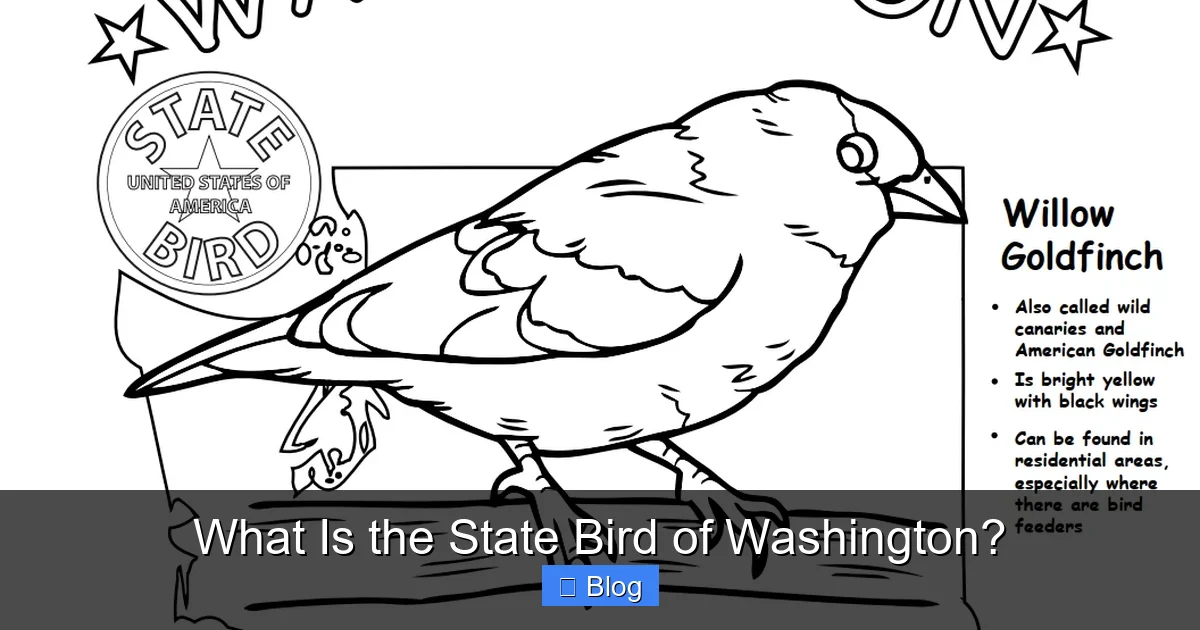
Curious about what is the state bird of Washington? It’s the dazzling American Goldfinch, a small, vibrant songbird officially adopted in 1951. Known for its brilliant yellow plumage in males, melodic song, and fondness for thistle seeds, this charming avian ambassador perfectly represents the Evergreen State’s natural beauty and rich biodiversity throughout its open fields and gardens.
Ever gazed out at the lush landscapes of Washington State and wondered which feathered friend truly represents its natural charm? Many states boast iconic birds that embody their spirit, from the majestic Bald Eagle to the tiny but tenacious Chickadee. Washington is no different, and its chosen avian ambassador is a burst of sunshine, a symbol of cheer, and a true delight to behold.
If you’ve ever spent time observing the birds in your backyard or explored the state’s beautiful parks and open spaces, you might have already encountered this vibrant creature. It flits between feeders, sings a delightful tune, and adds a splash of brilliant color to the green scenery. But do you know for certain what is the state bird of Washington?
Join us on a journey to uncover the identity of Washington’s official state bird, delve into its fascinating characteristics, learn where to find it, and even discover how you can invite this charming symbol into your own garden. Prepare to be enchanted by a small but mighty representative of the Evergreen State’s rich biodiversity!
Key Takeaways
- Official Symbol: The American Goldfinch was designated as the state bird of Washington in 1951, symbolizing the state’s vibrant natural environment.
- Distinctive Appearance: Males are recognized by their brilliant lemon-yellow body, black wings with white markings, and a small black cap during breeding season, with females being duller.
- Dietary Habits: These birds are primarily granivores, meaning they feed almost exclusively on seeds, particularly thistle (Nyjer) and sunflower seeds.
- Habitat Preference: American Goldfinches thrive in open, weedy fields, meadows, cultivated areas, and suburban gardens across Washington, avoiding dense forests.
- Melodious Vocalizations: They are known for their sweet, lively, and undulating songs, often described as a series of warbles and twitters, adding to their charm.
- Seasonal Molt: Goldfinches undergo two molts a year, with males changing from brilliant yellow in summer to a duller, olive-brown in winter.
- Attracting to Gardens: To invite them, provide Nyjer (thistle) or black oil sunflower seeds in specialized feeders, along with a water source and native plants for shelter.
Quick Answers to Common Questions
Question 1: When was the American Goldfinch officially designated as Washington’s state bird?
The American Goldfinch was officially designated as the state bird of Washington in 1951, through legislative action.
Question 2: What is the primary diet of the American Goldfinch?
The American Goldfinch is primarily a granivore, meaning it feeds almost exclusively on seeds, especially thistle (Nyjer) and sunflower seeds.
Question 3: Do American Goldfinches migrate from Washington?
While some American Goldfinches in Washington may undertake short-distance migrations or remain year-round residents, those from colder parts of their range often migrate south for winter.
Question 4: What color are male American Goldfinches during breeding season?
During the breeding season, male American Goldfinches display a brilliant lemon-yellow body, contrasting black wings with white markings, and a distinctive small black cap on their head.
Question 5: How can I attract American Goldfinches to my garden in Washington?
You can attract American Goldfinches by offering Nyjer (thistle) seeds in specialized feeders, providing black oil sunflower seeds, ensuring a fresh water source, and planting native seed-bearing plants.
📑 Table of Contents
- Unveiling Washington’s Feathered Ambassador: The American Goldfinch
- Getting to Know the American Goldfinch: A Deeper Dive
- Habitat and Range in Washington: Where to Find Your State Bird
- The Goldfinch’s Role in Washington’s Ecosystem: More Than Just a Pretty Face
- Attracting Goldfinches to Your Washington Garden: Practical Tips
- Conclusion: The Enduring Charm of Washington’s State Bird
Unveiling Washington’s Feathered Ambassador: The American Goldfinch
Let’s cut right to the chase! The answer to the question, “What is the state bird of Washington?” is the enchanting American Goldfinch (Spinus tristis). This small, migratory songbird, beloved for its striking appearance and melodious song, was officially designated as the Evergreen State’s avian emblem in 1951. It’s a choice that perfectly captures the beauty and vibrancy of Washington’s diverse ecosystems, from its eastern farmlands to its western urban parks, embodying Washington’s state bird spirit.
The American Goldfinch: A Burst of Sunshine
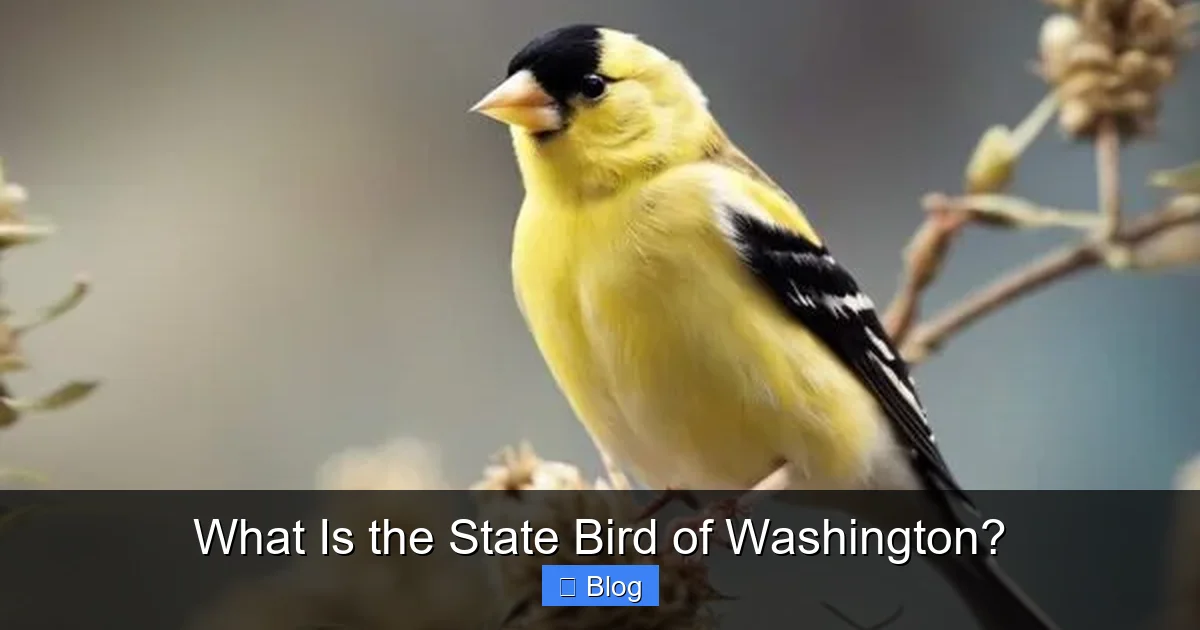
Imagine a tiny bird, barely five inches long, yet it commands attention with its spectacular plumage. During the breeding season, the male American Goldfinch is simply unmistakable. He sports a coat of brilliant, lemon-yellow feathers, set against striking black wings marked with prominent white wing bars. A distinctive black cap crowns his head, making him look like a dapper gentleman ready for a summer day. Females, while still lovely, are a bit more understated, typically having a duller, yellowish-olive hue that provides excellent camouflage while nesting. In winter, both sexes adopt a more subdued, brownish-olive coloration, a clever adaptation that helps them blend into the muted winter landscape, making them a little harder to spot, but no less charming.
How Did It Get Chosen?
The process of selecting a state bird often involves public input, legislative debate, and a desire to pick a species that truly resonates with the state’s identity. For Washington, the American Goldfinch was a popular choice. Its widespread presence across the state, its cheerful disposition, and its relatively non-controversial nature likely contributed to its adoption. Unlike some state symbols chosen for historical or mythological reasons, the goldfinch was simply a beloved and easily recognizable bird that brought joy to many residents. The official adoption of the American Goldfinch as the state bird of Washington through legislative action in 1951 solidified its place as a proud symbol alongside the state flower (Coast Rhododendron) and state tree (Western Hemlock), proudly proclaiming what is the state bird of Washington to all who inquire.
Getting to Know the American Goldfinch: A Deeper Dive
Beyond its official status, the American Goldfinch is a fascinating creature with unique behaviors and adaptations. Understanding these aspects helps us appreciate why it’s such a fitting answer to what is the state bird of Washington.
Visual guide about What Is the State Bird of Washington?
Image source: learnbirdwatching.com
Striking Plumage and Seasonal Changes
We’ve touched on the male’s vibrant yellow, but let’s elaborate. This dazzling display isn’t just for show; it plays a crucial role in attracting mates. The intensity of a male’s yellow plumage can even be an indicator of his health and fitness, making him more appealing to potential partners. The seasonal change, known as prenuptial and postnuptial molts, is a remarkable transformation. They replace their feathers twice a year, which is unusual for most songbirds that typically molt only once after breeding. This double molt ensures the male is in peak yellow condition for spring breeding, and then switches to a camouflaged look for winter survival. Watching for this transformation is one of the joys of identifying Washington’s state bird.
A Melodious Songbird
The American Goldfinch is not just a treat for the eyes but also for the ears. They possess a sweet, lively, and undulating song, often described as a series of warbles and twitters, sometimes interspersed with calls that sound like “potato-chip” or “per-CHIC-o-ree.” Their flight call is particularly distinctive – a series of “swee-swee-swee” notes given in an undulating flight pattern, almost as if they’re singing with each dip and rise. These vocalizations are a constant backdrop to the summer months in Washington, adding to the state’s natural symphony and making the experience of spotting the state bird of Washington even more delightful.
Diet and Feeding Habits: A Seed-Eating Specialist
One of the most distinctive traits of the American Goldfinch is its specialized diet. Unlike many songbirds that supplement their diet with insects, goldfinches are almost exclusively granivores, meaning they are seed-eaters. Their strong, conical beaks are perfectly adapted for husking seeds. They have a particular fondness for thistle seeds, especially those from plants like Canada thistle and common thistle, which is why they are often referred to as “thistle birds.” But their diet isn’t limited to thistle; they also enjoy sunflower seeds, dandelion, ragweed, and various other weed seeds. This unique dietary preference also influences their breeding cycle, as they often wait for thistle and other seed-bearing plants to mature before nesting, ensuring a plentiful food supply for their young. This specific diet sets Washington’s state bird apart from many other species.
Habitat and Range in Washington: Where to Find Your State Bird
Knowing what is the state bird of Washington is one thing, but knowing where to find it is another! Fortunately, the American Goldfinch is a widespread and adaptable species, making it relatively easy to spot across much of the state.
Preferred Environments
American Goldfinches are birds of open country. They thrive in environments characterized by weeds and wildflowers, which provide their primary food source. This includes open fields, meadows, cultivated areas, roadsides, and suburban gardens. They particularly love areas with scattered trees and shrubs for nesting and perching, but they generally avoid dense, unbroken forests. In Washington, you’ll find them comfortably nestled in the agricultural lands of Eastern Washington, the sprawling parks of Seattle and Spokane, and the rural outskirts of towns across the state. They are truly an avian emblem that connects all corners of the Evergreen State, representing the state bird of Washington with pride.
Migration Patterns (or lack thereof for many)
While often described as migratory, American Goldfinches in Washington sometimes display a more nomadic or partially migratory behavior. Populations in the northern parts of their range (like Canada) will undertake significant migrations south for the winter. However, many goldfinches in temperate regions like Washington may simply move short distances, following food sources, or remain year-round residents if food and conditions allow. This means you have a good chance of seeing Washington’s state bird at any time of year, though their vibrant yellow might be subdued in the colder months. Regardless of migration, they remain a constant presence for many in the state.
The Goldfinch’s Role in Washington’s Ecosystem: More Than Just a Pretty Face
The American Goldfinch isn’t just a beautiful sight; it plays a vital role in the ecological balance of Washington State. Its presence highlights the health and diversity of our natural spaces, making the choice of the state bird of Washington all the more significant.
Seed Dispersal and Plant Health
As dedicated seed-eaters, goldfinches are inadvertent gardeners. When they feed, they often drop seeds or carry them to new locations, helping to disperse plant species across the landscape. This seed dispersal is crucial for the regeneration and spread of various native plants, contributing to the overall health and biodiversity of Washington’s ecosystems. By favoring “weedy” plants, they also help manage the growth of certain species, preventing any single plant from dominating an area, thus promoting a more balanced flora. This natural behavior makes them crucial partners in maintaining ecological balance.
An Indicator Species
Like many bird species, the American Goldfinch can serve as an indicator of environmental health. A healthy, thriving population of goldfinches suggests that their preferred habitats – open fields, meadows, and gardens with abundant seed-bearing plants – are intact and flourishing. Conversely, a decline in goldfinch numbers might signal habitat loss, pesticide use impacting their food sources, or other environmental stressors. So, when you see Washington’s state bird flitting about, take it as a good sign that nature is doing well! Their continued presence is a testament to the efforts in conservation.
Attracting Goldfinches to Your Washington Garden: Practical Tips
Now that you know what is the state bird of Washington, wouldn’t it be wonderful to have these cheerful birds visit your own backyard? Attracting American Goldfinches to your garden is relatively easy, as they are often quite comfortable around humans and readily adapt to backyard feeders. Here are some practical tips:
The Right Food: Thistle and Sunflower Seeds
This is arguably the most critical step. Goldfinches absolutely adore thistle seeds (often sold as Nyjer or Nyger seed). Because these seeds are so tiny, they require specialized feeders with small slits that only allow birds with small beaks, like goldfinches, to access them. This helps prevent larger, more aggressive birds from dominating the feeder. Black oil sunflower seeds are also a huge hit. Offer them in a separate feeder, or a mixed seed feeder, and watch them flock in! Remember to keep your feeders clean to prevent the spread of disease, ensuring a healthy environment for Washington’s state bird.
Water and Shelter
Like all birds, goldfinches need fresh water for drinking and bathing. A bird bath, kept clean and filled with fresh water, will be a welcome addition to your garden. Ensure it’s placed in an open area so they can scan for predators. For shelter, plant native shrubs and small trees. Goldfinches appreciate dense, thorny shrubs for nesting and protection from the elements and predators. Evergreen shrubs can provide year-round cover. Providing these essentials significantly increases your chances of attracting the state bird of Washington.
Creating a Native Plant Haven
Beyond feeders, transforming a part of your garden into a natural buffet for goldfinches is a fantastic idea. Let some “weeds” go to seed – dandelions, thistles, and coneflowers are goldfinch favorites. Planting native seed-bearing plants like coneflowers, zinnias, cosmos, and sunflowers will not only provide a natural food source but also create a beautiful, biodiverse garden that supports a variety of wildlife. By embracing what grows naturally in Washington, you’re creating the perfect environment for the state bird of Washington to thrive.
Conclusion: The Enduring Charm of Washington’s State Bird
From the sun-drenched fields of eastern Washington to the leafy suburban gardens along the Puget Sound, the American Goldfinch stands as a vibrant, enduring symbol of the state’s natural splendor. We’ve explored what is the state bird of Washington, delved into its striking appearance, understood its unique dietary needs, pinpointed its favored habitats, and appreciated its ecological importance.
This small bird, with its brilliant yellow plumage and cheerful song, embodies the spirit of renewal and the simple joys of nature. It reminds us that beauty can be found in the most common of places, and that even the smallest creatures play a significant role in our world. So, the next time you see a flash of yellow flitting through your garden or hear a melodic “potato-chip” call, you’ll know you’re witnessing the beloved American Goldfinch – Washington’s very own, truly magnificent state bird. Take a moment to appreciate its presence, for it is a living testament to the natural wonders of the Evergreen State, a true delight for anyone curious about what is the state bird of Washington.
Frequently Asked Questions
Question: Why was the American Goldfinch chosen as Washington’s state bird?
The American Goldfinch was likely chosen for its widespread presence across the state, its vibrant appearance, and its cheerful song, making it a beloved and recognizable symbol of Washington’s natural beauty and avian diversity.
Question: Are female American Goldfinches as brightly colored as males?
No, female American Goldfinches are not as brightly colored as the males, particularly during the breeding season. They typically have a duller, yellowish-olive plumage, which provides better camouflage for nesting.
Question: Do American Goldfinches change color throughout the year?
Yes, American Goldfinches undergo a significant seasonal molt. Males lose their brilliant yellow plumage in winter, adopting a duller, more olive-brown coloration similar to females, before regaining their vibrant yellow in spring.
Question: What kind of nest do American Goldfinches build?
American Goldfinches build neat, cup-shaped nests typically in the forks of deciduous shrubs or small trees. Their nests are often so tightly woven with plant fibers, spider silk, and down that they can sometimes hold water.
Question: Is the American Goldfinch found throughout all of Washington State?
The American Goldfinch is widespread throughout most of Washington State, particularly in open woodlands, fields, and suburban areas. They are less common in dense, old-growth forests and high alpine regions.
Question: What is the typical lifespan of an American Goldfinch?
In the wild, the typical lifespan of an American Goldfinch is generally between 3 to 7 years. However, factors like predation, disease, and food availability can significantly impact individual survival.