
Oklahoma boasts one of the most distinctive and beautiful state birds in the nation: the Scissortail Flycatcher. This graceful avian is celebrated for its incredibly long, forked tail and acrobatic flight, making it an unmistakable symbol of the Sooner State. Adopted in 1951, it embodies the spirit and natural beauty of Oklahoma’s landscapes.
Have you ever stopped to wonder which majestic creature represents your state in the avian world? Every state in the United States proudly designates a state bird, a feathered ambassador that encapsulates the natural beauty and unique spirit of its region. These birds aren’t just pretty faces; they’re chosen for their distinct characteristics, their prevalence in the state’s ecosystem, or sometimes, simply because they capture the hearts of its residents. From the vibrant Western Meadowlark of Kansas to the bold Northern Cardinal of Illinois, each state bird tells a fascinating story.
Today, we’re going to soar into the heart of the Sooner State to answer a fascinating question that often piques the curiosity of residents and visitors alike: “What is the state bird of Oklahoma?” Prepare to be introduced to a truly elegant and captivating bird, a creature whose striking appearance and graceful movements make it an undeniable icon of Oklahoma’s vast and beautiful landscapes. Its presence is so deeply woven into the fabric of the state that once you learn about it, you’ll undoubtedly start spotting it everywhere during the warmer months.
So, let’s take flight and uncover the identity of Oklahoma’s official feathered symbol. Get ready to meet a bird with a tail so unique, it almost defies belief, and a personality that’s just as engaging. This isn’t just a lesson in ornithology; it’s a journey into the heart of Oklahoma’s natural heritage, revealing why this particular bird earned its prestigious title and what makes it such a cherished part of the state’s identity.
Key Takeaways
- Oklahoma’s State Bird: The Scissortail Flycatcher holds the distinguished title of what is the state bird of Oklahoma, officially designated in 1951.
- Unique Appearance: It’s easily recognizable by its exceptionally long, deeply forked, scissor-like tail, along with its graceful gray, white, and salmon-pink plumage.
- Aerial Acrobat: The Scissortail Flycatcher is known for its remarkable aerial displays, often seen swooping and diving to catch insects in flight with incredible agility.
- Habitat: These birds prefer open grasslands with scattered trees, a common landscape throughout Oklahoma, where they are summer residents before migrating south for winter.
- Cultural Significance: Beyond its natural beauty, the Scissortail Flycatcher is a beloved cultural icon, frequently appearing in Oklahoma art, business branding, and representing the state’s natural heritage.
- Conservation: While generally stable, awareness of habitat preservation and reduced pesticide use remains important for the continued thriving of this iconic species in Oklahoma.
Quick Answers to Common Questions
What is the official state bird of Oklahoma?
The official state bird of Oklahoma is the Scissortail Flycatcher (Tyrannus forficatus).
When was the Scissortail Flycatcher designated as Oklahoma’s state bird?
It was officially designated as the state bird by the Oklahoma Legislature on May 26, 1951.
What is the most distinctive feature of the Scissortail Flycatcher?
Its most distinctive feature is its exceptionally long, deeply forked, scissor-like tail, which can be up to twice the length of its body.
Where can you typically find Scissortail Flycatchers in Oklahoma?
They are commonly found in open grasslands, prairies, and savannas with scattered trees, as well as in agricultural and suburban areas during their breeding season.
Are Scissortail Flycatchers migratory birds?
Yes, they are migratory birds, spending their summers in Oklahoma and surrounding states for breeding, then migrating to Central America for the winter.
📑 Table of Contents
- Meet the Scissortail Flycatcher: A Royal Choice for Oklahoma
- The Scissortail’s Stunning Appearance: An Unforgettable Sight
- Habitat and Behavior: Where to Spot Oklahoma’s Icon
- The Scissortail Flycatcher’s Significance to Oklahoma
- Beyond the Symbol: Fun Facts and Local Lore About Oklahoma’s State Bird
Meet the Scissortail Flycatcher: A Royal Choice for Oklahoma
The moment of truth is here! The answer to “What is the state bird of Oklahoma?” is none other than the magnificent Scissortail Flycatcher (scientific name: Tyrannus forficatus). This isn’t just any bird; it’s a creature of unparalleled elegance and a true spectacle in the skies over Oklahoma. When you see it, you’ll immediately understand why this specific bird was chosen to represent the state. Its long, deeply forked tail, which can measure up to twice the length of its body, is its most defining feature, giving it its very apt name.
A History of Official Recognition
The journey for the Scissortail Flycatcher to become Oklahoma’s state bird wasn’t a long, arduous battle, but rather a widely supported adoption. It was officially designated as the state bird by the Oklahoma Legislature on May 26, 1951. This decision wasn’t made lightly. The Scissortail Flycatcher had already been a beloved and recognizable resident across the state for generations. Its beauty, distinctive characteristics, and common presence made it a natural and widely celebrated choice among Oklahomans.
Why the Scissortail was Chosen
Several compelling factors contributed to the Scissortail Flycatcher’s selection as Oklahoma’s state bird. First and foremost, its striking appearance sets it apart from almost any other bird found in North America. Its graceful flight, characterized by breathtaking aerial acrobatics as it hunts insects, is a common and cherished sight during the spring and summer months. It truly embodies the freedom and open spirit often associated with Oklahoma’s expansive landscapes. Furthermore, the bird is a common and widespread summer resident throughout much of Oklahoma, making it an accessible and familiar symbol for its citizens. Its annual return in spring is a strong indicator of the changing seasons, signifying the arrival of warmer weather and abundant life, making it a truly fitting emblem.
The Scissortail’s Stunning Appearance: An Unforgettable Sight
Visual guide about What Is the State Bird of Oklahoma?
Image source: image.shutterstock.com
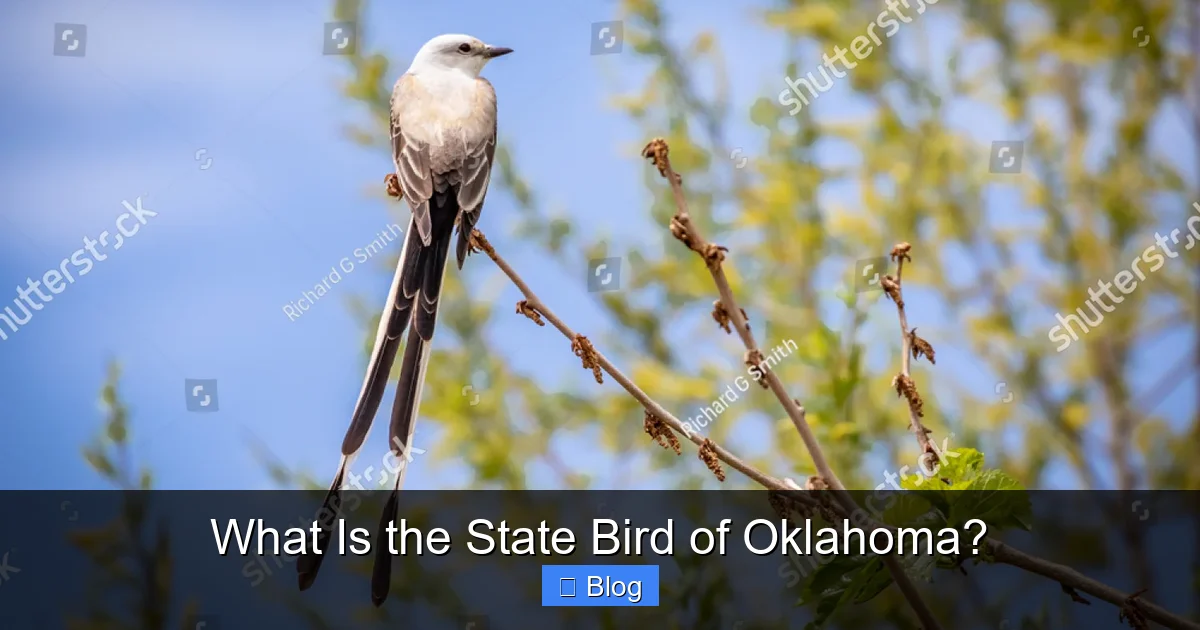
To truly appreciate what is the state bird of Oklahoma, we need to take a closer look at its breathtaking aesthetics. The Scissortail Flycatcher is a medium-sized bird, roughly 13 to 15 inches long from head to tip of its long tail, though a significant portion of that length is its incredible tail. Without its tail, the body size is more akin to that of a robin, highlighting just how dramatic its unique tail feathers are.
The Iconic Tail: Nature’s Scissors
Let’s talk about that tail first, because it’s truly spectacular and the defining feature of Oklahoma’s state bird. The two outer tail feathers are exceptionally long, often extending 6 to 9 inches beyond the rest of the tail, tapering gracefully to a point. These long feathers can cross over each other when the bird is in flight or perched, creating the distinctive “scissor-like” effect for which it’s named. This unique appendage isn’t just for show; it’s thought to play a crucial role in sexual selection, with longer tails often signaling a healthier, more desirable mate. It also likely aids in steering and maneuverability during its incredibly agile aerial hunting. Watching a Scissortail Flycatcher effortlessly navigate the air with its long tail trailing behind is a sight that few ever forget.
A Subtle Yet Elegant Color Palette
Beyond its tail, the Scissortail Flycatcher’s plumage is a study in subtle elegance. Its back and head are a soft, pale gray, blending seamlessly into a pristine white belly and chest. But look closely, and you’ll discover delightful splashes of color that add immensely to its charm. Underneath its wings and on its flanks, especially noticeable when the bird takes flight or stretches, you’ll often see beautiful patches of salmon-pink or peach-colored feathers. This soft pink hue is particularly vibrant in males and during the breeding season, adding a touch of warmth and unexpected beauty to its otherwise cool-toned plumage.
Hidden Gems: A Crown of Red
Another fascinating, albeit often unseen, feature of Oklahoma’s state bird is a small patch of bright red or orange feathers on the crown of its head. This “crown” is typically hidden, covered by the gray feathers, and is usually only visible during display flights, when the bird is highly excited, or if you get a very specific angle while it’s preening. It’s a little secret splash of vibrant color, adding to the intrigue and allure of the Scissortail Flycatcher. A dark, almost black, line runs through its eye, giving it a somewhat masked appearance. This combination of subtle grays, whites, pinks, and a hidden splash of red makes the Scissortail Flycatcher a truly distinctive and beautifully adapted bird for its environment.
Habitat and Behavior: Where to Spot Oklahoma’s Icon
Knowing what is the state bird of Oklahoma is one thing, but knowing where to find it and observe its fascinating behaviors is another. The Scissortail Flycatcher is a bird of open spaces, perfectly adapted to the landscapes that dominate much of Oklahoma, making it a familiar sight for anyone exploring the state.
Preferred Habitats
These magnificent birds thrive in environments that offer a mix of open grasslands, prairies, and savannas, punctuated by scattered trees, shrubs, or fence lines. You’ll often spot them perched atop utility wires, fence posts, tall weeds, or the highest branches of trees, using these elevated vantage points as lookout posts for insects. They are highly adaptable and can also be found in agricultural areas, along roadsides, and even in suburban parks and open urban areas, as long as there’s plenty of space to hunt and suitable perching spots. If you live in Oklahoma, chances are good you’ve seen one even if you didn’t know what it was at the time. Their preference for open country perfectly aligns with much of Oklahoma’s geography.
A Migratory Marvel
The Scissortail Flycatcher is a migratory bird, embarking on an incredible journey each year. It spends its breeding season, from spring to late summer, across its northern range, which includes much of Oklahoma, Kansas, Texas, and parts of neighboring states. As autumn approaches and insects become scarcer, these birds embark on an incredible journey south, migrating to their wintering grounds in Central America and sometimes as far south as Panama. This annual migration means that while they are a ubiquitous sight during the warmer months, they are truly summer residents of Oklahoma. Their highly anticipated return in spring is a welcome sign that warm weather and longer days are just around the corner, bringing life back to the plains.
Diet and Hunting Style: Aerial Acrobats
As their name suggests, Scissortail Flycatchers are insectivores, specializing in catching their prey in mid-air. They are truly masters of aerial pursuit, showcasing incredible agility and precision. From their elevated perch, they scan the skies for flying insects such as grasshoppers, crickets, beetles, wasps, and dragonflies. Once a target is spotted, the bird launches into a breathtaking display of agility, swooping, diving, and twisting with remarkable precision, its long tail acting as a rudder for tight turns. After snatching its meal, it often returns to the same or a nearby perch to consume it. Sometimes, they will also forage on the ground or pick insects from vegetation. Observing a Scissortail Flycatcher hunt is a captivating natural spectacle, highlighting its grace and efficiency as what is the state bird of Oklahoma.
Nesting Habits and Family Life
Scissortail Flycatchers typically build cup-shaped nests in isolated trees or shrubs, often choosing species like mesquites, oaks, elms, or hackberries. The nests are usually constructed from a variety of materials, including twigs, roots, string, cotton, and sometimes even discarded human materials like cigarette filters or bits of cloth, cleverly woven together. Both parents are actively involved in raising their young, from incubating the eggs (usually 3-6) to diligently feeding the hungry nestlings. They are quite territorial during the breeding season and will aggressively defend their nest and young from potential predators, including much larger birds like hawks and crows. Their dedication to their offspring is another admirable trait of what is the state bird of Oklahoma, embodying strong family values.
The Scissortail Flycatcher’s Significance to Oklahoma
The Scissortail Flycatcher isn’t just an official symbol; it’s a living, breathing emblem deeply woven into the cultural fabric of Oklahoma. Its unique beauty and widespread presence have fostered a strong sense of pride and connection among Oklahomans, making it an invaluable part of the state’s identity.
A Cultural Icon and Source of Pride
For many, the sight of a Scissortail Flycatcher soaring through the vast Oklahoma sky evokes a profound sense of home and belonging. It’s a bird that truly represents the open spaces, freedom, and natural beauty that define the state. You’ll find its graceful image adorning everything from local artwork and crafts to business logos, university emblems, and tourism promotions. Its elegant form is a popular subject for photographers and artists alike, capturing its dynamic presence and distinctive tail. It serves as a visual shorthand for Oklahoma, immediately recognizable and cherished by those who know it. This pervasive presence strengthens the answer to “what is the state bird of Oklahoma?” making it a household name and a cherished part of the local vernacular.
Educational Value and Conservation Efforts
As the state bird, the Scissortail Flycatcher plays an important role in environmental education across Oklahoma. It’s often featured in school curricula, teaching children about local wildlife, migration patterns, and the critical importance of preserving natural habitats. Its prominent status helps raise general awareness about avian conservation and the interconnectedness of ecosystems.
While the Scissortail Flycatcher is currently not considered endangered or threatened, like all wildlife, it faces challenges. Habitat loss due to urban development and agricultural expansion can reduce the open spaces they need. Pesticide use can also significantly impact insect populations, which are its primary food source. Conservation efforts often focus on maintaining open, native grasslands and wetlands, promoting sustainable agricultural practices, and reducing chemical use to ensure these iconic birds continue to thrive. Supporting local conservation groups and advocating for responsible land use are excellent ways to help protect Oklahoma’s state bird for future generations.
Practical Tips for Birdwatchers in Oklahoma
If you’re eager to spot the Scissortail Flycatcher during your time in Oklahoma, here are a few practical tips to increase your chances:
- Timing is Key: Visit Oklahoma between April and September for the best chances of observing them. They are most active and visible during the spring and summer breeding season.
- Look for Perches: Scan power lines, telephone wires, fences, and the very tops of lone trees in open fields. They love to perch high to survey their hunting grounds and display their long tails.
- Observe Flight: Their distinctive flight pattern – acrobatic swoops and glides, with their long tail trailing gracefully – is a dead giveaway. Keep an eye out for these unique aerial maneuvers.
- Listen Carefully: While not known for complex songs, they have distinct, often harsh, chattering calls and repetitive “ka-quep” sounds, especially when agitated or communicating with each other.
- Visit Parks and Reserves: State parks, wildlife refuges, and even large municipal parks with open spaces and scattered trees are excellent places to observe them in their natural or semi-natural habitats.
Beyond the Symbol: Fun Facts and Local Lore About Oklahoma’s State Bird
The Scissortail Flycatcher is more than just a pretty symbol; it’s a fascinating creature with behaviors and characteristics that continue to captivate all who observe it. Let’s explore some fun facts and local appreciation for what is the state bird of Oklahoma.
Master of the “Sky Dance”
During the breeding season, male Scissortail Flycatchers perform incredible aerial displays to attract mates. These elaborate “sky dances” involve soaring high into the air, sometimes performing a series of rapid, undulating flights, then dramatically diving earthward with their long tail feathers spread wide, often accompanied by chattering calls. These displays are a true marvel to witness and demonstrate the bird’s exceptional agility and command of the air. It’s a key part of their courtship ritual and a spectacular show for any lucky observer in Oklahoma.
A Brave and Feisty Defender
Despite its graceful appearance, the Scissortail Flycatcher is surprisingly feisty and territorial, especially when its nest or young are at stake. They are known to be fearless in defending their nests from much larger predators, including hawks, crows, and even small mammals. They will dive-bomb and harass intruders relentlessly, often issuing loud, harsh calls, until the perceived threat leaves the area. This courage and protective nature adds another layer to their appeal, showcasing their fierce dedication to their family and survival. This protective nature is a wonderful example of survival instincts at their best, and it makes them even more endearing to those who know them.
Longevity and Resilience in the Wild
While many small birds have relatively short lifespans, Scissortail Flycatchers can live for several years in the wild, with some banded individuals recorded living up to 10 years or more. This longevity speaks to their adaptability and resilience in navigating challenges like long migratory journeys, predator evasion, and finding sufficient food. Each year, when they return to Oklahoma, they bring with them a renewed sense of purpose and continuity, having successfully completed another arduous journey.
Local Nomenclature and Appreciation
Often, locals affectionately refer to them simply as “Scissortails.” Their image is so intertwined with Oklahoma identity that many residents feel a personal, almost proprietary, connection to them. They symbolize freedom, beauty, and the enduring spirit of the plains. Businesses, festivals, local sports teams, and even public art installations sometimes incorporate the Scissortail into their branding, further cementing its place in the state’s popular culture and showing just how much the state bird of Oklahoma is loved. The more you explore Oklahoma, the more you’ll see this bird celebrated in various forms.
How You Can Help Oklahoma’s State Bird
Want to contribute to the well-being and continued thriving of the Scissortail Flycatcher in your area? Here are a few simple things you can do:
- Reduce Pesticide Use: Since their diet is primarily insects, minimizing chemical pesticides in your yard and garden helps ensure a healthy and abundant food supply for them and other insectivorous birds.
- Plant Native Vegetation: Native plants support a wider array of native insects, providing a more robust and natural food source for Scissortails and other local wildlife.
- Provide Perching Spots: If you have an open yard, consider leaving a few taller plants, shrubs, or installing a shepherd’s hook that could serve as a convenient hunting perch for these birds.
- Support Conservation Efforts: Donate to or volunteer with local organizations that work to preserve Oklahoma’s native grasslands, prairies, and other ecosystems that are vital to the Scissortail Flycatcher and countless other species.
So, when someone asks, “What is the state bird of Oklahoma?”, you now have a comprehensive answer and a newfound appreciation for this truly remarkable avian. The Scissortail Flycatcher is far more than just a symbol; it’s a living emblem of the Sooner State’s natural grandeur. Its elegant form, characterized by that unforgettable scissor-like tail, and its graceful aerial ballets against the vast Oklahoma sky make it an unmistakable and cherished presence.
From its role as a master insect hunter to its fierce defense of its young, the Scissortail Flycatcher embodies resilience, beauty, and a deep connection to its environment. It’s a powerful reminder of the rich biodiversity that thrives within Oklahoma’s borders, showcasing how nature’s artistry can inspire and unite. So, the next time you’re driving through the plains or enjoying a quiet moment in an Oklahoma park, keep an eye out for this feathered royalty. Its distinctive silhouette against the horizon is a sight that truly captures the spirit of Oklahoma, reminding us of the wild beauty that is always just a glance away. It is, without a doubt, a perfect choice to represent the heart of the heartland, embodying everything that is unique and beautiful about Oklahoma.
Frequently Asked Questions
What colors are on a Scissortail Flycatcher?
Scissortail Flycatchers primarily feature soft gray on their back and head, with a pristine white belly. They also have distinctive salmon-pink or peach-colored patches under their wings and on their flanks, especially noticeable in flight and during the breeding season.
Do Scissortail Flycatchers make unique sounds?
While not known for complex songs, Scissortail Flycatchers produce a variety of distinct calls. These include harsh, chattering sounds and repetitive “ka-quep” notes, often heard when communicating with mates or defending their territory from intruders.
What do Scissortail Flycatchers eat?
Their diet consists almost entirely of insects. They are expert aerial hunters, primarily catching flying insects like grasshoppers, crickets, beetles, and dragonflies directly out of the air from a high perch.
How long do Scissortail Flycatchers live?
In the wild, Scissortail Flycatchers can live for several years, demonstrating remarkable resilience. Banded individuals have been recorded living for up to 10 years or more, which is quite long for a small songbird.
Is the Scissortail Flycatcher found only in Oklahoma?
No, while it is most prevalent and iconic in Oklahoma, the Scissortail Flycatcher’s breeding range extends across much of Texas, Kansas, and parts of Arkansas, Missouri, and Louisiana. Its wintering grounds are further south, in Central America.
How can I attract Scissortail Flycatchers to my yard?
To attract Scissortail Flycatchers, maintain an open yard with scattered trees or tall perching spots like power lines or fences, which they use as lookout posts. Additionally, avoid using chemical pesticides to ensure a healthy and abundant insect food source.