
Kansas proudly designates the Western Meadowlark as its official state bird. This vibrant, yellow-breasted songbird, renowned for its melodious tune and striking appearance, embodies the spirit of the Sunflower State’s prairie landscapes. Its selection in 1937 was a testament to its widespread presence and beloved status among Kansans, perfectly representing what is the state bird of Kansas.
Have you ever stood in the wide-open expanse of the Kansas prairie, felt the gentle breeze on your face, and heard a truly enchanting melody drifting across the fields? It’s a sound that perfectly encapsulates the spirit of the Sunflower State—a clear, fluty, and utterly beautiful song. This distinctive tune often leads people to wonder, “What is the state bird of Kansas?” It’s a question that connects us to nature, history, and the very identity of this remarkable state.
Kansas, with its sprawling grasslands and rich agricultural heritage, has a deep connection to its natural environment. Like many states, it chose an official avian ambassador to represent its unique character. This isn’t just a fun fact; it’s a symbol woven into the fabric of the state, taught to schoolchildren, and celebrated by birdwatchers and nature enthusiasts alike. If you’re curious about the winged wonder that holds this prestigious title, you’re in for a treat.
Today, we’re going to dive deep into the fascinating world of the Kansas state bird. We’ll explore its appearance, its mesmerizing song, its journey to becoming an official symbol, and where you can spot it in the wild. Get ready to discover everything there is to know about what is the state bird of Kansas and why this particular bird holds such a special place in the hearts of Kansans.
Key Takeaways
- The Western Meadowlark is Kansas’s State Bird: Designated in 1937, it holds a significant place in the state’s natural and cultural identity, answering the question, “What is the state bird of Kansas?”
- Distinctive Appearance and Song: Known for its bright yellow chest with a prominent black V, and its clear, flutey, gurgling song, often heard across open fields.
- Prairie Dweller: This bird is perfectly adapted to the grasslands, pastures, and hayfields that characterize much of Kansas’s landscape.
- Symbol of the Plains: The Western Meadowlark represents the resilience, beauty, and open spaces of the American Great Plains.
- Ecological Importance: As an insectivore and seed-eater, it plays a vital role in controlling insect populations and aiding plant dispersal within its ecosystem.
- Easy to Spot (with Tips): While sometimes shy, it can be observed perched on fence posts, utility wires, or foraging on the ground, especially during morning hours.
Quick Answers to Common Questions
What is the official state bird of Kansas?
The official state bird of Kansas is the Western Meadowlark.
When was the Western Meadowlark designated as Kansas’s state bird?
The Western Meadowlark was officially designated as Kansas’s state bird on April 20, 1937.
What does the Western Meadowlark look like?
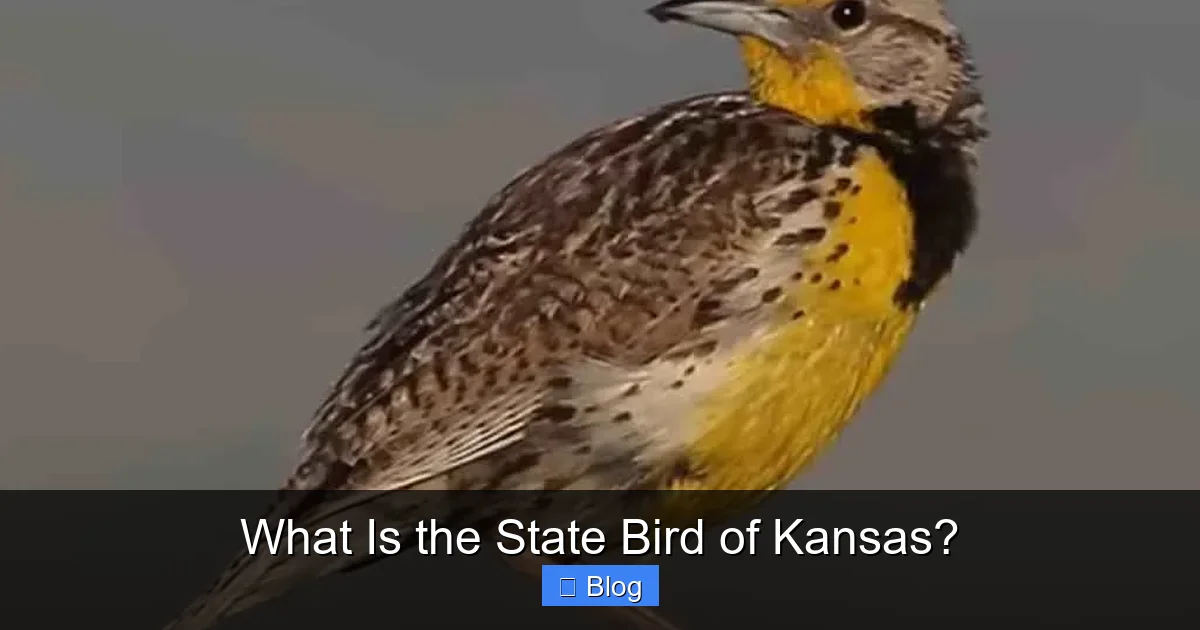
The Western Meadowlark is easily recognized by its bright yellow breast, marked with a distinctive black V-shaped band, and its streaked brown and black back.
Where can you typically find Western Meadowlarks in Kansas?
You can typically find Western Meadowlarks in open grasslands, prairies, pastures, and hayfields across Kansas, often perched on fence posts or utility wires.
What is unique about the Western Meadowlark’s song?
The Western Meadowlark is known for its beautiful, flutey, gurgling song, which is distinct from that of its look-alike, the Eastern Meadowlark, and is a quintessential sound of the Kansas prairies.
📑 Table of Contents
- The Big Reveal: Unpacking What Is the State Bird of Kansas?
- Meet the Western Meadowlark: A Portrait of Kansas’s Avian Emblem
- From Prairie Resident to State Symbol: The Journey of Kansas’s State Bird
- Where to Spot Kansas’s Beloved State Bird
- The Meadowlark’s Enduring Legacy: Ecology, Culture, and Conservation
- Beyond the Basics: Fun Facts and Common Misconceptions about Kansas’s State Bird
- Conclusion
The Big Reveal: Unpacking What Is the State Bird of Kansas?
So, let’s get right to the heart of the matter. If you’re asking, “What is the state bird of Kansas?” the answer is the magnificent Western Meadowlark (Sturnella neglecta). This isn’t just any bird; it’s a true emblem of the American Great Plains, and it was officially designated as Kansas’s state bird on April 20, 1937. Its selection wasn’t accidental; it was a testament to its ubiquitous presence and its melodious voice that so perfectly characterizes the Kansas landscape.
A Natural Choice for the Sunflower State
The Western Meadowlark was a natural and overwhelmingly popular choice for Kansas’s state bird. It’s a common sight across the state, inhabiting the very grasslands and prairies that define Kansas. Its distinctive appearance and unforgettable song made it a beloved bird among rural communities and city dwellers alike. When the time came to select a state bird, the meadowlark quickly emerged as the clear favorite, reflecting the desires of citizens, particularly schoolchildren who often played a pivotal role in these state symbol campaigns.
For many, the Western Meadowlark embodies the resilience and beauty of Kansas. It thrives in open spaces, just as the pioneering spirit once thrived on the plains. Its song is a daily reminder of the natural world, a cheerful counterpoint to the rustle of cornfields and the vastness of the sky. Understanding what is the state bird of Kansas means understanding a piece of the state’s soul.
Meet the Western Meadowlark: A Portrait of Kansas’s Avian Emblem
Now that we’ve definitively answered what is the state bird of Kansas, let’s get to know this charming creature a little better. The Western Meadowlark is a medium-sized songbird, truly a star of the open fields, and one you’ll quickly learn to recognize.
Visual guide about What Is the State Bird of Kansas?
Image source: trendingamerican.com
Appearance: A Splash of Yellow and a Black V
The Western Meadowlark is striking in its appearance. It measures about 8.5 to 10 inches long (21 to 26 cm) with a wingspan of about 16 inches (41 cm). Its most distinctive feature is its vibrant, bright yellow breast and belly, which is boldly accented by a prominent black V-shaped band across its chest. This “V” is a key identifier! Its back and wings are streaked with brown, black, and white, providing excellent camouflage against the grassy backgrounds of its habitat. It has a relatively long, pointed bill and short tail, often cocked slightly upward when it’s perched.
The yellow coloration is particularly vivid during breeding season, making these birds easy to spot from a distance, especially when they perch on a fence post or utility wire. Don’t confuse it with other yellow-breasted birds; that distinct black V is your ultimate clue to recognizing what is the state bird of Kansas.
Song and Calls: The Quintessential Sound of the Prairie
While its appearance is memorable, the Western Meadowlark’s song is truly legendary. Its melody is often described as a clear, fluty, gurgling whistle, usually a series of 7-10 clear notes that descend in pitch. It has a beautiful, almost ethereal quality, a sound that carries far across the open plains and is often the first sign of its presence. Unlike its close relative, the Eastern Meadowlark, the Western Meadowlark’s song is more complex and “flutey.”
Males sing from prominent perches to attract mates and defend their territory. Beyond their primary song, they also have a variety of calls, including a “chup” call and a rapid, rattling alarm call. Hearing the Western Meadowlark’s song is an experience that truly connects you to the spirit of Kansas, solidifying why it’s the answer to what is the state bird of Kansas.
Habitat: A True Grassland Specialist
The Western Meadowlark is a bird perfectly adapted to its environment. Its preferred habitats are open grasslands, prairies, pastures, hayfields, and agricultural areas with scattered shrubs. Basically, anywhere in Kansas with wide-open spaces and grasses, you’re likely to find them! Their streaked plumage allows them to blend seamlessly into the dry, brown grasses, making them surprisingly hard to spot when they’re on the ground. They are ground nesters, building well-hidden, dome-shaped nests within dense grass clumps, often with a tunnel-like entrance.
Diet: Nature’s Pest Controller
The diet of the Western Meadowlark consists mainly of insects during the warmer months. They are particularly fond of grasshoppers, crickets, beetles, caterpillars, and other agricultural pests, making them a natural friend to farmers. In the winter, their diet shifts to seeds and waste grains found in fields. Their foraging technique involves walking on the ground, probing the soil with their long bills, and occasionally catching insects in flight. This beneficial diet further solidifies their place as an important part of the Kansas ecosystem.
From Prairie Resident to State Symbol: The Journey of Kansas’s State Bird
The story of how the Western Meadowlark became what is the state bird of Kansas is a charming tale rooted in early 20th-century American civic pride. During this era, many states began to adopt official symbols—flags, flowers, and birds—to foster a sense of identity and state pride.
A Movement Led by the People (and Children!)
The movement to select a state bird for Kansas gained significant traction in the 1920s and 1930s. It was often spearheaded by civic organizations, women’s clubs, and particularly by the schoolchildren of the state. These children, learning about their state’s natural heritage, were encouraged to vote for their favorite bird, often after studying local bird populations and their habits. The idea was to choose a bird that was truly representative of Kansas’s natural beauty and widespread presence.
Among the contenders, the Western Meadowlark quickly rose to prominence. Its beautiful song was universally loved, and its adaptability to the Kansas landscape made it a clear frontrunner. Other birds might have been considered, but none captured the imagination and affection of Kansans quite like the meadowlark.
The Legislative Act of 1937
The popular sentiment for the Western Meadowlark eventually reached the state legislature. On April 20, 1937, House Bill No. 246 was passed, officially designating the Western Meadowlark as the state bird of Kansas. This formal act solidified its status, ensuring that future generations would always know what is the state bird of Kansas and recognize its significance.
The adoption of the Western Meadowlark as the state bird was more than just a legislative formality; it was a celebration of Kansas’s unique identity. It represented the vast open spaces, the rich agricultural lands, and the simple, enduring beauty of the prairie. The meadowlark, with its cheerful song and humble demeanor, perfectly embodied the spirit of the state and its people.
Where to Spot Kansas’s Beloved State Bird
Now that you know what is the state bird of Kansas and why it’s so special, you might be eager to see or hear one for yourself! Fortunately, spotting a Western Meadowlark in Kansas isn’t usually too difficult, especially if you know where and when to look.
Prime Locations for Meadowlark Sightings
The best places to find Western Meadowlarks are, unsurprisingly, their preferred habitats:
- Grasslands and Prairies: Areas like the Tallgrass Prairie National Preserve near Strong City are prime viewing spots. Here, the vast open spaces are exactly what meadowlarks love.
- State Parks and Wildlife Areas: Many of Kansas’s state parks and wildlife management areas, especially those with significant open field sections, will host meadowlarks. Look for designated birding trails or open observation points.
- Rural Roadsides and Agricultural Fields: Simply driving along country roads in Kansas often provides opportunities. Meadowlarks frequently perch on fence posts, utility wires, and telephone poles along rural routes, making them visible against the skyline.
- Pastures and Hayfields: If you have access to or are driving past working farms with pastures and hayfields, keep an eye out. These areas provide excellent foraging and nesting grounds.
Best Times for Viewing and Listening
The Western Meadowlark is most active and vocal during the breeding season, which typically runs from early spring through summer (March to August).
- Mornings: Just after sunrise is an excellent time to catch males singing their hearts out from their perches. The air is often still, allowing their songs to carry even further.
- Evenings: As the sun begins to set, meadowlarks will often sing again before roosting for the night.
- Throughout the Day (Spring/Summer): You can hear them intermittently throughout the day during these warmer months, especially on sunny, calm days.
While some populations are migratory, many Western Meadowlarks remain year-round residents in Kansas, so you might even spot them in winter, though they are less vocal.
Tips for Birdwatchers
Here are a few pointers to help you find what is the state bird of Kansas:
- Listen First: Often, you’ll hear the meadowlark’s distinctive song before you see the bird. Learn its tune, and it will guide you.
- Scan Prominent Perches: Meadowlarks love to sing from the highest point in their territory. Look at fence posts, utility poles, large rocks, or elevated clumps of grass.
- Use Binoculars: A good pair of binoculars will help you get a closer look at their vibrant yellow and black V.
- Be Patient and Respectful: If you spot one, approach slowly and quietly, or simply observe from a distance. Respect their habitat and avoid disturbing nesting areas.
- Dress Appropriately: For prairie birding, wear comfortable shoes, long pants to protect against ticks, and sun protection.
The Meadowlark’s Enduring Legacy: Ecology, Culture, and Conservation
Beyond being the answer to what is the state bird of Kansas, the Western Meadowlark holds significant ecological and cultural importance, and faces modern conservation challenges.
Ecological Role: A Keystone Species of the Prairie
The Western Meadowlark plays a vital role in the prairie ecosystem. As insectivores, they help control insect populations, particularly those that can become pests in agricultural settings. Their diet also includes seeds, contributing to seed dispersal and plant regeneration. Their presence is often an indicator of healthy grassland habitats, making them a “canary in the coal mine” for the health of these crucial ecosystems. They are a true keystone species of the prairie, interwoven into its complex web of life.
Cultural Symbolism: Freedom, Home, and the Great Plains
Culturally, the Western Meadowlark symbolizes much of what people cherish about Kansas and the Great Plains. Its association with open fields and endless skies evokes a sense of freedom and vastness. Its cheerful song brings a touch of beauty and wildness to rural life, becoming synonymous with the sound of home for many Kansans. It’s often featured in local art, photography, and literature, serving as a reminder of the state’s natural heritage and the simple, enduring beauty of the prairie.
Conservation Status and Challenges
While still widespread, Western Meadowlark populations have experienced declines in recent decades, primarily due to habitat loss and degradation. The conversion of native grasslands to agricultural land, increased use of pesticides, and changes in land management practices all pose threats. Habitat fragmentation, where large continuous grasslands are broken into smaller patches, also impacts their ability to thrive.
How You Can Help Kansas’s State Bird
Protecting what is the state bird of Kansas means protecting its habitat. Here’s how you can contribute:
- Support Grassland Conservation: Donate to or volunteer with organizations dedicated to preserving and restoring native prairies in Kansas.
- Promote Sustainable Agriculture: Support farmers and practices that minimize pesticide use and maintain grassland buffers.
- Create Bird-Friendly Habitats: If you own land, consider planting native grasses and wildflowers that provide food and shelter for meadowlarks and other grassland birds. Avoid mowing large areas during nesting season (late spring/early summer).
- Reduce Chemical Use: Minimizing pesticides and herbicides in your own yard helps protect the meadowlark’s food source.
- Educate Others: Share your knowledge about the Western Meadowlark and the importance of grassland conservation with friends and family.
By taking these steps, we can ensure that the enchanting song of the Western Meadowlark continues to grace the Kansas skies for generations to come.
Beyond the Basics: Fun Facts and Common Misconceptions about Kansas’s State Bird
Let’s round out our journey into what is the state bird of Kansas with a few intriguing tidbits and clear up some common misunderstandings about the Western Meadowlark.
Fun Fact 1: Not a True Lark
Despite its name, the Western Meadowlark is not actually a member of the true lark family (Alaudidae). Instead, it belongs to the blackbird family (Icteridae), which also includes orioles, grackles, and bobolinks. This means it’s more closely related to an American Robin than to a European Skylark!
Fun Fact 2: Eastern vs. Western – It’s All About the Song!
There are two species of meadowlark in North America: the Eastern Meadowlark and the Western Meadowlark. They look remarkably similar, with almost identical plumage. The easiest way to distinguish them in the field is by their song. The Western Meadowlark has that distinct, fluty, gurgling song we’ve described, while the Eastern Meadowlark’s song is a simpler, two or three-part whistle, often described as “spring-of-the-year!” Kansas is predominantly home to the Western Meadowlark, but there’s a small overlap zone where both can be found.
Fun Fact 3: Mimicry and Variation
While their primary song is consistent, meadowlarks can have a repertoire of different calls and even incorporate elements of other birds’ songs. Males often have multiple distinct songs they use in different contexts, and individual birds can vary their tunes.
Common Misconception: Pest or Ally?
Occasionally, meadowlarks are mistakenly seen as pests by some agriculturalists because they consume seeds. However, their primary diet during the growing season consists of insects, including many species that are harmful to crops. The benefits of their insect control often far outweigh any minor seed consumption, making them a valuable ally in the ecosystem.
Common Misconception: Only Found in Kansas
While the Western Meadowlark is the state bird of Kansas, it’s certainly not exclusive to the state! Its range extends across much of the western and central United States, as well as parts of Canada and Mexico. In fact, it’s also the state bird of Montana, North Dakota, Oregon, and Wyoming!
Conclusion
From its vibrant yellow plumage to its unforgettable, fluty song, the Western Meadowlark truly embodies the spirit and beauty of the Sunflower State. Learning what is the state bird of Kansas is more than just recalling a name; it’s an appreciation for a creature deeply intertwined with the landscape, history, and culture of this unique region. Designated in 1937, this iconic bird stands as a proud symbol of the Great Plains, reminding us of the vast open spaces, the resilience of nature, and the cheerful melodies that grace our everyday lives.
Whether you’re a lifelong Kansan or just passing through, take a moment to pause and listen. Let the song of the Western Meadowlark transport you to the heart of the prairie. By understanding and appreciating this remarkable bird, we not only celebrate what is the state bird of Kansas but also embrace our role in protecting the natural heritage that makes this state so special. Keep an eye and an ear open, and you might just catch a glimpse or hear a serenade from this magnificent avian ambassador.
Frequently Asked Questions
Is the Western Meadowlark truly a lark?
Despite its name, the Western Meadowlark is not a true lark (family Alaudidae). It belongs to the blackbird family (Icteridae), making it a distant relative of orioles and grackles.
Do Eastern and Western Meadowlarks look the same?
Eastern and Western Meadowlarks look very similar, both having a yellow chest with a black V. However, their songs are distinctly different, which is the primary way to tell them apart in the field.
Why was the Western Meadowlark chosen as the state bird?
The Western Meadowlark was chosen because of its widespread presence across Kansas, its beautiful song, and its symbolic representation of the vast prairies and agricultural landscape of the state. It was a popular choice among schoolchildren and citizens.
What do Western Meadowlarks eat?
Western Meadowlarks primarily feed on insects, especially grasshoppers, crickets, and beetles, during the warmer months. In winter, their diet shifts to seeds, making them beneficial for both pest control and seed dispersal.
Are Western Meadowlarks migratory in Kansas?
While some Western Meadowlarks in Kansas may migrate short distances or shift their ranges, many populations remain year-round residents, particularly in the southern parts of the state. They are generally resilient to winter conditions.
How can I attract Western Meadowlarks to my property?
To attract Western Meadowlarks, focus on creating or preserving open grassy areas, prairies, or fields with sparse tall vegetation and scattered perching spots like fence posts. Avoiding close-cropped lawns and providing a natural, undisturbed habitat are key.