
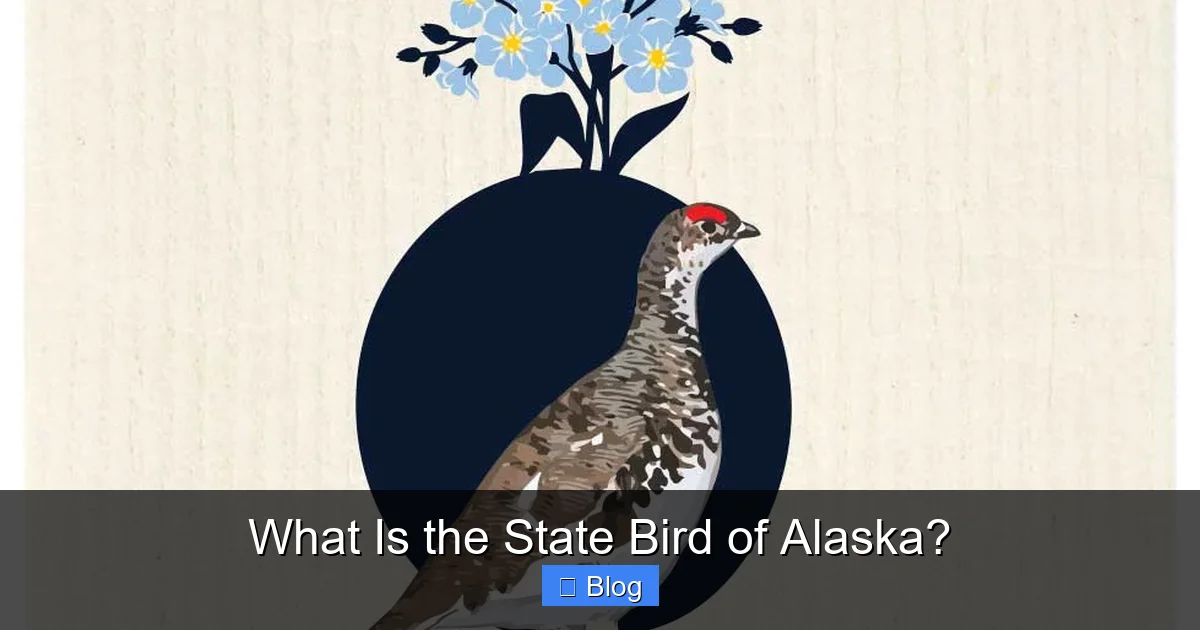
Alaska’s state bird is the resilient and remarkably adaptable Willow Ptarmigan, a feathered marvel perfectly suited for the harsh Arctic environment. Chosen for its widespread presence and incredible seasonal camouflage, this bird embodies the wild spirit and unique beauty of the Last Frontier. It’s a true symbol of survival and transformation in one of the world’s most extreme landscapes.
What Is the State Bird of Alaska?
Have you ever wondered what feathered friend represents the vast, wild beauty of Alaska? Every state in the U.S. proudly displays a state bird, a winged emblem that often tells a story about its unique environment, history, or spirit. For a place as immense and untamed as Alaska, the choice of a state bird isn’t just a formality; it’s a profound statement about resilience, adaptation, and the breathtaking natural world that defines the Last Frontier.
So, let’s cut to the chase and unveil the avian champion of the 49th state! The state bird of Alaska is none other than the magnificent **Willow Ptarmigan** (Lagopus lagopus). This isn’t just any bird; it’s a creature perfectly molded by the Arctic’s harsh demands, a master of disguise, and a symbol of life thriving against all odds in one of the planet’s most extreme environments. Its selection by the territorial legislature in 1955, following a vote by Alaskan schoolchildren, speaks volumes about its ubiquitous presence and significant role in the Alaskan ecosystem and culture.
Join us on an exciting journey as we delve deep into the world of the Willow Ptarmigan. We’ll explore its incredible adaptations, its life in the vast Alaskan wilderness, its cultural importance, and why this seemingly humble bird is truly the ideal ambassador for the Alaskan spirit.
Key Takeaways
- The Willow Ptarmigan is Alaska’s State Bird: This fascinating bird was officially designated as the state bird in 1955, following a choice made by Alaskan schoolchildren.
- Master of Disguise: The Willow Ptarmigan is renowned for its incredible seasonal plumage changes, transforming from speckled brown in summer to pure white in winter, providing perfect camouflage against its environment.
- Remarkable Adaptations to Cold: Beyond camouflage, these birds possess unique physiological features like feathered feet for warmth and grip, and a specialized diet that allows them to thrive in extreme Arctic temperatures.
- Widespread in Alaska: Willow Ptarmigans are found throughout most of Alaska’s diverse habitats, from coastal lowlands to mountain slopes, making them a truly representative species for the vast state.
- Ecologically and Culturally Significant: They play a vital role in the Arctic ecosystem as a food source for predators and have a rich cultural history among Alaska Natives for subsistence and folklore.
- Indicators of Environmental Health: Due to their reliance on specific habitats and food sources, Willow Ptarmigans can serve as important indicators of the health of Arctic and sub-Arctic ecosystems, facing challenges from climate change.
- Accessible for Observation: While masters of camouflage, they are relatively common, making them a rewarding species for birdwatchers to seek out in Alaska’s wilderness, especially with tips on where and when to look.
Quick Answers to Common Questions
What type of bird is the Willow Ptarmigan?
The Willow Ptarmigan is a medium-sized bird belonging to the grouse family, known for its ground-dwelling habits and distinctive seasonal plumage changes.
Why was the Willow Ptarmigan chosen as Alaska’s state bird?
It was chosen in 1955, after a vote by Alaskan schoolchildren, due to its widespread presence across the state and its remarkable adaptability to the harsh Alaskan environment.
How does the Willow Ptarmigan survive in cold temperatures?
It survives through dense plumage, feathered feet for insulation and grip, a specialized winter diet of woody plant parts, and the ability to burrow into snow for shelter.
What does the Willow Ptarmigan eat in winter?
In winter, its diet consists almost entirely of the buds, twigs, and catkins of willows, birches, and alders, which are accessible even under snow.
Where can I typically find Willow Ptarmigans in Alaska?
Willow Ptarmigans are found throughout Alaska’s tundra and shrub-dominated habitats, particularly near willow and alder thickets in subalpine and alpine regions.
📑 Table of Contents
- Unveiling Alaska’s Feathered Ambassador: The Willow Ptarmigan
- Master of Metamorphosis: The Willow Ptarmigan’s Incredible Adaptations
- A Day in the Life: Habitat, Diet, and Social Structure
- The Ptarmigan’s Place: Cultural Resonance and Ecological Role
- Stewards of the Tundra: Conservation Challenges and Efforts
- Experiencing the Wild: Tips for Spotting Alaska’s State Bird
- Conclusion
Unveiling Alaska’s Feathered Ambassador: The Willow Ptarmigan
When you consider what kind of bird could possibly embody the spirit of Alaska, images of majestic eagles or powerful ravens might first spring to mind. Yet, the Willow Ptarmigan, a member of the grouse family, carries a unique charm and an even more compelling story of survival that makes it perfectly suited for the role. Its official designation in 1955 wasn’t arbitrary; it was a recognition of a bird that is truly woven into the fabric of the Alaskan landscape.
The Willow Ptarmigan is not just present in Alaska; it *thrives* there, making its home across a vast range of the state’s diverse terrains. From the coastal lowlands to the alpine tundra, this bird is a familiar sight to many Alaskans and a testament to its incredible adaptability. Its very existence is a living lesson in how to flourish in a place defined by dramatic seasonal changes and challenging conditions. It might not be the largest or most colorful bird, but its unique characteristics make it undeniably special and a true symbol of Alaska.
Master of Metamorphosis: The Willow Ptarmigan’s Incredible Adaptations
Visual guide about What Is the State Bird of Alaska?
Image source: coloringlib.com
One of the most striking features of the Willow Ptarmigan, and perhaps its most famous, is its unparalleled ability to change its plumage. This isn’t just a subtle shift; it’s a complete wardrobe overhaul that allows it to blend seamlessly with its environment throughout the year.
The Art of Seasonal Camouflage
Imagine a bird that can literally disappear before your eyes, not by flying away, but by simply standing still. That’s the Willow Ptarmigan in action!
* **Summer Splendor:** In the warmer months, from late spring through early fall, the Willow Ptarmigan sports a mottled, rusty-brown plumage. This intricate pattern of browns, grays, and blacks provides exceptional camouflage among the tundra’s mosses, lichens, rocks, and low-lying shrubs. A hen incubating eggs on the open tundra, for example, is almost impossible to spot unless you know exactly where to look.
* **Winter White:** As autumn gives way to winter and the Alaskan landscape transforms into a blanket of snow, the ptarmigan undergoes a remarkable change. Its feathers gradually turn to a pristine, pure white. The only exceptions are its black tail feathers, which are usually hidden when the bird is resting, and its eyes. This snowy white coat makes it virtually invisible against the snowy backdrop, protecting it from predators like foxes, wolves, and raptors. This transition takes several weeks and is triggered by changes in day length, not temperature, ensuring they’re ready for the first heavy snows.
This incredible feat of nature isn’t just for show; it’s a vital survival mechanism in a land where cover can be scarce and predators are always on the hunt. This chameleon-like ability makes the Willow Ptarmigan a true symbol of adaptation and resilience.
Built for the Cold: Physical Features
Beyond its incredible camouflage, the Willow Ptarmigan boasts a suite of physical adaptations that make it exceptionally well-suited for surviving the frigid Alaskan winters.
* **Feathered Feet:** Unlike most birds, the Willow Ptarmigan has heavily feathered feet, right down to its toes. These feathery “snowshoes” serve multiple purposes. Firstly, they provide excellent insulation, protecting the feet from frostbite in sub-zero temperatures. Secondly, they increase the surface area of the feet, acting like natural snowshoes that prevent the bird from sinking into deep snow, allowing it to move easily across snowy landscapes. This also gives them a better grip on icy surfaces.
* **Dense Plumage:** The ptarmigan’s body is covered in a dense layer of feathers, including a thick underdown, which provides superior insulation. They can fluff up their feathers to trap more air, creating an insulating layer that helps maintain their body temperature even when ambient temperatures plummet far below freezing.
* **Nostril Feathers:** Even their nostrils are covered with small feathers, preventing ice and snow from entering their respiratory system and warming the inhaled air.
* **Burrowing Behavior:** When winter storms rage or temperatures become dangerously low, Willow Ptarmigans will often burrow into the snow. This snow roosting provides a remarkably effective insulated shelter, where temperatures can be significantly warmer and more stable than the exposed air above. This behavior is crucial for energy conservation during the long, cold nights.
These adaptations collectively paint a picture of a creature perfectly engineered by evolution to conquer one of the world’s most challenging environments, making the Willow Ptarmigan an enduring symbol of Arctic survival.
A Day in the Life: Habitat, Diet, and Social Structure
To truly appreciate what is the state bird of Alaska, we must understand how it lives its daily life amidst the grandeur of the Last Frontier. The Willow Ptarmigan is more than just a pretty (and camouflaged) face; it’s an active participant in its ecosystem.
Tundra Dwellers: Preferred Habitats
As its name suggests, the Willow Ptarmigan has a strong affinity for willow thickets and other shrubby vegetation. These areas are vital for several reasons:
* **Food Source:** Willows provide a crucial year-round food supply, especially in winter when other vegetation is scarce.
* **Cover and Protection:** The dense branches offer concealment from predators and shelter from harsh winds and snow.
* **Nesting Sites:** Hens often select nesting sites hidden amongst the low-lying shrubs of the tundra.
You’ll find them in a variety of open, shrub-dominated habitats across Alaska, including subalpine and alpine tundra, boreal forests, and riparian zones along rivers and streams. They are widely distributed across the state, from the North Slope to the Alaska Peninsula, truly making them a bird of all Alaska.
Foraging in the Frost: What They Eat
The Willow Ptarmigan’s diet is primarily herbivorous and undergoes a significant shift between seasons.
* **Summer Feast:** In summer, when the tundra bursts with life, their diet is more varied, consisting of berries (like crowberries and blueberries), leaves, flowers, and buds from various tundra plants. They might also supplement their diet with insects.
* **Winter Survival:** As winter arrives, their diet becomes highly specialized and revolves almost exclusively around the buds, twigs, and catkins of willows, birches, and alders. These woody plant parts are low in nutritional value, requiring the birds to consume large quantities to meet their energy needs. Their strong gizzards are specially adapted to grind down this tough fibrous material. This reliance on woody browse is another key to their winter survival, as these plants remain accessible even under snow.
The Social Scene: Flocks and Families
Ptarmigans are generally social birds, especially outside of the breeding season.
* **Winter Flocks:** In winter, they often gather in large flocks, sometimes numbering in the hundreds, particularly around abundant food sources. This flocking behavior provides safety in numbers, as more eyes are available to spot predators.
* **Breeding Season:** During the breeding season in late spring and summer, pairs form. Males are highly territorial, defending their chosen breeding grounds with impressive aerial displays and distinct calls. The male typically stays with the female during incubation and helps care for the chicks after they hatch.
* **Vocalizations:** Willow Ptarmigans have a distinctive array of calls. The male’s breeding call is a loud, guttural “go-back, go-back, go-back” sound that carries across the open tundra. They also have clucking alarm calls and soft contact calls within their flocks. Listening for their unique sounds can often be the first step in locating these camouflaged birds.
Understanding their daily habits helps us appreciate the intricate dance of life in the Alaskan wilderness and how the Willow Ptarmigan plays its part.
The Ptarmigan’s Place: Cultural Resonance and Ecological Role
Beyond its biological marvels, the Willow Ptarmigan holds a significant place in the cultural fabric of Alaska and plays a crucial role in its delicate ecosystem.
A Symbol of Resilience: Cultural Significance
For centuries, the Willow Ptarmigan has been an important species for Alaska Native peoples. Its abundance and accessibility, even in harsh winter conditions, made it a vital subsistence food source. Hunting ptarmigan for meat and feathers has been a traditional practice across many indigenous cultures in Alaska.
Its adaptability and survival skills have also made it a figure in folklore and oral traditions, embodying the spirit of persistence and harmony with nature. For contemporary Alaskans, the Willow Ptarmigan represents the ruggedness and beauty of their state, a living symbol of the wildness that still defines much of Alaska. When children learn what is the state bird of Alaska, they connect with a piece of their natural heritage.
The Ptarmigan’s Role in the Ecosystem
As a primary herbivore of the Arctic and sub-Arctic tundra, the Willow Ptarmigan plays a key role in its ecosystem.
* **Food Source:** They are a significant food source for many predators, including Arctic foxes, red foxes, gyrfalcons, golden eagles, various owls, and even wolverines. Their abundance supports these predator populations, linking the ptarmigan directly into the Arctic food web.
* **Seed Dispersal:** While not a primary disperser, by consuming berries and other plant matter, they may contribute to the dispersal of seeds across the landscape, aiding in plant regeneration.
* **Environmental Indicator:** Due to their relatively narrow habitat requirements and reliance on specific plant communities, ptarmigans can also serve as an indicator species. Changes in their populations or distribution can signal broader environmental shifts or habitat degradation within the Arctic and sub-Arctic regions.
Stewards of the Tundra: Conservation Challenges and Efforts
Even a bird as well-adapted as the Willow Ptarmigan faces challenges in a rapidly changing world. Understanding these threats is crucial for ensuring that future generations can continue to ask, “What is the state bird of Alaska?” and see it thriving.
Facing a Changing Climate
The most significant long-term threat to the Willow Ptarmigan, and indeed much of the Arctic wildlife, is climate change.
* **Habitat Alteration:** Rising temperatures can lead to changes in vegetation, with shrub lines potentially moving further north and higher in elevation, altering preferred ptarmigan habitat.
* **Snowpack Changes:** The timing and duration of snow cover are critical for the ptarmigan’s camouflage. Mismatches between snowmelt/snowfall and their plumage change schedule could leave them vulnerable to predators if they are white on bare ground or brown on snow.
* **Predator Dynamics:** Climate change can also affect predator populations and their hunting success, potentially increasing predation pressure on ptarmigans.
Protecting Alaska’s State Bird
Conservation efforts for the Willow Ptarmigan involve a multi-faceted approach:
* **Research and Monitoring:** Scientists continuously monitor ptarmigan populations, distribution, and breeding success. This data helps us understand population trends and identify areas of concern.
* **Habitat Preservation:** Protecting large, intact tracts of tundra and shrub habitats is essential. This includes responsible land management practices that minimize disturbance from human activities.
* **Climate Change Mitigation:** Addressing the root causes of climate change on a global scale is the ultimate solution for protecting Arctic ecosystems and species like the Willow Ptarmigan. Local efforts also include managing impacts on their habitats.
* **Education and Awareness:** Informing the public about the importance of the Willow Ptarmigan and the challenges it faces helps foster a greater appreciation for this unique bird and encourages support for conservation initiatives.
By understanding and addressing these challenges, we can help ensure that the Willow Ptarmigan continues to grace the Alaskan landscape for generations to come, standing as a proud emblem of the state.
Experiencing the Wild: Tips for Spotting Alaska’s State Bird
If you’re visiting Alaska and want to catch a glimpse of its iconic state bird, it’s an incredibly rewarding experience. While they are masters of camouflage, knowing where and when to look can significantly increase your chances.
Where and When to Look
* **Habitat is Key:** Focus your search on areas with extensive willow and alder thickets, especially at the edges of open tundra. These are their prime feeding and hiding spots.
* **Seasonal Advantage:**
* **Summer:** Look for them among the low-lying vegetation on the tundra. They will be in their brown plumage, and the males will be very vocal in the breeding season. Early mornings or late evenings are often the best times for activity.
* **Winter:** This is perhaps the most challenging time due to their pure white camouflage. However, they often gather in flocks and can be found foraging where willow branches protrude above the snow. Look for tracks in the snow leading to snow burrows. Sometimes, a flock can be surprisingly visible against a bare, dark rock face.
* **Specific Locations:** Areas like Denali National Park (outside the immediate developed areas), the Chugach Mountains, and accessible tundra environments along the Parks Highway or in interior Alaska offer good opportunities. Any area with suitable shrub tundra habitat can hold ptarmigans.
* **Listen for Calls:** Especially during the breeding season, the male’s distinctive “go-back, go-back” call can help you pinpoint their location. In winter, flocks might produce soft clucking sounds.
Ethical Birdwatching Practices
When observing any wildlife, especially a sensitive species like the Willow Ptarmigan, it’s vital to practice ethical birdwatching:
* **Maintain Distance:** Use binoculars or a spotting scope to observe them from a respectful distance. Avoid approaching too closely, which can stress the birds or disrupt their natural behavior.
* **Stay on Trails:** Stick to designated trails or durable surfaces to minimize disturbance to fragile tundra vegetation.
* **Leave No Trace:** Pack out everything you pack in. Do not leave any food scraps or trash behind.
* **Respect Nesting Areas:** If you happen upon a nesting bird, give it a wide berth. Disturbing a nesting hen can lead to nest abandonment.
* **Be Patient:** Spotting camouflaged birds requires patience and keen observation. Take your time, move slowly, and scan the landscape thoroughly.
By following these tips, you can have an unforgettable experience encountering what is the state bird of Alaska in its natural habitat, fostering a deeper connection with the Alaskan wilderness.
Conclusion
The Willow Ptarmigan is far more than just a name on a list of state symbols. It is a living, breathing embodiment of Alaska itself. From its incredible seasonal camouflage to its specialized adaptations for extreme cold, every aspect of this bird speaks to the unique challenges and spectacular beauty of the Last Frontier. It represents resilience, the profound interconnectedness of life in the Arctic, and the enduring spirit of survival.
Its journey from an ordinary bird to Alaska’s official feathered ambassador, chosen by the very children who represent Alaska’s future, underscores its widespread presence and cultural importance. As we learn about the Willow Ptarmigan, we gain insight not just into a single species, but into the delicate balance of the Arctic ecosystem and the urgent need for its conservation in a changing world. So, the next time you think of Alaska, let the image of the transformative and tenacious Willow Ptarmigan flutter into your mind, a true testament to nature’s enduring marvels.
Frequently Asked Questions
What is the scientific name for the Willow Ptarmigan?
The scientific name for the Willow Ptarmigan is Lagopus lagopus. The genus name “Lagopus” means “hare foot,” referring to its distinctive feathered feet.
Do both male and female Willow Ptarmigans change color?
Yes, both male and female Willow Ptarmigans undergo the dramatic seasonal plumage changes from mottled brown in summer to pure white in winter. Males, however, may retain some brown markings on their back slightly longer than females during the transition.
Are Willow Ptarmigans good flyers?
While primarily ground-dwelling, Willow Ptarmigans are capable flyers, especially for short bursts. They often fly low over the ground and can be quite fast when evading predators, using their powerful wingbeats to escape quickly.
How long do Willow Ptarmigans typically live?
In the wild, Willow Ptarmigans typically live for about 1 to 3 years. However, some individuals can survive longer, especially if they successfully navigate the challenges of predation and harsh weather conditions.
What sound does a Willow Ptarmigan make?
During the breeding season, males produce a distinctive, guttural “go-back, go-back, go-back” call. They also have clucking alarm calls and softer conversational clucks when communicating within their flocks.
Are there other species of ptarmigan in Alaska?
Yes, besides the Willow Ptarmigan, Alaska is also home to two other species: the Rock Ptarmigan (Lagopus muta) and the White-tailed Ptarmigan (Lagopus leucura). Each species has subtle differences in habitat preference, size, and plumage characteristics.