
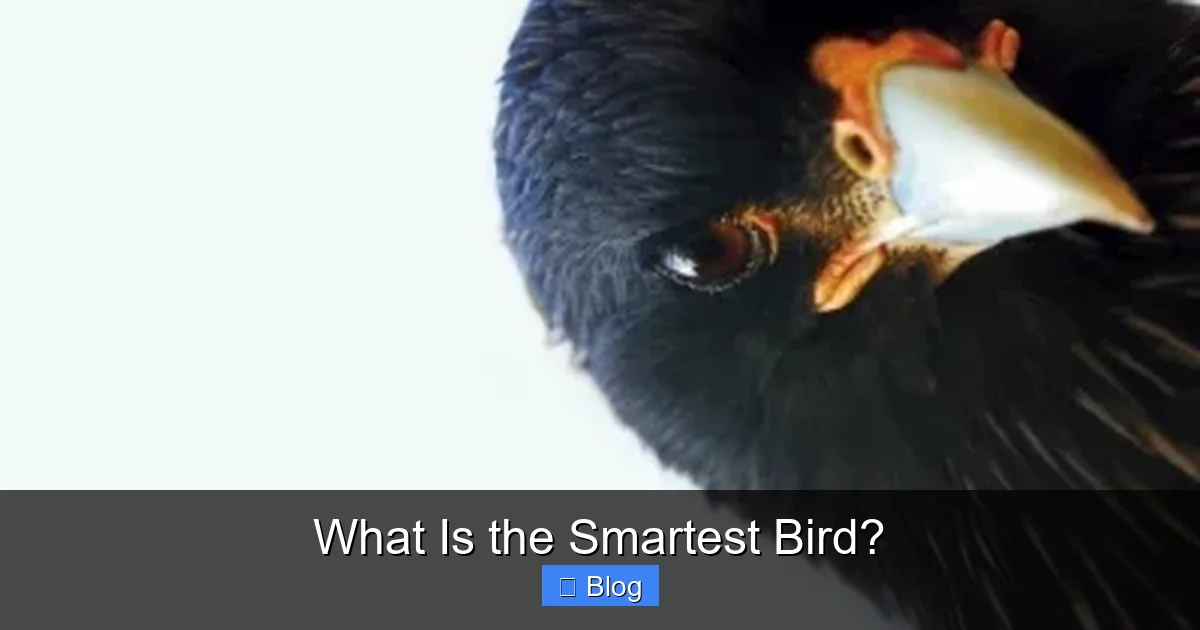
Determining what is the smartest bird isn’t straightforward, as intelligence manifests in diverse ways across species. While corvids (crows, ravens) and parrots (African Greys, macaws) frequently top the list for their remarkable problem-solving, tool use, and communication skills, “smartness” ultimately depends on the specific cognitive task and a bird’s unique adaptations to its environment. Appreciating avian intelligence means recognizing this incredible diversity.
What Is the Smartest Bird?
Have you ever watched a crow crack open a nut using a passing car, or seen a parrot seemingly engaging in a meaningful conversation? It’s enough to make you pause and wonder: just how smart are these feathered friends, and out of all the incredible species, what is the smartest bird? It’s a question that sparks curiosity and opens up a fascinating world of avian intellect, challenging our traditional views of intelligence.
When we talk about “smart,” we often think of human-centric traits like language, problem-solving, or abstract thought. But for a bird, intelligence might look a little different. It could be the ability to remember thousands of seed caches, to craft tools from twigs, to navigate vast distances with pinpoint accuracy, or even to understand the subtle social cues of their flock. The world of bird brains is far more complex and diverse than many of us realize, showcasing a stunning array of cognitive abilities perfectly adapted to their unique lives.
So, let’s embark on a journey to explore the incredible minds of our avian companions. We’ll delve into the scientific discoveries, anecdotal evidence, and sheer wonder that surrounds bird intelligence, trying to uncover not just who might hold the title of “what is the smartest bird,” but also what truly makes a bird intelligent in the first place. Get ready to have your perceptions of bird brains completely redefined!
Key Takeaways
- Intelligence is Diverse: There isn’t a single “smartest bird” as avian intelligence manifests in many forms, from problem-solving to social learning and communication.
- Corvids Lead the Pack: Crows, ravens, and jays (Corvidae family) are consistently recognized for their exceptional problem-solving, tool use, planning, and memory skills, often showing cognitive abilities comparable to primates.
- Parrots Excel in Communication: African Grey Parrots, macaws, and cockatoos demonstrate impressive linguistic abilities, mimicry, social learning, and emotional intelligence, making them strong contenders.
- Beyond the Obvious: Many other birds exhibit specialized intelligence, such as strategic hunting in owls, complex navigation in hummingbirds, or remarkable memory in nutcrackers.
- Factors Influence “Smartness”: Brain size relative to body size, social complexity, environmental challenges, and the need for adaptability all contribute to a species’ cognitive development.
- Human Observation is Key: Our understanding of bird intelligence comes from careful scientific study, including controlled experiments and field observations, helping us appreciate their sophisticated minds.
Quick Answers to Common Questions
Which family of birds is generally considered the most intelligent?
The corvid family, which includes crows, ravens, jays, and magpies, is widely regarded as one of the most intelligent bird families due to their exceptional problem-solving, tool-use, and planning abilities.
Are parrots truly understanding what they say?
While many parrots mimic sounds, research with species like the African Grey Parrot suggests they can learn to associate words with their meanings, understand concepts like color and shape, and use human language in context, indicating more than mere imitation.
Do birds use tools?
Yes, several bird species use tools, most notably New Caledonian Crows, who are famous for crafting hooks from twigs and bending wires to retrieve food. Other birds also use objects as tools for various purposes.
Can birds recognize human faces?
Yes, some birds, particularly crows, have been proven to recognize individual human faces and remember them, associating specific faces with positive or negative experiences over long periods.
How do scientists measure bird intelligence?
Scientists measure bird intelligence through controlled experiments (e.g., puzzle boxes, tool-use tasks, memory tests) and extensive field observations to assess problem-solving, social learning, communication, and adaptability.
📑 Table of Contents
- Defining “Smart”: The Nuances of Avian Intelligence
- The Crown Jewel: Corvids – Masters of the Avian Mind
- The Articulate Aviators: Parrots and Their Linguistic Prowess
- Beyond the Usual Suspects: Other Clever Contenders
- The Blueprint of Brilliance: What Makes a Bird Smart?
- Observing Avian Minds: How Scientists Study Bird Intelligence
- Conclusion: The Ever-Evolving Definition of Avian Genius
Defining “Smart”: The Nuances of Avian Intelligence
Before we can crown the smartest bird, we need to understand what intelligence means in the avian world. It’s not just about brain size, but rather how that brain is wired and what it can *do*. Bird brains, while generally smaller than mammal brains, are incredibly dense with neurons, particularly in areas associated with higher cognitive function. This allows for sophisticated processing despite their compact size.
Beyond Simple Instincts
For a long time, birds were considered creatures of pure instinct, their actions dictated by programmed responses. However, modern research has shattered this myth. We now know that many bird species exhibit complex behaviors that go far beyond instinct. They can learn from experience, adapt to new situations, and even plan for the future. This adaptability and capacity for learning are key indicators of intelligence, showing a flexible mind rather than just a rigid set of behaviors. When considering what is the smartest bird, we’re looking for signs of genuine cognitive flexibility.
Key Measures of Bird Brainpower
Scientists use several benchmarks to assess intelligence in birds. These include:
- Problem-Solving: Can a bird figure out how to get food from a complex puzzle box or open a container it’s never seen before?
- Tool Use: Does the bird modify objects in its environment to achieve a goal, like using a stick to extract insects?
- Memory: How well can a bird remember locations, individuals, or complex sequences of events?
- Social Learning: Can birds learn from observing others, adopting new behaviors without trial and error?
- Communication: Does the bird use complex vocalizations or gestures to convey information, and can it understand human speech or symbols?
- Self-Control: Can a bird resist an immediate reward for a larger, delayed one? This indicates planning and impulse control.
These various measures help us paint a comprehensive picture of avian cognitive abilities, moving beyond a simple “IQ score” to understand the diverse ways birds are smart.
The Crown Jewel: Corvids – Masters of the Avian Mind
Visual guide about What Is the Smartest Bird?
Image source: thedailyacorn.com
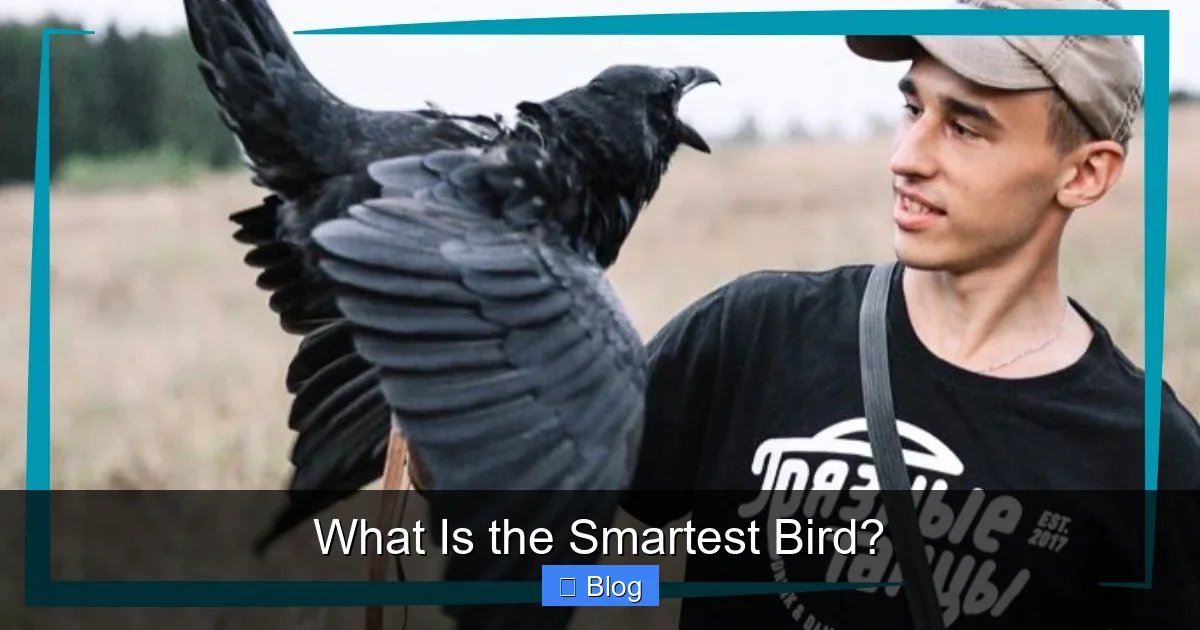
When people ask “what is the smartest bird?”, the answer often points directly to the corvid family. This group includes crows, ravens, jays, and magpies, and they are consistently hailed as the Einsteins of the avian world. Their cognitive abilities are so remarkable that they often draw comparisons to primates.
Crows: Problem Solvers Extraordinaire
Crows are perhaps the most famous corvid for their intelligence. They exhibit incredible problem-solving skills. For example, New Caledonian Crows are renowned for their tool-making abilities. They will bend wire into hooks to retrieve food from crevices or strip leaves from twigs to create custom tools. They can even learn to use multiple tools in sequence to achieve a goal. Research has also shown crows can recognize individual human faces and remember them for years, associating certain faces with positive or negative experiences. This means if you’re nice to a crow, it might just remember you! Their ability to solve complex multi-step puzzles, like unlocking several locks in a specific order, truly highlights their advanced cognitive capacity. It’s clear why many consider crows a strong candidate for what is the smartest bird.
Ravens: Planning and Pondering
Ravens are equally, if not more, impressive. They demonstrate remarkable planning abilities, sometimes caching food in anticipation of future hunger, even when they aren’t currently hungry. They can also use “bartering” tactics, exchanging less desired food for more preferred items. Studies have shown ravens understand the concept of cause and effect, and can even deceive other birds to protect their food caches. They’re highly social and engage in complex communication, using a wide range of calls and body language. Their long lifespans and complex social structures likely contribute to their advanced intelligence, allowing for more extensive learning and cultural transmission of knowledge within their groups.
Jays: Memory and Mimicry
Scrub-jays and Clark’s Nutcrackers are known for their incredible spatial memory. They can hide thousands of seeds across vast areas and remember the locations of these caches months later, even accounting for which seeds might spoil faster. This ability is crucial for their survival, especially during harsh winters. Jays also exhibit impressive mimicry, not just of other birds but even of human sounds, incorporating them into their complex vocalizations. These memory feats are not just about rote learning; they involve strategic thinking about future needs and environmental changes, making them powerful contenders when considering what is the smartest bird.
The Articulate Aviators: Parrots and Their Linguistic Prowess
Beyond the corvids, parrots stand out for their astonishing ability to mimic human speech and for their remarkable social intelligence. They are known for vibrant personalities and engaging behaviors, often leading people to wonder if they are indeed what is the smartest bird.
African Grey Parrots: Masters of Mimicry and Meaning
The African Grey Parrot is arguably the most famous example of avian linguistic ability. Birds like Alex, an African Grey Parrot studied by Dr. Irene Pepperberg, demonstrated not just mimicry, but an understanding of concepts like color, shape, number, and even “none.” Alex could identify objects, count them, and answer questions about their attributes, using human words. This went beyond simple imitation; it suggested a genuine cognitive understanding of the words’ meanings. Their ability to comprehend and use language in context is a strong indicator of advanced intelligence and complex abstract thinking. The sophisticated learning capabilities of African Greys place them high on any list of intelligent birds.
Cockatoos and Macaws: Ingenuity and Empathy
Other parrots, such as cockatoos and macaws, display different facets of intelligence. Cockatoos, particularly Goffin’s cockatoos, are incredible problem-solvers known for their dexterity and ability to invent new tools to reach food. They can even pick locks! Their creativity in manipulating objects and devising novel solutions showcases exceptional cognitive flexibility. Macaws are highly social and can form strong bonds with humans, displaying clear signs of empathy and emotional intelligence. They respond to human emotions and can even seem to “comfort” their caregivers. This combination of problem-solving, social complexity, and emotional depth makes parrots truly fascinating subjects in the quest for what is the smartest bird. Their capacity for social learning within their complex flocks also contributes significantly to their brainpower.
Beyond the Usual Suspects: Other Clever Contenders
While corvids and parrots often dominate the “smartest bird” discussions, it’s important to remember that intelligence takes many forms, and numerous other species exhibit specialized cognitive brilliance perfectly suited to their survival.
Owls: Strategic Hunters
Owls, with their keen senses and silent flight, are master hunters. Their intelligence lies in their highly developed predatory strategies, including intricate ambush techniques, understanding of prey behavior, and exceptional spatial awareness in low light conditions. While not known for tool use or language in the human sense, their cognitive abilities are finely tuned for their specific ecological niche, making them incredibly effective and “smart” within their domain. They demonstrate impressive learned behaviors and adaptability in different hunting environments.
Hummingbirds: Navigational Geniuses
Hummingbirds may be tiny, but their brains are astonishingly powerful for their size. They possess incredible spatial memory, remembering the exact locations of thousands of flowers, which ones they’ve visited, and how recently, to efficiently forage for nectar. They also remember the exact routes they take during migration over vast distances, an astounding feat of navigation and memory. This specialized intelligence, crucial for their survival, showcases a different kind of “smart.”
Pigeons: Unsung Cognitive Heroes
Pigeons, often dismissed as common city birds, are surprisingly intelligent. They have excellent spatial memory, navigation skills, and can recognize patterns and even abstract concepts. Research has shown pigeons can distinguish between different human faces and even identify specific individuals in photographs. They are also capable of self-recognition in mirror tests, a rare trait found in only a few animal species. Their ability to learn complex sequences and adapt to diverse urban environments points to a remarkable cognitive capacity that often goes unappreciated. When considering what is the smartest bird, it’s important not to overlook these unassuming creatures.
The Blueprint of Brilliance: What Makes a Bird Smart?
So, what factors contribute to a bird’s intelligence? It’s a complex interplay of biology, environment, and social dynamics. Understanding these elements helps us appreciate why certain species develop more advanced cognitive abilities.
Brain Size and Structure
While larger brains often correlate with greater intelligence in mammals, birds demonstrate that it’s not just absolute size but relative size and structure that matter. Birds have a highly dense neural architecture, particularly in the pallium (the part of the brain responsible for complex cognition). This means more processing power packed into a smaller volume. The specific organization of neurons in a bird’s forebrain allows for complex thought processes, even if their brains are not as large as a primate’s.
Social Learning and Culture
Many of the most intelligent birds, like corvids and parrots, are highly social. Living in complex groups fosters social learning, where individuals can acquire new skills and information by observing and interacting with others. This allows for the cultural transmission of knowledge across generations, leading to more sophisticated behaviors over time. A bird learning from its flock mates how to open a new type of seed pod, or how to avoid a specific predator, demonstrates this social intelligence. The richer the social environment, the more opportunities for cognitive development.
Environmental Pressures and Adaptability
The challenges a bird faces in its natural habitat also drive the evolution of intelligence. Birds living in unpredictable environments, or those with varied diets requiring complex foraging strategies, tend to develop more flexible and adaptive minds. For example, a bird that needs to find different food sources throughout the year, or hide food for later, will develop better memory and problem-solving skills than one with a constant, easily accessible food supply. The need to adapt to human-modified landscapes, like urban areas, also pushes some birds to develop novel problem-solving strategies.
Observing Avian Minds: How Scientists Study Bird Intelligence
Our understanding of what is the smartest bird, and avian intelligence in general, comes from rigorous scientific investigation. Researchers employ a variety of methods to uncover the cognitive prowess of our feathered friends.
Controlled Experiments
In controlled lab settings, scientists design specific tasks and puzzles to test different aspects of bird intelligence. These experiments can include:
- Tool-Use Tasks: Presenting birds with objects and challenges that require them to modify or use tools.
- Cognitive Tests: Using touchscreens or puzzle boxes to assess memory, pattern recognition, and problem-solving skills.
- Delay of Gratification Tests: Offering a small, immediate reward versus a larger, delayed one to measure self-control.
- Communication Studies: Analyzing vocalizations and body language, and sometimes attempting to teach birds symbolic communication.
These controlled environments allow researchers to isolate variables and draw clear conclusions about a bird’s cognitive abilities, giving us insights into specific aspects of what is the smartest bird.
Field Observations
Equally important are observations of birds in their natural habitats. Ethologists spend countless hours watching birds, documenting their natural behaviors, social interactions, and responses to environmental challenges. Field studies provide critical context, showing how cognitive abilities are applied in real-world scenarios, such as:
- Foraging Strategies: Observing how birds find, process, and store food.
- Social Dynamics: Documenting flock structures, communication, and cooperative behaviors.
- Problem-Solving in the Wild: Noting how birds adapt to new obstacles or find novel solutions to survival challenges.
Combining laboratory experiments with field observations offers a holistic view of avian intelligence, ensuring our definitions of “smart” are ecologically relevant.
Ethical Considerations
Studying bird intelligence also comes with important ethical considerations. Researchers prioritize the welfare of the birds, ensuring that experiments are non-invasive and cause no harm or undue stress. The goal is to understand and appreciate these creatures, not to exploit them. Respecting their natural behaviors and habitats is paramount in advancing our knowledge of what is the smartest bird.
Conclusion: The Ever-Evolving Definition of Avian Genius
So, what is the smartest bird? As we’ve seen, there’s no single, simple answer. The title of “smartest bird” isn’t a crown worn by one species, but rather a spectrum of incredible cognitive abilities spread across the avian kingdom. Corvids, with their unparalleled problem-solving and tool-making skills, certainly make a strong case. Parrots, with their astonishing linguistic capabilities and emotional depth, are equally compelling contenders.
Ultimately, the “smartest bird” is a subjective label. It depends on what criteria you value most: is it problem-solving, communication, memory, social intelligence, or specialized survival skills? Each species we’ve discussed, and countless others, demonstrates unique forms of brilliance perfectly adapted to their lives. The true takeaway isn’t about ranking them, but about marveling at the sheer diversity and complexity of bird intelligence.
Our journey through the minds of birds reveals that they are far from simple creatures of instinct. They are thinkers, planners, communicators, and innovators, with rich inner lives that continue to surprise and inspire us. So, the next time you see a bird, take a moment to appreciate the intricate intelligence behind those bright eyes – it’s a testament to the boundless creativity of evolution.
Frequently Asked Questions
Can birds recognize faces?
Yes, certain bird species, most famously crows, have demonstrated the ability to recognize individual human faces. They can remember these faces for years and even communicate this information to other crows, showing complex social learning and memory.
Do all parrots talk?
No, not all parrots “talk” or mimic human speech. While many species have the physical ability to mimic sounds, only some, like African Grey Parrots, are known for their advanced vocal learning and capacity to associate words with meaning. Even among those, individual abilities vary greatly.
Are hummingbirds smart?
Hummingbirds are incredibly smart in their own specialized way. They possess phenomenal spatial memory, remembering the exact locations of thousands of flowers, which ones they’ve visited, and how recently, which is crucial for their survival and efficient foraging.
How big is a bird’s brain?
A bird’s brain is typically very small in absolute size compared to mammals, often only a few grams. However, bird brains are remarkably dense with neurons, especially in areas responsible for higher cognition, allowing for complex thought processes despite their compact size.
Do birds have emotions?
While birds don’t express emotions in the same way humans do, research suggests they experience a range of complex feelings, including joy, fear, grief, and empathy. Their social behaviors, communication, and responses to situations indicate a rich emotional life.
Why is it hard to define “smartest bird”?
It’s challenging to define “smartest bird” because intelligence is multifaceted and diverse. Different species excel in various cognitive domains—some in problem-solving, others in communication, memory, or spatial navigation—making a single ranking difficult and often anthropocentric.