
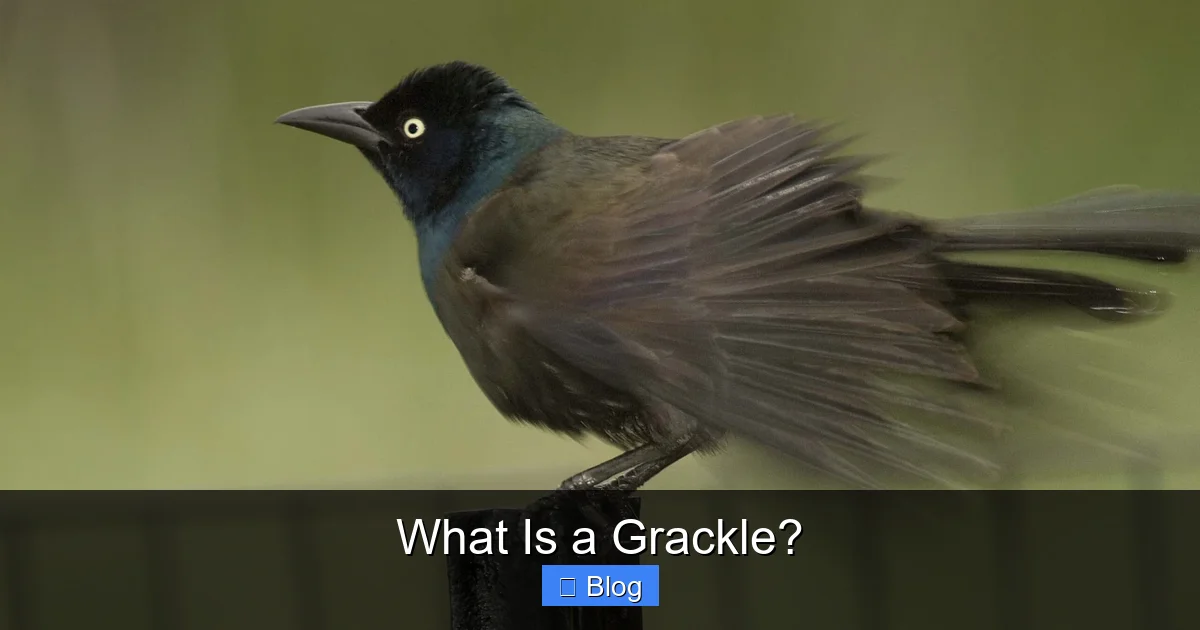
Grackles are fascinating, medium-sized blackbirds known for their glossy, iridescent plumage and distinctive calls. Often misunderstood, these highly intelligent and social birds play a significant role in various ecosystems across North America. They exhibit complex behaviors, from sophisticated foraging to clever adaptations for survival, making them much more than just a “common black bird.”
Have you ever seen a bird that looks strikingly black but, when the light hits it just right, reveals a dazzling spectrum of blues, greens, and purples? You’re likely looking at a grackle! These common North American birds are often seen in parks, backyards, and agricultural fields, yet they frequently go unnoticed or are simply dismissed as “another black bird.” But to truly appreciate them, we need to dig a little deeper than their glossy exterior.
Grackles are much more than their common appearance suggests. They are intelligent, adaptable, and highly social creatures with a fascinating array of behaviors. From their unique vocalizations to their clever foraging techniques, understanding what a grackle is can open your eyes to the rich biodiversity right outside your window. So, let’s embark on a journey to uncover the true nature of these often-misunderstood avian residents.
This article will guide you through the exciting world of grackles, exploring their characteristics, behaviors, habitats, and how they interact with their environment and with us. Get ready to challenge your preconceptions and discover the surprising charm of the grackle!
Key Takeaways
- Iridescent Beauty: Grackles are easily recognized by their striking, glossy black plumage that shimmers with blues, greens, and purples in the sunlight, often appearing black in shade.
- Intelligent and Adaptable: These birds are highly intelligent, demonstrating problem-solving skills, tool use, and complex social behaviors like flocking, especially during migration and roosting.
- Varied Diet: Grackles are omnivores with a broad diet, consuming insects, seeds, grains, fruits, and even small vertebrates, making them adaptable to diverse environments.
- Social Creatures: They are very social, often forming large flocks outside the breeding season, which can be noisy but also provides safety in numbers.
- Widespread Across North America: Common Grackles, Boat-tailed Grackles, and Great-tailed Grackles are the most prevalent species, each with distinct ranges but often found in urban, suburban, and agricultural areas.
- Unique Vocalizations: Grackles possess a repertoire of calls, including a distinctive “creaky gate” song, chirps, and harsh alarm calls, adding to their unique presence.
- Often Misunderstood: While sometimes considered pests due to their large numbers in urban settings, grackles contribute to insect control and are an integral part of their natural habitats.
Quick Answers to Common Questions
What do grackles eat?
Grackles are omnivores, meaning they have a very diverse diet. They primarily eat insects (like grasshoppers, beetles, and grubs), seeds, grains (especially corn), berries, and sometimes even small vertebrates like frogs or fish. In urban areas, they also opportunistically feed on human scraps.
Are grackles intelligent birds?
Yes, grackles are considered highly intelligent birds. They exhibit complex behaviors such as tool use (e.g., using bread as bait for fish), problem-solving abilities, and complex social interactions within their large flocks. Their adaptability to various environments also points to their cognitive flexibility.
Where do grackles typically live?
Grackles are widely distributed across North America. Common Grackles are found throughout eastern and central regions, while Great-tailed Grackles dominate the southwestern U.S. and expand northward. Boat-tailed Grackles prefer coastal and marshy habitats along the southeastern U.S. All species are adaptable, often found in urban, suburban, and agricultural areas.
What is the difference between a Common Grackle and a Great-tailed Grackle?
The main differences are size, tail length, and eye color. Great-tailed Grackles are significantly larger with a much longer tail (especially males) compared to Common Grackles. Common Grackles have bright yellow eyes, whereas Great-tailed Grackles also have yellow eyes but their overall larger size and more dramatic tail usually distinguish them.
Do grackles migrate?
Yes, many grackle populations, particularly those in the northern parts of their range, are migratory. They fly south for the winter to escape harsh conditions and find more abundant food sources. Grackles often form massive flocks during these migratory journeys.
📑 Table of Contents
What Exactly Is a Grackle? The Basics
When someone mentions a “grackle,” they are usually referring to one of three main species found across North America: the Common Grackle, the Boat-tailed Grackle, or the Great-tailed Grackle. All three belong to the Icteridae family, which also includes blackbirds, orioles, and meadowlarks. Despite their similar appearances, each grackle species has its own unique traits and geographical range.
Common Grackle: The Widespread Wonder
The Common Grackle (Quiscalus quiscula) is arguably the most recognized grackle. It’s a medium-sized bird, typically around 11-13 inches long, with a long tail and a somewhat flat head. Their most striking feature is their iridescent plumage. In the shade, they appear pure black, but in direct sunlight, their feathers shimmer with glorious metallic hues of blue, green, and purple, especially on the head and neck. They also have bright yellow eyes, which stand out sharply against their dark feathers.
Common Grackles are incredibly widespread, found throughout most of eastern and central North America, from southern Canada down to the Gulf Coast. They are highly adaptable, thriving in a variety of habitats, including urban parks, suburban lawns, agricultural fields, and open woodlands.
Boat-tailed Grackle: Coastal Charmer
The Boat-tailed Grackle (Quiscalus major) is a larger bird than the Common Grackle, measuring about 14-17 inches. As its name suggests, males have an exceptionally long, V-shaped tail that they can fan out, resembling the hull of a boat. Their plumage is also iridescent, often appearing a deep purplish-black. Females are typically smaller and a duller brown, lacking the males’ dramatic sheen. They also have dark eyes, unlike the yellow eyes of the Common Grackle.
These grackles prefer coastal habitats and marshes, primarily found along the southeastern Atlantic and Gulf Coasts of the United States. You’ll often spot them foraging in brackish waters or perched on cattails.
Great-tailed Grackle: Western Icon
The Great-tailed Grackle (Quiscalus mexicanus) is the largest of the three, with males reaching up to 18 inches in length, including their impressively long tails. Like the Boat-tailed Grackle, the male’s tail is a prominent feature, often held in a distinct keel shape. Their plumage is a rich, glossy black with purple and blue iridescence. Females are noticeably smaller and browner, much like the Boat-tailed Grackle, but can still be quite large compared to other songbirds. They also boast those striking yellow eyes.
Originating from Central America, the Great-tailed Grackle has expanded its range significantly northward in recent decades and is now a common sight across the southwestern U.S., including Texas, Arizona, and California, extending into the Great Plains. They are highly successful in urban and suburban environments, often seen in parking lots, fast-food drive-thrus, and agricultural areas.
Beyond the Gloss: Grackle Behavior and Habits
Grackles are far from just pretty faces; their behaviors are truly captivating. These birds are known for their intelligence, social dynamics, and interesting foraging strategies.
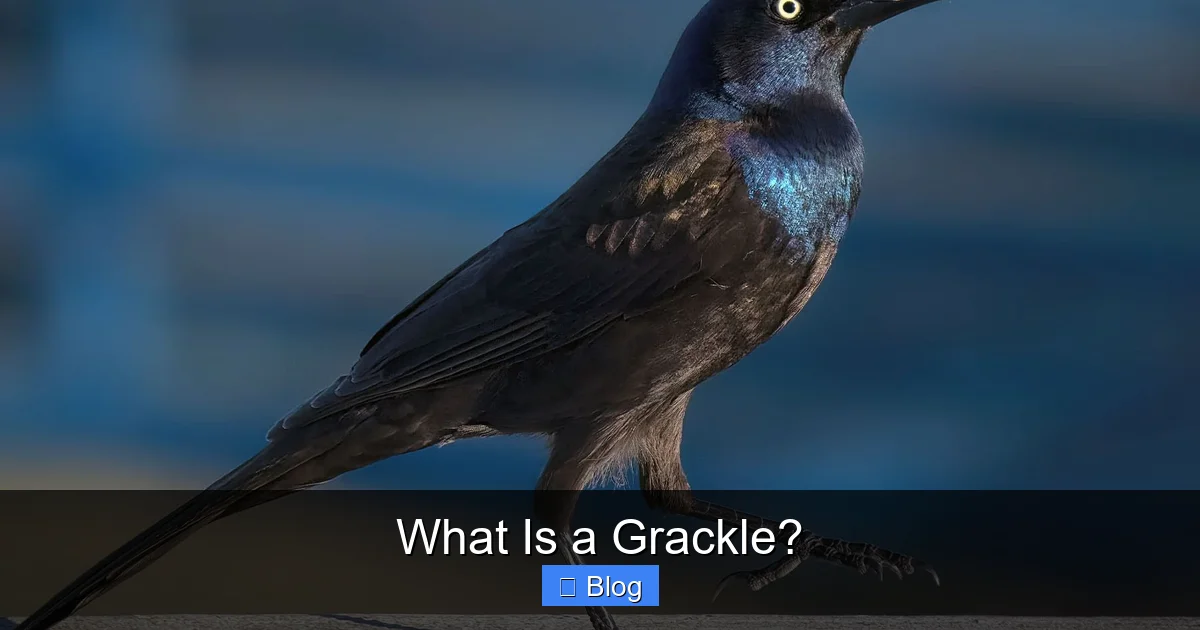
Visual guide about What Is a Grackle?
Image source: images.birdfact.com
Social Butterflies (or Birds!)
Grackles are incredibly social, especially outside the breeding season. You’ll often see them in large, noisy flocks, sometimes numbering in the thousands. These large gatherings serve several purposes: safety in numbers against predators, more efficient foraging, and sharing information about food sources. During migration, these flocks can be truly immense, creating spectacular aerial displays.
Within these flocks, there’s often a complex hierarchy and communication system. Grackles use a variety of calls to warn each other of danger, signal food, or communicate during mating rituals.
What’s on the Menu? A Grackle’s Diverse Diet
Grackles are omnivores, meaning they eat both plants and animals, which contributes greatly to their adaptability. Their diet includes a wide range of items:
- Insects: Grasshoppers, beetles, caterpillars, grubs – they’re great at pest control!
- Seeds and Grains: Especially corn, sunflower seeds, and other agricultural crops.
- Fruits: Berries and other small fruits.
- Small Vertebrates: Occasionally, they’ll catch small fish, frogs, mice, or even raid other bird nests for eggs and nestlings.
- Human Scraps: In urban areas, they are opportunistic feeders and will readily take advantage of discarded food.
Their strong, pointed beaks are well-suited for cracking seeds, probing soil for insects, and tearing at larger food items. They even have a unique foraging method called “gaping,” where they insert their closed bill into soft soil or crevices and then open it to create a larger hole, exposing hidden food.
The Sounds of a Grackle
Grackle vocalizations are distinct and often quite memorable. The Common Grackle’s song is a series of harsh, creaky notes, sometimes described as sounding like a rusty gate opening. They also produce various chirps, whistles, and harsh alarm calls. Great-tailed Grackles have an even more diverse and theatrical repertoire, including whistles, clacks, and gurgling sounds, often performed with elaborate body postures.
Where Do Grackles Live? Habitat and Range
The different grackle species have adapted to various environments, allowing them to thrive across vast stretches of North America. Understanding their preferred habitats helps us know where to look for them.
Urban and Suburban Conquerors
Common Grackles and Great-tailed Grackles, in particular, have become incredibly successful in human-modified landscapes. They are frequent visitors to:
- Parks and Backyards: Where food and water sources are abundant.
- Agricultural Areas: Fields of corn, wheat, and other grains provide ample sustenance.
- Shopping Centers and Fast-Food Restaurants: Offering easy access to discarded food.
- Cemeteries and Golf Courses: Open spaces with scattered trees for roosting.
Their adaptability to human environments is a testament to their intelligence and opportunistic nature. They learn quickly where food is available and are not shy about taking advantage of it.
Wetland Warriors
Boat-tailed Grackles, on the other hand, show a strong preference for coastal and wetland environments. You’ll find them in:
- Coastal Marshes: Both salt and freshwater.
- Mangrove Swamps: In warmer southern regions.
- Wetlands and Ponds: Where they can forage for aquatic insects and small fish.
Their long legs and strong claws are well-suited for navigating reeds and wading in shallow water, distinguishing them from their more terrestrial cousins.
Migration Patterns
While many grackles, especially in the southern parts of their range, are year-round residents, those in northern regions undertake impressive migrations. Common Grackles, for instance, will fly south for the winter, often forming massive migratory flocks that can stretch for miles. These migrations are an essential part of their life cycle, allowing them to exploit seasonal food sources and escape harsh winter conditions.
Grackles and Humans: Interaction and Coexistence
Our relationship with grackles is often a mixed bag. They are intelligent, charismatic birds, yet their tendency to gather in large numbers can sometimes lead to conflicts with humans.
The “Pest” Perception
Because grackles can congregate in huge flocks, especially in urban areas or agricultural fields, they are sometimes perceived as pests. Large roosts can be noisy and messy, and their consumption of agricultural crops can lead to economic losses for farmers. This is particularly true for Great-tailed Grackles, whose numbers have exploded in many urban centers.
However, it’s important to remember that these behaviors are natural for a grackle. They are simply taking advantage of abundant resources, a survival strategy that has served them well for millennia.
Benefits of Having Grackles Around
It’s not all conflict, though. Grackles provide several ecological benefits:
- Insect Control: A significant portion of their diet consists of insects, including many that are considered agricultural pests. By eating large quantities of grasshoppers, caterpillars, and grubs, grackles help keep insect populations in check.
- Seed Dispersal: While they eat some seeds, they also help disperse others, contributing to plant propagation.
- Scavengers: In urban settings, they act as natural clean-up crews, consuming discarded food that might otherwise attract other pests.
Coexisting with Grackles: Tips for Your Backyard
If you’re finding grackles a bit too boisterous in your backyard, here are a few friendly tips:
- Adjust Bird Feeders: Use feeders designed for smaller birds, or switch to safflower seeds, which grackles (and squirrels) generally dislike, while many songbirds still enjoy them.
- Clean Up Spills: Don’t leave spilled birdseed or pet food out overnight.
- Trim Roosting Trees: If a particular tree is a favored, messy roosting spot, strategic trimming can make it less attractive without harming the tree.
- Embrace Diversity: Remember that a grackle is just one part of a healthy ecosystem. Try to appreciate their unique behaviors and the role they play.
Amazing Grackle Adaptations and Facts
Grackles have a few more tricks up their sleeves that highlight their intelligence and evolutionary success.
Anting: A Bizarre Spa Treatment
One of the most curious grackle behaviors is “anting.” This involves the bird deliberately picking up ants (usually formic acid-producing ants) and rubbing them on their feathers, particularly under their wings. While the exact purpose isn’t fully understood, theories suggest it helps remove parasites, soothes irritated skin during molting, or simply feels good! It’s a fascinating example of self-medication in the avian world.
Tool Use and Problem-Solving
Grackles have been observed using tools, a rare trait among birds. For instance, a grackle might use a piece of bread to bait fish, or drop hard-shelled nuts onto roads to be cracked by passing cars. They are also adept at solving puzzles to get food, demonstrating a high level of cognitive ability.
Their Longevity
While life in the wild is tough, a grackle can live surprisingly long. The oldest recorded Common Grackle lived for over 23 years, a testament to their resilience and adaptability.
Courtship Displays
During breeding season, male grackles engage in elaborate courtship displays. They puff up their feathers, spread their tails, and emit their distinctive “songs” to attract females. These displays can be quite dramatic, showcasing their iridescent plumage and vocal talents.
Conclusion: Appreciating the Grackle
From their striking iridescent plumage to their complex social structures and impressive intelligence, grackles are truly remarkable birds. They are adaptable survivors, thriving in a variety of environments, from wild wetlands to bustling city centers. While their large numbers can sometimes make them seem overwhelming, taking a moment to observe a grackle reveals a creature of great character and ecological importance.
The next time you spot a glossy black bird strutting across your lawn or perched high in a tree, don’t just dismiss it. Take a closer look, listen to its unique call, and appreciate the intricate life of the grackle. These birds are a testament to nature’s ingenuity and a reminder that even the most common creatures hold extraordinary secrets, waiting to be discovered.
Frequently Asked Questions
Are grackles considered pests?
Grackles can sometimes be perceived as pests, especially when they gather in large, noisy flocks in urban areas or consume agricultural crops. However, they also provide benefits, such as significant insect control, eating many common garden and farm pests, making their role somewhat complex.
What makes a grackle’s feathers look iridescent?
The iridescence of a grackle’s feathers isn’t due to pigments but rather to the microscopic structure of their feathers. These structures scatter and reflect light in specific ways, creating the shimmering blues, greens, and purples that change with the angle of light, similar to how an oil slick or a CD surface works.
Can grackles be found in all parts of North America?
While grackles are widespread across North America, their distribution varies by species. The Common Grackle covers much of the eastern and central parts, the Great-tailed Grackle is prominent in the southwest and increasingly central, and the Boat-tailed Grackle is restricted to coastal areas of the southeastern U.S. So, while you’ll likely find a grackle somewhere, not all species are everywhere.
Do grackles use tools?
Yes, grackles have been observed demonstrating tool use, which is a sign of high intelligence. Examples include using bread to lure fish or dropping hard-shelled nuts onto roads for cars to crack open, showcasing their problem-solving abilities and adaptability.
What is “anting” in grackles?
Anting is a peculiar behavior where a grackle deliberately picks up ants and rubs them on its feathers, particularly under its wings. Scientists believe this might help control parasites, soothe irritated skin during molting, or perhaps it just feels good, as the ants’ formic acid may have a stimulating effect.
How long do grackles typically live?
In the wild, grackles typically live for a few years, but some individuals can live much longer. The oldest recorded Common Grackle, for instance, lived for over 23 years, highlighting their resilience and ability to thrive in various environments when conditions are favorable.