

The idiom “birds of a feather” describes how people with similar interests, personalities, or backgrounds tend to gravitate towards each other and form groups. It speaks to our natural inclination for homophily, seeking comfort and understanding among those who share our perspectives. This phenomenon explains why friendships and communities often form around shared traits, creating a sense of belonging and mutual support, though it can also lead to limited viewpoints.
What Does “Birds of a Feather” Mean?
Have you ever noticed how some groups of friends seem to share everything? From their hobbies and humor to their opinions and even their fashion sense, they just *click*. It’s almost as if they were made from the same mold. Well, there’s a classic saying that perfectly captures this phenomenon: “birds of a feather flock together.” It’s one of those timeless idioms that pops up in conversations, books, and even movies, and for good reason – it describes a fundamental aspect of human nature.
But what exactly does “birds of a feather” mean beyond its literal interpretation of winged creatures? At its core, this widely recognized idiom describes the natural tendency for people who are alike in interests, character, or background to gravitate towards each other. It means that individuals with similar traits, values, or life experiences often seek out and prefer the company of others who mirror those qualities. Think about it: isn’t it easier to connect with someone who “gets” your obscure hobby, shares your passion for a specific genre of music, or understands the nuances of your professional field? That’s the essence of “birds of a feather.”
Today, we’re going to dive deep into this fascinating phrase. We’ll explore its ancient origins, unravel the psychology behind why we’re so drawn to people like ourselves, and examine both the wonderful benefits and potential pitfalls of always sticking with “birds of a feather.” So, whether you’re wondering why you click so well with your best friend or pondering the dynamics of your social circles, prepare to discover the profound truth behind why birds of a feather truly flock together.
Key Takeaways
- Core Meaning: “Birds of a feather” signifies that like-minded individuals naturally seek each other out and associate, forming groups based on shared characteristics.
- Psychological Basis: The concept is rooted in homophily – the tendency to bond with similar people – driven by comfort, validation, and a desire for shared understanding and predictability.
- Benefits of Flocking: Connecting with similar people fosters strong social bonds, provides mutual support, validates experiences, reduces conflict, and can lead to collaborative growth.
- Potential Drawbacks: Exclusively sticking to “birds of a feather” can create echo chambers, limit exposure to diverse viewpoints, hinder personal growth, and potentially lead to groupthink and insularity.
- Balance is Key: While comfort and belonging are found in similarity, true growth, innovation, and a well-rounded perspective often require actively engaging with people from diverse backgrounds.
- Ancient Wisdom: The phrase has ancient roots, appearing in various forms across different cultures and throughout history, highlighting its universal human relevance and timeless observation of social dynamics.
Quick Answers to Common Questions
What is the simplest meaning of “birds of a feather”?
It simply means that people who are alike in interests, personality, or background tend to gather together.
Is “birds of a feather” a positive or negative idiom?
It’s generally considered neutral, simply stating an observation. Its implications can be positive (finding support) or negative (forming echo chambers), depending on the context.
Does “birds of a feather” only apply to friends?
No, it applies to various social connections, including professional colleagues, community groups, romantic partners, and even online communities where people with shared interests congregate.
What is homophily in relation to “birds of a feather”?
Homophily is the psychological and sociological principle that explains *why* “birds of a feather” flock together. It’s the tendency for individuals to associate and bond with others who are similar to themselves.
Can “birds of a feather” hinder personal growth?
Yes, if you exclusively stick to “birds of a feather,” it can limit your exposure to new ideas and challenge, potentially hindering personal growth and creativity by reinforcing existing beliefs.
📑 Table of Contents
The Ancient Roots and Evolution of “Birds of a Feather”
Idioms often have rich histories, carrying wisdom from generations past. “Birds of a feather” is no exception, boasting a lineage that spans centuries and continents. Understanding its origins helps us appreciate its enduring relevance in describing human social dynamics.
Where Did It Come From?
While the exact first utterance is hard to pinpoint, the sentiment behind “birds of a feather flock together” can be traced back to ancient times. One of the earliest known forms appears in Plato’s *Republic*, around 380 BC, where he wrote: “Men of the same craft, as the old proverb says, flock together.” While not precisely about birds, the core idea – that similar people associate – is clearly present.
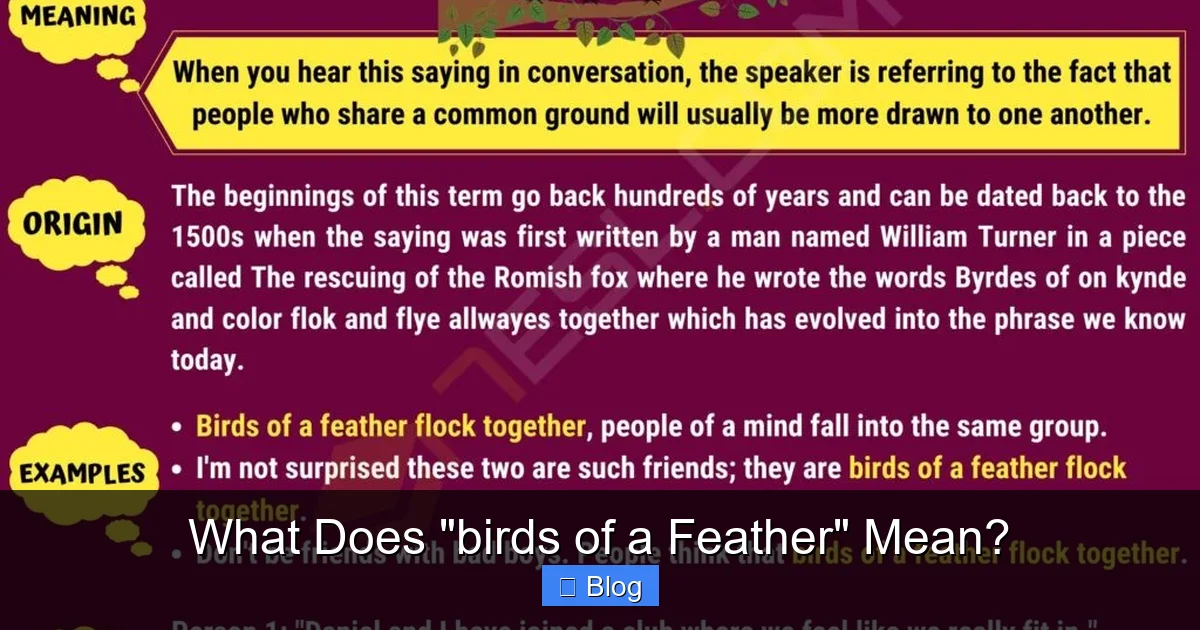
The avian metaphor itself gained popularity later. In English, one of the earliest recorded uses that specifically mentions “birds” is from the 16th century. For instance, William Turner’s *The Rescuing of Romish Fox* (1545) includes the line: “Byrdes of on kynde and color, flok together.” This shows that by the Renaissance, the imagery of birds with matching plumage gathering in groups was already a common way to illustrate human association. The phrase solidified over time into the concise and memorable form we use today, making it clear what “birds of a feather” means.
Variations Across Time and Cultures
It’s fascinating to note that this observation isn’t unique to English culture. Many other languages and societies have their own versions of this proverb, proving that the tendency for similar people to group together is a universal human truth.
For example, in Latin, the saying “Simile simili gaudet” translates to “Like rejoices in like.” Spanish has “Dios los cría y ellos se juntan,” which means “God creates them and they get together.” In Dutch, “Soort zoekt soort” translates to “Kind seeks kind.” These varied expressions all point to the same underlying principle: there’s an inherent pull for individuals to connect with those who share common ground. It speaks to a fundamental human characteristic that transcends language and geography, highlighting why “birds of a feather” resonates so widely.
The Psychology Behind Why “Birds of a Feather” Flock Together
Visual guide about What Does “birds of a Feather” Mean?
Image source: 7esl.com
So, why are we, as humans, so inclined to seek out “birds of a feather”? It’s not just a coincidence; there’s a deep psychological basis for this behavior. Understanding these underpinnings can offer valuable insights into our social lives and the formation of our communities.
Homophily: The Love of the Same
At the heart of “birds of a feather” is a sociological concept called *homophily*. Derived from Greek words meaning “love of the same,” homophily describes the tendency of individuals to associate and bond with others who are similar to themselves. This similarity can manifest in various ways: age, gender, race, education, occupation, values, interests, and even personality traits.
Research consistently shows that homophily is a powerful force in social networks. We are more likely to form friendships, romantic relationships, and professional connections with people who share our backgrounds or perspectives. It’s an unconscious bias that guides our social choices, making us gravitate towards what feels familiar and understandable. When you understand homophily, you really start to grasp what “birds of a feather” means in a social context.
Comfort, Validation, and Predictability
One of the primary reasons we seek out similar individuals is the immense comfort and sense of validation they provide. When we’re surrounded by “birds of a feather,” we feel understood. Our jokes land, our opinions are often affirmed, and our experiences are relatable. This creates a psychological safety net.
* Comfort: Being with like-minded people reduces social friction. You don’t have to explain yourself as much, and there’s a shared shorthand that makes communication easier. This reduces anxiety and promotes relaxation.
* Validation: When others share your views, it validates your own beliefs and choices. It makes you feel like you’re “normal” or “right,” which boosts self-esteem and reinforces your identity.
* Predictability: People who are similar tend to behave in predictable ways. This predictability makes social interactions less stressful, as we can better anticipate responses and avoid potential conflicts. We feel secure knowing what to expect, fostering trust and deeper connections.
Social Identity and Belonging
Humans are social creatures with a fundamental need to belong. Our social identity – the part of our self-concept derived from our membership in social groups – is profoundly shaped by the “birds of a feather” we associate with.
Being part of a group of similar individuals provides a strong sense of belonging. It reinforces who we are and gives us a community where we feel accepted and valued. Whether it’s a sports club, a book group, an online forum for a specific hobby, or a professional association, these groups allow us to express aspects of our identity that might not be understood elsewhere. They provide a space where our shared passions and values are celebrated, further solidifying the meaning of “birds of a feather” in our lives.
The Bright Side: Benefits of Finding Your Flock
While some might warn against too much homogeneity, there are undeniable and significant benefits to finding your “birds of a feather.” These connections can enrich our lives in numerous ways, offering support, understanding, and opportunities for growth.
Strong Support Systems
One of the most powerful advantages of flocking with similar individuals is the creation of robust support systems. When facing challenges, celebrating successes, or simply navigating daily life, having people who genuinely understand your specific context is invaluable.
Imagine you’re an entrepreneur struggling with the unique pressures of starting a business. Connecting with other entrepreneurs (your “birds of a feather”) means you’ll find people who truly empathize with late nights, financial anxieties, and the thrill of a breakthrough. They can offer advice born from direct experience, provide emotional support, and share resources that others outside that world might not know about. This kind of targeted support is incredibly fortifying.
Shared Understanding and Empathy
When you’re among “birds of a feather,” there’s an immediate baseline of shared understanding. This leads to deeper empathy because others have likely walked a similar path, faced similar dilemmas, or hold similar core values. This mutual understanding can be incredibly comforting and validating.
For example, people who share a specific cultural background often have a profound understanding of each other’s experiences, traditions, and even inside jokes that outsiders might miss. This creates a bond that goes beyond superficial interaction, fostering a sense of belonging and reducing feelings of isolation. This is truly what “birds of a feather” means in action – a profound connection based on shared reality.
Facilitating Personal and Professional Growth
While it might seem counterintuitive, being with similar people can also be a catalyst for growth. When you’re surrounded by “birds of a feather” who are all striving for similar goals, it can create a powerful environment for collective advancement.
* Peer Learning: In professional settings, “birds of a feather” (colleagues in the same field) can share best practices, discuss industry trends, and mentor each other, leading to collective skill enhancement.
* Motivation and Accountability: Seeing peers achieve their goals can be highly motivating. A shared drive can push everyone in the group to perform better. For instance, a group of runners, all “birds of a feather” in their dedication to fitness, can motivate each other to train harder and set new personal bests.
* Innovation within a Niche: While extreme similarity can lead to groupthink, within a focused area, “birds of a feather” can rapidly iterate on ideas and deepen expertise, leading to specialized innovation.
The Shadow Side: When “Birds of a Feather” Can Clip Your Wings
While there are many benefits to finding your flock, an overreliance on “birds of a feather” can also present significant drawbacks. Exclusively associating with those who are just like us can inadvertently create echo chambers, limit our perspectives, and even hinder personal growth.
Echo Chambers and Groupthink
One of the most talked-about downsides of “birds of a feather” dynamics, especially in the digital age, is the creation of echo chambers. These are environments where a person encounters only beliefs or opinions that coincide with their own, reinforcing their existing perspectives and making them less likely to consider alternative viewpoints.
* Echo Chambers: Online social media algorithms often feed us content from “birds of a feather,” people we already agree with, making us believe our views are more universally held than they are. This can lead to a distorted sense of reality.
* Groupthink: In a real-world group of “birds of a feather,” there’s a risk of groupthink, where the desire for harmony or conformity in the group results in an irrational or dysfunctional decision-making outcome. Individuals suppress dissenting viewpoints to maintain group cohesion, even if they privately have doubts. This happens when everyone is too similar and no one challenges the prevailing ideas.
Limiting Perspectives and Innovation
If you only ever talk to people who think exactly like you, your perspective can become incredibly narrow. You miss out on the rich tapestry of human experience and the diverse ways of looking at the world. This limitation can stifle personal growth and innovative thinking.
New ideas often emerge at the intersection of different fields and viewpoints. If everyone in your “flock” has the same background, skills, and knowledge, you might struggle to come up with truly novel solutions or creative approaches. The lack of varied input means you’re constantly re-treading familiar ground, which can impede both personal and collective innovation. Understanding what “birds of a feather” means also involves recognizing its limitations in broadening horizons.
Exclusion and Divisiveness
While “birds of a feather” can foster strong internal bonds, it can also inadvertently lead to exclusion and divisiveness between groups. When groups become too insular, they might view “outsiders” with suspicion, misunderstanding, or even hostility.
This can manifest in various ways, from subtle social snobbery to more severe forms of prejudice and discrimination. The “us vs. them” mentality can develop, hindering intergroup cooperation and understanding. In larger societal contexts, this can exacerbate social divisions, making it harder to find common ground across different communities. This aspect highlights the ethical considerations of always sticking with “birds of a feather.”
Navigating the Skies: Balancing Similarity with Diversity
So, knowing both the comforts and the cautions, how should we navigate the world of “birds of a feather”? The key lies in finding a healthy balance – appreciating the warmth of your flock while also daring to explore beyond its familiar confines.
Embrace Your Flock, But Don’t Get Trapped
It’s perfectly natural and healthy to seek out “birds of a feather.” These are the people who lift you up, validate your experiences, and offer a safe space. Cherish these relationships; they are vital for your emotional well-being and sense of belonging. Don’t feel guilty for finding comfort in shared interests and values.
However, be mindful of when comfort turns into complacency. Recognize if your “flock” is becoming an echo chamber, where dissenting opinions are frowned upon or where growth is stagnating. The goal is to be part of a supportive community, not a restrictive one.
Actively Seek Out Different Perspectives
To counteract the potential downsides of exclusively associating with “birds of a feather,” make a conscious effort to engage with people who are different from you. This doesn’t mean abandoning your core group, but rather expanding your horizons.
* Diverse Social Circles: Join groups or attend events that attract a wide range of people. This could be a community volunteer organization, a public speaking club, or even just striking up conversations with new people at work or in your neighborhood.
* Intellectual Cross-Pollination: Read books, articles, and news from sources that challenge your existing viewpoints. Listen to podcasts or watch documentaries that explore unfamiliar cultures, ideologies, or scientific fields. This broadens your mental “flock” and shows you what “birds of a feather” means beyond just your immediate group.
* Travel and Cultural Exchange: Immersing yourself in different cultures, even locally, can profoundly expand your understanding of the world and expose you to diverse ways of thinking and living.
Building Bridges, Not Walls
Ultimately, the goal is to build bridges between different groups, rather than erecting walls. While “birds of a feather” will naturally draw together, a healthy society, and a well-rounded individual, benefit from interaction across various “flocks.”
By engaging with people who have different backgrounds, beliefs, and experiences, you develop empathy, enhance your problem-solving skills, and foster a deeper understanding of the complex world around you. This rich interplay of ideas and perspectives is where true innovation and personal growth thrive. It’s about recognizing the value in both similarity and difference, understanding that while “birds of a feather” will always flock together, a truly vibrant ecosystem requires many different types of birds to flourish.
Conclusion
The saying “birds of a feather flock together” is far more than just a quaint idiom; it’s a profound observation about human nature and our innate drive for connection. From ancient philosophy to modern psychology, the evidence consistently shows that we are drawn to those who mirror us, seeking comfort, validation, and a sense of belonging in shared characteristics. It offers a powerful explanation for how our friendships form and our communities coalesce.
We’ve seen how finding your “birds of a feather” can lead to invaluable support systems, deep empathy, and shared journeys of growth. These relationships are fundamental to our well-being and help us navigate life’s complexities. However, we’ve also uncovered the crucial counterpoint: an exclusive focus on similarity can lead to echo chambers, narrow perspectives, and a resistance to new ideas.
The true art of social connection, then, lies in balance. Embrace the warmth and understanding that comes from your flock, but never stop stretching your wings beyond its familiar skies. Actively seek out diverse voices, challenge your own assumptions, and engage with individuals whose “feathers” might look very different from your own. By doing so, you’ll not only foster personal growth and broaden your horizons, but you’ll also contribute to a more understanding, innovative, and interconnected world. So go ahead, find your flock, but remember to soar and explore the vast, diverse skies beyond.
Frequently Asked Questions
Where does the phrase “birds of a feather flock together” originate?
The sentiment can be traced back to ancient texts like Plato’s *Republic*. The specific avian metaphor became common in English by the 16th century, with early variations appearing in works like William Turner’s *The Rescuing of Romish Fox*.
What are the main psychological reasons people gravitate towards “birds of a feather”?
People are drawn to “birds of a feather” primarily for comfort, validation, and a sense of belonging. Similar individuals provide a predictable social environment, affirm one’s own beliefs, and satisfy the fundamental human need for connection within a group that understands them.
How can exclusively associating with “birds of a feather” be problematic?
Exclusively sticking with similar people can lead to echo chambers, where diverse opinions are absent, and groupthink, where individuals suppress their own doubts to conform. This limits new perspectives, stifles innovation, and can contribute to social divisiveness.
Are there cultural variations of this idiom?
Yes, many cultures have similar proverbs. For example, in Latin, “Simile simili gaudet” means “Like rejoices in like,” and in Spanish, “Dios los cría y ellos se juntan” translates to “God creates them and they get together.” These variations highlight the universality of the observation.
How can one balance the comfort of “birds of a feather” with the need for diversity?
To achieve balance, cherish your core “flock” for support and understanding, but actively seek out and engage with individuals from diverse backgrounds and viewpoints. Join varied groups, consume different media, and challenge your own assumptions to broaden your horizons.
Does “birds of a feather” imply that people with different interests cannot be friends?
Not at all! While similarity often forms the initial basis for connection, deep and meaningful friendships can absolutely develop between people with different interests or backgrounds. These diverse relationships often bring new perspectives and enrich both individuals’ lives.