
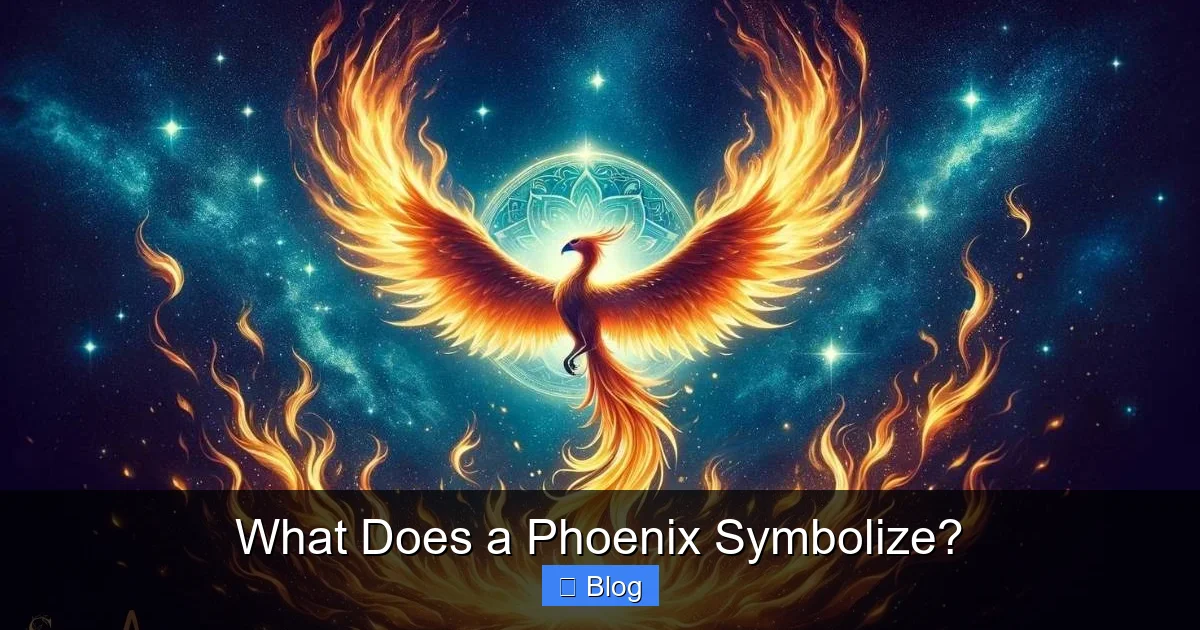
The phoenix is a legendary bird universally recognized as a powerful symbol of rebirth, renewal, and transformation. It represents overcoming adversity, finding hope after loss, and the eternal cycle of life, death, and resurrection. This mythical creature encourages us to embrace change, rise stronger from challenges, and embody unwavering resilience in the face of life’s fires.
Have you ever faced a moment in your life where everything felt like it was crashing down, only to find an unexpected strength within you to build it all back up, perhaps even better than before? Or maybe you’ve witnessed someone rise triumphantly from a profound personal setback, their spirit not just unbroken but seemingly refined by the experience? If so, you’ve seen the essence of the phoenix in action, even if not the mythical creature itself.
The phoenix, that magnificent bird of ancient legend, isn’t just a captivating story. It’s a timeless emblem, etched into the human consciousness for centuries, carrying a weight of meaning that resonates deeply with our own experiences of struggle, loss, and ultimately, renewal. But what does a phoenix symbolize, really? Why has this fiery bird held such a powerful grip on our imaginations, finding its way into countless cultures, stories, and even our personal philosophies?
Join us as we embark on a journey through the fiery myth and profound symbolism of the phoenix. We’ll explore its many facets, from its ancient origins to its modern interpretations, and discover why this legendary creature continues to inspire hope, resilience, and the belief in second chances for all of us. Prepare to be inspired by the ultimate symbol of transformation and enduring spirit!
Key Takeaways
- Rebirth and Renewal: The primary symbolism of the phoenix is its ability to die in flames and be reborn from its own ashes, signifying cyclical renewal, fresh starts, and profound transformation.
- Resilience and Hope: It powerfully represents overcoming immense adversity, enduring difficult challenges, and emerging stronger, symbolizing an enduring spirit and unwavering hope.
- Immortality and Eternity: The phoenix’s endless cycle of life and death without true demise makes it a potent emblem of immortality, eternal life, and an everlasting legacy.
- Transformation and Growth: Beyond mere rebirth, the phoenix symbolizes a deep personal transformation, shedding old selves, embracing change, and evolving into a more refined or enlightened state.
- Purity and Wisdom: Often associated with fire, the phoenix also carries connotations of purification, cleansing, and the attainment of higher wisdom or enlightenment through trials.
- Courage and Strength: Facing its fiery demise and subsequent rebirth requires immense courage, making the phoenix a symbol of bravery, inner strength, and the power to face life’s ultimate tests.
Quick Answers to Common Questions
What is the most common meaning of the phoenix?
The most common meaning of the phoenix is rebirth, renewal, and resurrection, symbolizing its ability to rise from its own ashes after being consumed by fire.
Does the phoenix symbolize immortality?
Yes, the phoenix strongly symbolizes immortality and eternal life, as it undergoes a cycle of death and rebirth rather than true demise, making it perpetually existing.
What emotions does the phoenix represent?
The phoenix represents emotions like hope, resilience, courage, and determination, inspiring individuals to overcome challenges and embrace transformation.
Is the phoenix a good luck symbol?
In some cultures, particularly Chinese mythology (Fenghuang), the phoenix is considered a symbol of good fortune, prosperity, and harmony, often appearing in times of peace.
Can the phoenix symbolize change?
Absolutely, the phoenix is a powerful symbol of profound change and personal transformation, encouraging us to shed old selves and evolve into something new and better.
📑 Table of Contents
The Ultimate Symbol of Rebirth and Renewal
When you hear the word “phoenix,” the first thing that probably springs to mind is its incredible ability to rise from its own ashes. This isn’t just a cool party trick; it’s the very core of what a phoenix symbolizes. It’s about letting go of the old, burning away what no longer serves you, and embracing a brand-new beginning. This cycle of death and rebirth is what makes the phoenix such a potent and universally understood symbol.
From Ashes to Glory: The Cycle of Life, Death, and Rebirth
Imagine a creature that lives for hundreds, sometimes thousands, of years. As its time draws near, it doesn’t simply die. Instead, it builds a nest of aromatic spices and resins, sets itself ablaze, and is consumed by fire. From those very ashes, a new, young phoenix emerges, ready to begin its life cycle anew. This dramatic process embodies the ultimate form of renewal. It tells us that even when things seem utterly destroyed, there’s always the potential for something magnificent to rise in their place.
This powerful narrative of the phoenix symbolizes the continuous cycle of life, death, and rebirth found in nature and in our own lives. Think about the changing seasons: autumn brings decay, winter brings dormancy, but spring always brings new life. The phoenix teaches us that endings are often just beginnings in disguise. When we face the “death” of a job, a relationship, or even an old way of thinking, the phoenix reminds us that from those “ashes,” we have the opportunity to create something new and vibrant. It’s a testament to the fact that nothing truly ends; it simply transforms.
Personal Transformation and Second Chances
Beyond the grand cosmic cycles, the phoenix has incredibly personal meaning. What does a phoenix symbolize for an individual? It represents profound personal transformation. We all go through periods where we need to shed an old skin, let go of past mistakes, or overcome deep-seated fears. This process can be painful, much like the phoenix’s fiery end. But just as the phoenix emerges refined and rejuvenated, we too can come out of these experiences stronger, wiser, and more authentic.
Consider someone who has gone through a major life change, like recovering from an illness, overcoming an addiction, or navigating a divorce. These experiences can feel like being “burned,” but the act of healing and rebuilding is a phoenix-like transformation. It’s about accepting that certain parts of your past may be gone, but refusing to let that be the end of your story. Instead, you use the lessons learned and the strength gained to forge a new path. The phoenix is a beacon for second chances, proving that no matter how difficult the past, a glorious future is always within reach if we’re willing to embrace the fire of change.
Resilience, Hope, and Overcoming Adversity
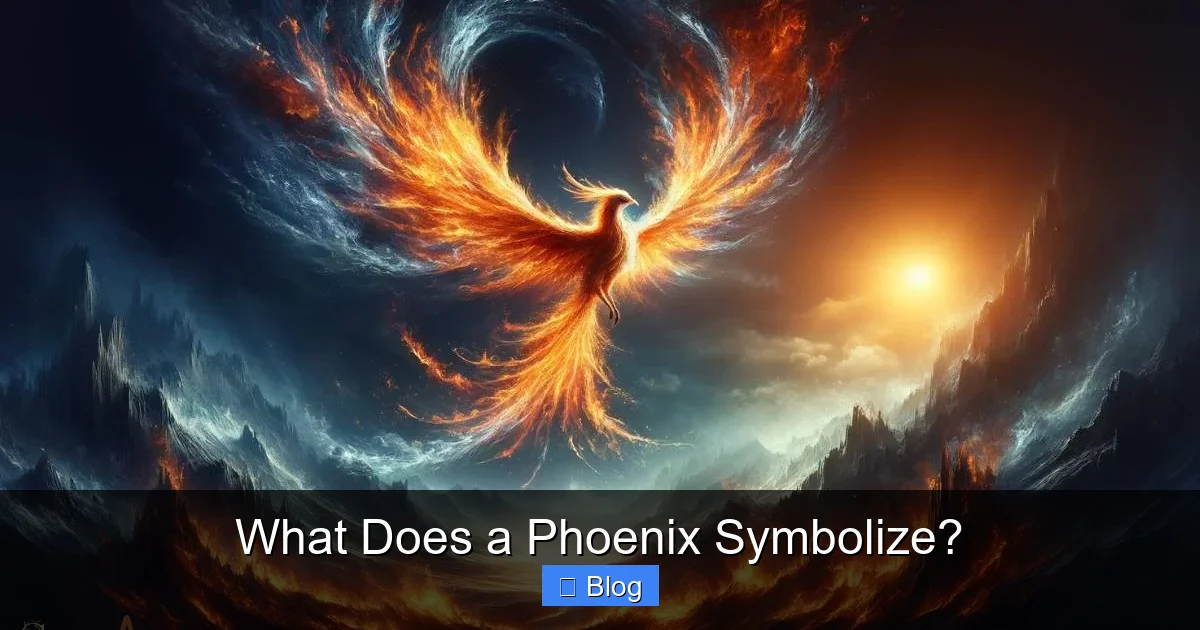
Visual guide about What Does a Phoenix Symbolize?
Image source: spiritualask.com
Life throws curveballs, doesn’t it? We all face moments that test our limits, challenge our beliefs, and sometimes, make us feel like giving up. This is where the symbolism of the phoenix truly shines as an emblem of unwavering resilience and enduring hope. The phoenix doesn’t just get reborn; it *chooses* rebirth, embodying an indomitable spirit that refuses to stay down.
Finding Strength in Times of Trouble
The phoenix endures its own destruction and rebirth, a process that speaks volumes about inner strength. It’s not about avoiding the fire; it’s about facing it head-on and knowing that you possess the inherent ability to emerge from it. This incredible resilience is a core aspect of what a phoenix symbolizes. It teaches us that true strength isn’t about never falling, but about always getting back up, no matter how many times you fall.
Think about moments in history or in personal narratives where communities or individuals have faced catastrophic events – wars, natural disasters, personal tragedies. The phoenix spirit is evident in their ability to rebuild, to find courage in despair, and to persist against overwhelming odds. It’s the human spirit saying, “I may be knocked down, but I am not out.” The phoenix offers a powerful blueprint for navigating adversity, encouraging us to tap into our inner reserves of strength and to trust in our capacity to bounce back.
A Beacon of Hope in Darkness
When all seems lost, the idea of the phoenix rising provides immense comfort and inspiration. It’s a potent reminder that even after the darkest night, dawn will break. What does a phoenix symbolize more powerfully than the promise of hope? When you’re in the midst of a personal “dark night of the soul,” the phoenix whispers that this too shall pass, and a new beginning is just around the corner.
This bird of fire stands as a perpetual beacon, assuring us that even from the deepest pits of despair, there is always a path toward renewal and a brighter future. It inspires us to hold onto hope, even when evidence of it seems scarce. The phoenix is a testament to the cyclical nature of existence – lows are followed by highs, endings by new beginnings. It teaches us to have faith in the process of life and to believe in our own power to overcome and thrive.
Immortality and Eternal Life
While its rebirth is often the most celebrated aspect, the phoenix’s cyclical existence also ties it deeply to concepts of immortality and eternal life. It’s a creature that defies true death, perpetually renewing itself through fire. This endless cycle offers profound insights into what a phoenix symbolizes regarding permanence and enduring legacy.
The Promise of Eternity
The phoenix, by its very nature, is a creature of eternity. It doesn’t truly die; it simply transitions into a new form, carrying its essence and wisdom forward. This makes it a powerful emblem of immortality, suggesting that some things, like love, truth, and the human spirit, can transcend physical limitations and endure forever. It’s a comforting thought, isn’t it? That even after our physical lives end, something of us – our impact, our lessons, our spirit – continues on.
This symbolism extends to ideas beyond personal longevity. It touches on cultural immortality, the enduring nature of ideas, and the legacy we leave behind. Think of influential figures whose ideas continue to shape generations, or timeless works of art that speak across centuries. Their impact achieves a form of phoenix-like immortality, continually inspiring new interpretations and understanding.
Legacy and Enduring Impact
The phoenix also speaks to the concept of legacy. Each new phoenix is born from the ashes of the old, carrying with it the inherited wisdom and spirit of its predecessor. This highlights the idea that our actions, teachings, and values can continue to live on through those we influence. What does a phoenix symbolize when it comes to leaving your mark on the world? It symbolizes the enduring nature of positive influence.
Consider mentors who shape future generations, or philanthropists whose contributions continue to benefit communities long after they are gone. Their impact is a form of phoenix legacy, an enduring flame that lights the way for others. It encourages us to think about the kind of “ashes” we will leave behind – the foundation from which future growth can spring.
Purity, Wisdom, and Enlightenment
Beyond its dramatic fiery rebirth, the phoenix is also associated with less obvious but equally profound qualities: purity, wisdom, and a journey towards enlightenment. The fire itself is a key element here, not just as a destroyer but as a purifier.
Cleansing and Spiritual Renewal
Fire, in many ancient traditions, isn’t just destructive; it’s also purifying. It burns away impurities, leaving behind only what is essential and refined. The phoenix’s fiery death and rebirth therefore symbolize a process of spiritual cleansing and purification. It suggests that by going through trials and tribulations – the “fire” of life – we can shed our ego, our negative habits, and our less desirable traits, emerging as a purer, more authentic version of ourselves.
This aspect of what a phoenix symbolizes is deeply spiritual. It encourages introspection and self-examination, prompting us to ask what aspects of our lives need to be “burned away” so that we can grow. It’s a powerful metaphor for letting go of emotional baggage, forgiving past hurts, and purifying our intentions to live a more meaningful life.
The Pursuit of Knowledge and Higher Understanding
Given its long lifespan and cyclical wisdom, the phoenix is also often seen as a creature of immense knowledge and enlightenment. Each rebirth theoretically imbues it with the accumulated wisdom of its past lives. This makes it a symbol for the pursuit of higher understanding, for continuous learning, and for the wisdom gained through experience and transformation.
The phoenix encourages us to embrace the learning process that comes from our challenges. Every setback, every “fire,” holds a lesson. By reflecting on these experiences and integrating the insights gained, we move closer to our own form of enlightenment. It suggests that true wisdom isn’t just about accumulating facts, but about understanding life’s cycles, embracing change, and finding meaning in both destruction and creation.
Cultural Significance and Modern Interpretations
The phoenix isn’t confined to a single mythology; its powerful symbolism has resonated across diverse cultures and continues to inspire us in the modern world, proving its universal appeal and timeless relevance.
The Phoenix Across Ancient Cultures
While most commonly associated with Greek mythology (derived from Egyptian traditions), variations of the phoenix story appear in many ancient cultures:
- Ancient Egypt: The *Bennu* bird, often depicted as a heron, was linked to the sun god Ra and the cycles of the Nile, symbolizing creation, rebirth, and the rising sun.
- Greek and Roman Mythology: This is where the most familiar phoenix myth comes from, describing a magnificent bird with golden and scarlet plumage that lives for centuries before self-immolating and rising from its ashes.
- Chinese Mythology: The *Fenghuang* (sometimes translated as “Chinese phoenix”) is a benevolent and regal bird, second only to the dragon in importance. It symbolizes high virtue, grace, prosperity, peace, and the harmonious union of yin and yang. Unlike the Western phoenix, it doesn’t necessarily die and rebirth itself, but rather embodies the cyclical nature of governance and good fortune.
- Japanese Mythology: The *Ho-o* is the Japanese equivalent of the Fenghuang, carrying similar meanings of good fortune, justice, and the imperial household.
These diverse interpretations all share core themes of renewal, power, and significance, highlighting the universal appeal of what a phoenix symbolizes.
Modern Applications: From Pop Culture to Personal Emblems
Today, the phoenix continues to burn brightly in our collective consciousness. It’s a popular motif in:
- Literature and Film: From *Harry Potter*’s Fawkes to various fantasy novels and superhero narratives, the phoenix often appears when a character needs to undergo a significant personal change or rise against overwhelming odds.
- Art and Design: It’s a striking image for tattoos, logos, and artwork, conveying messages of strength, uniqueness, and personal overcoming.
- Corporate Branding: Companies undergoing significant restructuring or seeking to convey resilience and innovation might use phoenix imagery.
- Personal Inspiration: Many individuals adopt the phoenix as a personal emblem during challenging times, seeing it as a reminder of their own capacity for healing, growth, and starting fresh. When you ask what does a phoenix symbolize for someone recovering from an illness or a major life event, it often becomes a deeply personal tattoo or piece of art, representing their journey back to strength.
The enduring presence of the phoenix across cultures and time underscores its profound and universal significance as a symbol of hope, renewal, and the invincible spirit.
Courage, Strength, and Solitude
The phoenix’s journey isn’t just about grand rebirths; it also speaks to more nuanced aspects of character, particularly courage in the face of destiny and the often solitary path of profound transformation.
Facing the Fire with Bravery
Think about the act itself: willingly entering the flames. This isn’t just a passive event; it’s an act of immense courage. The phoenix consciously embraces its own destruction, understanding that it’s a necessary step towards renewal. This aspect of what a phoenix symbolizes is a powerful lesson in bravery. It teaches us that sometimes, the most courageous thing we can do is face our fears, confront uncomfortable truths, or willingly step into challenging situations, knowing they are catalysts for growth.
Applying this to our lives, it means having the courage to end a toxic relationship, pursue a difficult dream, or confront a personal flaw. These acts require a phoenix-like bravery, an acceptance that the process might be painful, but the outcome is worth the temporary discomfort.
The Independent Journey
The phoenix embarks on its cycle alone. It builds its nest, sets its own fire, and rises solitary from the ashes. This highlights the idea of an independent journey and the personal responsibility for one’s own transformation. While support from others is invaluable, ultimately, the deep work of self-renewal often happens within us, through our own strength and determination.
This isn’t about being alone; it’s about owning your path. What does a phoenix symbolize in terms of self-reliance? It represents the inner power to initiate change, to heal oneself, and to forge a new identity without relying solely on external validation. It’s a powerful reminder that while community is important, the true “fire” of transformation burns brightest within our own spirit.
Conclusion
From the scorching deserts of ancient Egypt to the pages of modern fantasy, the phoenix has captivated humanity for millennia, not merely as a mythical creature, but as a profound symbol that speaks to the very core of the human experience. We’ve seen how what a phoenix symbolizes spans a rich tapestry of meanings:
- The ultimate emblem of **rebirth and renewal**, reminding us that every ending holds the promise of a new beginning.
- A powerful beacon of **resilience and hope**, inspiring us to overcome adversity and emerge stronger.
- A testament to **immortality and eternal life**, both personal and in the enduring legacy we leave.
- A guide to **purity, wisdom, and enlightenment**, achieved through the cleansing fire of transformation.
- An example of **courage and independent strength**, urging us to face life’s challenges head-on.
The phoenix’s story is, in essence, our story. It’s a powerful metaphor for anyone who has faced adversity, suffered loss, or simply felt the urge to transform and become something greater. So, the next time you encounter the image of this magnificent bird, remember its deep wisdom. Let it be a reminder that no matter how difficult the “fire” you face, you too possess the innate strength to rise, renewed and radiant, from your own ashes. Embrace the cycles of life, trust in your capacity for transformation, and never stop believing in the power of a fresh start.
Frequently Asked Questions
What are the origins of the phoenix myth?
The phoenix myth has ancient origins, with its earliest known accounts tracing back to Egyptian mythology with the Bennu bird. The Greeks later adapted and popularized the myth, giving us the more familiar image of the fiery, colorful bird we know today.
How long does a phoenix live before its rebirth?
The lifespan of a phoenix varies across different myths, but it’s typically said to live for a very long time, often between 500 and 1,400 years, before it builds its nest and enters its fiery cycle of renewal.
Is the phoenix considered a benevolent or malevolent creature?
The phoenix is overwhelmingly considered a benevolent creature across most cultures. It’s often associated with positive attributes like hope, purity, good fortune, and justice, bringing inspiration rather than harm.
Can a phoenix represent specific challenges or losses?
Yes, a phoenix can represent specific challenges, losses, or periods of intense difficulty in one’s life. Its symbolism suggests that even from the deepest setbacks, one has the capacity to recover, rebuild, and emerge stronger than before, signifying personal triumph over adversity.
How does the phoenix relate to the concept of self-improvement?
The phoenix relates strongly to self-improvement by symbolizing the continuous process of personal growth. Its cycle of burning away the old self and emerging anew perfectly illustrates the journey of shedding negative habits, learning from mistakes, and striving for a better, more refined version of oneself.
Why is the phoenix often depicted with fire?
The phoenix is always depicted with fire because fire is central to its myth – it dies by self-immolation and is reborn from its own ashes. Fire, in this context, symbolizes not just destruction but also purification, transformation, and the potent energy of creation.