
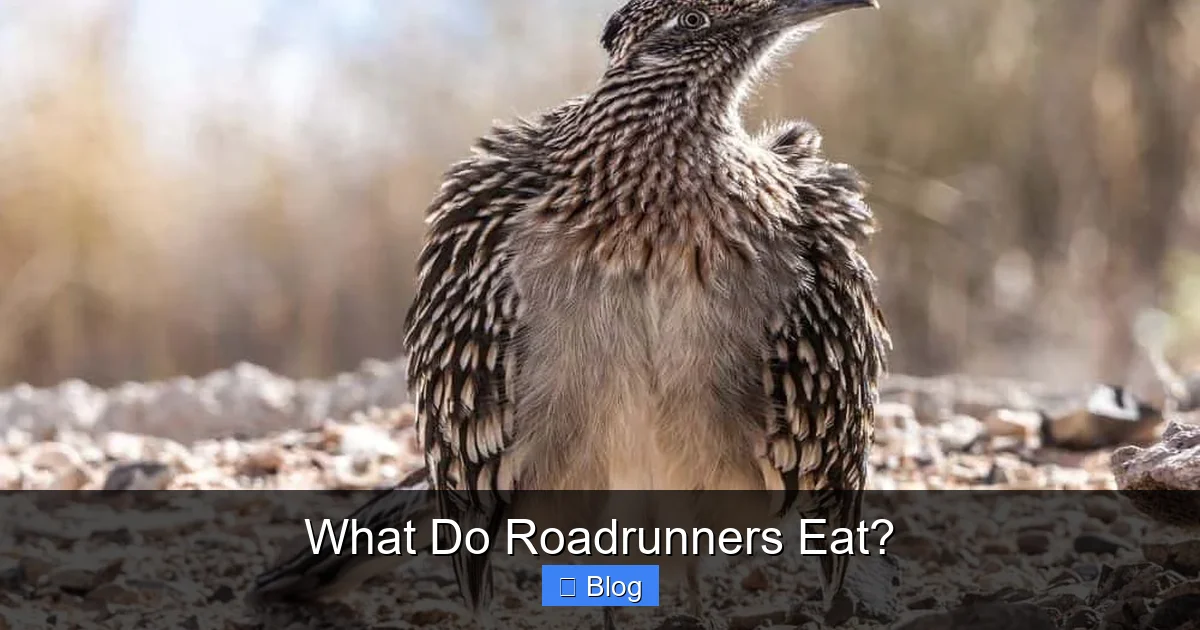
Roadrunners are opportunistic omnivores, meaning their diet is incredibly varied and depends on what’s available in their desert habitats. They are renowned for their speed and agility, using these traits to hunt a wide array of prey, from insects and lizards to formidable venomous snakes. Their ability to extract water from their food makes them incredibly well-adapted to arid environments, showcasing their mastery of survival.
What Do Roadrunners Eat?
Have you ever wondered about those lightning-fast birds darting across the desert floor, seemingly always on the move? We’re talking about the Greater Roadrunner, a creature of myth and legend, often depicted in cartoons as a speedy, “beep-beeping” rival to a coyote. While their cartoon counterparts might only be seen fleeing, the real roadrunners are fascinating predators with an incredibly diverse and often surprising diet.
These iconic birds are much more than just quick runners; they are skilled hunters and resourceful survivors. Living in some of the most challenging environments on Earth, primarily the arid and semi-arid regions of the American Southwest and Mexico, roadrunners have developed a keen sense for finding food. Their unique adaptations allow them to thrive where many other animals struggle. But exactly what do roadrunners eat to maintain their impressive speed and energy? Let’s dive deep into the fascinating menu of this desert dynamo.
Key Takeaways
- Opportunistic Omnivores: Roadrunners have a highly diverse diet, eating almost anything they can catch, including insects, reptiles, small mammals, birds, and even some plant matter.
- Master Hunters: They are incredibly fast and agile, using their speed and quick reflexes to pursue and capture prey, often employing a unique “beating” technique to subdue larger or venomous animals.
- Reptiles and Snakes are Favorites: Lizards and snakes, including rattlesnakes, make up a significant portion of their diet, showcasing their bravery and specialized hunting skills.
- Hydration from Food: Roadrunners primarily get their water requirements from the moisture contained within their prey, a crucial adaptation for surviving in arid desert environments where water sources are scarce.
- Adaptable Survivors: Their varied diet allows them to thrive in harsh conditions, adapting to seasonal changes and localized food availability, making them highly resilient predators.
- Beneficial to Ecosystems: By preying on a wide range of animals, including pests and venomous creatures, roadrunners play an important role in maintaining ecological balance in their habitats.
Quick Answers to Common Questions
Can roadrunners eat venomous snakes?
Yes, roadrunners are well-known for their ability to hunt and consume venomous snakes, including rattlesnakes. They use their speed and agility to wear down the snake, often beating it against a hard surface to kill it before swallowing it headfirst.
How do roadrunners get water in the desert?
Roadrunners primarily obtain their water needs from the moisture contained within the bodies of their prey, such as insects, lizards, and small mammals. This physiological adaptation allows them to survive for long periods without needing to drink freestanding water.
Do roadrunners eat plants or only animals?
While roadrunners are predominantly carnivorous, they are considered omnivores. They do consume some plant matter, especially fruits and seeds from desert plants like prickly pear cacti, which can also provide essential moisture and nutrients.
Are roadrunners beneficial to humans?
Yes, roadrunners can be beneficial to humans, especially in agricultural areas. They help control populations of various pests, including insects, rodents, and venomous snakes, which can be a nuisance or danger to people and crops.
What is a roadrunner’s favorite food?
While roadrunners eat a wide variety of prey, lizards and snakes (including venomous ones) are particularly prominent and often considered a favorite or primary food source, alongside a diverse array of insects.
📑 Table of Contents
The Ultimate Opportunistic Omnivore
When you ask “what do roadrunners eat?”, the simplest answer is: “almost anything they can catch!” Roadrunners are classic opportunistic omnivores. This means they don’t stick to a rigid menu; instead, they adapt their diet to whatever food sources are most abundant and accessible in their immediate environment. Their ability to switch between different types of prey is a key factor in their survival across diverse desert landscapes.
Insects Galore: The Everyday Snack
A significant portion of a roadrunner’s diet consists of insects and other invertebrates. These smaller, more easily captured morsels provide a steady source of energy. You might see a roadrunner darting swiftly through the underbrush, snatching up grasshoppers, crickets, beetles, caterpillars, and cicadas. Spiders, centipedes, and scorpions are also fair game, with roadrunners exhibiting impressive agility to avoid venomous stings. They often run alongside moving objects, like cattle or even cars, to flush out bugs stirred up by the movement.
Reptiles and Amphibians: A Staple of the Desert Diet
This is where the roadrunner truly earns its reputation as a formidable predator. Roadrunners are famous for their appetite for reptiles. Lizards, in particular, are a major food source. From small skinks to larger horned lizards and even Gila monsters (though less common), no reptile is safe if a roadrunner spots it. But perhaps the most iconic part of their diet is snakes. Roadrunners are fearless snake hunters, capable of taking down venomous species like rattlesnakes. They do this with remarkable strategy and speed, often tiring out the snake before delivering a fatal blow. Frogs and toads, especially after rains, also make it onto their menu.
Small Mammals and Birds: When Opportunity Knocks
While not their primary food, roadrunners will absolutely prey on small mammals and birds if the opportunity arises. This includes mice, shrews, young rabbits, and even small rodents like pack rats. They are quick enough to catch fledgling birds or raid nests for eggs and chicks. They are not above scavenging either; if they find a small carcass, they might partake. This part of their diet truly highlights their opportunistic nature – they won’t pass up an easy meal.
Plant Matter and Scavenging: Rounding Out the Menu
Although primarily carnivorous, roadrunners do consume some plant material, especially fruits and seeds from desert plants like prickly pear cacti. This can provide essential moisture and nutrients. They are also known to scavenge for carrion, particularly if a larger animal has left behind edible scraps. This varied approach to finding food ensures that they can survive lean times and make the most of abundant periods.
Master Hunters of the Desert: How They Catch Their Food
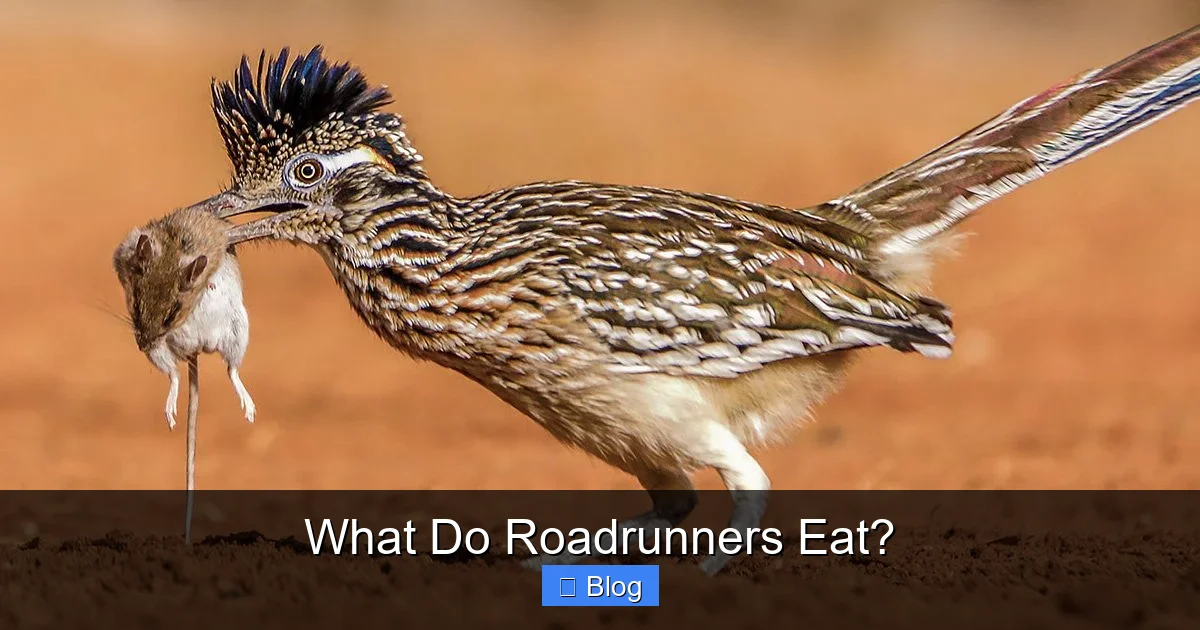
Visual guide about What Do Roadrunners Eat?
Image source: images.birdfact.com
Understanding what do roadrunners eat is one thing, but how they catch their incredibly diverse prey is another marvel entirely. Roadrunners are perfectly built for life as a terrestrial hunter, rarely taking to the air. Their hunting tactics are a testament to their speed, intelligence, and adaptability.
Speed and Agility: The Chase is On!
Roadrunners can run at speeds up to 20 miles per hour (32 km/h), making them one of the fastest running birds in North America. This incredible speed is their primary hunting tool. They pursue prey on foot, zig-zagging through vegetation with surprising agility. They often employ a “stop-and-start” method, freezing to scan the ground with their keen eyesight, then bursting forward to snatch an unsuspecting insect or lizard. Their long legs and stiff tail act as a counterbalance, allowing for quick turns and sudden stops.
The Beating Technique: Subduing Tough Prey
For larger or more dangerous prey, like venomous snakes, roadrunners employ a distinct and impressive technique. They grab the prey by the tail or neck, then repeatedly bash it against a hard surface – a rock, the ground, or even a tree trunk. This “beating” helps to stun or kill the prey, making it safe to swallow. With snakes, they might also use their sharp beak to peck at the head, aiming for a quick kill while deftly avoiding strikes. This method showcases their courage and strategic hunting prowess, allowing them to overcome prey much larger and potentially more dangerous than themselves.
Ambush and Scavenging: Less Energy, More Reward
While active hunting is common, roadrunners are also adept at ambush. They might wait patiently for prey to emerge from cover before launching a swift attack. As mentioned, scavenging is also a viable strategy. If they come across roadkill or the remains of another predator’s meal, they won’t hesitate to take advantage. This conserves energy, which is vital in a harsh desert environment where every calorie counts.
Dietary Adaptations and Survival in Arid Environments
The roadrunner’s diet is not just a matter of preference; it’s a finely tuned adaptation for survival in some of the world’s driest regions. Their eating habits directly address the challenges of living where water is scarce and food sources can be unpredictable.
Water from Food: The Ultimate Desert Drink
One of the most critical aspects of what roadrunners eat is how it helps them survive without readily available water. Roadrunners primarily obtain their hydration from the moisture content within their prey. Insects, reptiles, and small mammals all contain water, which the roadrunner efficiently extracts. This physiological adaptation allows them to go for long periods without needing to drink freestanding water, making them incredibly self-sufficient in arid landscapes. This is a common strategy among desert animals, but the roadrunner does it exceptionally well.
Seasonal Changes and Food Availability: A Flexible Menu
The desert environment is dynamic, with food availability fluctuating throughout the year. What roadrunners eat can change significantly from one season to the next. During spring and summer, when insects are abundant and reptiles are active, their diet will be heavily skewed towards these sources. In cooler months, when insect activity dwindles, they might rely more on small mammals, dormant reptiles, or opportunistic scavenging. Their flexibility ensures a constant food supply, regardless of environmental shifts. This adaptability is key to their success as a species.
Avoiding Competition: Finding a Niche
By having such a broad diet, roadrunners minimize direct competition with other desert predators that might specialize in a narrower range of prey. For example, a hawk might focus on rodents, while a coyote has a wider, but still distinct, diet. The roadrunner’s willingness to consume everything from a tiny ant to a large snake allows it to exploit resources that other animals might overlook or avoid. This diverse dietary niche contributes significantly to their ecological success.
Roadrunners and Humans: Coexistence and Impact
As human populations expand into traditional roadrunner habitats, encounters between these birds and people become more common. Understanding what do roadrunners eat can help us appreciate their role and how to coexist with them.
Backyard Visitors: Unexpected Guests
It’s not uncommon for roadrunners to venture into suburban areas or even backyards, especially if there’s available food or water. They might be attracted to gardens with insect populations, lizards basking on warm patios, or even bird feeders (though they’re more interested in the small birds or rodents that might visit the feeder, rather than the seeds themselves). Observing a roadrunner in your yard can be a thrilling experience, offering a glimpse into the wild heart of the desert.
What NOT to Feed Them: Keeping Them Wild
While it might be tempting to offer food to a roadrunner visiting your yard, it’s generally best not to. Feeding wild animals can lead to dependency, alter their natural hunting behaviors, and sometimes even harm them with unsuitable foods. Roadrunners are highly adapted to hunt for their own meals, and providing them with human food can disrupt their natural diet and ability to survive independently. If you want to help, focus on creating a natural, undisturbed habitat that encourages their natural prey, such as maintaining native plant species that attract insects and small lizards.
Conservation Considerations: Protecting Their Habitat
The primary threat to roadrunners is habitat loss and fragmentation due to human development. Preserving their natural desert and scrubland environments, with their rich diversity of insects, reptiles, and small mammals, is crucial for their survival. Understanding what roadrunners eat helps us realize the interconnectedness of their ecosystem and the importance of protecting the entire food web they rely upon. They are a valuable part of desert ecosystems, helping to control pest populations and contributing to overall biodiversity.
Conclusion: The Desert’s Dietary Marvel
The question “what do roadrunners eat?” reveals a story of incredible adaptation, cunning hunting, and relentless survival. From their cartoon fame to their real-life prowess, these birds are much more than just fast runners. They are opportunistic omnivores, master hunters capable of subduing venomous snakes, and resilient survivors who draw their very hydration from the diverse bounty of the desert.
Their diet is a reflection of their environment – harsh, challenging, yet full of life for those intelligent enough to find it. By eating almost anything they can catch, roadrunners ensure their survival in one of the toughest landscapes on Earth. So, the next time you spot a roadrunner, remember that you’re witnessing a truly remarkable creature, a dietary marvel, thriving against the odds through a wonderfully varied and resourceful menu.
🎥 Related Video: Surprising Facts About the Greater Roadrunner
📺 Absorbed In Nature
Today, we’re going to take a closer look at one of the most iconic birds of the American Southwest: the Greater Roadrunner.
Frequently Asked Questions
Do roadrunners eat scorpions?
Yes, roadrunners definitely eat scorpions. They are adept at handling venomous prey and will quickly snatch up scorpions, often beating them against a hard surface to disarm and kill them before consuming them.
How fast can a roadrunner run when hunting?
Roadrunners are incredibly fast runners, capable of reaching speeds up to 20 miles per hour (32 km/h) when hunting. This exceptional speed and agility are crucial for pursuing and catching their diverse range of prey in open desert environments.
Do roadrunners hunt birds?
Yes, roadrunners will hunt and eat small birds, especially fledglings or chicks, if the opportunity arises. They are opportunistic predators and will not pass up an easy meal, including raiding nests for eggs or young birds.
Can roadrunners survive without drinking water?
Roadrunners are highly adapted to arid environments and can survive for extended periods without drinking freestanding water. They obtain most of their necessary hydration from the moisture content within the food they consume, a vital survival strategy in the desert.
What time of day do roadrunners hunt?
Roadrunners are primarily diurnal hunters, meaning they are most active during the day. They typically hunt during the warmer hours, especially from mid-morning to late afternoon, taking advantage of the activity of their prey like insects and reptiles.
Is it okay to feed a roadrunner in my backyard?
It is generally not recommended to feed wild roadrunners. Providing them with human food can lead to dependency, alter their natural hunting behaviors, and may even introduce foods that are not suitable for their digestive system, potentially harming them in the long run.