
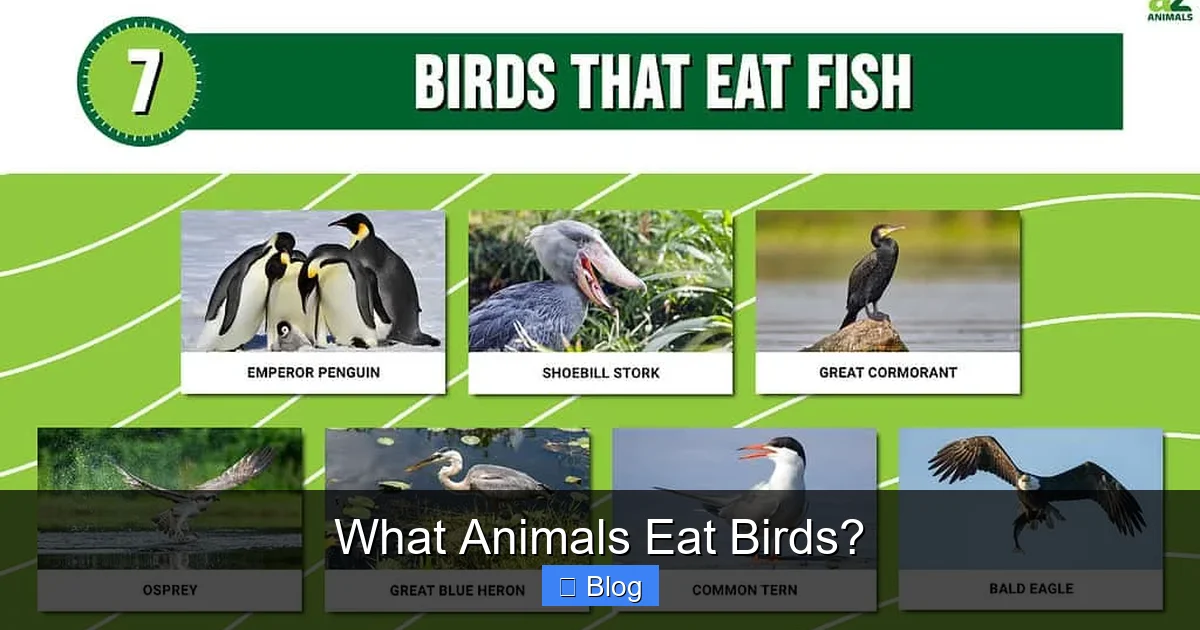
Birds are a vital food source within various ecosystems, making them prey for a wide array of animals. This article explores the diverse predators, including other birds like raptors, various mammals from foxes to domestic cats, reptiles such as snakes, and even certain fish and amphibians. Understanding who preys on birds helps us appreciate the intricate balance of nature and highlights critical conservation challenges.
Have you ever stopped to think about the incredible diversity of life in your backyard or local park? Birds, with their vibrant colors and melodious songs, are often a focal point. We love watching them flit from branch to branch, build their intricate nests, and raise their young. But beneath this seemingly peaceful existence lies a complex and often harsh reality: the natural world is a place of constant give and take, where life often depends on the demise of another.
Birds, despite their aerial agility and often keen senses, are not always at the top of the food chain. In fact, they are a vital food source for a surprising number of animals across nearly every ecosystem on Earth. From the smallest chick to the most formidable adult, birds face threats from a multitude of predators. Understanding what animals eat birds helps us appreciate the intricate web of life, the delicate balance of ecosystems, and the incredible survival strategies birds have developed over millions of years. It also shines a light on some of the challenges birds face, especially in a world increasingly shaped by human activities.
So, who exactly are these feathered, scaled, and furred hunters? Let’s embark on a journey to uncover the diverse array of animals that eat birds, exploring their hunting techniques, preferred targets, and the ecological roles they play. Prepare to see the natural world through a new lens, where every chirp and flutter could be a beacon to a waiting predator.
Key Takeaways
- Diverse Predators: Birds are prey for an extensive range of animals, including other birds (raptors, crows), mammals (foxes, cats, raccoons), reptiles (snakes), and occasionally even fish and amphibians.
- Natural Ecological Role: Predation is a fundamental and healthy part of most ecosystems, helping to control bird populations, remove weak or sick individuals, and drive natural selection.
- Vulnerability Factors: Nestlings and eggs are particularly vulnerable to predation due to their immobility and defenselessness, making nests a prime target for many predators.
- Significant Impact of Domestic Cats: Free-roaming domestic cats are one of the most prolific and impactful non-native predators of birds, responsible for millions of bird deaths annually.
- Conservation Challenges: Human activities like habitat loss, fragmentation, and the introduction of non-native predators (like feral cats) can exacerbate predation pressure and lead to declines in bird populations.
- Understanding for Conservation: Knowing which animals eat birds helps inform conservation strategies, allowing us to protect vulnerable species by managing predator populations or enhancing bird habitats.
Quick Answers to Common Questions
Do all birds have predators?
Yes, nearly all bird species, from eggs and nestlings to adults, are part of the food chain and serve as prey for various animals at different life stages.
Are domestic cats a major threat to birds?
Yes, free-roaming domestic cats are considered one of the leading human-caused threats to bird populations, killing millions of birds annually due to their natural hunting instincts.
What types of wild mammals commonly eat birds?
Wild mammals such as foxes, raccoons, weasels, skunks, and opossums commonly prey on birds, especially eggs and nestlings from ground or tree nests.
Can fish eat birds?
Yes, large predatory fish like pike and bass can opportunistically snatch ducklings or small birds that venture too close to the water’s surface.
Is bird predation always a bad thing?
No, natural predation is a vital ecological process that helps maintain healthy bird populations by removing weak individuals and controlling numbers, contributing to the overall balance of the ecosystem.
📑 Table of Contents
Avian Predators: The Hunters of the Sky and Beyond
When we talk about what animals eat birds, it’s often other birds that first come to mind. The skies are not just highways for birds; they are also hunting grounds.
Raptors: The Ultimate Aerial Hunters
Raptors, a group of birds that includes hawks, eagles, falcons, and owls, are perhaps the most iconic avian predators. Their keen eyesight, sharp talons, and powerful beaks make them incredibly efficient hunters.
- Hawks: Species like the Cooper’s Hawk and Sharp-shinned Hawk are incredibly agile, specializing in hunting other birds on the wing or snatching them from dense foliage. These medium-sized hawks are a common sight in many suburban areas, often seen pursuing smaller songbirds. Red-tailed Hawks, while often targeting rodents, won’t hesitate to take a bird if the opportunity arises.
- Eagles: While Bald Eagles are often associated with fish, they are opportunistic predators and will certainly prey on water birds like ducks and geese, especially juveniles. Golden Eagles, powerful hunters of open country, often target game birds and even larger birds like cranes.
- Falcons: Peregrine Falcons, famous for their incredible speed, are masters of aerial pursuit, catching birds mid-flight. They often target pigeons, shorebirds, and various waterfowl. Kestrels, smaller falcons, might take very small birds or nestlings.
- Owls: Primarily nocturnal hunters, owls like the Great Horned Owl are formidable predators of almost anything they can overpower, including other birds. They will hunt smaller owls, ducks, geese, and a wide variety of songbirds that roost in trees. Their silent flight and excellent night vision give them a distinct advantage.
These magnificent birds play a crucial role in maintaining healthy bird populations by preying on the weak, sick, or unwary.
Other Bird Species: Opportunistic Cannibals
It’s not just specialized raptors that eat birds. Many other bird species, often thought of as scavengers or insectivores, are opportunistic predators, especially when it comes to eggs and young chicks.
- Corvids (Crows, Jays, Magpies): These intelligent birds are notorious nest predators. American Crows, Blue Jays, and Eurasian Magpies will actively search out nests to feed on eggs and nestlings. They are clever and adaptable, often raiding nests in both urban and rural settings. They understand that young birds are easy targets.
- Gulls: Various gull species, especially larger ones, are highly opportunistic. They will snatch unattended eggs and chicks from ground-nesting birds like terns or ducks. They can also prey on injured or weak adult birds.
- Shrikes: Also known as “butcher birds,” shrikes are small predatory songbirds with hooked beaks. They impale their prey, which includes insects, small mammals, and indeed, small birds, on thorns or barbed wire to store them.
These generalist predators add another layer of pressure to bird populations, especially during the nesting season. The answer to “what animals eat birds?” often starts with other birds!
Mammalian Marauders: Ground-Level Threats
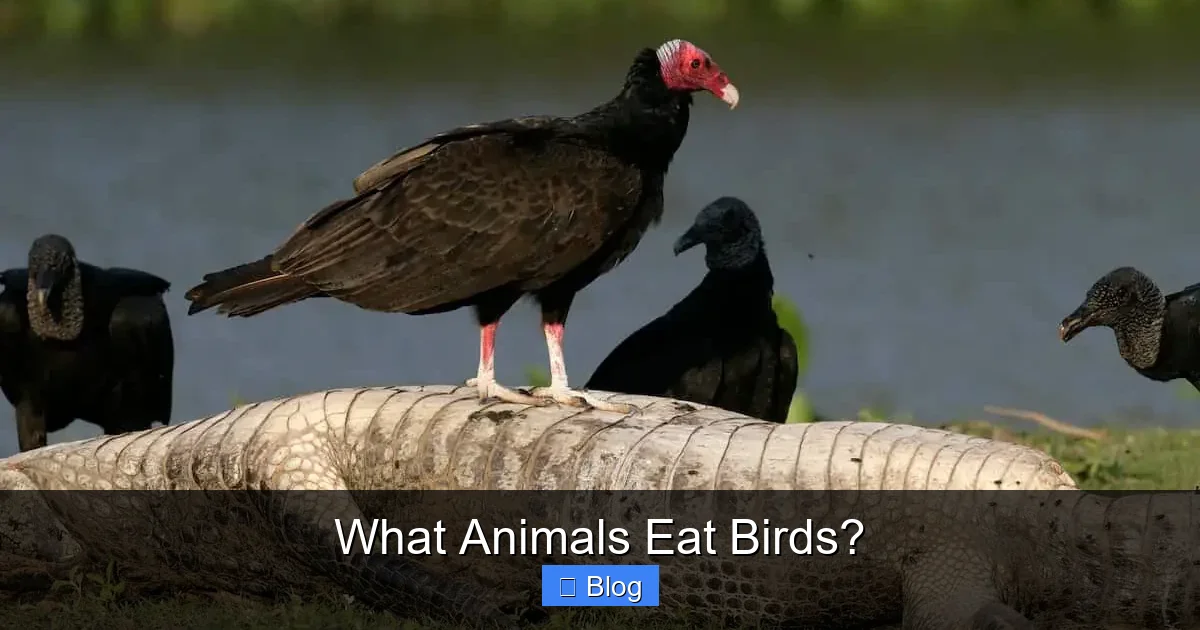
Visual guide about What Animals Eat Birds?
Image source: birdfeederhub.com
When birds are on the ground, in their nests, or fledging, they become vulnerable to a vast array of mammalian predators. This category includes everything from beloved pets to stealthy wild hunters.
Domestic Animals: The Feline Factor
One of the most significant and often underestimated threats to bird populations comes from our furry friends.
- Domestic Cats: Free-roaming domestic cats (both pets and feral) are incredibly efficient and widespread predators. Their natural hunting instinct, even in well-fed pets, drives them to stalk and kill millions of birds annually, a staggering number that far exceeds what many native predators consume. They are particularly devastating to ground-nesting birds and fledglings. If you want to help protect birds, keeping your cat indoors is one of the most impactful actions you can take.
Wild Mammals: From Foxes to Raccoons
The wild landscape is teeming with mammals that consider birds a part of their diet.
- Foxes (Red Foxes, Gray Foxes): Agile and cunning, foxes are opportunistic hunters that prey on ground-nesting birds, their eggs, and fledglings. They are excellent at sniffing out nests and can quickly decimate local populations of pheasants, grouse, and other ground-dwellers.
- Raccoons: Highly adaptable and skilled climbers, raccoons are notorious nest predators. They can easily access tree nests, raiding them for eggs and chicks. Their dexterous paws allow them to manipulate nests and extract contents with ease. They are a common sight in urban and suburban areas, often making them a significant threat.
- Weasels and Stoats: These slender, agile mustelids are relentless hunters. They can squeeze into small spaces, making them very effective at raiding nests, especially those of ground-nesting birds or those in tree cavities. They are particularly devastating to island bird populations where they have been introduced.
- Skunks and Opossums: Both skunks and opossums are omnivores that will readily consume eggs and nestlings if they discover a nest. They are slower than some other predators but are persistent and often active at night when birds are most vulnerable.
- Coyotes and Wolves: While larger canids primarily target larger prey, they are opportunistic and will certainly take ground-nesting birds or fledglings if encountered. Their primary impact is usually on larger game birds rather than small songbirds.
- Bears: Black Bears and Grizzly Bears, though primarily omnivores, will readily raid bird nests, especially those of larger ground-nesting birds or waterfowl, for their eggs and young. They are particularly drawn to calorie-rich eggs.
Understanding that these animals eat birds helps us appreciate the complex challenges birds face in raising their young.
Reptilian Risks: Scales and Stealth
While less immediately obvious than a hawk or a fox, certain reptiles are highly effective bird predators, especially when it comes to raiding nests.
Snakes: The Silent Climbers
Snakes are incredibly adept at finding and consuming bird eggs and nestlings. Their ability to climb trees, often unnoticed, makes them formidable nest predators.
- Rat Snakes: Common in many parts of North America, rat snakes (like the Black Rat Snake or Gray Rat Snake) are excellent climbers. They can scale trees to access bird nests high off the ground, consuming eggs and young birds whole.
- Garter Snakes: While often smaller, some larger garter snake species can occasionally take nestlings or small fledglings, especially if they are ground-nesting.
- Tree Boas and Pythons: In tropical regions, various arboreal snakes, including tree boas and smaller pythons, are significant predators of nesting birds and even adult birds. Their camouflage and constricting abilities make them highly effective.
The silent approach of a snake is a major threat, particularly to defenseless eggs and hatchlings. These animals eat birds by exploiting their vulnerability in the nest.
Lizards: Opportunistic Hunters
While less common as bird predators than snakes, some larger lizard species can be opportunistic.
- Monitor Lizards: In parts of Africa, Asia, and Australia, larger monitor lizards (like the Goanna in Australia) are known to raid ground nests for eggs and small chicks. They are formidable reptiles that can move surprisingly quickly when hunting.
Mostly, lizards pose a threat to very young birds or those nesting on the ground in specific regions.
Aquatic and Amphibious Ambushers
It might come as a surprise, but even in the water, birds are not always safe. Certain aquatic animals eat birds, especially those that spend time near or on the water.
Fish: The Underwater Snatchers
Large predatory fish are a threat to ducklings, goslings, and other small birds that swim on the water’s surface or venture too close to the edge.
- Pike: Northern Pike and Muskellunge are ambush predators known for their voracious appetites. They will readily snatch ducklings or other small birds that swim within striking distance.
- Bass: Larger species of bass, particularly Largemouth Bass, can also be opportunistic and attempt to grab small birds or ducklings that come too close to the water’s edge.
These underwater threats remind us that danger for birds can come from any direction.
Amphibians: The Unlikely Hunters
While rare, some of the largest amphibians can also be opportunistic bird predators.
- Bullfrogs: American Bullfrogs are known for their incredibly wide mouths and insatiable appetites. While they primarily eat insects, smaller frogs, and fish, large bullfrogs have been documented consuming small birds that venture too close to the water’s edge or fall into the water.
It’s a testament to the food web’s complexity that even a frog can be among the animals that eat birds.
The Role of Predation in Ecosystems
Understanding what animals eat birds isn’t just about listing threats; it’s about appreciating the fundamental processes that shape life on Earth. Predation is not inherently “bad”; it’s a critical, natural force.
Natural Selection and Population Control
Predation plays a vital role in natural selection. Predators typically target the weakest, slowest, sickest, or least alert individuals. This process helps to:
- Strengthen Populations: By removing less fit individuals, predation helps ensure that only the strongest and most adaptable birds survive to reproduce, thereby strengthening the gene pool of the species.
- Prevent Overpopulation: Predators keep prey populations in check, preventing them from growing too large, which could lead to resource depletion and ultimately harm the entire ecosystem.
- Maintain Ecosystem Health: A balanced predator-prey relationship ensures the overall health and stability of an ecosystem, preventing any single species from dominating.
Food Web Dynamics: A Foundation of Life
Every time an animal eats birds, it contributes to the intricate network of food webs that sustain all life. Birds are a significant energy transfer point in many ecosystems, moving energy from insects and plants to a host of carnivores and omnivores. Without this transfer, many predator populations would decline, leading to cascading effects throughout the food chain. It’s a fundamental part of how ecosystems function.
Human Impact and Bird Conservation
While predation is natural, human activities often disrupt the delicate balance, making birds more vulnerable or introducing new threats. Understanding what animals eat birds also means understanding how we can help.
Habitat Loss and Fragmentation: Increased Vulnerability
When habitats are destroyed or broken into smaller pieces (fragmentation), birds are often forced into smaller, more exposed areas. This makes their nests easier for predators to find and leaves them with fewer safe places to forage or hide, increasing their susceptibility to predation. Urbanization also introduces new predator dynamics, with generalist species like raccoons and feral cats thriving.
Introducing Non-Native Predators: Ecological Disaster
One of the most devastating human impacts is the introduction of non-native predators to new environments, particularly islands.
- Feral Cats: As mentioned, feral cats have decimated bird populations on islands worldwide, where native birds evolved without ground predators and lack defensive strategies.
- Rats and Stoats: Similarly, rats and stoats introduced to islands have had catastrophic effects on ground-nesting and cavity-nesting birds, pushing many species to the brink of extinction.
These introductions fundamentally alter the natural predator-prey dynamics, with often irreversible consequences.
How You Can Help: Practical Tips for Bird Conservation
If you care about birds and want to mitigate some of these human-exacerbated threats, here are some practical tips:
- Keep Cats Indoors: This is arguably the single most effective action any cat owner can take to protect birds. Indoor cats live longer, healthier lives, and local bird populations thrive. If letting your cat outside is a must, consider a “catio” (enclosed outdoor space) or supervised leash walks.
- Provide Safe Backyard Habitat: Plant native shrubs and trees that offer dense cover for birds to hide from predators. Offer bird baths and feeders, but ensure they are placed in open areas away from hiding spots where predators like cats can ambush. Clean feeders regularly to prevent disease.
- Support Local Conservation Efforts: Many organizations work to restore habitats, remove invasive species, and protect vulnerable bird populations. Your support can make a huge difference.
- Educate Others: Share your knowledge about responsible pet ownership and the importance of native habitats. Understanding that animals eat birds and how we influence this can drive positive change.
Conclusion
The question of what animals eat birds reveals a complex and often harsh reality of the natural world. From the soaring raptors in the sky to the stealthy snakes in the undergrowth, and even our own domestic pets, birds face a constant array of predators. This natural predation is a fundamental part of healthy ecosystems, driving natural selection and maintaining ecological balance.
However, human actions have undeniably altered these ancient dynamics, introducing new threats and intensifying existing ones. By understanding the diverse predators and the impact of our own footprint, we can become more responsible stewards of the environment. Protecting birds isn’t just about saving a single species; it’s about preserving the intricate web of life that makes our planet so vibrant and resilient. So, the next time you hear a bird sing, remember the many challenges it faces, and perhaps consider how you can help it thrive in a world full of watchful eyes.
🎥 Related Video: Bird Eat Bird | Hummingbird Vs Bald Eagle
📺 Animal Anatomy
Frequently Asked Questions
What animals are the most common predators of bird eggs?
The most common predators of bird eggs include various mammals like raccoons, skunks, foxes, and opossums, as well as snakes and other birds such as crows and jays. These animals often raid nests opportunistically, drawn by the high nutritional value of eggs.
How do birds protect their nests from predators?
Birds employ various strategies to protect their nests, including building them in concealed locations, camouflaging them, nesting in colonies for collective defense, and actively defending their territory with alarm calls or mobbing behavior. Some birds also choose inaccessible spots like cliffs or over water.
Are there any bird species that don’t have predators?
No, virtually all bird species face predation at some point in their life cycle. While large, powerful birds like eagles or ostriches have fewer natural predators as adults, their eggs and young are still vulnerable to a wide range of animals.
What is the impact of invasive species on bird predation?
Invasive species, particularly non-native predators like feral cats, rats, and stoats, can have a devastating impact on bird populations, especially on islands. Native birds often lack evolved defenses against these new threats, leading to significant population declines and even extinctions.
Do snakes only eat bird eggs, or can they eat adult birds too?
While many snakes specialize in eating bird eggs and nestlings due to their ease of capture, larger snake species can and do prey on adult birds. Arboreal snakes, for example, are adept at ambushing roosting or nesting adult birds in trees.
Why is it important to understand what animals eat birds?
Understanding what animals eat birds is crucial for effective wildlife conservation and ecosystem management. It helps scientists identify threats to vulnerable bird populations, design protective measures, and appreciate the natural ecological roles of various predators in maintaining biodiversity and healthy food webs.