
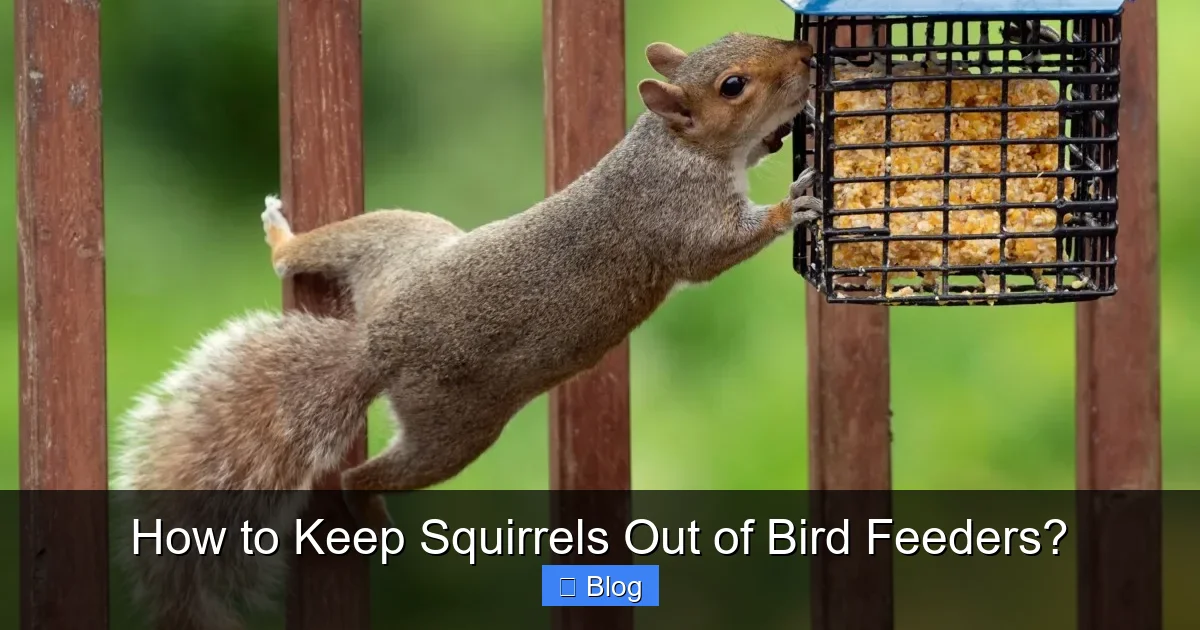
Tired of squirrels raiding your bird feeders? It’s a common dilemma, but entirely solvable! This guide provides comprehensive strategies on how to keep squirrels out of bird feeders, offering practical solutions from choosing the right equipment to smart feeder placement and food selection. By understanding squirrel behavior and implementing a multi-faceted approach, you can ensure your feathered friends get their meals undisturbed, transforming your backyard into a peaceful sanctuary for birds.
There’s a special joy that comes with watching colorful birds flit about your backyard, enjoying a meal at your feeder. It’s a peaceful, rewarding hobby that connects us with nature. But then, a flash of grey fur, a twitching tail, and suddenly your peaceful bird sanctuary turns into a bustling diner for one very determined, bushy-tailed bandit: the squirrel.
If you’re reading this, chances are you know the feeling. You’ve invested in a nice bird feeder, bought good quality seed, and instead of finches and cardinals, you’re hosting a squirrel feast. They’re clever, acrobatic, and seemingly unstoppable. It can be incredibly frustrating to see your efforts (and your birdseed budget!) go towards feeding these furry freeloaders instead of your intended avian guests. But don’t despair! You are not alone in this battle, and more importantly, it’s a battle you can absolutely win. We’re here to show you how to keep squirrels out of bird feeders once and for all.
This comprehensive guide will arm you with practical, effective strategies to outsmart these persistent creatures. We’ll explore everything from choosing the right feeder and optimal placement to ingenious baffles and even what food choices can make a difference. Get ready to reclaim your bird feeders and bring back the joyful songs of your feathered friends!
Key Takeaways
- Invest in Squirrel-Proof Feeders: Choose feeders designed with weight-activated perches, caged designs, or baffles that physically deny squirrels access to seeds.
- Strategic Feeder Placement is Crucial: Position feeders at least 8-10 feet away from any potential jump-off points like trees, fences, or structures to prevent squirrels from leaping onto them.
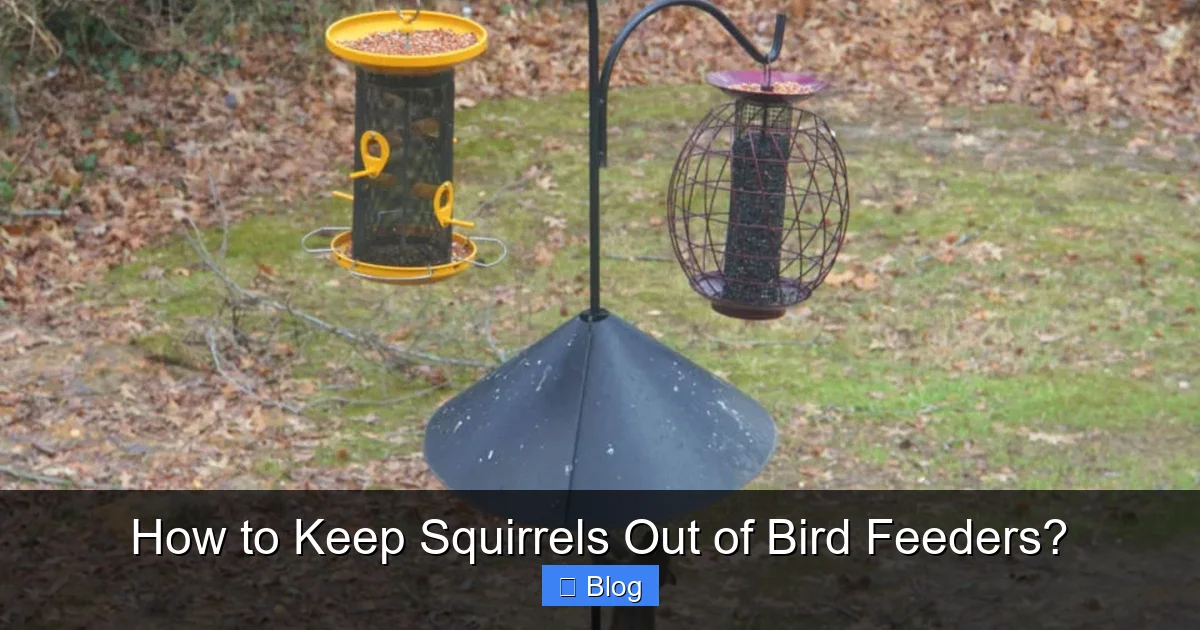
- Utilize Baffles Effectively: Install dome-shaped baffles above hanging feeders and cylindrical pole baffles below pole-mounted feeders to create an impassable barrier for climbing squirrels.
- Offer Less Appealing Foods: While not a complete solution, seeds like safflower and Nyjer are often less palatable to squirrels than sunflower seeds or corn, potentially reducing their interest.
- Maintain Cleanliness and Consistency: Regularly clean up spilled seeds to avoid attracting squirrels, and be consistent with your chosen deterrents so squirrels learn to avoid the feeder.
- Consider Diversion Feeding: Provide a separate, dedicated food source for squirrels away from your bird feeders to draw their attention elsewhere, lessening their attempts on bird food.
- Combine Multiple Strategies: The most successful approach to keep squirrels out of bird feeders typically involves using a combination of different methods, creating multiple layers of defense.
Quick Answers to Common Questions
How far away should a bird feeder be from trees to deter squirrels?
You should place your bird feeder at least 8 to 10 feet horizontally away from any trees, fences, or structures that squirrels could use as a jumping-off point. Squirrels are capable of impressive leaps!
Do baffles really work to keep squirrels off bird feeders?
Yes, baffles are one of the most effective tools to keep squirrels out of bird feeders. When installed correctly (pole baffles below the feeder, dome baffles above), they create a physical, slippery barrier that squirrels cannot navigate around.
What bird seeds do squirrels dislike?
Squirrels generally dislike safflower seeds and Nyjer (thistle) seeds. Offering these can reduce their interest compared to their favorites like black oil sunflower seeds, corn, and peanuts.
Is it safe to put hot pepper in bird seed for squirrels?
Yes, capsaicin-treated birdseed is generally considered safe for birds because they don’t have the same taste receptors for capsaicin as mammals. Squirrels will find it spicy and unpleasant, deterring them. Handle spicy seeds with care to avoid eye or skin irritation.
Should I provide a separate feeder for squirrels?
Providing a separate “diversion feeder” for squirrels, placed a good distance away from your bird feeders, can be an effective strategy. Offer them inexpensive treats like corn or peanuts to draw their attention away from the birdseed.
📑 Table of Contents
Understanding Your Opponent: The Squirrel Mind
Before we dive into solutions, it helps to understand who we’re up against. Squirrels aren’t just cute; they’re incredibly intelligent, agile, and driven by a powerful instinct: food. Knowing their motivations and capabilities is the first step in learning how to keep squirrels out of bird feeders effectively.
Agile Acrobats and Master Planners
Squirrels are natural gymnasts. They can jump incredible distances, climb almost any surface, and squeeze through surprisingly small openings. They remember food sources and will revisit them repeatedly if successful. Think of them as tiny, furry ninjas with an insatiable appetite for birdseed. They’ll scale poles, tightrope walk wires, and leap from seemingly impossible distances just to get to a meal.
Their Motivation: Easy Calories
Birdseed is a high-calorie, easily accessible food source for squirrels, especially during lean times or when they’re preparing for winter. While they bury nuts, finding a feeder full of readily available seeds is like hitting the jackpot. Their primary goal is simply to get as many calories as possible with the least amount of effort. This drive makes them persistent and resourceful.
Learning and Persistence
Squirrels are quick learners. If a particular method of reaching your feeder works once, they’ll remember it and try it again. If it fails, they’ll often observe, strategize, and try a different approach. This means that a single, one-off deterrent might not be enough. You need to be consistent and sometimes combine several strategies to truly keep squirrels out of bird feeders.
The Right Feeder: Your First Line of Defense
One of the most effective ways to deter squirrels starts with the feeder itself. Many modern bird feeders are specifically designed with squirrel deterrents built-in. Investing in a good “squirrel-proof” feeder can save you a lot of headaches (and birdseed) in the long run.
Visual guide about How to Keep Squirrels Out of Bird Feeders?
Image source: ruralsprout.com
Weight-Activated Feeders
These feeders are ingenious. They work on a simple principle: when a squirrel (which is heavier than most birds) lands on the perch or platform, a mechanism closes off access to the seed ports. Birds are light enough not to trigger the mechanism, allowing them to feed freely. Many popular brands offer excellent weight-activated designs. Just make sure the mechanism is easy to clean and doesn’t get jammed.
Caged Feeders
Caged feeders feature a protective outer cage or wire mesh with openings large enough for small birds to pass through, but too small for squirrels. The inner seed chamber is then protected. These are great for keeping out larger birds like jays and doves too, ensuring smaller birds get their fair share. The downside can be that larger birds like cardinals might also struggle to get inside.
Tube Feeders with Metal Ports
While not entirely squirrel-proof on their own, tube feeders made from sturdy materials with metal seed ports are much more resistant to squirrel chewing than plastic ones. Squirrels can easily gnaw through plastic, turning your feeder into a sieve. Combine a robust tube feeder with good placement and baffles for best results on how to keep squirrels out of bird feeders.
Specialized Seed Feeders (e.g., Nyjer/Thistle)
Feeders designed specifically for Nyjer (thistle) seeds have tiny openings that only finches with their small beaks can access. Squirrels usually aren’t interested in Nyjer, and even if they were, they’d have a very hard time getting to it. This isn’t a solution for all bird species, but it works wonderfully for finches.
Strategic Placement: Location is Everything
Even the best squirrel-proof feeder can be defeated if it’s placed in the wrong spot. Squirrels are master jumpers and climbers, so understanding their acrobatic abilities is key to proper placement. This is a critical step in learning how to keep squirrels out of bird feeders.
The “Squirrel Jump Zone” Rule
Squirrels can jump horizontally about 8 to 10 feet and drop from much higher. Therefore, the golden rule of feeder placement is to position your feeder at least 8 to 10 feet away from any potential launch pad. This includes tree trunks, branches, fences, deck railings, pergolas, and even the side of your house. If a squirrel can launch itself from a nearby object, it will!
Open Spaces Are Your Friend
The ideal location for a bird feeder is in an open area, well away from any structures or foliage that squirrels could use as a springboard. A wide-open lawn, for example, forces squirrels to approach from the ground, making them more vulnerable to other deterrents.
Pole Mounting: The Gold Standard
Mounting your feeder on a smooth metal pole in an open area is one of the most effective strategies. Make sure the pole is tall enough (at least 6 feet high) and sturdy. The smooth surface makes it difficult for squirrels to climb. However, a pole alone isn’t enough; you’ll need to add a baffle, which we’ll discuss next.
Hanging Feeders: The Challenge
Hanging feeders from tree branches can be tricky because squirrels are expert climbers. If you must hang a feeder, choose a branch that is thin and flexible, and hang the feeder far from the trunk. Even then, you’ll almost certainly need a good baffle above it.
Baffles: The Unbreakable Barrier
Baffles are physical barriers designed to stop squirrels in their tracks. They are a fundamental component of any serious plan on how to keep squirrels out of bird feeders. There are two main types of baffles, designed for different types of feeder setups.
Pole Baffles: Stopping Them From Below
If your feeder is mounted on a pole, a pole baffle is essential. This is a wide, dome-shaped, or conical metal or plastic barrier that wraps around the pole and faces downwards. It should be installed at least 4.5 to 5 feet off the ground. When a squirrel tries to climb the pole, it hits the baffle, can’t get around it, and slides off. Make sure the baffle is wide enough (at least 18 inches in diameter) so squirrels can’t reach around it. A well-placed pole baffle is incredibly effective.
Dome Baffles: Foiling Aerial Assaults
For hanging feeders, a dome baffle (also called a “squirrel dome” or “squirrel guard”) is hung above the feeder. This is typically a wide, slippery, dome-shaped shield. If a squirrel tries to climb down the rope or chain holding the feeder, it will encounter the dome, find no grip, and slide off. The dome should be large enough that the squirrel cannot reach around it to get to the feeder below. Choose one that’s at least 15-18 inches in diameter. Combine this with the 8-10 foot jump-zone rule for maximum effectiveness on how to keep squirrels out of bird feeders.
DIY Baffles and Creative Solutions
While commercial baffles are highly recommended, some DIY solutions can also work. For pole-mounted feeders, you can try wrapping the pole with a slinky, which frustrates squirrels as they try to climb. Another idea is to coat a pole with a thick layer of petroleum jelly (though this can be messy and needs reapplication). Just ensure any DIY solution is safe for both birds and squirrels.
Food Choices and Other Deterrents
While feeders and placement are paramount, what you offer inside the feeder and other environmental factors can also influence whether squirrels visit. Sometimes, small changes can make a big difference in how to keep squirrels out of bird feeders.
Less Appealing Seeds: Safflower and Nyjer
Squirrels have preferences, just like us. They absolutely love black oil sunflower seeds, corn, and peanuts. However, they are generally less enthusiastic about safflower seeds. Many birds, including cardinals, grosbeaks, and titmice, enjoy safflower. Offering only safflower can significantly reduce squirrel interest. Nyjer (thistle) seed, as mentioned, is also highly unappealing to squirrels and is a favorite of finches.
Spicy Solutions: Capsaicin-Treated Seeds
Birds don’t have the same taste receptors for capsaicin (the compound that makes chilies hot) that mammals do. This means you can purchase birdseed that has been treated with capsaicin or add chili powder/flakes to your existing seed. Squirrels will find it unpalatable and will likely move on. While generally considered safe for birds, some birders prefer not to use this method. If you do, ensure you handle the spicy seed carefully to avoid irritation to your own eyes or skin.
Diversion Feeding: A Truce Strategy
Sometimes, the best offense is a good defense – or in this case, a good distraction. You can set up a separate “squirrel feeder” a good distance away from your bird feeders. Offer them inexpensive treats like whole corn, dried corn on the cob, peanuts in the shell, or even squirrel-specific blends. This can divert their attention and reduce the pressure on your birdseed, making your primary efforts to keep squirrels out of bird feeders more successful.
Cleanliness: Don’t Invite Them Back
Spilled birdseed under your feeder is a huge attractant for squirrels (and other critters). Regularly sweep or rake up any fallen seeds. Using trays under your feeders can help catch spills and make cleanup easier. A tidy feeding station is less appealing to foraging squirrels.
The Long Game: Patience and Persistence
Keeping squirrels out of bird feeders isn’t always a one-and-done task. It’s often an ongoing process that requires patience, observation, and adaptability. Squirrels are smart, and they will test your defenses.
Don’t Give Up!
If a squirrel manages to defeat one of your deterrents, don’t get discouraged. It’s a learning opportunity. Adjust your strategy, combine different methods, or reinforce existing ones. The goal is to make your feeder consistently too much trouble for them, so they seek easier meals elsewhere.
Combine Strategies
The most successful approach often involves a multi-pronged strategy. For example, using a squirrel-proof feeder and placing it correctly and using a baffle and offering less desirable seed and having a diversion feeder will be far more effective than relying on just one method. Each layer of defense makes it harder for the squirrels to succeed.
Observe and Adapt
Watch how squirrels approach your feeders. Are they jumping from a specific branch? Climbing up the pole? Swinging from the wires? Their actions will tell you where your defenses are weakest and where you need to adapt your strategy. This continuous observation is crucial to truly understanding how to keep squirrels out of bird feeders over time.
Keeping squirrels out of bird feeders can sometimes feel like a never-ending battle, but with the right tools, knowledge, and a bit of patience, you can absolutely create a bird-friendly sanctuary in your backyard. Remember, the key is to combine different strategies, make your feeders inaccessible and unappealing to squirrels, and stay consistent with your efforts.
By implementing these tips, you’ll soon find your bird feeders bustling with beautiful birds, and those clever squirrels will be looking for dinner elsewhere. Enjoy the peace and beauty of your thriving bird haven!
🎥 Related Video: How to Keep Squirrels Away from Bird Feeders
📺 Backyard Birds Cincinnati
Are you tired of squirrels raiding your bird feeders and stealing all the food meant for your feathered friends? Look no further!
Frequently Asked Questions
What is the most effective way to squirrel-proof a bird feeder?
The most effective strategy typically involves a combination of methods: using a high-quality squirrel-proof feeder (like a weight-activated or caged design), placing it at least 8-10 feet away from any jump-off points, and installing a well-positioned baffle (pole baffle for pole-mounted feeders, dome baffle for hanging feeders).
Can squirrels learn to defeat “squirrel-proof” feeders?
Squirrels are incredibly intelligent and persistent, so they might initially try to figure out new feeders. However, truly well-designed squirrel-proof feeders with effective mechanisms or physical barriers are very difficult for them to consistently defeat, often leading them to give up and seek easier food sources.
Are there any natural remedies or sprays to deter squirrels?
While some people try natural repellents like cayenne pepper or apple cider vinegar sprays, their effectiveness is often temporary and requires frequent reapplication, especially after rain. Spicy birdseed (treated with capsaicin) is a more targeted and generally safer “natural” deterrent for the food itself.
How high should a pole baffle be installed to be effective?
A pole baffle should be installed at least 4.5 to 5 feet off the ground. This height prevents squirrels from jumping over the baffle from the ground, ensuring they cannot climb the pole to reach the feeder.
Will feeding squirrels separately attract more squirrels to my yard?
Potentially, yes. Any new food source can attract more wildlife. However, if the squirrel feeder is placed far away from the bird feeders, and the bird feeders are well-protected, the hope is that the squirrels will focus on the easier, dedicated food source rather than attempting to raid the birdseed.
What type of bird feeder is easiest for squirrels to access?
Platform feeders, open tray feeders, and simple tube feeders made of chewable plastic are generally the easiest for squirrels to access and exploit. Any feeder without physical barriers, weight-activated mechanisms, or sturdy materials will be a prime target for them.