
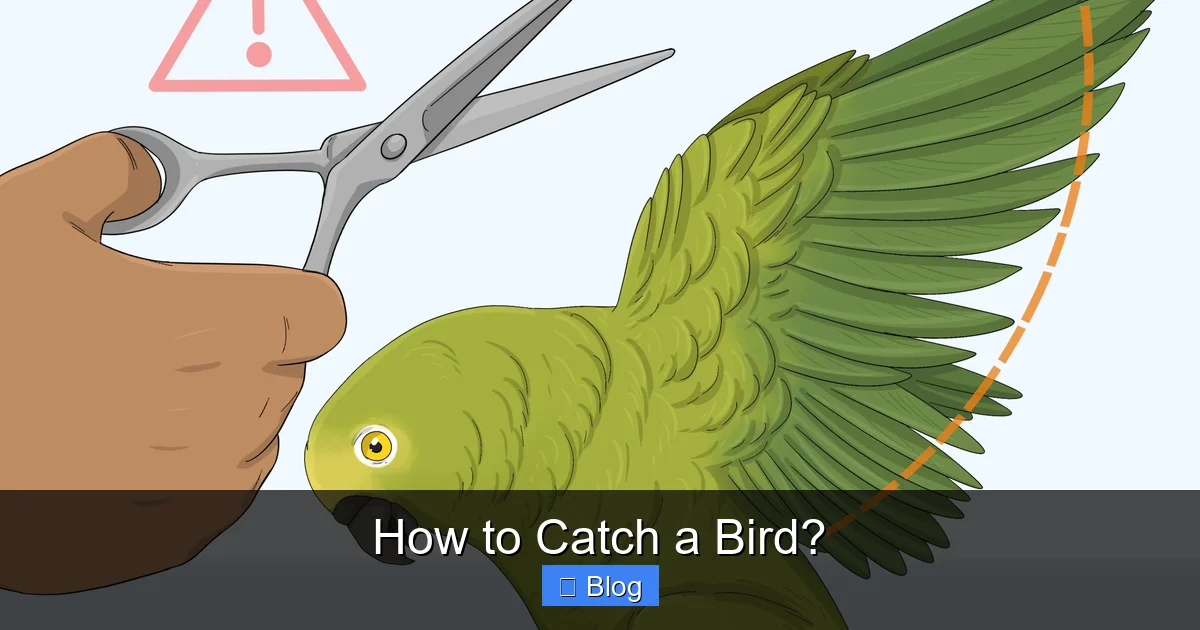
Learning how to catch a bird safely and ethically requires careful consideration of legality, animal welfare, and personal safety. This guide emphasizes responsible approaches, focusing on rescue, rehabilitation, or scientific study rather than pet ownership, and strongly advises consulting wildlife professionals for most situations. It outlines gentle, humane methods for specific scenarios, such as helping an injured bird or one trapped indoors, always stressing the importance of proper permits and avoiding harm. Ultimately, understanding how to catch a bird is less about technique and more about making an informed, ethical decision to protect wildlife.
Have you ever found yourself wondering how to catch a bird? Perhaps you’ve spotted a small bird in distress, a fledgling fallen from its nest, or maybe a bird has accidentally flown into your home. The idea of reaching out and helping, or simply observing these fascinating creatures up close, can be incredibly tempting. Birds are a wonder of nature, full of life and beauty, and it’s natural to feel a connection to them.
However, the question of how to catch a bird is far more complex than it might first appear. It’s not just about speed or technique; it’s primarily about ethics, legality, and safety. Wild birds are delicate creatures, easily stressed and injured. They are also protected by various laws, both locally and internationally, making it illegal to capture them without proper permits or a valid, urgent reason. Misinformation or good intentions without proper knowledge can often do more harm than good.
This comprehensive guide will walk you through the nuances of how to catch a bird, but with a very clear and important caveat: *most* people should *not* attempt to catch wild birds. We’ll explore the rare, ethical circumstances where intervention might be necessary—such as rescue, rehabilitation, or scientific study—and outline the safest, most humane methods for those specific situations. Our primary goal is always the bird’s welfare and your safety, emphasizing that calling a professional is almost always the best first step.
Key Takeaways
- Prioritize Ethics and Legality: Always consider the bird’s welfare and local laws. Unlicensed capture of wild birds is often illegal and carries significant penalties.
- Identify Your Purpose: Only attempt to catch a bird for urgent reasons like rescue (if injured or truly orphaned), rehabilitation, or scientific study with proper permits, *never* for keeping as a pet.
- Safety First: Protect yourself from potential scratches or bites, and ensure the bird’s safety by minimizing stress and avoiding injury during any capture attempt.
- Understand Humane Methods: Utilize gentle techniques such as soft netting, towels, or simply guiding for injured birds or those trapped indoors. Avoid aggressive or harmful approaches.
- Seek Professional Help: For most situations, especially with healthy birds, complex rescues, or protected species, contact a licensed wildlife rehabilitator or animal control.
- Know Bird Behavior: Familiarize yourself with common bird actions, flight patterns, and signs of stress to approach them effectively and safely.
- Post-Capture Care: If you must catch a bird, know how to provide immediate, temporary, safe containment and quickly connect with a professional for long-term care or release.
Quick Answers to Common Questions
Can I catch a bird to keep as a pet?
No, it is almost always illegal and unethical to catch a wild bird to keep as a pet. Wild birds have complex needs and specialized diets that are very difficult to meet in captivity, leading to stress and often an early death. Additionally, many native bird species are protected by law, making their capture illegal.
What should I do if I find an injured bird?
If you find an injured bird, the best course of action is to contact a licensed wildlife rehabilitator immediately. They can provide instructions on how to safely contain the bird temporarily and arrange for its transport to their facility for professional care.
Is it okay to catch a baby bird that has fallen from its nest?
Not always. Many “baby birds” found on the ground are fledglings learning to fly, and their parents are usually nearby, watching them. Observe from a distance for an hour or two. If it’s truly a nestling (no feathers, eyes closed) or appears injured, contact a wildlife rehabilitator for advice.
What’s the safest way to get a bird out of my house?
The safest way is usually to close off interior doors, open all exterior windows and doors in the room where the bird is, and then leave the room. Birds are typically attracted to light and will often find their way out on their own. Avoid chasing or swatting at the bird, which causes more stress.
Can handling a bird harm it?
Yes, handling a bird incorrectly can cause significant harm. Birds have delicate bones and are prone to stress. Improper handling can lead to broken bones, internal injuries, or fatal shock. Always handle birds gently and as little as possible, and only when absolutely necessary.
📑 Table of Contents
Understanding Why and When to Catch a Bird
Before you even consider how to catch a bird, it’s vital to understand *why* you might need to and if it’s truly the right thing to do. Many people mistakenly believe they should intervene when a young bird is on the ground, or they might think catching a bird for a pet is harmless. These assumptions can lead to unfortunate outcomes for the bird.
The Right Reasons: Rescue, Rehab, Research
There are very few legitimate reasons for an ordinary person to try and catch a wild bird. These generally fall into urgent, life-saving categories:
- Rescue an Injured Bird: If you see a bird that is visibly injured (e.g., broken wing, bleeding, clear signs of sickness, cat attack), it might need immediate help. Your goal here is to stabilize it and get it to a professional.
- Help a Bird Trapped Indoors: A bird that has flown into your garage, house, or office building is in an unnatural, stressful environment. Helping it escape is a responsible act.
- Scientific Study (with Permits): Ornithologists and licensed researchers often catch birds for banding, health checks, or population studies. This is done under strict regulations and with specialized training.
- Pest Control (as a last resort, professionally): In rare cases, a specific bird species might become a significant pest, and professional pest control might use humane traps. This is highly regulated.
The Wrong Reasons: Pets and Unlicensed Capture
It is almost always wrong and often illegal to catch a wild bird to keep as a pet. Wild birds have complex needs that are very difficult to meet in a home environment. They thrive on specific diets, social structures, and vast open spaces. Captivity causes immense stress and suffering for most wild species. Furthermore, many countries and regions have laws protecting native bird species. For example, in the United States, the Migratory Bird Treaty Act makes it illegal to possess, sell, or transport any migratory bird or its parts (feathers, eggs, nests) without a permit. The urge to catch a bird as a pet, no matter how well-intentioned, typically has severe legal consequences and is detrimental to the bird’s well-being.
Legalities and Permits: Knowing the Law
Before attempting any capture, even for rescue, familiarize yourself with your local wildlife laws. In many places, interfering with wild birds is illegal without specific permits. If you are unsure, contact your local animal control, a wildlife rehabilitator, or a nature center. They can provide guidance on how to proceed legally and safely. Ignoring these laws can lead to fines, legal action, and harm to the birds you are trying to help. Understanding the law is the first step in knowing how to catch a bird responsibly.
Preparing for a Bird Encounter: What You Need
Visual guide about How to Catch a Bird?
Image source: cdn.domyown.com
If you’ve determined that catching a bird is absolutely necessary and ethical, proper preparation is key. This isn’t just about having the right tools; it’s also about understanding the bird’s behavior and protecting yourself.
Essential Gear for Humane Capture
The goal is to be gentle and quick, minimizing stress for the bird. Here’s what you might need:
- Soft Net: A fine-mesh landing net (like those used for fishing) or a specialized bird net can be useful for injured birds. Avoid nets with large holes where delicate wings or legs can get tangled.
- Towel or Blanket: A clean, soft towel, pillowcase, or small blanket is excellent for covering and gently scooping up an injured bird. The darkness and warmth can calm them.
- Cardboard Box or Pet Carrier: A well-ventilated cardboard box (with small air holes) or a small pet carrier lined with a soft cloth will serve as a temporary, safe holding space.
- Gloves: Thick work gloves or gardening gloves will protect your hands from potential scratches or bites, especially from larger or more stressed birds.
- Eye Protection: While less common, some birds might try to peck, so safety glasses can be a good idea.
Understanding Bird Behavior and Stress Signs
Knowing how birds react to threats can help you approach them more effectively and with less stress. Birds are naturally wary of humans, who they perceive as predators.
- Flight Response: Most birds will attempt to fly away if approached. Be prepared for quick movements.
- Freezing: Some birds, especially if injured or very young, might freeze in place. This doesn’t mean they’re calm; it’s often a panic response.
- Vocalization: Chirping, squawking, or hissing can indicate distress or aggression.
- Physical Signs of Stress: Rapid breathing, puffed-up feathers, gaping beak, or attempting to bite are all signs of a highly stressed bird.
Approaching calmly and quietly, without direct eye contact, can sometimes reduce a bird’s anxiety. Fast, sudden movements will almost always cause panic.
Personal Safety Precautions
When you are trying to figure out how to catch a bird, always remember your own safety. Birds can carry diseases (though transmission to humans is rare) and their beaks and talons can deliver painful nicks or scratches. Always wear gloves. Wash your hands thoroughly with soap and water after any contact with a wild bird or its droppings. If you get scratched or bitten, clean the wound immediately with antiseptic and monitor for any signs of infection.
Gentle Techniques for How to Catch a Bird (Specific Scenarios)
Once you’ve determined that you must intervene and have your gear ready, here are some humane methods for how to catch a bird in specific, ethical situations.
The Injured or Grounded Bird: Soft Net and Towel Method
If a bird is clearly injured and unable to fly, or a fledgling is truly orphaned and vulnerable (and a rehabilitator has advised intervention), a gentle capture is needed.
- Approach Slowly and Quietly: Move deliberately, avoiding sudden movements or loud noises that could further startle the bird.
- Use a Towel or Blanket: For smaller birds, gently drape a towel or blanket over the bird. This immediately calms them by creating darkness and preventing them from seeing you.
- Gently Scoop: Once covered, carefully scoop the bird up, holding its wings gently against its body to prevent further injury. Be extremely careful not to squeeze its body or legs. For larger birds, use a soft net to quickly cover and contain them.
- Transfer to a Dark, Quiet Container: Immediately place the bird into your prepared cardboard box or pet carrier. A dark environment reduces stress.
Remember, the goal is not to hold the bird for long but to get it safely into a temporary container so you can transport it to a wildlife professional.
Bird Trapped Indoors: Guiding to Freedom
This is one of the most common scenarios where you might need to know how to catch a bird, or rather, how to *guide* a bird.
- Stay Calm and Patient: A bird trapped inside is terrified. Panicking will only make it worse.
- Close Interior Doors and Windows: Confine the bird to one room if possible. This prevents it from flying further into your home.
- Open Exterior Exits: Open all windows and doors leading outside in the room where the bird is trapped. Turn off lights if it’s dark outside, or darken other areas of the room if it’s daytime, creating a clear path to the light source from outside.
- Remove Obstacles: Take down any sheer curtains that the bird might fly into. Cover reflective surfaces like mirrors.
- Wait and Observe: Often, the bird will find its way out on its own, drawn to the light. Give it time.
- Gentle Guiding (Last Resort): If the bird doesn’t leave, you can gently try to guide it with a broom or a large piece of cardboard, steering it towards the open exit. Avoid hitting or chasing it aggressively. If it lands, you might be able to gently drape a towel over it as described above and carry it outside.
The less direct contact, the better for the bird in this situation. The main aim is to get it out.
Using Live Traps (for Approved Purposes Only)
Live traps (like Havahart traps) are sometimes used for catching birds, but this is *highly specialized* and typically reserved for pest control (when approved and humane) or scientific research.
- Never for Pets: These traps should absolutely never be used by individuals trying to catch a bird for a pet.
- Baiting: If used, bait like seeds or fruits can lure birds.
- Constant Monitoring: Traps must be monitored constantly to prevent injury, stress, or predation. Birds can quickly become dehydrated or overheat.
- Expert Supervision: This method should only be attempted under the guidance of a licensed professional or wildlife expert.
This is generally *not* a method for the average person wondering how to catch a bird.
What About Mist Nets? (Professional Use Only)
Mist nets are very fine, nearly invisible nets used by ornithologists and bird banders for scientific study. They are extremely effective but require immense skill and constant vigilance to prevent injury or death to the birds. Mist nets are *never* for amateur use. If you see someone using a mist net without clear professional affiliation, report it.
After the Catch: Immediate Care and Next Steps
So, you’ve successfully managed how to catch a bird for an ethical reason. What’s next? Immediate post-capture care is crucial to ensure the bird’s survival and well-being.
Secure Containment: A Safe Temporary Home
The temporary container (cardboard box or pet carrier) should be:
- Dark: Dark surroundings help reduce stress.
- Quiet: Keep the bird in a quiet area away from pets, children, and loud noises.
- Warm: If it’s cold, you can place a hot water bottle or heating pad (on a low setting, wrapped in a towel) halfway under the box. Ensure the bird can move away from the heat if it gets too warm.
- Well-Ventilated: Make sure there are adequate air holes.
- Lined: Use a soft, non-looping cloth (like a t-shirt, not terrycloth) for the bird to rest on.
Do not offer food or water unless specifically instructed by a rehabilitator. Attempting to force-feed or water a stressed bird can cause aspiration (liquid in the lungs) or further injury.
Hydration and First Aid (if applicable)
Unless a rehabilitator explicitly tells you to, *do not* attempt to give food or water. A stressed bird can easily choke. If you are instructed to offer water, a very shallow dish or a few drops from a dropper (not directly into the beak) might be appropriate, but this is rare for a layperson. Focus on getting the bird to a professional quickly. Avoid trying to “fix” injuries yourself; you could do more harm.
Contacting Wildlife Rehabilitators
This is the most critical step after you know how to catch a bird. Your local wildlife rehabilitator or animal control center is the expert.
- Have a List Ready: Keep phone numbers for local wildlife rescues handy. You can usually find these by searching online for “wildlife rehabilitator near me” or “animal control [your city]”.
- Describe the Situation: Clearly explain where you found the bird, what happened, and any visible injuries. They will give you instructions on what to do next.
- Transport Promptly: Follow their instructions for transport. Speed is often crucial for an injured bird’s recovery.
Responsible Release Practices
If you’ve helped a trapped bird escape or a rehabilitator has advised you to release a bird, do so safely.
- Open Space: Choose a quiet, open outdoor area away from busy roads, predators (like cats), and potential hazards.
- Direct Release: Simply open the container and allow the bird to fly out on its own. Do not throw or force the bird out.
- Observe: Watch from a distance to ensure the bird flies off strongly and doesn’t immediately crash or become re-trapped.
Releasing an injured bird without professional assessment is often a death sentence. Only release birds that are visibly healthy and able to fly, or as directed by a professional.
When to Call a Professional (Always the Best Option)
While this article covers how to catch a bird, it cannot be stressed enough: for almost every situation involving a wild bird, the best course of action is to contact a professional.
Identifying Situations Beyond Your Capability
Many situations are simply too complex or dangerous for a layperson.
- Large or Aggressive Birds: Raptors (hawks, owls), herons, or large gulls can inflict serious injury. Do not attempt to catch these birds yourself.
- Birds in Hazardous Locations: If a bird is stuck high in a tree, on a power line, or in a dangerous construction area, call emergency services or animal control.
- Protected or Endangered Species: Handling these birds requires special permits and expertise. Report sightings to wildlife authorities.
- Unknown Illness: If a bird appears sick but you don’t know why, it could carry a contagious disease. Avoid direct contact and call an expert.
The Expertise of Wildlife Rescuers
Wildlife rehabilitators and animal control officers are trained professionals. They have:
- Specialized Knowledge: They understand bird physiology, behavior, and specific care needs for various species.
- Proper Equipment: They have the right tools for safe capture and transport, reducing stress and injury.
- Medical Resources: They can provide veterinary care, medication, and long-term rehabilitation for injured or sick birds.
- Legal Authorization: They operate under the necessary permits and licenses.
Their involvement ensures the bird receives the best possible chance of recovery and a safe return to the wild.
Protecting Yourself and the Bird
Calling a professional protects both you and the bird. You avoid potential injury, legal issues, and the emotional distress of unintentionally harming an animal. The bird receives expert care, increasing its chances of survival and successful rehabilitation. Knowing when *not* to catch a bird yourself is perhaps the most important lesson in how to catch a bird responsibly.
Conclusion
Learning how to catch a bird is a skill best reserved for highly specific, ethical situations, primarily for rescue or scientific study, and ideally performed by or under the guidance of trained professionals. The natural world is a delicate balance, and our interference, even with the best intentions, can cause harm. Wild birds are not pets; they are vital components of our ecosystems, deserving of our respect and protection in their natural habitats.
If you encounter a bird that seems to need help, take a moment to assess the situation carefully. Ask yourself: Is this bird truly in distress? Is it legal and safe for me to intervene? Do I have the proper knowledge and equipment? More often than not, the answer will lead you to the most responsible action: contact a local wildlife rehabilitator or animal control. They are the true experts in helping these magnificent creatures, ensuring that our interactions with them are always for their benefit and conducted with the utmost care and respect. Your thoughtful decision is the first and most important step in truly understanding how to catch a bird in a way that truly helps.
Frequently Asked Questions
What laws protect wild birds from being caught?
Many countries have laws protecting wild birds. For instance, in the United States, the Migratory Bird Treaty Act makes it illegal to capture, kill, or possess migratory birds, their eggs, or nests without a federal permit. Similar laws exist globally, aiming to conserve bird populations and prevent their exploitation.
How can I identify if a bird needs help or if it’s just a fledgling?
Fledglings are young birds with some feathers, able to hop but not fly well, and their parents are usually nearby. They typically don’t need intervention unless they are in immediate danger. A bird truly needing help might be lethargic, visibly injured, shivering, or a naked nestling fallen from the nest.
What should I *not* do if I catch a bird?
Never try to “fix” a bird’s injuries yourself, give it food or water directly into its mouth (risk of aspiration), or keep it as a pet. Do not subject it to loud noises, bright lights, or the presence of pets, as these will cause immense stress. Your role is temporary containment and transfer to a professional.
Where can I find a local wildlife rehabilitator?
You can typically find a local wildlife rehabilitator by performing an online search for “wildlife rehabilitator near me” or “animal rescue [your city/region]”. Your local animal control, humane society, or even a veterinarian’s office might also provide contact information or direct referrals.
Are there any birds I should absolutely never try to catch?
Yes, you should never attempt to catch large, potentially aggressive birds like raptors (hawks, owls, eagles), herons, or large gulls, as they can cause serious injury with their beaks and talons. Also, avoid birds that appear visibly sick, as they could carry diseases transmissible to humans or pets.
What if a bird flew into a window and seems stunned?
If a bird flew into a window and seems stunned but uninjured, gently place it in a dark, quiet, well-ventilated box outdoors in a safe, sheltered spot for an hour or two. Check on it periodically; often, it will recover and fly away. If it doesn’t recover or appears injured, contact a wildlife rehabilitator.