
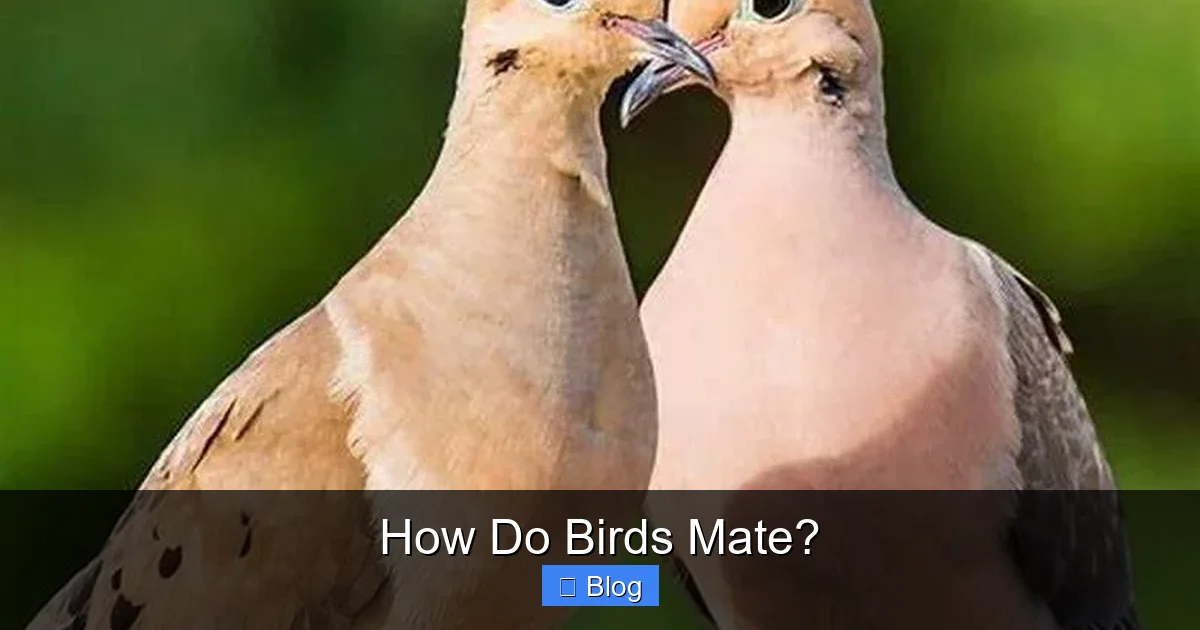
Birds mate through a fascinating series of rituals and a brief physical act often called the ‘cloacal kiss.’ This intricate process begins with elaborate courtship displays, vocalizations, and nest building, all designed to attract a suitable partner. The physical union, where sperm is transferred from male to female, is typically quick and efficient. Understanding how birds mate reveals the incredible diversity and dedication of avian life cycles, from successful fertilization to the collaborative effort of raising new life.
Have you ever stopped to truly observe the vibrant life around us, particularly the feathered creatures that dart and sing? Birds are everywhere, filling our skies with their grace and our mornings with their melodies. But beneath the surface of their everyday activities lies one of nature’s most intricate and vital processes: reproduction. It’s a journey that starts long before tiny chicks hatch, beginning with the fundamental question: How do birds mate?
For many, the mechanics of bird reproduction remain a mystery, often overshadowed by the more apparent aspects of their lives, like flight or foraging. Yet, the way birds choose partners, court, and ultimately conceive new life is a spectacle of evolutionary adaptation, survival, and sometimes, surprisingly complex social dynamics. It’s not just about a simple physical act; it’s a symphony of behaviors, instincts, and environmental cues all working in harmony.
So, let’s pull back the curtain and explore the fascinating world of avian romance. We’ll delve into everything from the dazzling displays of courtship to the intimate moment of conception and the devoted care that follows. Get ready to discover the secrets of how birds mate, a story that’s as diverse and captivating as the birds themselves.
Key Takeaways
- Courtship is Crucial: Before mating, most birds engage in elaborate courtship rituals involving displays, songs, and gifts to attract and assess potential partners.
- The “Cloacal Kiss”: The primary method of mating for the vast majority of bird species is a brief contact between the male and female cloacae, allowing for sperm transfer.
- Internal Fertilization: Once sperm is transferred, fertilization occurs internally within the female’s reproductive tract, leading to egg formation.
- Diverse Mating Systems: While many birds are socially monogamous, others exhibit polygyny, polyandry, or promiscuity, showcasing a wide range of reproductive strategies.
- Not Just About Mating: Successful reproduction extends far beyond the mating act, encompassing nest building, egg incubation, and dedicated parental care for the young.
- Environmental Influence: Factors like food availability, predator presence, and habitat quality significantly influence when and how successfully birds mate.
Quick Answers to Common Questions
Do all birds mate the same way?
No, while most birds use the “cloacal kiss,” a small percentage, primarily waterfowl like ducks and geese, possess a phallus for internal fertilization.
How long does bird mating take?
The physical act of mating, or the “cloacal kiss,” is usually very brief, often lasting only a few seconds.
Can a female bird store sperm?
Yes, many female birds have specialized sperm storage tubules in their reproductive tracts, allowing them to store viable sperm for days, weeks, or even months after mating.
Do birds form lifelong pairs?
Some species, like albatrosses and geese, form lifelong pair bonds, while others are monogamous only for a single breeding season, or practice polygamy or promiscuity.
Do birds always build nests together?
Nest building responsibilities vary by species; in some, both parents contribute, in others, only one parent builds, and in some, the male builds an elaborate structure to attract the female.
📑 Table of Contents
- The Grand Overture: Courtship and Attraction
- The Intimate Moment: The “Cloacal Kiss”
- Beyond the Kiss: Fertilization and Egg Laying
- Raising the Next Generation: Parental Care
- Diversity in Avian Relationships: Mating Systems
- Environmental Factors and Reproductive Success
- Conclusion: A Symphony of Life
The Grand Overture: Courtship and Attraction
Before any physical mating can occur, birds embark on a crucial phase: courtship. This isn’t just a casual fling; it’s a rigorous process where individuals assess potential partners, demonstrate their fitness, and solidify their bond. The goal is to prove worthiness and ensure successful reproduction.
Displaying Dazzling Attire and Skills
One of the most striking aspects of bird courtship is the visual spectacle. Many male birds sport incredibly elaborate plumage specifically for this purpose. Think of the peacock’s majestic tail fan, or the vibrant colors of a male superb fairywren. These aren’t just for show; they signal health, good genes, and the ability to find resources despite being encumbered by such ornate features. Females are often the choosers, carefully evaluating these displays to select the strongest, healthiest mate.
- Feather Displays: Males puff up feathers, fan tails, or perform intricate dances to highlight their best attributes. The greater sage-grouse, for instance, inflates large air sacs on its chest, creating a booming sound and visual display to attract females.
- Ritualized Movements: Birds perform specific flight patterns, ground dances, or head bobs. Take the red-capped manakin, whose “moonwalk” dance is a famous example of complex, synchronized movement.
The Sweet Symphony: Songs and Calls
Beyond visual displays, vocalizations play a massive role in how birds mate. Male birds often sing complex songs to announce their presence, define their territory, and attract females. Each species has its unique repertoire, and the quality and complexity of a male’s song can be a strong indicator of his health and experience.
- Territory Defense: Songs primarily serve to warn off rival males, signaling that a territory is occupied and defended.
- Female Attraction: A strong, consistent song tells females that the male is capable of defending resources and potentially providing good parental care. In some species, like nightingales, females prefer males with larger and more diverse song repertoires.
- Duets: Some species, like certain types of wrens, engage in coordinated duets, where both male and female sing together, further strengthening their pair bond.
Gifts, Nests, and Bonding Behaviors
Courtship isn’t always about flash; it can also be about practicality and demonstrating commitment. Many bird species engage in behaviors that show their ability to provide for a family.
- Food Gifts: A male bird might present a female with a choice morsel of food, demonstrating his foraging prowess and willingness to share resources. This is common in raptors and terns.
- Nest Building: While some birds build nests collaboratively after pairing, in many species, the male might start or even complete a nest to showcase his homemaking skills. The bowerbird takes this to an extreme, building elaborate structures decorated with specific items to impress a female.
- Mutual Preening: Allopreening, or one bird preening another, is a common bonding behavior that strengthens the pair bond and reduces parasites.
These elaborate courtship rituals ensure that partners are compatible and ready for the intensive process of raising young. They are a vital prelude to understanding how birds mate successfully.
The Intimate Moment: The “Cloacal Kiss”
Once courtship is successful and a pair bond is established, the physical act of mating occurs. For most bird species, this is a surprisingly quick and seemingly simple process, often referred to as the “cloacal kiss.”
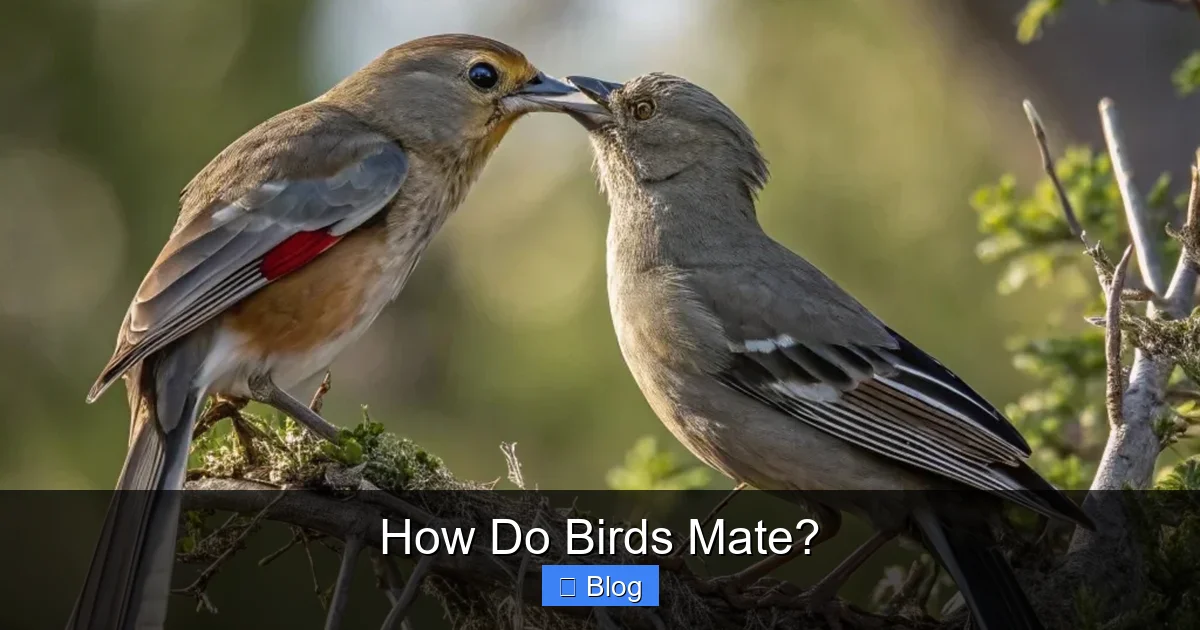
Visual guide about How Do Birds Mate?
Image source: birdsaffection.com
What is the Cloaca?
To understand how birds mate, we first need to understand the cloaca. Unlike mammals, birds have a single opening called the cloaca (pronounced kloh-AY-kah) which serves multiple functions: excretion of waste (feces and urine), and the passage of eggs or sperm. It’s a common chamber for the digestive, urinary, and reproductive tracts.
The Act Itself: A Brief Encounter
When birds mate, the male typically mounts the female, positioning his cloaca against hers. This usually happens with the male balancing on the female’s back, sometimes holding onto her neck feathers for stability. The female may crouch and move her tail to the side to facilitate contact. The male then quickly presses his everted cloaca against the female’s everted cloaca, transferring sperm. This contact is often incredibly brief, lasting only a few seconds, hence the term “cloacal kiss.”
- Speed and Precision: The rapid nature of the cloacal kiss is often a necessity. Mating can make birds vulnerable to predators, so speed is key.
- Multiple Attempts: It’s common for a pair to engage in multiple “kisses” over a period to increase the chances of successful fertilization.
- Pair Bonding: While the physical act is brief, it’s often preceded and followed by continued bonding behaviors, like preening or vocalizations.
The Exceptions: Birds with Penises
While the cloacal kiss is the norm, a small percentage of bird species, primarily waterfowl like ducks, geese, and swans, possess a phallus (a type of penis). This organ is typically coiled internally and rapidly everted during mating. These phalluses can be quite elaborate, with spirals and spines, and their evolution is a fascinating area of study, often linked to sexual conflict and forced copulation in these species.
So, when you consider how birds mate, remember that for almost all species, it’s a quick, efficient cloacal kiss, a testament to evolutionary refinement.
Beyond the Kiss: Fertilization and Egg Laying
The cloacal kiss marks the transfer of sperm, but it’s just one step in the broader reproductive journey. What happens next is equally incredible.
Internal Fertilization and Sperm Storage
Once the sperm is transferred to the female’s cloaca, it travels up her reproductive tract to fertilize an egg. Birds, like mammals, have internal fertilization. Interestingly, many female birds have specialized sperm storage tubules within their oviducts. This allows them to store sperm for days, weeks, or even months after mating. This adaptation means that a female doesn’t need to mate every time she lays an egg, and can even lay a clutch of fertile eggs from a single mating event.
This sperm storage capacity also offers females a degree of reproductive control, allowing them to time fertilization with optimal conditions for egg laying and rearing young.
The Marvel of Egg Formation
After fertilization, the egg begins its journey through the female’s oviduct. This is where the magic of egg formation occurs:
- Yolk Formation: The yolk, which provides nourishment for the embryo, forms in the ovary.
- Albumen Secretion: As the yolk travels, layers of albumen (egg white) are added.
- Shell Membrane Formation: Two delicate shell membranes enclose the albumen and yolk.
- Shell Gland and Pigmentation: The egg then enters the shell gland (or uterus), where the hard, calcareous shell is deposited. If the species lays colored eggs, pigments are added in this stage.
The entire process of forming a single egg, from ovulation to laying, can take 24-48 hours. Females typically lay one egg per day until their clutch is complete.
Incubation: The Warmth of Life
Once the clutch is laid, incubation begins. This is the process of keeping the eggs warm at a constant temperature, which is essential for embryonic development. Both parents might share incubation duties, or it could be primarily one sex, depending on the species.
- Brood Patch: Incubating birds develop a “brood patch”—a featherless area of skin on their belly that is highly vascularized, allowing for efficient heat transfer to the eggs.
- Constant Vigilance: Incubation is a demanding task, requiring parents to sit on the eggs almost continuously, only leaving briefly to feed or stretch.
The duration of incubation varies widely, from around 10 days for small passerines to over 80 days for some large albatrosses. The successful completion of this phase brings us closer to the arrival of new life.
Raising the Next Generation: Parental Care
Mating and egg-laying are just the beginning. The true measure of reproductive success lies in the ability to raise healthy offspring to independence. Parental care in birds is a testament to dedication and teamwork.
From Hatchling to Fledgling
Once the chicks hatch, they are incredibly vulnerable and completely dependent on their parents. The amount of care required varies depending on whether they are altricial or precocial.
- Altricial Chicks: Most songbirds produce altricial chicks, meaning they hatch naked, blind, and helpless. They require constant brooding to stay warm and are fed frequently by both parents. Examples include robins, sparrows, and warblers.
- Precocial Chicks: Some birds, like ducks, chickens, and quails, have precocial chicks. These hatch with downy feathers, open eyes, and can walk and forage shortly after hatching. While they can feed themselves, they still need parental protection and guidance.
The parents’ lives revolve around finding food, feeding their young, keeping the nest clean, and defending against predators. This period is energetically demanding and critical for survival.
Learning and Independence
As chicks grow, they develop feathers and begin to explore the world around their nest. They learn vital survival skills from their parents, such as foraging techniques, recognizing predators, and communication calls. Fledging—the act of leaving the nest for the first time—is a momentous occasion, but even after fledging, many young birds continue to rely on their parents for food and protection for some time.
The journey from a successful “how do birds mate” encounter to independent young birds is long and arduous, requiring immense parental investment and natural instincts.
Diversity in Avian Relationships: Mating Systems
While we often think of “pair bonding” when considering how birds mate, the reality is far more complex and varied. Birds exhibit a wide range of mating systems, each adapted to specific ecological pressures and life histories.
Monogamy: The Most Common Arrangement
Social monogamy is the most prevalent mating system in birds, meaning a male and female form a pair bond and cooperate in raising a clutch of young. This doesn’t always mean sexual fidelity, however, as “extra-pair copulations” (EPCs) are quite common, where individuals mate outside their primary pair bond. Examples include bald eagles, swans, and many songbirds.
- Benefits: Monogamy often ensures both parents contribute to resource-intensive tasks like incubation and chick-feeding, increasing reproductive success.
- Lifelong Bonds: Some species, like albatrosses and geese, form lifelong pair bonds, returning to the same partner year after year.
Polygamy: More Than Two Parents
Polygamy refers to mating systems where an individual has multiple mates during a breeding season. This is less common than monogamy but found in many species:
- Polygyny (One Male, Multiple Females): The male mates with multiple females, but only he might defend a territory or contribute to courtship, while females do most or all of the parental care. Examples include red-winged blackbirds, where a male defends a territory with multiple females nesting within it, and grouse.
- Polyandry (One Female, Multiple Males): This is much rarer. A female mates with multiple males, lays eggs for each, and then leaves the males to incubate and raise the young. Jacanas are a classic example, where females defend territories containing several male nests.
- Promiscuity: In highly promiscuous systems, individuals mate with multiple partners and form no lasting pair bonds. Both sexes contribute little to no parental care, or only one sex does. Examples include leks, where males gather to display to females, who then choose a mate and leave to raise young alone (e.g., many types of manakins).
These diverse mating systems highlight the incredible flexibility in how birds mate and structure their family lives to best ensure survival in their specific environments.
Environmental Factors and Reproductive Success
The success of how birds mate is not just about the birds themselves; it’s profoundly influenced by their environment. External factors play a crucial role in every stage of the reproductive cycle, from courtship to the fledging of young.
Food Availability and Habitat Quality
Abundant food resources are paramount. A female needs significant energy to produce eggs, and both parents need a steady supply of food to feed hungry chicks. Poor foraging conditions can delay breeding, reduce clutch size, or lead to chick starvation. High-quality habitat provides not only food but also suitable nesting sites and protection from predators.
Climate and Weather Patterns
Weather plays a huge role. Mild springs with adequate rainfall often lead to more insects for insectivorous birds, boosting reproductive success. Extreme weather events like late frosts, heavy rains, or prolonged droughts can devastate breeding attempts, destroying nests, killing chicks, or reducing food supplies.
Predation Pressure
Nests, eggs, and chicks are highly vulnerable to predators. The presence of snakes, mammals (like raccoons or squirrels), and other birds (like jays or crows) can significantly impact reproductive success. Birds often choose nest sites carefully to minimize predation risk, and some species employ elaborate camouflage or defensive behaviors.
Human Impact
Unfortunately, human activities often pose significant challenges. Habitat loss due to development, pesticide use that reduces insect populations, light pollution that disorients migratory birds, and direct disturbance can all negatively affect how birds mate and successfully raise their young. Conservation efforts are crucial to ensuring birds have the environments they need to continue their ancient reproductive cycles.
Conclusion: A Symphony of Life
The journey of how birds mate is a truly astonishing process, a testament to the power and ingenuity of natural selection. From the elaborate dances and songs of courtship to the intimate cloacal kiss, the internal marvel of egg formation, and the unwavering dedication of parental care, every step is a finely tuned mechanism aimed at ensuring the continuation of the species.
The diversity in mating systems—be it lifelong monogamy or brief, promiscuous encounters—reflects the incredible adaptability of birds to their myriad environments. Understanding these complex behaviors not only deepens our appreciation for avian life but also highlights the delicate balance of ecosystems and the profound impact environmental factors and human actions have on these vital cycles.
So, the next time you see a bird flitting through your garden or hear a distant song, remember the intricate dance of life happening behind the scenes. It’s a powerful reminder of nature’s beauty, resilience, and the endless wonder of the avian world.
🎥 Related Video: Crow Mates do a little dance when they see each other. #crowlovers #crow
📺 Zero State Reflex
Frequently Asked Questions
What is the cloacal kiss?
The cloacal kiss is the primary method of mating for most birds. It involves a brief, rapid contact between the everted cloacae (a single opening for waste and reproduction) of the male and female, allowing for sperm transfer.
Do birds have sex for pleasure?
While birds engage in mating for reproduction, whether they experience pleasure is not scientifically understood. Their behaviors are primarily driven by instinct and hormonal cues to ensure the continuation of their species.
How do birds choose their mates?
Birds choose mates based on a variety of factors, including the quality of courtship displays, song complexity, plumage vibrancy, territory quality, and ability to provide resources or parental care. Females often have a strong preference for healthy and strong males.
Can birds reproduce without a nest?
For almost all bird species, a nest is essential for laying eggs, incubating them safely, and providing a protected environment for the helpless chicks. A few species, like some ground-nesting birds, create simple scrapes, but a structure of some kind is almost always involved.
What is “extra-pair copulation”?
Extra-pair copulation (EPC) occurs when an individual bird, typically one that is socially paired with another, mates with an individual outside of its pair bond. This is common in many socially monogamous bird species and can increase genetic diversity within a clutch.
How many eggs do birds typically lay?
The number of eggs a bird lays, known as clutch size, varies greatly by species. It can range from a single egg (e.g., some albatrosses) to over a dozen (e.g., quails), influenced by factors like body size, food availability, and predation risk in their environment.