
Introduction
Have you ever wondered how birds find their way when the sun disappears and the world becomes dark? While many birds rest at night, others become active and begin searching for food, hunting prey, or traveling through the darkness. Their ability to see in low light is one of the most fascinating features of the bird world.
The night vision of birds varies greatly from one species to another. Some birds, such as owls, have excellent adaptations for seeing in dim light. Other birds are active mainly during the daytime and cannot see nearly as well in darkness.
Birds that live or hunt at night have developed special features that help them survive. Their eyes may collect more available light, and some species use hearing to locate prey when visibility is poor. Certain nocturnal birds can also navigate using familiar landmarks, the moon, stars, or other environmental cues.
In this vlog, we will explore how birds see at night, why owls are such successful nighttime hunters, which birds are active after sunset, and how birds use their senses to survive in darkness.
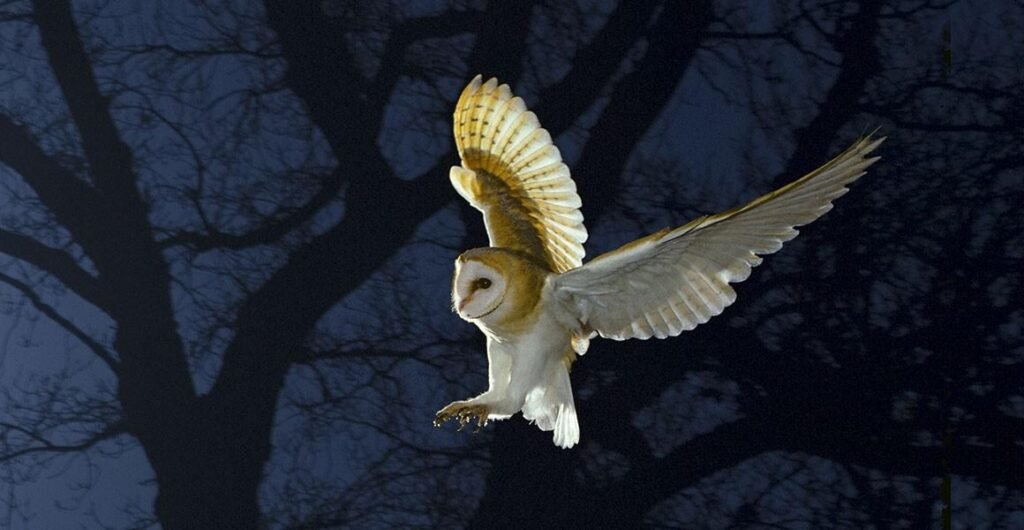
1. Can Birds See at Night?
Yes, many birds can see at night, but their ability depends on their species and the amount of light available.
Birds that are active during the day, such as many sparrows and finches, generally have vision adapted for daylight. They may have difficulty seeing in very dark conditions because their eyes are not specialized for nighttime activity.
Nocturnal birds, on the other hand, are adapted to function in low light. Owls are well-known examples. Their large eyes help collect available light, allowing them to detect movement and shapes when the surroundings are dim.
However, even excellent night vision has limits. In complete darkness, where no visible light is available, ordinary vision cannot provide a clear image. Birds must rely on other senses or wait for more light.
This is why some nighttime hunters combine sight with excellent hearing and other behavioral adaptations.
2. How Do Birds’ Eyes Work in Darkness?
To understand the night vision of birds, it helps to learn about two important types of light-sensitive cells in the retina: rods and cones.
Rods are especially sensitive to low levels of light. They help an animal detect shapes and movement when the surroundings are dim, although they provide limited color information.
Cones work best in brighter conditions and are important for seeing fine details and colors.
Many nocturnal birds have visual systems that are well suited to detecting light in dark environments. Their retinas may contain a high proportion of rod cells, helping them see when only a small amount of light is available.
The size and structure of the eyes also matter. Large eyes can gather more light, which is particularly useful when hunting at night.
Different bird species have different combinations of these features. Their eyesight reflects their lifestyle, feeding habits, habitat, and the time of day when they are most active.
3. Why Do Owls Have Excellent Night Vision?
Owls are among the best-known nighttime hunters in the bird world. Many owl species have large eyes relative to their body size, which helps them gather available light.
Their eyes are positioned toward the front of their heads, providing substantial overlap between the views of both eyes. This supports binocular vision and helps them judge the position and distance of objects.
Unlike human eyes, owl eyes are relatively fixed in their sockets. Owls compensate by turning their heads to look in different directions. Their flexible necks allow a wide range of head movement without needing to move their entire bodies.
Owls also possess sensitive hearing. In many species, their facial feathers form a disc that helps direct sound toward the ears. Some owls can locate prey using sound even when it is hidden by vegetation or darkness.
The combination of low-light vision, hearing, silent flight, and specialized hunting behavior makes many owls highly effective nighttime predators.
Nevertheless, not all owls are strictly nocturnal. Some species are active during the day or at dawn and dusk.
4. How Do Owls Hunt in the Dark?
Imagine a small animal moving through grass under a dark sky. An owl may detect the movement, turn its head, and carefully approach its prey.
Depending on the species, an owl can use both vision and hearing to locate food. Its eyesight helps detect movement, while its sensitive ears can identify sounds produced by small animals.
Some owls have asymmetrically positioned ears, meaning the ears are not exactly alike in position. This arrangement helps them compare the timing and intensity of sounds arriving from different directions.
After locating prey, an owl may glide toward it and use its sharp talons to capture it. Specialized feathers help many owls fly quietly, reducing the sound of their approach.
Owls eat different foods depending on their species. Their prey may include mice, other small mammals, insects, frogs, or small birds.
Hunting in darkness requires more than simply seeing well. An owl must recognize useful signals, estimate distance, move accurately, and conserve energy while searching for its next meal.
5. Which Birds Have Good Night Vision?
Several groups of birds have adaptations that help them remain active in low light.
Owls: Many species hunt at night and combine excellent low-light vision with sensitive hearing.
Nightjars: These birds are often active at dusk and during the night. They catch flying insects and have large mouths suited to this feeding style.
Night-herons: Some species forage at night or around twilight, catching fish and other aquatic animals in shallow water.
Kiwis: These flightless birds are often active at night. They use a combination of senses, including smell and touch, to find food on the forest floor.
Oilbirds: These unusual birds live in caves and forage at night for fruit. They can use echolocation, producing sounds and listening to returning echoes to help navigate in dark caves.
Certain seabirds: Some seabirds travel or forage during nighttime hours, using a combination of vision, smell, and other senses depending on the species and conditions.
It is important to remember that not every member of these groups follows exactly the same schedule. Some birds are nocturnal, while others are crepuscular, meaning they are most active at dawn and dusk.
6. Do All Birds See Colors at Night?
Birds have diverse visual systems, and many species have excellent color vision in daylight. Some birds can perceive colors beyond the range visible to humans, including ultraviolet wavelengths.
However, color vision generally becomes less useful as light levels fall. Cone cells require more light than rod cells to function effectively.
In dim conditions, a bird may rely more heavily on light-sensitive rod cells. As a result, colors can become harder to distinguish, and the bird may depend more on shapes, contrast, and movement.
The degree of change depends on the species and the available light.
For example, an owl hunting under moonlight may detect the outline and movement of prey without needing to identify its exact color. In many nighttime situations, recognizing a moving target is more important than seeing its colors.
Bird vision is not identical across species, and scientists continue to study how different visual systems support different lifestyles.
7. How Do Birds Find Food at Night?
Finding food in darkness can be challenging, but nocturnal birds have evolved several strategies.
Owls may use vision and hearing to locate small mammals or other prey. Nightjars often catch insects while flying, taking advantage of their wide mouths and feeding behavior.
Night-herons may stand quietly near water and wait for fish or other aquatic animals to come within striking distance.
Kiwis search through leaf litter and soil for worms and other invertebrates. Their long bills and sensitive bill-tip structures help them detect and locate food.
Oilbirds feed mainly on fruit and use echolocation to move around the dark caves where they roost. They then travel to fruiting trees to feed.
These examples demonstrate that there is no single method all nighttime birds use. Some depend heavily on vision, others rely on hearing or touch, and a few use specialized echolocation.
Their feeding strategies show how evolution can produce different solutions to the same challenge: finding food when sunlight is limited or absent.
8. Can Birds Fly at Night?
Yes, many birds can fly at night. Nocturnal birds hunt or forage after sunset, while many migratory species travel during nighttime hours.
Night migration can offer several advantages. The air may be cooler, some predators may be less active, and daytime hours can remain available for feeding or resting, depending on the species.
Migrating birds use multiple navigational cues. These can include stars, the Earth’s magnetic field, familiar landmarks, and other environmental signals. The importance of each cue differs among species.
However, nighttime flight has risks. Clouds can hide stars, artificial lights can disorient some migrating birds, and poor weather can make travel more difficult.
Not all birds are adapted to fly safely in darkness. A bird that depends heavily on daylight may prefer to rest after sunset.
Whether a bird flies at night depends on its biology, migration strategy, habitat, and environmental conditions.
9. How Do Birds Navigate in the Dark?
Bird navigation is more complex than simply looking at the surroundings. Different species use different combinations of sensory information.
Some migrating birds can use patterns in the night sky to help maintain their direction. Under suitable conditions, stars provide useful orientation cues.
Research also indicates that certain birds use information from the Earth’s magnetic field as part of their navigation system. The exact mechanisms vary, and some details remain active areas of scientific investigation.
Birds that regularly move through forests may use familiar landmarks, sounds, and knowledge of their surroundings. Birds living in caves can use echolocation to detect nearby obstacles.
Artificial lighting can interfere with normal orientation in some species, particularly during migration. Brightly illuminated buildings may attract or disorient birds, increasing the risk of collisions.
Protecting dark skies, reducing unnecessary outdoor lighting, and making windows more visible to birds can help reduce some of these hazards.
10. What Happens to Birds’ Eyes During the Day?
Birds active at night do not necessarily sleep through every daylight hour. Many rest during the day, while others spend some time feeding, preening, or moving around.
Owls may rest on branches or in sheltered locations during daylight. Their feathers can provide camouflage, helping them remain difficult to spot.
Some nocturnal birds have pupils that adjust to changing light conditions, just as human pupils do. This helps regulate how much light enters the eye.
Birds’ visual systems also differ in how they handle bright and dim environments. Species active across several light conditions may need to adjust their behavior according to the surroundings.
During rest, birds must also remain alert to possible dangers. Depending on the species, they may choose concealed perches or sheltered roosting sites.
The balance between rest, feeding, and activity is an important part of a bird’s daily routine.
11. How Do Birds Sleep at Night?
Birds have different sleeping patterns depending on their species and environment.
Many daytime birds roost in trees, bushes, cavities, or other protected locations after sunset. Some tuck their bills into their feathers to conserve warmth, while others stand on one leg when resting.
Owls often rest during the day and become more active after dark, although their routines vary.
Some birds can show unihemispheric slow-wave sleep, in which one brain hemisphere is in a sleep-like state while the other remains more alert. This can allow certain birds to remain aware of their surroundings while resting.
However, sleep patterns are not identical in all species, and this ability should not be assumed for every bird.
Safe roosting places are important because sleeping birds can be vulnerable to predators, extreme weather, and human disturbance.
Keeping trees and natural nesting habitats intact can help provide the protected resting locations that many birds need.
12. Can Birds See in Complete Darkness?
Most birds cannot see using ordinary vision when absolutely no visible light is available. Even animals with excellent night vision need at least some light to form a visual image.
Moonlight, starlight, and other faint sources of illumination can be enough for some nocturnal birds to detect shapes and movement.
In very dark environments, birds may rely more heavily on other senses. Owls can use hearing to locate prey, while kiwis use smell and touch to find food.
Oilbirds and some swiftlets are notable for using echolocation in dark caves. They produce sounds and detect returning echoes, helping them navigate around obstacles.
This does not mean that these birds see through darkness. Instead, they use specialized senses to gather information that vision cannot provide.
Each species has its own strengths and limitations, depending on its ecological needs.
13. How Artificial Lights Affect Nocturnal Birds
Artificial light has changed nighttime environments around the world. Streetlights, illuminated buildings, stadiums, and other sources can affect the behavior of birds that are active at night.
Some nocturnal birds may alter their feeding or resting patterns around artificial lights. Migrating birds can sometimes become disoriented by bright lighting, particularly during cloudy or foggy conditions when natural navigation cues are harder to see.
Birds attracted to illuminated areas may also face a higher risk of striking windows or structures.
There are practical ways to reduce these dangers. Outdoor lights can be switched off when they are not needed, directed downward, and fitted with suitable shields. Warmer, lower-intensity lighting may also reduce some unwanted effects, depending on the setting.
Building managers and homeowners can use bird-friendly window treatments and reduce unnecessary nighttime illumination.
Small changes to lighting practices can help make towns and cities safer for birds without eliminating useful lighting altogether.
14. Amazing Facts About the Night Vision of Birds
Here are some fascinating facts about birds that are active at night:
- Many owls have large eyes that help them collect light in dim conditions.
- Owls can turn their heads through a wide range of motion to look around.
- Sensitive hearing helps many owls locate prey when visibility is poor.
- Nightjars often catch insects at dusk or during the night.
- Kiwis use smell and touch as well as other senses when searching for food.
- Oilbirds use echolocation to navigate in dark caves.
- Many migratory birds travel at night and use a variety of navigation cues.
- Color vision is generally less effective in very dim light than in bright daylight.
- Artificial lights can disorient some birds and increase collision risks.
- Different species have different visual abilities, depending on their lifestyle and habitat.
These facts reveal that nighttime activity requires a remarkable combination of adaptations rather than a single extraordinary ability.
15. How Humans Can Help Nocturnal Birds
People can help nighttime birds by making homes, gardens, and cities safer.
Reduce unnecessary lighting: Switch off outdoor lights when they are not required, especially during migration seasons where relevant.
Protect natural habitats: Trees, forests, wetlands, and grasslands provide food, shelter, and roosting places.
Make windows safer: Use effective external markers or other proven bird-collision prevention methods.
Avoid disturbing roosts: Do not repeatedly shine bright lights at resting owls or other nocturnal birds.
Protect native plants: Healthy native vegetation supports insects, fruit, and other food resources.
Keep cats indoors at night where possible: This can reduce the risk of predation on vulnerable wildlife.
Support bird conservation: Learn about local nocturnal species and support responsible habitat protection efforts.
By taking these steps, people can help preserve the dark, healthy environments that many birds need to survive.
Frequently Asked Questions (FAQ)
Which bird has the best night vision?
Owls are famous for excellent low-light vision, but no single species can be declared the best in every situation. Night vision depends on the species and the task being performed.
Can ordinary birds see in the dark?
Many daytime birds can see in dim conditions to some extent, but they generally do not have the same adaptations for nighttime activity as specialized nocturnal birds.
Why do owls have large eyes?
Large eyes help many owls collect available light, improving their ability to detect objects in low-light environments.
Can birds see in complete darkness?
Ordinary vision requires some light. In complete darkness, birds must rely on other senses or specialized systems, such as echolocation in certain species.
Do all owls hunt at night?
No. Some owls are nocturnal, while others are active during the day or around dawn and dusk.
How do birds find food at night?
Depending on the species, birds use vision, hearing, smell, touch, or echolocation to find and capture food.
Why are bright lights dangerous for migrating birds?
Artificial lights can interfere with orientation and attract or disorient some birds, potentially increasing the risk of collisions with buildings and other structures.
Conclusion
The night vision of birds is an extraordinary example of how animals adapt to their environments. While many birds depend mainly on daylight, nocturnal species have developed specialized ways to hunt, navigate, find food, and survive after sunset.
Owls use large eyes and sensitive hearing to locate prey. Nightjars catch insects in dim conditions, while kiwis search for food using smell and touch. Oilbirds demonstrate an even more unusual adaptation by using echolocation to navigate through dark caves.
Yet even the most specialized birds have limitations. Complete darkness restricts ordinary vision, and artificial lights, habitat destruction, and human disturbance can create additional challenges.