
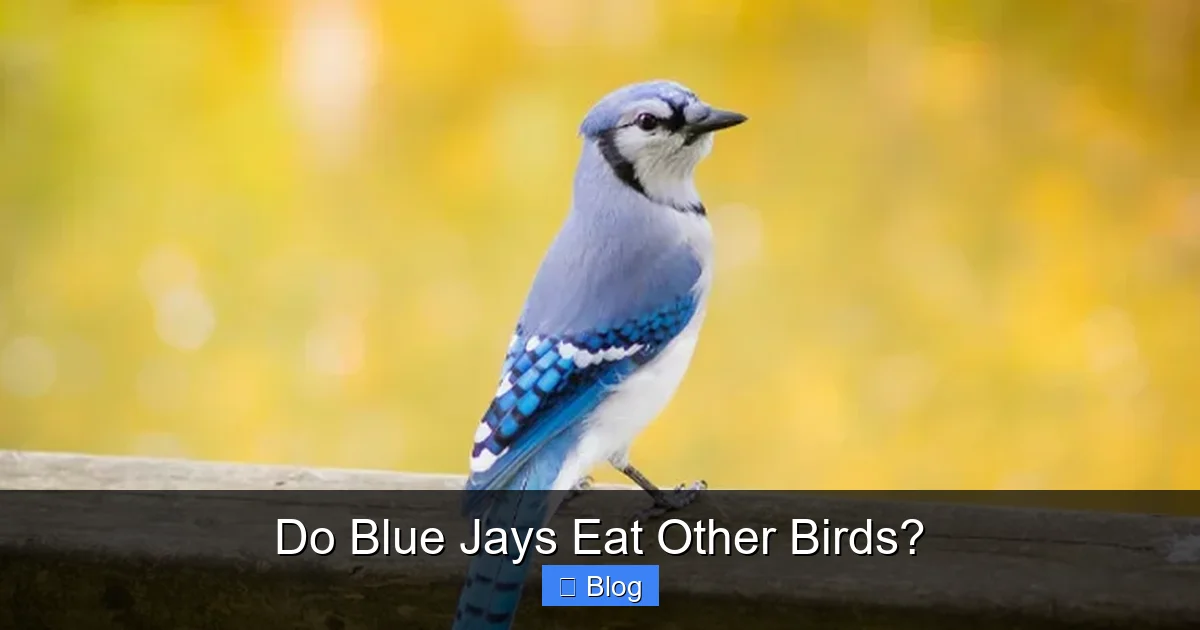
Blue Jays are omnivores with a highly varied diet that includes nuts, seeds, berries, insects, and occasionally, the eggs and nestlings of other birds. While they *do* engage in this predatory behavior, it constitutes a very small portion of their overall diet and is often opportunistic, not a primary food source. They are an integral part of their ecosystem, helping to maintain balance.
Do Blue Jays Eat Other Birds?
When you spot a Blue Jay, it’s often an unmistakable experience. Their vibrant blue, black, and white plumage, coupled with their bold calls and intelligent eyes, make them one of North America’s most striking and recognizable birds. They’re common visitors to backyard feeders, known for their love of peanuts and their sometimes boisterous personalities. But beneath that beautiful exterior lies a creature that often sparks a controversial question among bird enthusiasts: Do Blue Jays eat other birds?
It’s a question that can divide opinion, conjure vivid images, and sometimes lead to a misunderstanding of these complex birds. Many people have heard stories or even witnessed fleeting moments that suggest a darker side to their diet. So, let’s dive deep into the world of the Blue Jay’s eating habits, exploring their true nature as part of the intricate tapestry of the natural world. We’ll separate myth from reality and understand just what makes a Blue Jay tick when it comes to dinnertime.
The simple answer to “Do Blue Jays eat other birds?” is yes, they can. However, like many things in nature, the full picture is far more nuanced than a simple yes or no. It’s crucial to understand the context, frequency, and ecological role behind this behavior. Blue Jays are incredibly adaptable omnivores, and their diet tells a story of survival, opportunity, and the constant balancing act of an ecosystem. Let’s unpack what they truly eat and why this particular question generates so much discussion.
Key Takeaways
- Blue Jays are Omnivores: Their diet is incredibly diverse, primarily consisting of plant matter like acorns, seeds, and berries, along with a significant amount of insects.
- Opportunistic Predators: While not their main food source, Blue Jays *do* sometimes eat the eggs and nestlings of other birds, especially when food is scarce or opportunities arise.
- Not a Primary Diet Component: Predation on other birds’ young is a small, opportunistic part of their diet, not a regular or significant percentage of their food intake.
- Ecological Role: This behavior is a natural part of the ecosystem, contributing to natural selection and population control, much like other predators.
- Often Exaggerated: Observations of Blue Jays predating on nests are memorable and can lead to an overestimation of how frequently this occurs.
- Backyard Balance: Understanding their diet helps backyard bird watchers appreciate their complex role and take steps to support a diverse bird population.
- Highly Adaptable: Blue Jays are intelligent and adaptable, constantly adjusting their foraging strategies based on available food sources throughout the seasons.
Quick Answers to Common Questions
Do Blue Jays primarily eat other birds?
No, Blue Jays do not primarily eat other birds. Their diet consists mostly of plant matter like acorns, seeds, and berries, along with insects. Predation on other birds’ eggs or nestlings is a very small, opportunistic part of their diet.
What do Blue Jays eat most often?
Blue Jays most often eat acorns, seeds, berries, and a wide variety of insects such as caterpillars, grasshoppers, and beetles. They are also frequent visitors to bird feeders for sunflower seeds and peanuts.
Is it common to see a Blue Jay eating another bird?
It is not common to see a Blue Jay eating another bird. While rare instances of them taking eggs or nestlings are observed, these events are infrequent and represent a tiny fraction of their overall foraging behavior.
Are Blue Jays a significant threat to other bird populations?
No, Blue Jays are generally not considered a significant threat to other bird populations. Their occasional predation is a natural part of the ecosystem, and other factors like habitat loss, pesticides, and domestic cat predation have a far greater impact on bird numbers.
Can Blue Jays harm adult birds?
Blue Jays are not typically predators of healthy adult birds. While they might harass or chase smaller birds away from food sources, their predatory behavior is almost exclusively limited to eggs and very young, vulnerable nestlings.
📑 Table of Contents
The Blue Jay’s Diverse Diet: More Than Just Nuts
To truly understand whether Blue Jays eat other birds, we first need to look at their overall diet. Blue Jays are classic omnivores, meaning they eat both plant and animal matter. And when we say diverse, we mean *diverse*. Their menu changes with the seasons and what’s readily available, showcasing their impressive adaptability.
A True Omnivore’s Table
Blue Jays have a remarkable ability to find and utilize a wide variety of food sources. The bulk of their diet, especially outside of the breeding season, consists of plant material. This includes:
- Acorns: These are arguably their favorite and most important food source, especially in the fall. Blue Jays are incredible at caching acorns, burying thousands of them each year. This not only provides them with food through winter but also plays a vital role in oak tree propagation, as many forgotten acorns sprout.
- Seeds: Sunflower seeds, corn, and various other wild seeds are staples, especially at bird feeders.
- Berries and Fruits: They enjoy a wide array of wild berries, including blueberries, blackberries, cherries, and dogwood berries.
- Nuts: Beyond acorns, they also consume beech nuts and pecans.
Beyond the plant kingdom, Blue Jays are also significant consumers of animal protein, primarily from invertebrates:
- Insects: Caterpillars, grasshoppers, beetles, spiders, and grubs are common prey, particularly during the spring and summer when insects are abundant and provide essential protein for breeding adults and growing chicks.
- Snails and Slugs: These slow-moving creatures also make for an easy meal.
This varied diet allows them to thrive in many different habitats, from dense forests to suburban backyards.
Seasonal Shifts in Food Choices
The Blue Jay’s diet isn’t static; it constantly shifts with the seasons. In spring and summer, when they are breeding and raising young, their need for protein is at its peak. This is when they will actively hunt for insects to feed their hungry chicks. As fall approaches, their focus shifts dramatically to acorns and other nuts, which they diligently collect and cache for winter. Winter sees them relying heavily on their cached stores, as well as any available bird feeder offerings. This seasonal adaptation is key to their survival and why their diet composition is never truly fixed.
Unpacking the Predatory Question: Do Blue Jays Eat Other Birds?
Visual guide about Do Blue Jays Eat Other Birds?
Image source: birdchronicle.com
Now, let’s tackle the burning question directly: Do Blue Jays eat other birds? The scientific answer, based on observation, is yes, they occasionally do. However, it’s critical to understand the specifics of this behavior.
Eggs and Nestlings: An Opportunistic Meal
When Blue Jays predate on other birds, it is almost exclusively in the form of eggs or very young nestlings. They are not typically hunting adult birds. This behavior is usually opportunistic rather than systematic. If a Blue Jay discovers an unguarded nest with eggs or vulnerable chicks, it might take them. This often happens in suburban areas where nests might be more exposed or parents are temporarily away.
It’s a stark reality of nature that many species face predation during their most vulnerable life stages. Blue Jay predation is one of many factors that can impact nesting success for smaller songbirds. While such an event can be distressing for human observers, it is a natural part of the food web.
Why They Predate: Nutrition and Survival
Why would Blue Jays engage in such behavior? The reasons are rooted in fundamental biological needs:
- Protein and Calcium: Eggs are an excellent source of protein, fat, and calcium, all crucial nutrients, especially for breeding birds and their developing young. Nestlings also provide a concentrated source of protein.
- Energy Efficiency: Finding a nest with multiple easy-to-access meals can be a highly efficient way to acquire necessary nutrients, particularly when insects are scarce or hard to catch.
- Opportunism: Blue Jays are intelligent and adaptable. If an opportunity presents itself – an unattended nest, a weak or vulnerable chick – they will often take advantage of it.
This behavior, while jarring to our sensibilities, is simply another facet of their survival strategy, no different from how a squirrel might eat a bird’s egg, or how a hawk preys on an adult bird. They are not malicious; they are simply responding to their instinctual drives for survival and nourishment.
How Often Does This Happen? Separating Myth from Reality
The question “Do Blue Jays eat other birds?” often comes with an underlying assumption that this is a frequent or even common occurrence. However, research and extensive observation suggest this is largely a misconception.
Observational Bias and Exaggeration
The truth is, Blue Jay predation on eggs and nestlings is actually quite rare. Studies on Blue Jay diets often show that this behavior makes up a very small percentage, typically less than 1%, of their overall food intake. Most of their animal protein comes from insects.
So why does it seem so prevalent in popular lore?
- Memorable Events: Witnessing a Blue Jay raiding a nest is a dramatic and often unsettling event. Such an experience tends to stick in our minds far more than watching them harmlessly peck at an acorn or snatch a caterpillar. This creates an “observational bias,” where rare, impactful events are given more weight than common, mundane ones.
- Folklore and Misinformation: Over time, these dramatic observations can be exaggerated or misinterpreted, leading to a widespread belief that Blue Jays are habitual nest predators.
It’s important to remember that for every observed instance of a Blue Jay eating eggs or nestlings, there are thousands of hours of them eating nuts, seeds, and insects.
The Role of Scavenging
It’s also worth noting that Blue Jays are opportunistic scavengers. If they find a dead bird, they might peck at it, but this is distinct from actively hunting and killing an adult bird. This scavenging behavior is another way they utilize available resources in their environment, but it does not mean they are preying on healthy adult birds. Their beaks are not designed for tearing flesh in the same way a hawk’s or owl’s would be, but they can certainly consume carrion or small, soft bodies.
The Ecological Impact of Blue Jay Predation
While the idea of a beautiful bird like the Blue Jay eating other birds’ young can be disturbing to us, it’s a natural part of the intricate balance of nature. This behavior, though infrequent, plays a role in the broader ecosystem.
Natural Selection at Play
Predation is a fundamental force in natural selection. When Blue Jays (or any other predator) consume eggs or nestlings, they are, in a way, influencing the gene pool. The young that are taken are often the most vulnerable, perhaps from weaker parents who built an exposed nest, or those with less robust defenses. This helps ensure that the stronger, more adaptable individuals survive to reproduce, contributing to the overall health and resilience of the prey species.
Impact on Backyard Bird Populations
For backyard bird watchers, it’s natural to worry about the impact of Blue Jay predation on smaller songbird populations. However, studies show that Blue Jay predation typically does not significantly impact overall bird populations. Many other factors have a far greater influence on nest success and bird numbers, such as habitat loss, pesticide use, domestic cat predation, and adverse weather conditions.
A healthy ecosystem has a variety of predators and prey. Blue Jays, by occasionally predating on nests, are simply filling a niche within that system. Their primary ecological benefit is often considered to be their role as “forest planters” due to their acorn caching habits, which contributes far more to the ecosystem than their infrequent predatory activities.
Understanding Blue Jay Behavior in Your Backyard
If you’re a bird enthusiast, it’s important to observe all species in your backyard with an understanding of their natural behaviors, even those that might seem harsh. Blue Jays are incredibly interesting birds to watch, and their intelligence and complex social structures are fascinating.
Creating a Safe Haven for Small Birds
If you want to help protect smaller nesting birds in your backyard, rather than focusing solely on deterring Blue Jays, consider creating a more predator-aware environment:
- Dense Shrubbery and Cover: Plant native shrubs and trees that offer dense cover for nesting birds. This makes nests harder to find for all predators, including Blue Jays, squirrels, and cats.
- Nest Box Placement: Place nest boxes in locations that are less accessible to larger birds and other predators. Mounting them on poles with predator baffles can be very effective.
- Reduce Attractants for Opportunists: Keep your yard tidy, removing brush piles that might attract rodents (which also predate nests), and consider predator-proofing feeders to keep squirrels and larger birds from monopolizing them.
- Limit Domestic Cat Access: Domestic cats are a far greater threat to backyard bird populations than Blue Jays. Keeping cats indoors is one of the most impactful things you can do to protect all birds.
It’s important to remember that Blue Jays are native birds with their own place in the ecosystem. Attempting to eliminate or aggressively deter them can disrupt the natural balance of your backyard.
Observing Blue Jays Respectfully
Instead of viewing Blue Jays solely through the lens of their predatory behavior, try to appreciate their full spectrum of fascinating traits:
- Intelligence: They are highly intelligent birds, known for their problem-solving skills, mimicry (they can imitate hawk calls!), and complex social structures.
- Resourcefulness: Watch them cache acorns, cleverly find food, and adapt to different challenges.
- Communication: Their vocalizations are incredibly varied, from harsh “jay jay” calls to soft whispers.
Understanding that Blue Jays eat other birds occasionally, but that this is a small, natural part of their existence, allows us to appreciate them as the complex, vibrant, and essential members of our natural world that they truly are.
Conclusion
So, do Blue Jays eat other birds? The answer is yes, sometimes, particularly the eggs and nestlings of other bird species. However, it’s crucial to put this behavior into perspective. Blue Jays are highly omnivorous birds whose diet is overwhelmingly composed of plant matter like acorns, seeds, and berries, along with insects. Their predatory excursions into nests are opportunistic and represent a tiny fraction – often less than 1% – of their overall food intake.
This behavior, while it can be unsettling to observe, is a natural part of the food web and plays a small role in the ecosystem’s balance, contributing to natural selection. It is often overemphasized due to the memorable nature of such observations, leading to an exaggerated perception of its frequency. Blue Jays are resourceful, intelligent, and adaptable creatures, and their occasional predation on nests is simply one aspect of their complex lives, not a defining characteristic of their species. By understanding their full dietary spectrum, we can better appreciate these magnificent birds and their vital role in our natural environment.
🎥 Related Video: Woman Hand-Feeds Wild Blue Jay || ViralHog
📺 ViralHog
Occurred on August 25, 2023 / Flatrock, Newfoundland and Labrador, Canada “Mordi is a special bluejay in my yard who would …
Frequently Asked Questions
Are Blue Jays aggressive towards other birds?
Blue Jays can be aggressive, especially around food sources or during nesting season. They are known to dominate bird feeders and chase away smaller birds, but this is usually a competition for resources rather than predatory behavior towards adult birds.
Do Blue Jays eat baby birds or just eggs?
Blue Jays can eat both the eggs and very young nestlings (baby birds) of other species. This behavior is opportunistic and provides essential protein and calcium, especially for their own breeding needs.
What is the most important food for Blue Jays?
Acorns are often considered the most important food source for Blue Jays, particularly in the fall and winter. They collect and cache thousands of acorns, relying on them to survive through colder months and playing a crucial role in forest regeneration.
How can I protect small birds from Blue Jays in my yard?
To help protect smaller birds, provide dense, native shrubbery for cover and nesting sites. Place nest boxes in secure locations with predator baffles and consider measures to keep domestic cats indoors, as they are a more significant threat.
Are Blue Jays insectivores or carnivores?
Blue Jays are omnivores, meaning they eat both plant and animal matter. While they do consume a significant amount of insects (making them partially insectivorous), and occasionally eggs or nestlings (carnivorous behavior), neither fully defines their diverse diet.
Do Blue Jays share food with each other?
Blue Jays are known to cache food, especially acorns, for later consumption. While they don’t typically “share” food directly in the way some social mammals might, their caching behavior can inadvertently provide food for other animals, and they are social birds that forage in groups.