
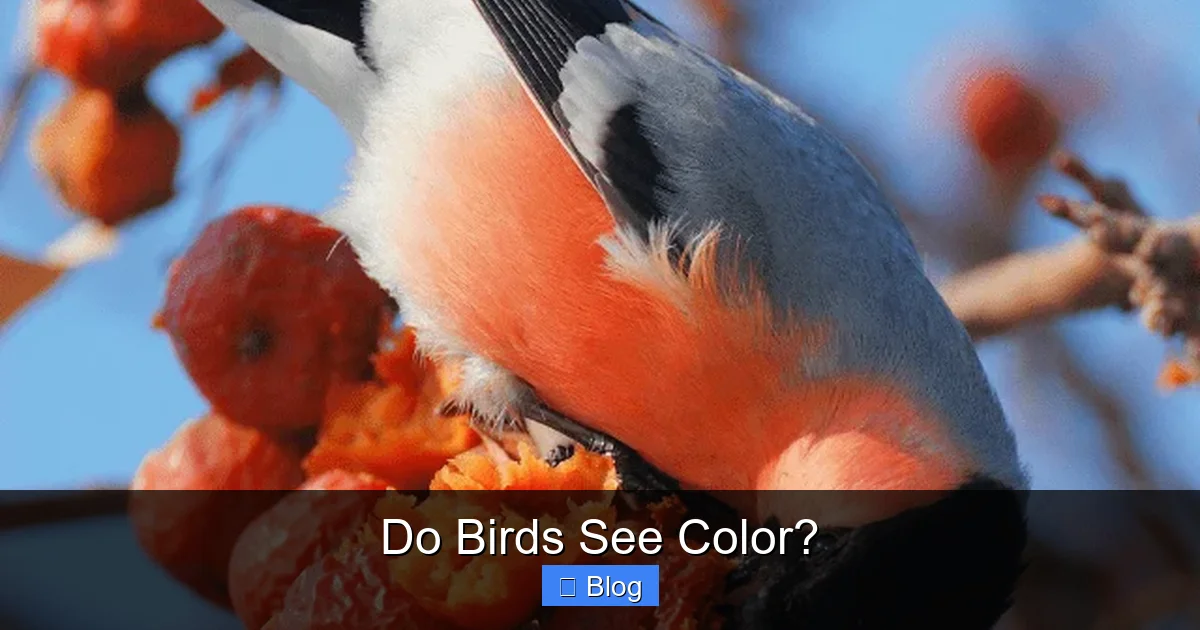
Birds possess a vastly superior color vision compared to humans, perceiving a spectrum that includes ultraviolet light. This enhanced visual capability is crucial for everything from foraging and mating to navigation, revealing a world far more vibrant and detailed than we can imagine. Their unique eye structure allows them to unlock hidden colors, making their world an astonishing tapestry of hues.
Do Birds See Color?
Have you ever stopped to truly appreciate the dazzling array of colors found in the natural world? From the vibrant petals of a flower to the iridescent sheen on a beetle’s back, our world is a symphony of hues. But what if I told you that, despite our own impressive visual capabilities, we humans are actually missing out on a huge portion of this colorful concert? What if the birds flitting past your window, the ones we often admire for their own brilliant plumage, are seeing a reality far more vivid and complex than anything we can comprehend?
It’s a fascinating question, isn’t it? For a long time, scientists wondered about avian vision. Could a creature with such tiny eyes truly perceive the world with the same richness, or even more richness, than we do? The answer, as it turns out, is a resounding and awe-inspiring “yes!” Birds don’t just see color; they see a spectrum of colors that makes our human perception look, well, a little bit monochrome. Get ready to have your mind blown, because we’re about to dive into the incredible world of avian color vision.
Prepare to discover a hidden dimension of sight, one where ultraviolet light plays a starring role and subtle differences in feather patterns become dazzling displays. Understanding how birds see color not only deepens our appreciation for these feathered marvels but also offers insights into their behavior, survival strategies, and the intricate ways they interact with their environment. So, let’s explore the science, the beauty, and the practical implications of a bird’s extraordinary ability to see color.
Key Takeaways
- Birds See UV Light: Unlike humans, most birds can perceive ultraviolet (UV) light, adding an entire dimension to their color spectrum.
- Tetrachromatic Vision: Many birds have four types of color-sensitive cone cells (tetrachromatic vision), sometimes even five (pentachromatic), compared to humans’ three.
- Enhanced Color Discrimination: This advanced vision allows birds to distinguish between colors that appear identical to the human eye, enabling them to find camouflaged food or differentiate subtle feather patterns.
- Unique Eye Structure: Bird eyes contain colored oil droplets within their cone cells, which act as filters to fine-tune color perception and sharpen their visual acuity.
- Crucial for Survival: Superior color vision is vital for birds to identify ripe fruits and insects, attract mates through vibrant (often UV-reflective) plumage, detect hidden predators, and navigate their environment.
- Varies by Species: While most birds see color exceptionally well, the specific range and importance of color vision can vary based on a species’ habitat, diet, and daily activity patterns (e.g., diurnal vs. nocturnal).
Quick Answers to Common Questions
Do birds see more colors than humans?
Yes, most birds see a broader spectrum of colors than humans, including ultraviolet (UV) light, thanks to having more types of color-sensitive cone cells in their eyes.
Can birds see UV light?
Absolutely! The vast majority of bird species can perceive UV light, which is invisible to humans. This ability is crucial for many aspects of their lives, from finding food to attracting mates.
Why is color vision important for birds?
Color vision is vital for birds for finding food (like ripe fruits or insects with UV patterns), attracting mates through vibrant plumage, identifying other birds, avoiding predators, and navigating their environment effectively.
Do nocturnal birds see color?
Nocturnal birds like owls have eyes adapted for low light, with more rod cells than cone cells. This means their color vision is significantly reduced, and their world is likely perceived in muted tones or largely monochromatic.
Are bird feeder colors important?
While the food itself is most important, certain feeder colors can attract specific bird species (e.g., red for hummingbirds, orange for orioles). Birds also see UV, so feeder materials reflecting UV light could potentially be more noticeable to them.
📑 Table of Contents
Beyond Human Perception: The Avian Color Spectrum
Let’s start by comparing our vision to theirs. Humans are trichromats. This means we have three types of color-sensitive cone cells in our eyes, each tuned to perceive specific wavelengths of light: red, green, and blue. Our brains then combine these signals to create the wide spectrum of colors we know and love. It’s pretty good, right? We can see millions of colors, distinguish between shades, and appreciate a sunset.
But here’s the kicker: most birds are tetrachromats. That’s right, they have *four* types of cone cells. And some species might even be pentachromats, boasting five types! This fourth type of cone cell is sensitive to ultraviolet (UV) light. Imagine adding an entirely new primary color to your palette – a color you can’t even begin to visualize. That’s what birds experience.
What is Tetrachromatic Vision?
Think of it this way: if you were trying to describe the color purple to someone who had only ever seen red and blue, it would be difficult. They could understand it as a mix, but they couldn’t truly *see* it in its own right. Now imagine a color that exists entirely outside the range of red, green, and blue. That’s what UV light is to us. For a bird with tetrachromatic vision, UV isn’t just a “mix” of other colors; it’s a distinct hue, a fundamental part of their visual world.
This expanded color spectrum means birds can see combinations and distinctions that are completely invisible to us. What appears to us as a plain, dull brown feather might be a riot of shimmering UV patterns to another bird. This isn’t just a cool party trick; it’s fundamental to their survival.
The Magic of Ultraviolet Light
The ability to see UV light opens up a secret world for birds. Many flowers have intricate UV patterns, acting as “nectar guides” that point insects and birds towards their sweet rewards. Imagine seeing a plain yellow flower suddenly light up with a vibrant UV bullseye in the center! This makes foraging much more efficient.
But it’s not just about flowers. Fruits, berries, and even the feathers of other birds often reflect UV light in specific ways. A bird might be able to tell if a fruit is ripe based on its UV signature, long before a human could judge by visible color alone. Similarly, distinguishing between species, assessing the health or age of a potential mate, or even spotting a camouflaged insect becomes much easier when you have an extra dimension of color perception.
The Science Behind Bird Vision: How They See Color
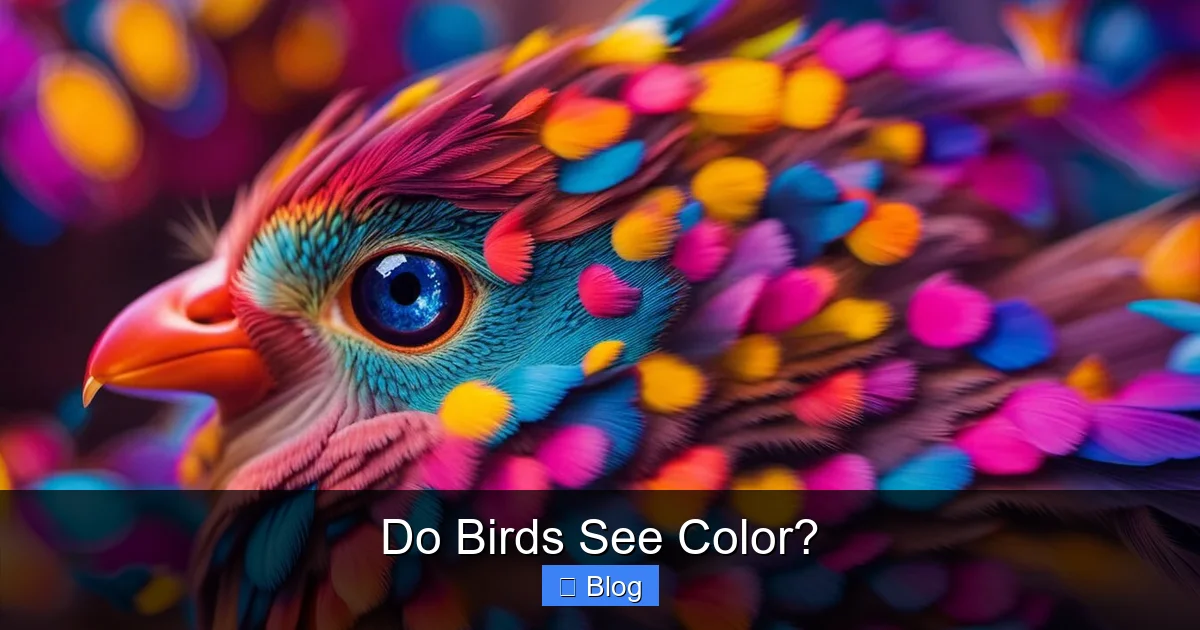
Visual guide about Do Birds See Color?
Image source: img.birding.pro
So, how do birds manage this incredible feat? It’s not just about having an extra cone cell. Their eyes are marvels of evolutionary engineering, packed with unique features that refine and enhance their color perception far beyond our own.
Cones and Oil Droplets: A Unique Design
While humans have three types of cone cells, birds typically have four, and sometimes five. These cone cells are specialized photoreceptor cells in the retina responsible for color vision. But what truly sets avian eyes apart is the presence of colored oil droplets within these cone cells.
Imagine tiny, perfectly spherical lenses, each filled with a specific color pigment – red, yellow, or clear. These oil droplets act like miniature filters. They sit on top of the cone cells, filtering the light before it reaches the photoreceptive pigments. This unique filtering system has several key advantages:
- Sharper Color Discrimination: The oil droplets narrow the range of wavelengths that each cone cell responds to. This means less overlap between the responses of different cone types, leading to much finer discrimination between very similar colors. Where two colors might blend together for us, birds can see distinct shades.
- Reduced Chromatic Aberration: Light of different wavelengths (colors) bends at slightly different angles when passing through a lens. This can cause blurry images, especially at the edges. The oil droplets help to reduce this effect, leading to sharper, clearer vision even across a wide color spectrum.
- Enhanced Contrast: By filtering light, the oil droplets can increase the contrast between objects and their backgrounds, making it easier to spot camouflaged prey or predators.
It’s like having a built-in set of perfect color filters for each individual pixel of their vision, constantly optimizing their perception for clarity and detail.
The Role of the Brain
Of course, seeing isn’t just about the eyes; it’s also about how the brain interprets the signals. Bird brains are wired to process this expanded color information. They have evolved specific neural pathways that allow them to make sense of the UV spectrum and the nuanced distinctions provided by their oil droplets.
This sophisticated processing means that the information gathered by their specialized eyes is effectively translated into a coherent and detailed perception of their environment. It’s not just an extra cone; it’s an entire system designed for hyper-specific color analysis.
Why Color Matters: Survival in a Vibrant World
The ability to see an extraordinary range of colors isn’t just a biological curiosity; it’s a fundamental tool for survival. For birds, color vision plays a critical role in almost every aspect of their daily lives.
Finding Food and Water
Think about foraging. For a bird, quickly identifying ripe berries or insects against a leafy background is literally a matter of life and death.
- Ripe Fruits and Berries: Many fruits change their color as they ripen. These color changes often include specific shifts in their UV reflectance that birds can easily detect, indicating they’re packed with sugars and nutrients. A bird might spot a ripe berry long before a human would, giving it a competitive edge.
- Insects and Prey: Some insects have specific UV patterns or colors that make them stand out from foliage for a bird but blend in for a human. For instance, bees have UV-reflective stripes, and certain caterpillars might have patterns visible only in UV, making them easy pickings for an observant bird.
- Nectar Guides in Flowers: As mentioned, flowers often have UV patterns that act as “landing strips” or “nectar arrows,” guiding birds directly to the nectar source, which might be invisible to us.
- Water Sources: While less studied, it’s plausible that differences in water quality or depth might be discernible through subtle color and UV cues, helping birds locate vital hydration.
This superior color vision essentially gives birds a “cheat sheet” for finding food, making their foraging efforts much more efficient and successful.
Attracting a Mate: Feathered Signals
Perhaps one of the most stunning examples of the importance of color vision is in avian courtship. Many bird species are renowned for their spectacular plumage, and it’s no coincidence.
- Sexual Selection: Bright, elaborate, and often UV-reflective feathers are signals of health, vigor, and good genes. A male bird with particularly vibrant, well-maintained plumage (including those invisible UV components) is signaling to females that he’s a strong, fit potential partner. Females use these visual cues to choose the best mate.
- Species Recognition: Subtle differences in feather coloration, especially in UV, can help birds distinguish between their own species and similar-looking ones, preventing hybridisation.
- Individual Recognition: Even within a species, individual birds might have unique UV signatures or color variations that allow them to recognize specific partners or rivals.
What might look like a simply colorful bird to us, could be a breathtaking, multi-dimensional display of biological advertising to another bird.
Avoiding Predators and Navigating Safely
Color vision isn’t just for finding food and mates; it’s also a crucial defense mechanism.
- Spotting Camouflage: Predators often rely on camouflage to blend into their surroundings. However, a bird with superior color and UV vision might be able to detect subtle differences in texture or pattern that reveal a hidden predator, giving it precious moments to escape.
- Recognizing Warning Colors: Some insects or animals use bright, warning coloration (aposematism) to signal their toxicity. Birds can quickly learn and recognize these colors, allowing them to avoid dangerous prey.
- Navigation: While not fully understood, environmental cues like distinct color gradients in landscapes, reflections off water, or even the polarized light of the sky (which is linked to color perception) could aid birds in navigation, especially during long migrations.
In essence, having exceptional color vision enhances a bird’s overall awareness of its environment, making it safer and more efficient in every aspect of its life.
Do All Birds See Color the Same Way?
While the general principle of advanced color vision applies to most birds, it’s important to remember that nature is full of adaptations. Not all birds perceive color in precisely the same manner, and there are fascinating variations based on their specific lifestyles and habitats.
Species-Specific Adaptations
Just as a bird’s beak shape adapts to its diet, its visual system adapts to its needs.
- Diurnal Birds: Most diurnal (day-active) birds, like songbirds, raptors, and hummingbirds, have highly developed color vision, including strong UV sensitivity. Their survival often depends on seeing fine details in bright, varied environments.
- Sea Birds: Some seabirds, like penguins, might have shifted their color perception slightly to better detect prey in the blue-green light that penetrates water. Their UV sensitivity might be less pronounced if their primary food source doesn’t rely on UV signals.
- Fruit-Eating Birds: Frugivorous (fruit-eating) birds often have exceptionally keen color vision, finely tuned to detect the specific wavelengths of light that indicate ripe, nutritious fruits.
These adaptations highlight how evolution tailors sensory systems to maximize a species’ chances of survival in its particular niche.
Nocturnal vs. Diurnal Birds
Here’s where things get interesting. What about nocturnal birds, like owls? Do birds see color in the dark? The answer is generally “not as well,” or sometimes, “not at all.”
Nocturnal birds have made a trade-off. Their eyes are optimized for low-light conditions, meaning they have a higher concentration of rod cells (which detect light intensity but not color) and fewer cone cells. While some nocturnal birds might retain a degree of color perception, particularly in dim light, their primary focus is on maximizing sensitivity to any available light to hunt in the dark. Their world is likely more monochromatic or seen in very muted tones compared to their diurnal relatives. This is a perfect example of how environmental pressures shape sensory capabilities.
Practical Implications: What This Means for Us
Understanding how birds see color isn’t just for scientists or avid birdwatchers; it has practical implications for anyone who interacts with birds, from backyard enthusiasts to urban planners.
Bird Feeders and Garden Design
If you enjoy attracting birds to your garden, knowing about their color vision can make a real difference.
- Feeder Colors: While food quality is paramount, the color of your bird feeder might play a role in attracting specific species. For instance, hummingbirds are famously attracted to red, which they likely associate with nectar-rich flowers. Oriole feeders are often orange. While birds don’t rely solely on feeder color, making it visually appealing in their spectrum could give it an edge. Consider bright, vibrant colors.
- Plant Choices: When designing a bird-friendly garden, think beyond human aesthetics. Incorporate plants that offer UV-reflective flowers or fruits, creating a visual feast for your feathered visitors. Native plants are often a great choice, as they’ve evolved alongside local bird species.
- Window Decals: One of the biggest dangers to birds is window collisions. Applying decals that reflect UV light can make windows more visible to birds, helping them perceive the glass as an obstacle rather than an open flight path. What looks like a clear window to us can be a deadly invisible barrier to a bird.
By designing our spaces with avian vision in mind, we can create safer and more inviting environments for birds.
Understanding Bird Behavior
Knowing about avian color vision can also help us interpret and appreciate bird behavior more deeply.
- Courtship Displays: When you see a male bird puffing up his feathers or performing an elaborate dance, remember that he’s putting on a show that includes hidden UV elements. His vibrant display is far more complex and dazzling to a female bird than it is to us.
- Foraging Habits: Observing how quickly a bird finds food, even when it seems camouflaged to our eyes, gives us a glimpse into their superior visual acuity and how they utilize their tetrachromatic vision to scan for ripe berries or hidden insects.
- Species Identification: Sometimes, closely related bird species look very similar to us, but subtle differences in their plumage’s UV reflectance allow them to distinguish each other. This explains why two seemingly identical birds might not interbreed.
This knowledge fosters a greater sense of wonder and respect for the natural world and the creatures that inhabit it. It reminds us that our human perception is just one way of experiencing reality, and there are many others, equally valid and incredibly rich.
Conclusion
So, do birds see color? The answer is an unequivocal and astonishing “yes,” but in a way that truly transcends our human understanding. Their world is not just a vibrant tapestry of reds, greens, and blues, but a shimmering, UV-enhanced spectacle, filled with hidden patterns and signals that remain invisible to us. From the intricate nectar guides on flowers to the dazzling, multi-dimensional displays of courtship plumage, color is a language birds speak fluently, deeply embedded in every aspect of their survival.
Their unique eye structure, complete with those remarkable colored oil droplets and an extra set of cone cells, is a testament to the power of evolution. It allows them to navigate, forage, mate, and escape danger in a hyper-aware, hyper-colorful reality. When you next watch a bird, take a moment to imagine the world through its eyes—a world brimming with an unseen spectrum of light and a kaleidoscope of colors that we can only begin to dream of. It’s a humbling and inspiring reminder of the incredible diversity and complexity of life on Earth, and of the many wonders that lie just beyond our human perception.
🎥 Related Video: What do Birds See? Bird vision & ultraviolet light!
📺 Ornithopter Zone
Birds can see all the colors we can see, plus ultraviolet. Could they have hidden colors and markings that aren’t visible to the …
Frequently Asked Questions
What is tetrachromatic vision?
Tetrachromatic vision refers to the ability to see color using four types of cone cells in the eye, each sensitive to a different range of light wavelengths. Most humans are trichromats with three cone types, but many birds are tetrachromats, allowing them to perceive an extended spectrum that includes ultraviolet light.
How do oil droplets enhance bird vision?
Bird cone cells contain unique colored oil droplets that act as filters, refining the light before it hits the photoreceptive pigments. These droplets sharpen color discrimination, reduce chromatic aberration (blurriness), and enhance contrast, allowing birds to distinguish between extremely similar colors and see their world with greater clarity.
Can birds distinguish between very similar colors?
Yes, thanks to their tetrachromatic vision and the filtering effect of oil droplets in their cone cells, birds have an exceptional ability to distinguish between very similar shades and hues that would appear identical to the human eye. This fine discrimination is crucial for tasks like finding camouflaged food.
Does a bird’s age affect its color vision?
While research is ongoing, it’s generally understood that a bird’s color vision is developed early in life. As with humans, extreme age or certain health conditions could potentially impact the sharpness or range of vision, but their fundamental tetrachromatic ability remains throughout most of their lifespan.
Are certain colors more attractive to birds?
Yes, certain colors are known to be particularly attractive to specific bird species due to their natural foraging and mating instincts. For example, hummingbirds are highly attracted to red and orange, as these colors are often associated with nectar-rich flowers. Many birds also respond strongly to UV-reflective colors.
How does UV vision help birds find food?
UV vision is incredibly beneficial for finding food. Many fruits and berries reflect UV light differently as they ripen, signaling their nutritional readiness. Similarly, numerous insects and flowers have unique UV patterns that act as “nectar guides” or make prey stand out against foliage, all invisible to the human eye but clear to a bird.