
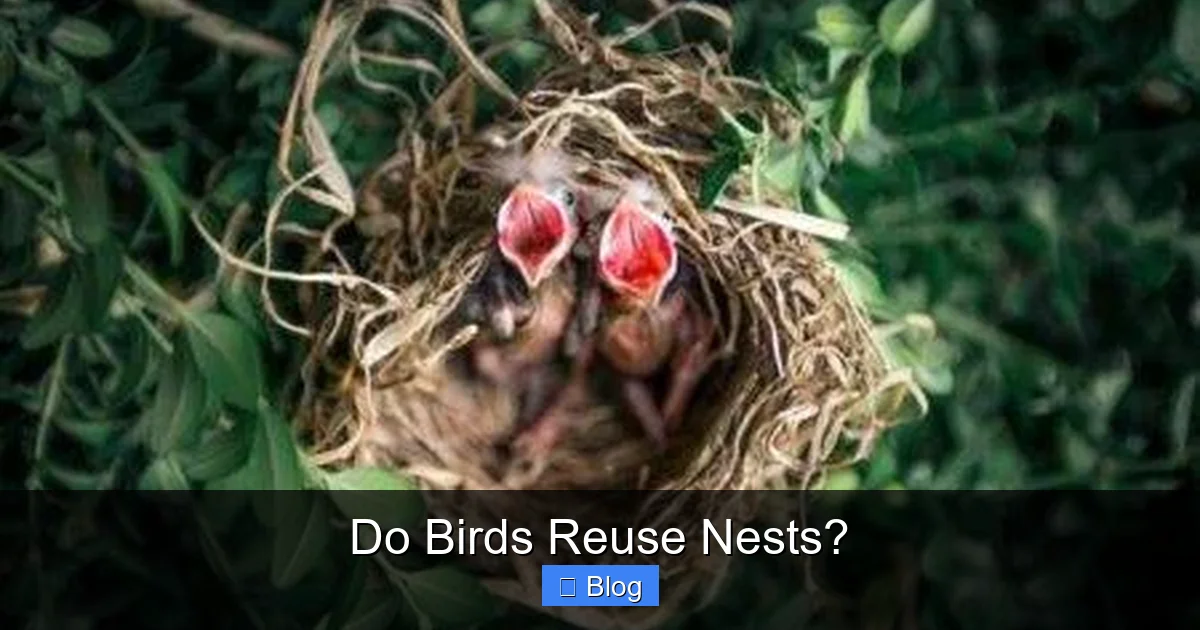
Do birds reuse nests? The answer is nuanced and depends largely on the bird species, nest type, and environmental factors. While many smaller songbirds typically build new nests each season to avoid parasites and maintain structural integrity, larger birds like raptors or cavity nesters often repair and reuse their sturdy structures or existing cavities for multiple breeding cycles, saving valuable energy and securing prime locations. Understanding these behaviors helps us appreciate the diverse strategies birds employ for successful reproduction.
Do Birds Reuse Nests?
Have you ever looked up at a beautifully constructed bird’s nest and wondered, “Will the birds be back next year to use that cozy home again?” It’s a common and fascinating question that brings us closer to understanding the intricate lives of our feathered friends. The thought of a bird returning to its carefully crafted abode seems logical, perhaps even heartwarming. After all, if it worked once, why wouldn’t it work again?
But as with many aspects of the natural world, the answer isn’t a simple yes or no. Bird behavior is incredibly diverse, influenced by everything from their species and the type of nest they build to the local environment and the prevalence of pesky parasites. Understanding whether birds reuse nests involves diving into a world of survival strategies, architectural marvels, and the constant battle against the elements and unseen threats. Let’s explore the fascinating truth behind bird nesting habits.
The Short Answer: It’s Complicated!
So, do birds reuse nests? The most accurate answer is: it depends entirely on the bird species and a variety of situational factors. Some birds are meticulous architects, building a brand-new home from scratch every single year, sometimes even for each brood within the same season! Others, particularly larger birds or those that nest in specific types of locations, are masters of renovation, repairing and reusing their established homes for many years, sometimes even decades. This varied approach highlights the incredible adaptability of avian life.
Why Some Birds Don’t Reuse Nests
For many of our backyard favorites, especially smaller songbirds like robins, finches, or warblers, the answer to “do birds reuse nests?” is almost always no. There are several compelling reasons for this annual construction spree:
- Parasite and Pathogen Buildup: This is arguably the biggest deterrent. Old nests are prime real estate for mites, fleas, ticks, and other parasites. These unwelcome guests can infest newly hatched chicks, weakening them, causing anemia, and sometimes even leading to death. Pathogens like bacteria and fungi can also thrive in old nesting material, posing a health risk. Starting fresh is often the safest bet for the new brood.
- Structural Integrity: Most small nests are marvels of engineering, but they aren’t built to withstand the test of time. Made from twigs, mud, grass, and spider silk, they are exposed to sun, rain, wind, and snow. A nest that held up for one season might be structurally compromised and prone to collapse by the next, especially once new chicks start wiggling around.
- Predator Detection: An old, abandoned nest can signal to predators (like snakes, raccoons, or jays) that this is a good hunting ground. By building a new nest in a slightly different location, even nearby, birds can reduce the risk of past predator encounters informing future attacks.
- Seasonal Needs: Different seasons might call for slightly different nesting strategies or locations. A tree that offered good cover in spring might be too exposed later in the year.
Why Some Birds Do Reuse Nests
Conversely, for many other species, particularly larger birds or those with specific nesting requirements, the answer to “do birds reuse nests?” is a resounding yes! And there are equally strong reasons for this:
- Energy Conservation: Building a large, sturdy nest, especially for a big bird like an eagle or osprey, can be an incredibly energy-intensive and time-consuming process. It can take weeks or even months to gather materials and construct a substantial platform. Repairing and adding to an existing structure is far more efficient, allowing birds to focus their energy on mating, incubating, and raising young.
- Security of Prime Locations: Some nesting sites are simply ideal – perfectly camouflaged, well-protected from predators, or offering an excellent vantage point. If a site has proven successful in the past, birds will often try to secure it again, especially if suitable alternatives are scarce.
- Durability of Construction: Nests built by birds that reuse them are often much more robust and durable. Think of the massive stick nests of raptors, which can weigh hundreds of pounds and are built to last for decades, growing larger each year.
Birds That (Almost) Always Build New: The Disposable Nest Makers
When we ask, “do birds reuse nests?”, most of the birds we see in our backyards fall into the category of annual nest builders. These are the tireless architects of spring, creating new masterpieces year after year.
The Smaller Songbirds
Species like American Robins, House Finches, Northern Cardinals, Blue Jays, and many warblers typically construct new nests for each breeding attempt. A female robin might build three different nests in a single season if she has multiple broods! The nests are often cup-shaped, made from twigs, mud, grass, and sometimes lined with finer materials like hair or feathers. While effective for one brood, these structures quickly degrade and become unsanitary.
Even though they don’t typically reuse the exact same nest structure, these birds often return to the same general territory or even the same tree where they had previous nesting success. They know the area offers good foraging and fewer predators, so they’ll simply choose a new, fresh spot within that familiar patch.
The Threat of Parasites and Predators
For these smaller birds, the risk of parasites accumulating in an old nest is simply too high. Imagine a nest full of tiny, blood-sucking mites. They could easily overwhelm a clutch of delicate chicks, leading to poor growth or even death. Predators, too, learn. If a raccoon or snake found a nest in a particular bush last year, it might check that same bush again. A new nest in a slightly different location is a fresh start and a way to break that pattern.
The Persistent Nest Builders: Birds That Do Reuse
Now, let’s look at the other side of the coin for “do birds reuse nests?”. Many species exhibit fascinating patterns of nest reuse, often due to the significant investment involved in their initial construction or the scarcity of suitable nesting locations.
Sturdy Structures and Longevity: Raptors and Large Birds
This group includes some of the most impressive nest builders and re-users. Birds like Bald Eagles, Ospreys, Red-tailed Hawks, and Great Horned Owls often use the same nest year after year, sometimes for decades or even centuries across generations of birds! These nests are massive, constructed from large sticks and branches, and built on sturdy platforms in tall trees or on cliffs.
- Bald Eagles: Known for their enormous nests, which can be 4-6 feet across and 2-4 feet deep, weighing over a ton! These nests are often repaired and added to annually, growing larger and more robust with each passing year. The sheer effort to build one makes reuse almost essential.
- Ospreys: Similar to eagles, ospreys build large stick nests, often on dead trees, utility poles, or artificial platforms. They are highly site-faithful and will return to the same nest year after year, adding new material to the top.
- Great Horned Owls: These owls are less inclined to build their own nests from scratch. Instead, they are opportunists, often taking over old nests built by hawks, eagles, or even squirrels. They may add some fresh lining, but the underlying structure is reused.
Cavity Nesters and Limited Real Estate
Cavity nesters are another group where “do birds reuse nests?” often gets a “yes.” These birds rely on existing holes in trees (or human-made birdhouses) for nesting. Since suitable cavities are a limited resource, finding a good one is like striking gold, and they will defend and reuse it fiercely.
- Woodpeckers (Primary Cavity Nesters): While they excavate new holes annually for nesting, they don’t typically reuse the *same* hole themselves for subsequent broods. However, the cavities they create are then often reused by a whole host of secondary cavity nesters.
- Secondary Cavity Nesters: This group includes birds like Eastern Bluebirds, Titmice, Wrens, Nuthatches, and some types of Owls. They cannot excavate their own holes but rely on natural tree cavities or old woodpecker holes. If a cavity provides a safe and successful nesting site, they will often return to it year after year, though they will usually remove old nesting material or build a fresh nest lining on top.
- Swallows and Martins: Bank Swallows excavate burrows in sandy banks and may reuse them, while Cliff Swallows and Barn Swallows build mud nests that they often repair and reuse. Purple Martins are colony nesters that readily use multi-compartment birdhouses and will return to the same gourds or houses annually.
How Birds “Reuse” Nests (It’s Not Always What You Think)
When we say birds reuse nests, it’s not always a matter of simply moving back into the exact same structure without any changes. There are nuances to how “reuse” actually happens.
Repair, Reinforce, and Relayer
For large birds like raptors, reuse almost always means repair and reinforcement. They’ll add new sticks, soften the inner cup with fresh leaves or down, and generally spiff up the place. The nest grows larger and more substantial over time. This annual maintenance helps to combat the wear and tear of weather and makes the nest stronger for the next brood.
Cavity nesters like bluebirds or chickadees will often remove old nesting material entirely from a nest box before building a new, fresh nest inside. In natural tree cavities, they might just build a new lining on top of the old, compacted material, creating a cleaner surface for their eggs and chicks.
Taking Over Abandoned Nests: The Opportunists
Some birds don’t just reuse their own nests, but also the nests of other species. Great Horned Owls, as mentioned, are famous for taking over hawk, crow, or even squirrel nests. Kestrels and some smaller owls might use old woodpecker holes. This is a smart strategy, saving them the immense energy of construction and allowing them to focus on foraging and breeding. It also highlights the interconnectedness of species in an ecosystem, where the efforts of one can benefit another.
The Same Location, a New Nest
Sometimes, when we observe birds “reusing” a spot, it’s not the actual nest structure they’re reusing, but rather the highly desirable location. A robin might build a new nest in the exact same branch crotch where a successful nest stood last year, but it will be an entirely new construction. This is a form of site fidelity, where the bird remembers a good location and capitalizes on that past success without incurring the risks of an old, potentially infested nest structure.
Factors Influencing Nest Reuse Decisions
The decision of “do birds reuse nests?” is not arbitrary. It’s a complex calculation influenced by several key factors:
- Species-Specific Behaviors: As we’ve seen, this is the primary driver. Genetics and evolutionary history have shaped these behaviors over millennia.
- Nest Type and Durability: A flimsy cup nest of a vireo simply won’t last compared to the sturdy platform nest of a Golden Eagle. The material and construction directly impact reusability.
- Availability of Nesting Sites: For birds that rely on specific types of sites (like cavities or tall, sturdy trees), the scarcity of good locations increases the likelihood of reuse. If a prime cavity is hard to find, a bird will certainly want to re-secure it.
- Presence of Pests and Pathogens: A nest that was heavily infested with mites last year is unlikely to be reused, even by species that typically reuse. Birds can detect these threats, though perhaps not always with perfect accuracy.
- Nesting Success from Previous Seasons: Birds are smart learners. If a nest site led to a successful brood last year (meaning chicks fledged), the parents are far more likely to return to that general area, and if applicable, to that specific nest structure, for the next breeding season. Success reinforces site fidelity.
Should You Clean Out Old Nests? A Gardener’s Dilemma
This is a common question, especially for those who have bird boxes in their gardens. The answer is generally yes, but with important caveats.
When to Leave Nests Alone
For nests built in natural settings – trees, bushes, eaves of your house – it’s almost always best to leave them alone. They will naturally decompose, and the materials will return to the ecosystem. Plus, disturbing them could be harmful to wildlife or, in some cases, illegal.
The Migratory Bird Treaty Act (MBTA) in the United States, for example, protects almost all native bird species, their nests, and eggs. This means you generally cannot disturb or remove a nest while it is active (i.e., contains eggs or chicks). Even empty nests of protected species may not be legally removed without a permit, although enforcement typically focuses on active nests. Always check with your local wildlife authorities if you’re unsure about a specific situation.
When to Consider Cleaning (Bird Boxes)
For human-made bird boxes, the situation changes. These enclosed spaces don’t allow for natural decomposition and ventilation as easily as open nests. Cleaning them out after the nesting season can be highly beneficial.
- Preventing Parasite Buildup: Removing old nests eliminates a breeding ground for parasites that could infest next year’s brood.
- Reducing Disease Transmission: It clears out old fecal matter and debris that could harbor bacteria or fungi.
- Maintaining Structural Integrity: Old, damp nesting material can rot the floor of a bird box over time. Cleaning helps the box last longer.
- Encouraging Reuse (of the box): Some species, like bluebirds, are more likely to use a clean box. They prefer to build a fresh nest.
How to Clean a Nest Box Safely
If you decide to clean your bird boxes, here are some tips:
- Timing is Key: Wait until you are absolutely certain the box is empty and no birds are actively using it (no eggs, no chicks, no adults roosting regularly). Late fall or early winter is usually ideal.
- Wear Protection: Use gloves and a dust mask to protect yourself from dust, parasites, and potential pathogens.
- Remove Old Material: Simply scoop out all the old nesting material.
- Scrub and Disinfect (Optional but Recommended): You can scrub the inside with a stiff brush and a solution of 10% bleach (1 part bleach to 9 parts water). Rinse thoroughly with plain water and allow it to air dry completely before replacing the lid. If you prefer a less harsh approach, hot water and soap followed by a thorough rinse and dry is often sufficient.
- Inspect and Repair: Check the box for damage, loose screws, or splintered wood. Make any necessary repairs so it’s ready for the next nesting season.
Conclusion
The question, “do birds reuse nests?”, opens up a fascinating window into the diverse and often surprising world of avian behavior. We’ve learned that there’s no single answer, but rather a spectrum of strategies tailored to each species’ needs and environment. From the tireless songbirds who meticulously craft a new home for every brood, driven by the need to escape parasites and build structurally sound havens, to the majestic raptors who annually reinforce their ancestral homes, birds employ a multitude of approaches to ensure the next generation thrives.
Understanding these behaviors not only satisfies our curiosity but also helps us become better stewards of the natural world. By recognizing why certain birds act the way they do – whether they opt to reuse nests or build anew – we can better appreciate their challenges and adapt our own actions, like safely maintaining bird boxes, to support their incredible journeys. So, the next time you spot a bird’s nest, take a moment to ponder its story, knowing that its fate is a testament to the enduring ingenuity of our feathered friends.
Key Takeaways
- Species-Specific Behavior: Whether birds reuse nests is primarily determined by their species. Smaller songbirds generally build new nests annually, while larger birds and cavity nesters are more inclined to reuse or repair existing structures.
- Parasite Avoidance: One major reason many birds avoid reusing nests is to prevent the buildup of parasites (like mites, fleas, and ticks) and pathogens, which can severely impact the health and survival of new chicks.
- Structural Integrity: Most smaller nests are not built to last beyond a single breeding season. They degrade due to weather exposure and use, making them structurally unsound for future attempts.
- Energy and Resource Conservation: For species that do reuse nests, like eagles or owls, it’s a significant energy-saving strategy. Building a large, robust nest can take weeks or months, so repairing an old one is much more efficient.
- Limited Nesting Sites: Cavity-nesting birds, which depend on holes in trees or human-made nest boxes, often reuse these specific sites due to the scarcity of suitable alternatives, even if they reline them.
- Management of Human-Made Nests: For bird boxes, it’s generally beneficial to clean them out annually after the breeding season to remove old nesting material, parasites, and prevent the accumulation of moisture, provided there are no legal restrictions (e.g., Migratory Bird Treaty Act).
- Observational Learning: Watching local bird behaviors, especially around nesting season, can offer fascinating insights into which birds reuse nests in your specific area and how they adapt their strategies.
Quick Answers to Common Questions
Do birds build new nests every year?
Many smaller bird species, especially songbirds like robins and finches, build a brand new nest every year, and sometimes even for each brood within a single season.
Which birds reuse their nests?
Larger birds like eagles, hawks, and ospreys often reuse their sturdy, massive nests for many years, as do some cavity nesters like bluebirds, owls, and swallows.
Why don’t birds reuse nests?
The primary reasons birds don’t reuse nests are to avoid the buildup of parasites (mites, fleas) and pathogens, and because many smaller nests are not structurally sound enough to last another season.
Is it okay to remove an old bird’s nest?
Generally, it’s best to leave natural nests alone. For human-made bird boxes, it’s often beneficial to clean them out after the breeding season, but always ensure the nest is completely empty and check local wildlife laws first.
Do birds recognize their old nest?
Birds certainly recognize successful nesting sites and often return to the same general territory or specific tree where they had success. Whether they reuse the exact nest depends on the species and conditions.
🎥 Related Video: Do Robins Reuse Nests?
📺 House Notebook
Read the blog post: https://housenotebook.com/do-robins-reuse-nests/ If you have a Robin nest somewhere in your house you …
Frequently Asked Questions
How long does it take for a bird to build a nest?
The time it takes to build a nest varies greatly by species. Small songbirds might complete a nest in 2-7 days, while larger birds like raptors can take weeks or even months to construct their initial, more elaborate nests.
Do birds ever abandon their nests?
Yes, birds will abandon nests for various reasons, including disturbance by humans or predators, failure of eggs to hatch, poor weather conditions, or if the nest becomes too infested with parasites. It’s a natural, albeit sometimes sad, part of their breeding cycle.
What happens to old bird nests?
Most old bird nests in natural settings simply decompose over time, returning their organic materials to the ecosystem. Some might be taken apart by other birds for materials, or fall apart due to weather. Nests of species that reuse them, however, continue to grow year after year.
Do birds reuse nests if their first brood failed?
If a first brood fails early in the season, some birds might try to build a new nest for a second attempt, often nearby. If the failure was due to a problem with the nest itself (e.g., instability, heavy parasite load), they are less likely to reuse that specific structure for future broods, even within the same season.
Is it illegal to remove an active bird nest?
In many regions, including the United States under the Migratory Bird Treaty Act, it is illegal to disturb, destroy, or remove an active nest (one containing eggs or young) of most native bird species without a permit. Always ensure a nest is truly abandoned and check local regulations before interacting with it.
Do birds reuse nests if a predator found it?
Birds are intelligent and learn from experience. If a nest was successfully predated, the birds are highly unlikely to reuse that specific nest or even that exact spot. They will usually select a new location for future nesting attempts to avoid repeating the previous failure.