
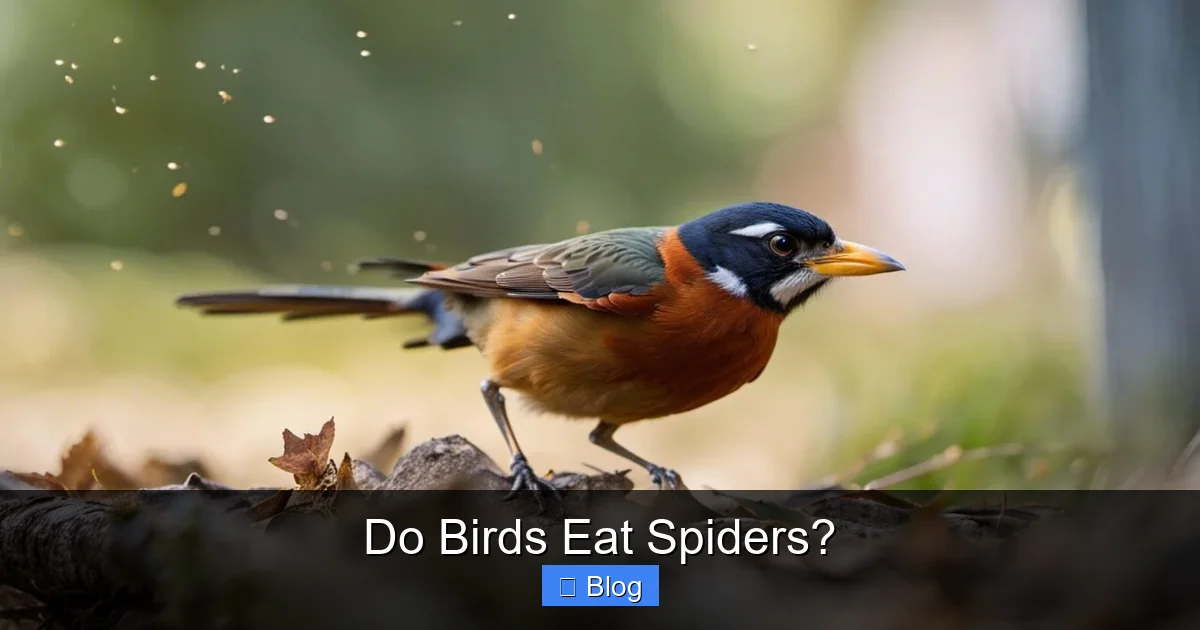
Yes, birds absolutely eat spiders! Many bird species, from tiny warblers to larger thrushes, actively hunt and consume spiders as a valuable part of their diet. Spiders are a rich source of protein and essential nutrients, making them an attractive and readily available food source for birds, especially during nesting season. This natural predation helps maintain ecological balance and provides vital sustenance for our feathered friends.
Have you ever found yourself watching a busy bird flitting through your garden, perhaps eyeing a spider web, and wondered: “Do birds eat spiders?” It’s a common and fascinating question that often pops into our minds. We know birds eat seeds, berries, and a whole host of insects, but what about those eight-legged creatures that weave intricate traps?
The short and sweet answer is a resounding “yes!” Many bird species do indeed eat spiders, often making them a regular and important part of their diet. Far from being too creepy or dangerous, spiders represent a readily available and highly nutritious food source for our feathered friends. This natural predation is a beautiful example of how interconnected life is in our gardens and wild spaces.
Let’s dive deeper into the world of avian diets to understand why spiders are on the menu, which birds are the primary spider hunters, and what makes these arachnids such a valuable snack. Get ready to discover more about the intricate relationship between birds and the tiny web-spinners around us!
Key Takeaways
- Yes, Birds Love Spiders: Most insectivorous and omnivorous bird species readily consume spiders, recognizing them as a valuable food source.
- Nutritional Goldmine: Spiders are packed with protein, fats, and other essential nutrients vital for bird health, growth, and energy, especially for young birds.
- Opportunistic Hunters: Birds are adaptable foragers, eating spiders they find while gleaning foliage, hunting in the air, or foraging on the ground.
- Wide Range of Spider-Eating Birds: From small warblers, chickadees, and wrens to larger thrushes, flycatchers, and even some owls, many different birds include spiders in their diet.
- Low Risk for Birds: While some spiders are venomous to humans, their venom rarely poses a threat to birds, and the silk is easily managed during consumption.
- Ecological Importance: Birds eating spiders play a crucial role in controlling insect and arachnid populations, contributing to healthy, balanced ecosystems.
Quick Answers to Common Questions
Do all birds eat spiders?
No, not all birds eat spiders. Birds with specialized diets, such as strict seed-eaters (finches), nectar-eaters (hummingbirds), or large raptors, typically do not. However, most insectivorous and omnivorous bird species include spiders in their diet.
Are common garden spiders safe for birds to eat?
Yes, common garden spiders are generally very safe for birds to eat. Their venom is usually not potent enough to harm a bird, and birds’ digestive systems are well-equipped to break down the spiders.
Do birds get tangled in spider webs when hunting?
While birds can sometimes encounter sticky web strands, they are usually very agile and adept at avoiding getting tangled. Small birds can often pluck a spider from its web with precision without becoming ensnared.
Can birds digest spider silk?
Yes, birds can digest small amounts of spider silk that might be consumed along with the spider. The silk is primarily protein, and a bird’s digestive system can break it down. Some birds even use spider silk in nest construction.
Why are spiders important for a bird’s diet?
Spiders are important for a bird’s diet because they are a rich source of protein and fats, which are essential nutrients for growth, energy, feather development, and especially for feeding young chicks during breeding season.
📑 Table of Contents
The Avian Diet: A Broad and Varied Palate
Birds are incredibly diverse creatures, and their diets reflect this diversity. While some birds are strict vegetarians, feeding only on seeds, fruits, or nectar, many others are insectivores (eating insects) or omnivores (eating a mix of plants and animals). It’s among these insectivorous and omnivorous groups that we find the most enthusiastic spider eaters.
Opportunistic Eaters
Birds are, by nature, very opportunistic eaters. They’ll consume whatever is readily available, easy to catch, and provides good nutrition, especially when they need to conserve energy or are feeding hungry chicks. Spiders often fit this bill perfectly. They can be found almost everywhere: on leaves, under bark, in grassy areas, and, of course, in their webs. This widespread distribution makes them an accessible food source year-round, though their numbers tend to peak in warmer months.
Nutritional Needs
Think about what a growing bird needs. Lots of protein for muscle development, fats for energy, and a whole range of vitamins and minerals. Spiders are tiny packages of concentrated nutrition. They are particularly rich in protein and fats, making them an excellent supplement to a bird’s diet, especially during demanding periods like nesting, egg-laying, and raising young. A mother bird expends a huge amount of energy finding food for her brood, and nutrient-dense spiders are a highly efficient meal.
Spiders on the Menu: Why Birds Love Them
Visual guide about Do Birds Eat Spiders?
Image source: rusticaly.com
So, why exactly are spiders such an appealing meal for birds? It goes beyond just being available. There are several key factors that make spiders a sought-after snack in the avian world.
Protein Powerhouses
As mentioned, spiders are little bundles of protein. For birds, protein is essential for growth, feather development, muscle repair, and egg production. Young birds, in particular, require a diet very high in protein to grow quickly and healthily. Just like how humans might eat meat or beans for protein, birds rely on sources like insects and spiders to meet these crucial dietary demands. Without enough protein, birds can become weak, grow poorly, and struggle to survive.
Abundance and Accessibility
Spiders are everywhere! From the smallest garden to the densest forest, under rocks, on fences, in bushes, and high in trees – you’ll find spiders. This sheer abundance means that birds don’t have to spend excessive energy hunting for them. They are often just a quick peck away. Their presence in diverse habitats means that birds living in different environments can all potentially benefit from adding spiders to their diet. They’re a reliable food source when other insects might be scarce.
Soft-Bodied Prey
Compared to some beetles or hard-shelled insects, most spiders have relatively soft bodies. This makes them easier for birds to consume and digest. A bird doesn’t want to waste energy trying to break down a tough exoskeleton when a soft, juicy spider is readily available. This ease of consumption makes spiders a highly efficient food item, allowing birds to quickly get the nutrients they need without much fuss.
Which Birds Are Spider-Hunters?
It’s not just a select few; a wide variety of bird species include spiders in their diet. If you’ve ever wondered, “Do birds eat spiders often?” the answer is yes, for many of these species! Their foraging habits and preferred habitats often dictate how frequently they encounter and consume spiders.
Warblers and Vireos
These small, active songbirds are often seen meticulously gleaning insects and spiders from leaves and twigs. Warblers, with their keen eyesight and agile movements, are experts at plucking spiders directly from foliage or carefully extracting them from their delicate webs. Vireos also share this foraging style, slowly and deliberately searching branches for hidden arachnids. Species like Yellow Warblers, Black-and-white Warblers, and Red-eyed Vireos are known spider enthusiasts.
Flycatchers and Swallows
While primarily aerial insectivores, these birds won’t turn down a spider when the opportunity arises. Flycatchers often perch and dart out to snatch flying insects, but they might also grab a spider exposed on a branch. Swallows, famous for their acrobatic flight, can sometimes be seen scooping up spiders that might be dangling from silk threads in the air. Eastern Phoebes and Barn Swallows are good examples.
Chickadees and Tits
These cheerful, acrobatic birds are constant foragers, often seen hanging upside down to inspect every crevice. Chickadees, Tits (like the Great Tit or Blue Tit in Europe), and their North American cousins, the Titmice, are very efficient at finding spiders hiding in bark, under leaves, and in dense vegetation. Their small size and agility allow them to access places larger birds cannot, making them excellent spider hunters.
Wrens and Thrushes
Wrens, known for their busy, almost frenetic energy, explore every nook and cranny for food. They’ll readily snatch up ground-dwelling spiders or those found low in vegetation. Thrushes, like the American Robin, primarily forage on the ground, probing the soil for worms and insects, but they will certainly consume spiders they unearth. Their larger size allows them to tackle bigger spiders too.
Even Larger Birds!
While less common, some larger birds, including certain owls and shrikes, might also consume larger spiders if they come across them. For example, a kestrel or shrike might occasionally prey on a large tarantula or wolf spider if it presents itself as an easy meal, though this is not their primary food source. The general rule is: if it’s edible and catchable, a bird might eat it!
Hunting Strategies: How Birds Catch Spiders
Birds employ a variety of clever techniques to catch spiders, adapted to their physical features and foraging preferences. Watching a bird hunt a spider is often a masterclass in precision and agility.
Gleaning from Foliage
This is one of the most common methods. Birds like warblers, vireos, and chickadees move slowly and methodically through leaves and branches, carefully inspecting surfaces. They “glean” by picking spiders directly off the vegetation with their sharp beaks. This requires excellent eyesight and the ability to distinguish a well-camouflaged spider from its surroundings.
Aerial Acrobatics
Some spiders can be found suspended from silk threads, either ballooning to new locations or simply dangling. Aerial insectivores, such as flycatchers and swallows, might snatch these airborne spiders mid-flight. While less frequent than catching flying insects, it’s still a viable way for these birds to add spiders to their diet.
Ground Foraging
Birds that forage on the ground, such as thrushes, wrens, and some sparrows, will encounter and consume ground-dwelling spiders. They might flip over leaves, poke through leaf litter, or simply spot spiders crawling across the ground. A robin pulling a spider from beneath a garden stone is a common sight.
Web Raiding
Yes, some birds will even “raid” spider webs! While most birds avoid getting tangled, smaller, agile birds can sometimes pluck a spider directly from its web, being careful to avoid the sticky strands. They might even eat the silk itself, though this is less common. For instance, a small wren might quickly dart in, grab the spider, and retreat before getting ensnared.
Are Spiders Dangerous for Birds? Addressing Concerns
A natural question arises: “Are spiders dangerous for birds to eat?” After all, some spiders are venomous to humans. Let’s clear up some common concerns.
Venomous Concerns?
For the vast majority of birds, spider venom is not an issue. Even highly venomous spiders like black widows or brown recluse spiders generally pose little threat to birds that consume them. There are several reasons for this:
- Dosage: The amount of venom in a single spider is usually too small to harm a bird, especially a larger one.
- Metabolism: Birds have a very fast metabolism that can often neutralize toxins more effectively than humans.
- Digestion: The bird’s digestive system quickly breaks down the venom before it can cause systemic harm.
- Behavior: Birds typically eat the spider whole, and the venom glands are rapidly processed along with the rest of the body.
So, you can rest assured that your backyard birds are perfectly safe munching on common garden spiders.
The Silk Challenge
Spider silk is incredibly strong and sticky, designed to trap prey. However, birds are surprisingly adept at managing it. They often avoid the stickiest parts of the web or quickly remove any clinging silk before swallowing the spider. The small amount of silk consumed along with the spider is easily digested and poses no problem. In fact, some birds even use spider silk as a building material for their nests, valuing its strength and elasticity!
Pesticides and Predators
While spiders themselves are rarely dangerous, what they eat can sometimes be. If spiders have consumed insects that were exposed to pesticides, those toxins could potentially accumulate in the spider and then be passed on to the bird. This is why it’s always best to avoid using chemical pesticides in your garden, not only for the direct health of birds but also for the health of their food sources. Other dangers, like domestic cats or habitat loss, are far greater threats to birds than the spiders they eat.
The Ecological Impact: Why It Matters
The fact that “Do birds eat spiders?” can be answered with a resounding “yes” has significant ecological implications. This natural predation is not just about a bird getting a meal; it’s about maintaining balance in our ecosystems.
Natural Pest Control
Birds are incredible natural pest controllers. By consuming spiders, they are helping to regulate the populations of these arachnids, which in turn helps regulate insect populations. Spiders themselves are beneficial predators, eating many pest insects. So, birds eating spiders is part of a complex chain of predation that keeps ecosystems healthy and prevents any single species from becoming overabundant. If you encourage birds in your garden, you’re investing in a natural, chemical-free pest control system for both insects and spiders.
Food Web Dynamics
Every time a bird eats a spider, it contributes to the intricate web of life. Energy flows from plants to herbivores (like insects) to predators (like spiders and birds). This continuous transfer of energy is fundamental to ecosystem health. When birds have a diverse diet that includes spiders, it strengthens these food web dynamics, making the ecosystem more resilient and stable. It highlights the importance of biodiversity, where each creature plays a vital role.
Supporting Bird Populations
By providing a crucial source of protein and fat, spiders directly support the health and reproduction of bird populations. During breeding season, when parent birds are working tirelessly to feed their chicks, easy access to nutrient-rich food like spiders can be the difference between a successful brood and one that struggles. Promoting a healthy garden ecosystem that supports a variety of insects and spiders will, in turn, support a vibrant bird population.
Conclusion
So, the next time you see a bird meticulously searching foliage or darting after a dangling thread, you can confidently answer the question, “Do birds eat spiders?” with a firm “absolutely!” These eight-legged creatures are much more than just creepy crawlies; they are essential, nutritious components of many birds’ diets, playing a crucial role in their survival and the overall health of our ecosystems.
From tiny warblers to robust thrushes, birds across many species recognize the value of a good spider meal. Their adaptability, efficient hunting strategies, and resilient digestive systems ensure that spiders remain a safe and beneficial part of their varied diet. By understanding and appreciating this fascinating aspect of bird behavior, we gain a deeper insight into the delicate balance of nature and the countless ways living things interact to thrive. Encourage biodiversity in your own backyard, and you’ll be supporting a thriving food web for all your feathered visitors!
🎥 Related Video: The Biggest Spider on the Planet | Bite, Sting, Kill
📺 Nat Geo Animals
The Goliath bird-eating spider is a stealth hunter in South American forests. ➡ Subscribe: https://on.natgeo.com/41A7tf0 …
Frequently Asked Questions
Are spiders a primary food source for birds?
For many insectivorous birds, spiders are a significant and regular part of their diet, but rarely the sole food source. They are an important supplement, providing crucial protein and fats alongside insects, seeds, and fruits, depending on the bird species and season.
Do birds eat venomous spiders like black widows?
Yes, birds can and do eat venomous spiders like black widows. The venom typically does not affect birds due to their high metabolism and efficient digestive systems, which quickly neutralize the toxins before they can cause harm.
How do birds find spiders?
Birds find spiders using their excellent eyesight and keen senses. They observe movement, search meticulously on leaves, bark, and the ground, and sometimes even snatch spiders from the air. Their foraging techniques are adapted to the specific habitats where spiders reside.
Can young birds eat spiders?
Absolutely! Young birds, or chicks, have a very high demand for protein to fuel their rapid growth. Parent birds often actively seek out protein-rich foods like spiders to feed their hungry brood, making spiders a vital part of a nestling’s diet.
Does spider abundance affect bird populations?
Yes, spider abundance can certainly affect bird populations. A healthy population of spiders provides a stable food source, contributing to the overall health and reproductive success of birds that rely on them for food, especially during breeding seasons when food demands are high.
Are there any birds that specialize in eating spiders?
While many birds eat spiders, few “specialize” exclusively in them. However, certain insectivorous birds, like many species of warblers, vireos, and chickadees, are particularly adept at finding and consuming spiders, making them a very regular and significant part of their diet.