
Introduction
Birds are among the most fascinating creatures in the natural world. One of their most remarkable abilities is flying. From tiny hummingbirds hovering beside flowers to powerful eagles soaring high above mountains, birds demonstrate incredible flying skills that continue to amaze people around the world.
Birds and their amazing flying skills have fascinated scientists, photographers, nature lovers, and birdwatchers for centuries. Some birds can fly at extraordinary speeds, while others travel thousands of kilometers during seasonal migration. Certain species can hover in one place, glide without constantly flapping their wings, or perform rapid turns to catch their prey.
Flying is not simply about moving through the air. It requires strength, balance, coordination, energy, and the ability to respond to changing wind and weather conditions. Birds have developed special body structures, lightweight skeletons, powerful flight muscles, and feathers that help them fly efficiently.
In this vlog, we will explore how birds fly, discover their different flying techniques, learn about the fastest and most skillful flying birds, and understand why flight is so important for their survival.

How Do Birds Fly?
Birds fly through the air by using their wings, feathers, and powerful flight muscles. Their bodies are adapted to produce lift, control movement, and overcome the force of gravity.
The Role of Wings
A bird’s wings are essential for flight. Their shape helps air move around the wing in a way that produces lift. During active flight, birds also use their wings to generate thrust, which moves them forward.
Different species have different wing shapes because they have different flying needs. Long, narrow wings can be useful for gliding over oceans, while shorter, rounded wings can help birds maneuver through forests.
The Importance of Feathers
Feathers are lightweight structures that help birds fly, remain balanced, and control their direction.
The long feathers at the outer part of the wings help generate lift and thrust. Tail feathers help many birds steer, brake, and maintain stability.
Feathers also provide insulation and protection, making them important for more than just flying.
Powerful Flight Muscles
Flying requires energy. Birds use strong muscles in their chest to move their wings. These muscles are especially developed in species that spend considerable time flying.
A bird’s heart and respiratory system also help supply oxygen to its muscles during demanding activity.
Lightweight Bodies
Many flying birds have relatively lightweight skeletons and streamlined bodies that help reduce the energy needed for flight.
However, not every bird has the same body structure. Wing shape, body size, muscle strength, and flight behavior vary widely among species.
Different Types of Bird Flying Skills
Birds use several flying techniques depending on their species, environment, and purpose.
1. Flapping Flight
Flapping flight occurs when birds repeatedly move their wings to generate lift and thrust.
Small birds, such as sparrows, often use flapping flight when moving between trees, searching for food, or escaping danger.
This technique allows birds to take off, gain height, accelerate, and maneuver through the air.
However, continuous flapping can require considerable energy. Some birds alternate between flapping and short periods of gliding to conserve energy.
2. Soaring Flight
Soaring is a flying technique in which birds use rising air currents to gain or maintain altitude with little flapping.
Eagles, vultures, and some storks are well known for their ability to soar.
On sunny days, the ground heats unevenly, causing warm air to rise. These rising columns of air are called thermals. Birds can circle within them to gain height and then glide toward their destination.
Soaring helps large birds travel long distances while reducing the energy they need to flap their wings.
3. Gliding Flight
Gliding occurs when a bird spreads its wings and moves forward while gradually losing altitude, unless it encounters rising air.
Many seabirds use gliding to travel efficiently over the ocean. They may also take advantage of wind patterns near waves or cliffs.
Gliding allows birds to cover considerable distances without continuous wingbeats.
4. Hovering Flight
Hovering allows a bird to remain nearly stationary in the air.
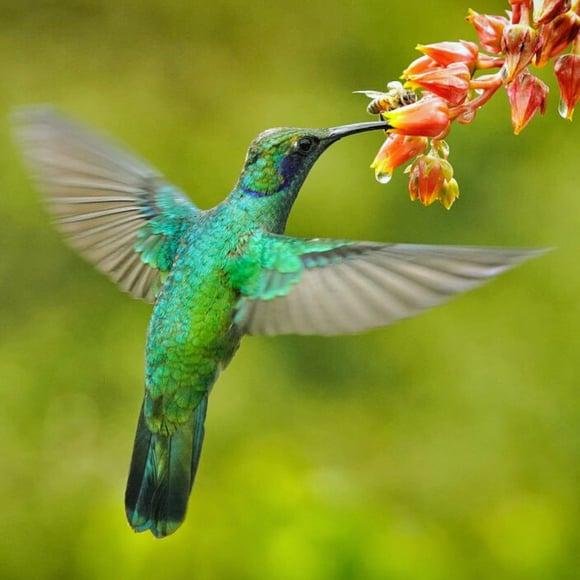
Hummingbirds are famous for this remarkable skill. They can rapidly move their wings in a figure-eight-like pattern that helps generate lift during both the forward and backward parts of the wing stroke.
This ability allows hummingbirds to feed on nectar while remaining in front of flowers.
Some other birds, including kestrels, can hover in a headwind while searching for prey below.
5. Diving Flight
Diving is a fast downward movement through the air. Some birds use it to catch prey, while others dive to escape danger or reach a destination quickly.
The peregrine falcon is particularly famous for its high-speed hunting dives, known as stoops.
During a dive, the falcon folds its wings close to its body, reducing drag and allowing it to accelerate dramatically.
6. Maneuvering Flight
Some birds are excellent at making sharp turns, changing direction quickly, and flying through narrow spaces.
Swallows, swifts, and many small woodland birds demonstrate impressive maneuverability.
These abilities are useful when catching flying insects, avoiding obstacles, or escaping predators.
The shape of a bird’s wings, its tail movements, and its ability to adjust its body position all contribute to maneuverability.
The Fastest Flying Birds in the World
Some birds are capable of extraordinary speeds, although their performance depends on whether they are diving, flying horizontally, or using favorable winds.
Peregrine Falcon
The peregrine falcon is widely recognized as the fastest animal in a dive. During a hunting stoop, it can exceed 300 kilometers per hour under suitable conditions.
Its streamlined body, pointed wings, and specialized flight control help it accelerate toward prey.
Peregrine falcons hunt other birds and use their speed to surprise prey in the air.
Common Swift
Common swifts are remarkable aerial birds that spend much of their lives on the wing. They catch insects while flying and can travel long distances between feeding areas.
Their long, narrow wings and streamlined bodies support efficient flight.
Golden Eagle
The golden eagle is a powerful bird of prey that uses a combination of flapping, soaring, and gliding.
It can cover large distances while searching for prey and uses its sharp eyesight to identify potential targets from above.
Frigatebirds
Frigatebirds are excellent long-distance fliers. Their long wings help them remain airborne for extended periods, especially over tropical oceans.
They can use rising air and wind conditions to travel with relatively little flapping.
Their ability to remain aloft is particularly useful in marine environments where landing on the water is difficult.
Hummingbirds: Masters of Hovering
Hummingbirds are among the most extraordinary flying birds on Earth.
They are famous for their small size, rapid wingbeats, and ability to hover beside flowers. Many species can also fly backward for short distances, an unusual ability among birds.
How Do Hummingbirds Hover?
A hummingbird’s wings move rapidly through a wide range of motion. Unlike many other birds, hummingbirds can generate useful lift during both halves of the wing stroke.
This allows them to maintain their position while feeding on nectar.
Why Is Hovering Useful?
Flowers do not always provide a convenient place to land. Hovering enables hummingbirds to feed while keeping their bodies in a stable position in front of a flower.
However, hovering requires substantial energy. Hummingbirds therefore need frequent access to food to support their demanding lifestyle.
Their Incredible Agility
Hummingbirds can accelerate, stop, and change direction quickly. These abilities help them visit many flowers and compete for feeding territories.
Their flight skills demonstrate how a bird’s body can evolve to meet a highly specialized need.
How Eagles Use Their Wings to Soar
Eagles are among the most impressive soaring birds. Their broad wings allow them to travel across open landscapes while taking advantage of rising air currents.
Using Warm Air
When the sun warms the ground, some areas heat more quickly than others. The warm air above these areas may rise, forming thermals.
Eagles can circle inside these rising air currents to gain altitude. After climbing, they may glide toward another thermal.
Searching for Prey
Soaring allows eagles to survey large areas without constantly flapping their wings.
Their excellent eyesight helps them identify animals on the ground or in nearby habitats.
Once an eagle identifies a potential meal, it can adjust its flight path and descend toward the target.
Saving Energy
Large birds require substantial energy to remain airborne. Soaring and gliding can reduce the effort needed to travel long distances.
These techniques are particularly valuable for eagles and other large birds that hunt across extensive territories.
How Birds Fly Long Distances
Many birds undertake long journeys during seasonal migration. Some travel between continents, crossing mountains, deserts, and oceans.
Why Do Birds Migrate?
Birds migrate for several reasons, including changes in food availability, breeding opportunities, and seasonal weather.
When food becomes scarce in one region, some birds travel to another region where conditions are more favorable.
Many return to their breeding grounds when the season changes.
Conserving Energy During Migration
Migratory birds use several strategies to make long journeys more manageable.
They may alternate between flapping and gliding, use favorable winds, and stop at suitable places to rest and feed.
Some species accumulate fat before migration because stored fat provides energy during long flights.
Navigation During Flight
Birds may use Earth’s magnetic field, the sun, stars, familiar landmarks, and other environmental cues to help navigate.
The combination of cues varies by species. Their navigation abilities help them follow migration routes and reach important seasonal habitats.
How Birds Fly in Groups
Have you ever watched a flock of birds flying together across the sky? Group flight can be a beautiful example of coordination and communication.
The V Formation
Many geese and some other large birds fly in a V-shaped formation.
The formation may help birds save energy by taking advantage of favorable air movement created by the wings of birds ahead. The precise benefit depends on positioning and flight conditions.
Birds may change places within the formation so that the effort of leading is shared.
Communication Within the Flock
Birds can use calls, body movements, and visual cues to maintain contact with other flock members.
Group coordination can help birds remain together during migration and respond to changes in their surroundings.
Safety in Numbers
Flying in groups may also help birds detect predators. More individuals can watch for danger, although group flight does not eliminate risk.
Not every bird species flies in a V formation. Flock shapes and group behavior differ according to species and circumstances.
How Birds Control Their Direction in the Air
Birds must constantly control their direction and balance while flying.
The Role of Tail Feathers
Tail feathers act like a control surface for many birds. Adjusting the tail can help with steering, braking, and maintaining stability.
When landing, a bird may spread its tail and change its wing position to slow down.
Wing Adjustments
Birds can change the angle and shape of their wings to turn, climb, descend, or slow their movement.
Some birds have flexible feathers that help control airflow during different flight conditions.
Body Position
A bird can tilt or rotate its body to change direction. Coordinated movements of the wings, tail, and body allow it to maneuver with remarkable precision.
These adjustments are particularly important for birds that fly through forests or pursue moving prey.
How Birds Take Off and Land
Taking off and landing require careful coordination.
How Birds Take Off
Many birds begin by pushing off with their legs while flapping their wings to gain lift.
Large birds may need a running start or a short period of flapping to become airborne. Smaller birds can often take off directly from a branch or the ground.
The method depends on the bird’s size, body structure, and environment.
How Birds Land
Before landing, birds usually slow down by adjusting their wings and tail.
They may spread their wings, raise their tail, and extend their legs to prepare for contact with a branch, nest, or the ground.
Accurate landing is essential for reaching food sources, resting places, and nesting sites safely.
How Weather Affects Bird Flight
Weather conditions can make flying easier or more difficult.
Wind
Birds can use favorable winds to travel efficiently. However, strong crosswinds may push them away from their intended route.
Some birds adjust their direction or postpone a journey when wind conditions become dangerous.
Rain
Rain can make feathers wet and increase the difficulty of flight, depending on the intensity of the rainfall and the species.
Heavy rain may reduce visibility and make it harder for birds to find food or safe landing places.
Storms
Severe storms can threaten birds by producing powerful winds, turbulence, and heavy precipitation.
Birds may seek shelter when possible or change their routes to avoid dangerous weather.
Temperature
Air temperature affects air density and the formation of thermals. These changes can influence soaring conditions and the amount of effort required for flight.
Birds respond to weather through a combination of behavior, physical adaptations, and experience.
Why Some Birds Cannot Fly
Although flight is common among birds, some species have evolved to live without it.
Ostriches and emus are adapted for running, while penguins have wings specialized for swimming. Kiwis spend much of their time searching for food on the forest floor.
These birds show that different environments can favor different abilities.
Flightlessness can develop when flying offers fewer advantages than other forms of movement. However, flightless birds may be especially vulnerable to introduced predators because they cannot escape by taking off into the air.
How Birds Inspire Human Technology
Bird flight has inspired scientists, engineers, and inventors for centuries.
The Study of Wings
Researchers study bird wings to understand how shape, flexibility, and movement affect airflow.
These observations contribute to research into aircraft wings and other aerodynamic designs.
Efficient Movement
Birds demonstrate how changing body position and using air currents can reduce energy demands.
Scientists investigate these principles to improve the efficiency of flying machines.
Drones and Robotics
Some engineers study birds’ ability to maneuver through complex environments when developing small flying robots and drones.
Bird-inspired research may help improve stability, control, and movement in difficult spaces.
Birds and airplanes are not identical, however. Living birds can adjust their feathers and muscles in ways that conventional aircraft cannot fully reproduce.
How We Can Protect Birds and Their Flying Habitats
Birds need safe environments to feed, breed, rest, and migrate.
Human activities can create several dangers, including habitat destruction, window collisions, pollution, and poorly managed artificial lighting.
Here are some ways we can help:
- Protect forests, wetlands, grasslands, and coastal habitats.
- Reduce unnecessary outdoor lighting, especially during migration seasons.
- Make windows more visible to birds to reduce collisions.
- Avoid disturbing nesting birds.
- Keep domestic cats away from vulnerable wild birds.
- Support responsible bird conservation projects.
- Plant suitable native vegetation that provides food and shelter.
Protecting birds also helps maintain healthy ecosystems, because birds contribute to seed dispersal, pollination, and natural pest control.
Amazing Facts About Birds and Their Flying Skills
Here are ten fascinating facts about bird flight:
- Peregrine falcons can exceed 300 kilometers per hour during a hunting dive under suitable conditions.
- Hummingbirds can hover while feeding on nectar.
- Many eagles use rising warm air to soar.
- Some migratory birds travel thousands of kilometers between seasonal habitats.
- Tail feathers help many birds steer and slow down.
- Certain seabirds use long, narrow wings for efficient gliding.
- Many geese fly in V formations during migration.
- Birds use different combinations of wingbeats and gliding to manage energy.
- Some birds can make sharp turns while pursuing insects in the air.
- Bird flight has inspired research into aircraft design and flying robots.
These facts show that bird flight involves a remarkable combination of anatomy, behavior, and environmental awareness.
Frequently Asked Questions (FAQ)
1. Which bird has the fastest flight?
The peregrine falcon is widely regarded as the fastest bird in a dive, with recorded diving speeds exceeding 300 kilometers per hour under suitable conditions.
2. How do birds stay in the air?
Birds use their wings to generate lift and, during flapping flight, thrust. Their wing shape, feathers, muscles, and body movements help them remain airborne.
3. Which bird can fly backward?
Hummingbirds are famous for their ability to fly backward for short distances.
4. Why do birds fly in a V formation?
Some birds, including geese, use V formations that may reduce the energy required for flight by taking advantage of favorable airflow. The benefit depends on their position and conditions.
5. How do birds fly for long distances without getting tired?
Many birds conserve energy by gliding, soaring, using favorable winds, and stopping to rest and feed when possible. They also store energy before some long migrations.
6. Why do birds spread their wings?
Birds spread their wings for several reasons, including taking off, landing, gliding, balancing, displaying, and drying their feathers.
7. Can all birds fly?
No. Some birds, including ostriches, emus, penguins, and kiwis, are flightless. Their bodies are adapted for running, swimming, or moving on the ground.
8. How do birds know where to fly?
Birds may use the sun, stars, Earth’s magnetic field, landmarks, and other cues to navigate. Their navigation strategies differ by species.
Conclusion
Birds and their amazing flying skills reveal the extraordinary beauty and complexity of nature. From the rapid dives of peregrine falcons to the hovering abilities of hummingbirds, different birds have developed specialized techniques to survive and thrive in the air.
Their wings, feathers, lightweight body structures, and powerful muscles work together to make flight possible. Some birds soar across mountains, others glide over oceans, and many migrate thousands of kilometers to reach seasonal habitats.
Bird flight is not only important for finding food and escaping predators but also for reproduction, migration, and survival. It has inspired human technology and continues to help scientists understand the principles of movement and aerodynamics.