
Introduction
Have you ever wondered what happens inside a tiny bird egg before a baby bird comes into the world? Bird eggs may look simple from the outside, but they contain the beginning of a remarkable journey. Inside each fertile egg, a developing embryo gradually grows until it is ready to hatch.
The Secret Life of Bird Eggs is full of fascinating discoveries. From building safe nests and laying eggs to keeping them warm and protecting them from predators, parent birds work hard to give their babies a chance to survive.
Bird eggs come in many shapes, sizes, and colors. Some are tiny enough to fit comfortably between two fingers, while others are much larger. Some birds lay pale white eggs, while others lay blue, green, brown, or speckled eggs.
In this vlog, we will explore how bird eggs develop, why their shells are important, how parent birds incubate them, and what happens when baby birds finally hatch.
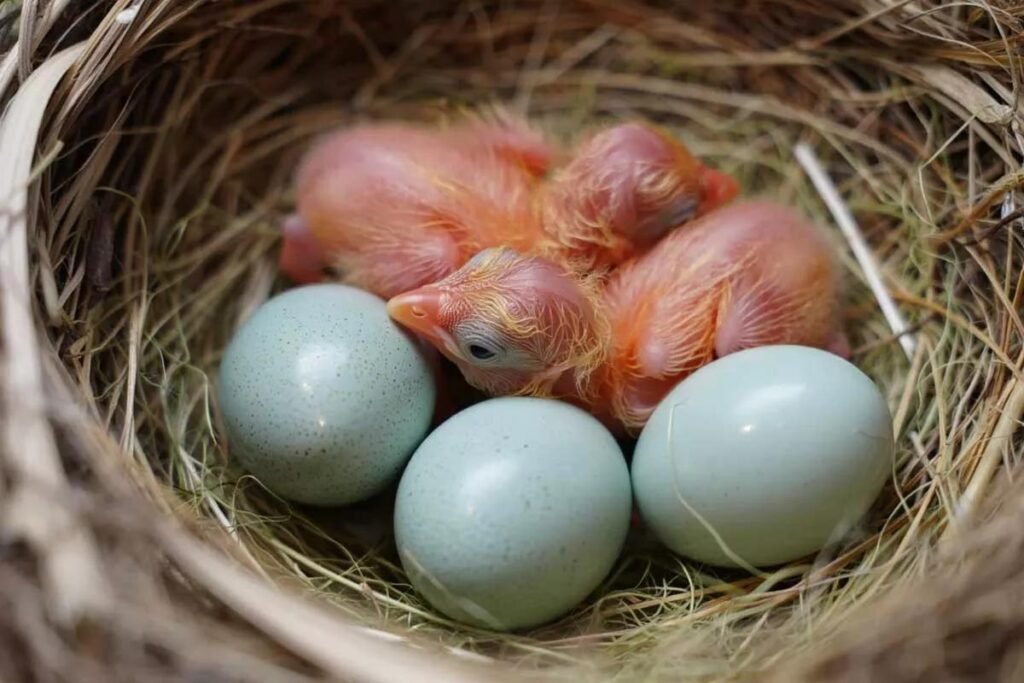
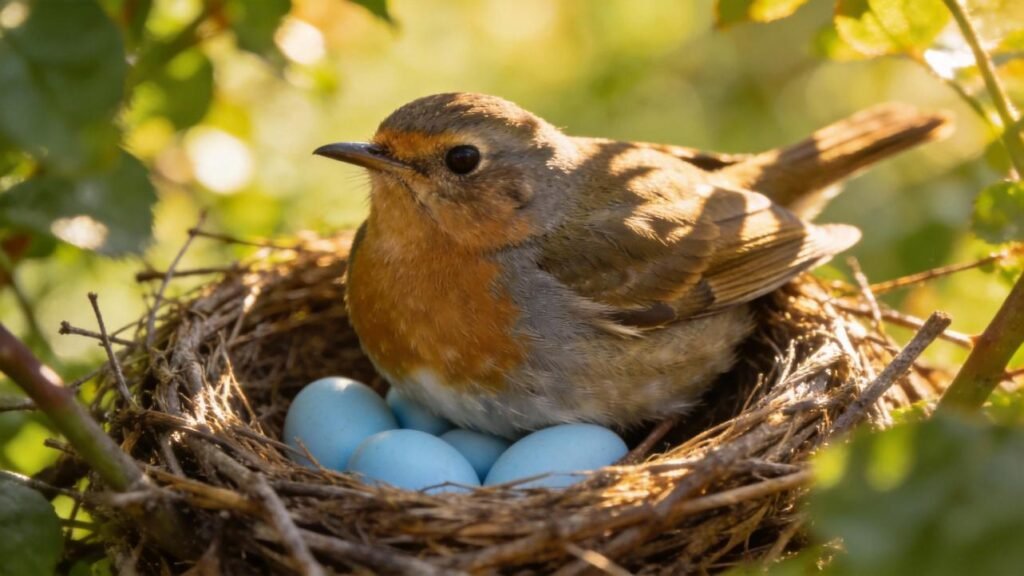
1. How Do Birds Produce Eggs?
Bird reproduction begins when a female bird develops an egg inside her reproductive system. If the egg is fertilized, an embryo can begin developing.
The egg travels through the reproductive tract, where its different layers form. The yolk provides nutrients for the developing embryo, while the egg white, membranes, and shell provide additional protection and support.
The Important Parts of a Bird Egg
A typical bird egg contains several important parts:
- Eggshell: The hard outer layer protects the contents while allowing gas exchange through tiny pores.
- Shell membranes: Thin layers beneath the shell provide additional protection.
- Egg white (albumen): Supplies water and proteins and helps cushion the developing embryo.
- Yolk: Provides much of the energy and nutrients needed for development.
- Air cell: An air pocket that usually forms at the broad end of the egg and becomes important near hatching.
Each part plays a role in helping the embryo develop under suitable conditions.
2. Why Do Bird Eggs Have Different Colors?
Bird eggs display a remarkable range of colors. Depending on the species, they may be white, cream, blue, green, brown, or covered in spots and speckles.
These colors come largely from pigments deposited in the shell while the egg is forming.
Camouflage and Protection
For some ground-nesting birds, speckled or mottled eggs blend into soil, grass, or leaf litter. This can make them harder for predators to notice.
Other birds lay eggs in enclosed nests, tree cavities, or sheltered locations, where camouflage may be less important.
Recognizing Eggs
Egg color and pattern can also vary among species and sometimes among individual females. Researchers study these differences to understand bird evolution, nesting strategies, and reproduction.
Not every egg color has one simple purpose. Its meaning depends on the bird’s biology and environment.
3. How Do Birds Build Nests for Their Eggs?
Many birds build nests before laying their eggs. A nest provides a place where eggs can rest safely and where parent birds can incubate and care for their young.
Birds use a wide range of materials, including twigs, grass, leaves, moss, mud, feathers, and plant fibers.
Different Types of Bird Nests
Cup-shaped nests: Many songbirds make small, rounded nests in trees or shrubs.
Cavity nests: Some birds lay eggs inside holes in trees, rock crevices, or nest boxes.
Ground nests: Certain species lay eggs directly on the ground or create shallow scrapes in soil and vegetation.
Platform nests: Larger birds, including some eagles, build broad platforms from sticks.
Each design reflects the bird’s body, behavior, habitat, and nesting needs.
4. How Do Parent Birds Keep Their Eggs Warm?
Most bird embryos need suitable temperatures to develop. Parent birds commonly incubate their eggs by sitting on them or positioning their bodies over them.
The warmth from the parent’s body helps maintain the temperature needed for development.
What Is Incubation?
Incubation is the process of keeping eggs under appropriate conditions so embryos can develop. In many species, a parent bird uses a specialized featherless or sparsely feathered area called a brood patch to transfer body heat to the eggs.
Some birds share incubation duties, while in other species one parent does most of the work.
Parents may briefly leave the nest to find food, but they often return to continue incubating the eggs.
5. What Happens Inside a Bird Egg?
A developing embryo changes dramatically during incubation. The process begins with a tiny group of cells and gradually produces the structures needed for a young bird’s life.
The embryo develops organs, a heart, a head, limbs, and other body parts. As development continues, the embryo grows and uses nutrients stored in the egg.
The Role of the Yolk
The yolk is a major source of energy and nutrients. It supports the embryo as its body develops.
Near hatching, the developing bird absorbs much of the remaining yolk into its body. These stored nutrients can help support the chick during its early hours or days, depending on the species.
Why Oxygen Matters
Although an eggshell looks solid, it contains microscopic pores. Oxygen enters through these pores and carbon dioxide leaves, allowing the embryo to exchange gases with the surrounding air.
This is one reason eggs need an appropriate environment during incubation.
6. How Long Does It Take for Bird Eggs to Hatch?
The incubation period varies greatly among bird species. Many small songbirds hatch after roughly one to two weeks, while some larger birds take several weeks or longer.
The exact duration depends on the species and can also be affected by environmental conditions.
For example, the incubation period of a chicken egg is usually about 21 days, while many small garden birds have shorter incubation periods.
Why Does Hatching Time Matter?
Birds must coordinate incubation with the development of their embryos. If conditions are unsuitable, development and hatching success may be affected.
Some species begin incubating after laying the first egg, while others delay full incubation until several eggs have been laid. This can influence whether chicks in a nest hatch at nearly the same time or several days apart.
7. How Do Baby Birds Break Out of Their Eggs?
Hatching is one of the most exciting stages of a bird’s life. When the chick is ready, it begins working to break through the shell.
Many chicks have a temporary structure called an egg tooth, a small, hard projection on the beak that helps them crack the shell. It is not a permanent tooth and is generally lost or absorbed after hatching.
The Hatching Process
A chick may first make small cracks in the shell. It then gradually works around the shell or opens it enough to emerge.
This process can take many hours and requires considerable effort. Once the chick hatches, it may be wet, tired, and still developing the strength needed to move normally.
Not all bird chicks look the same at birth. Some hatch covered in down and with their eyes open, while others are nearly naked, weak, and dependent on their parents.
8. How Do Parent Birds Protect Their Eggs?
Bird eggs are vulnerable to predators, extreme weather, and disturbance. Parent birds use several strategies to protect them.
Some defend their nests aggressively. Others remain quiet and inconspicuous, relying on camouflage to avoid attracting attention.
Warning Calls and Defensive Behavior
When a predator approaches, a parent bird may make alarm calls, chase the intruder, or use distraction displays.
Some birds pretend to be injured or move away from the nest to draw a predator’s attention elsewhere.
Choosing a Safe Nesting Location
The location of a nest can be just as important as its design. Depending on the species, birds may choose high branches, cavities, dense vegetation, or concealed spots on the ground.
These strategies help reduce risks, although no nest is completely safe.
9. Why Do Some Birds Lay Many Eggs While Others Lay Few?
The number of eggs a bird lays in one nesting attempt is called its clutch size.
Clutch size differs from species to species. Some birds usually lay only one or two eggs, while others may lay several or more.
Factors That Influence Clutch Size
The number of eggs a bird lays can be influenced by:
- The availability of food.
- The bird’s body size and species.
- The risks posed by predators.
- The length of the breeding season.
- The amount of care parents can provide.
Laying more eggs can produce more offspring, but raising many chicks requires time, energy, and food. Birds have evolved different reproductive strategies to balance these demands.
10. What Happens After the Eggs Hatch?
Hatching is only the beginning. Many young birds depend on their parents for warmth, protection, and food.
Parent birds may bring insects, worms, seeds, or other suitable foods to their chicks, depending on the species. Some adults remove eggshell fragments and waste from the nest, helping maintain a cleaner environment.
Feeding Baby Birds
In many songbird species, parents repeatedly travel between the nest and feeding areas to deliver food.
As the chicks grow, their bodies become stronger and their feathers begin to develop. Eventually, many young birds leave the nest in a stage called fledging.
However, fledging does not always mean complete independence. Some young birds continue receiving food and protection from their parents for a period after leaving the nest.
11. Why Should We Never Disturb Bird Eggs?
Bird eggs and nests are sensitive parts of wildlife reproduction. Handling eggs or repeatedly approaching nests can disturb parent birds and may expose eggs or chicks to danger.
If a nest is abandoned or an egg appears damaged, it is not always easy to know what happened. Parent birds may be away temporarily, and human intervention can sometimes make the situation worse.
How Can We Help Nesting Birds?
- Observe nests from a distance.
- Keep cats and dogs away from nesting areas.
- Avoid cutting trees or shrubs containing active nests.
- Do not touch, move, or collect wild bird eggs.
- Keep the surrounding environment clean.
- Contact a qualified wildlife rehabilitator if an egg or chick appears to need help.
Wildlife laws differ by location, so follow local rules and seek expert advice when necessary.
12. Amazing Facts About Bird Eggs
Here are some fascinating facts about bird eggs:
- Eggshells contain tiny pores that allow gases to pass through.
- Egg colors and patterns vary widely among species.
- The yolk supplies essential nutrients for embryo development.
- Many chicks use an egg tooth to help break through the shell.
- Incubation periods vary from species to species.
- Some birds share incubation duties, while others rely mainly on one parent.
- The number of eggs in a clutch depends on the species and its environment.
- Some chicks hatch ready to walk or swim, while others need extensive parental care.
- Nest shape and location vary according to a bird’s lifestyle.
- Protecting natural habitats helps birds find suitable places to nest and raise their young.
Frequently Asked Questions (FAQ)
1. How long does it take for a bird egg to hatch?
It depends on the species. Many small birds hatch within roughly one to two weeks, while other species may need several weeks or longer.
2. What is inside a bird egg?
A bird egg contains a yolk, egg white, shell membranes, and a protective shell. If the egg is fertile and develops normally, it also contains a growing embryo.
3. Why do birds sit on their eggs?
Birds often sit on their eggs to provide the warmth and conditions required for embryo development. This process is called incubation.
4. Why are bird eggs different colors?
Egg colors come from pigments deposited in the shell. Color and pattern may help with camouflage or reflect other aspects of a species’ biology.
5. Do both parent birds take care of the eggs?
In some species, both parents help incubate the eggs. In others, one parent performs most or all of the incubation.
6. Should I touch a bird egg that has fallen from a nest?
Avoid handling it unless a qualified wildlife professional advises you otherwise. If possible, seek advice from a local wildlife rehabilitator or relevant wildlife authority.
7. What is an egg tooth?
An egg tooth is a temporary hard projection on the beak of many hatchlings. It helps the chick crack the shell and usually disappears after hatching.
Conclusion
The secret life of bird eggs reveals one of nature’s most remarkable journeys. From the formation of the egg and the construction of a nest to incubation and hatching, every stage plays an important role in bringing a new bird into the world.
Bird eggs may appear small and delicate, but they contain the nutrients and protective structures needed for a developing embryo. Parent birds contribute warmth, protection, and care, giving their chicks a better chance of survival.