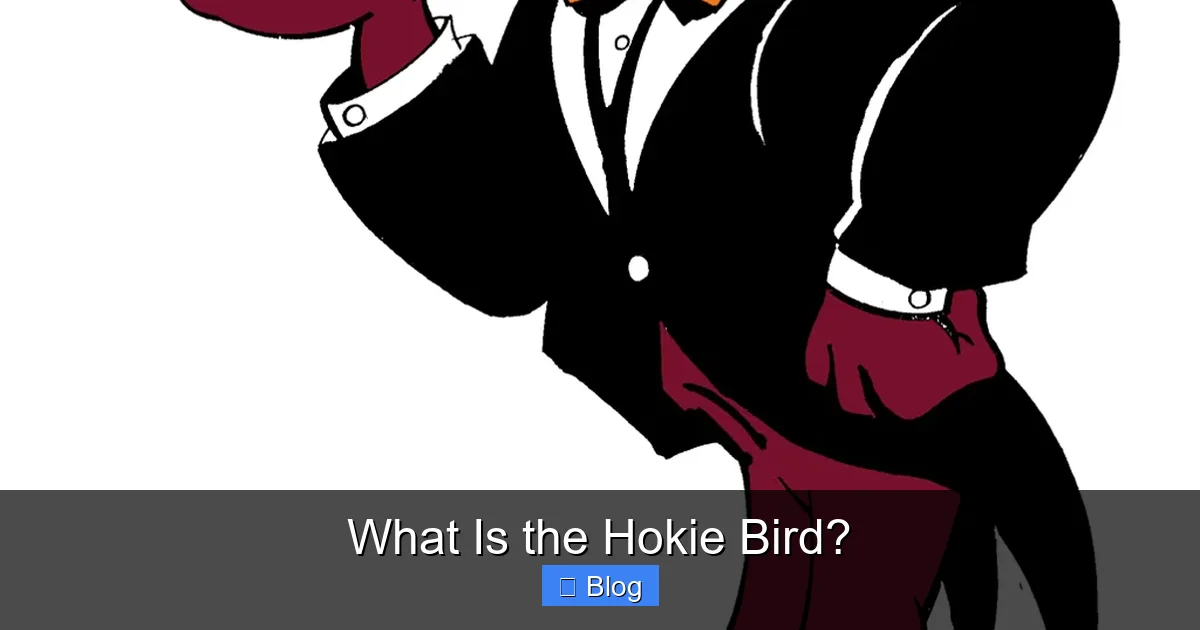
The Hokie Bird is the official and highly recognizable mascot of Virginia Polytechnic Institute and State University (Virginia Tech). Far more than just a character, this vibrant, turkey-like creature embodies the university’s unique “Hokie” spirit, energizing crowds at sporting events, participating in community outreach, and serving as a cherished symbol of pride, tradition, and unity for the entire Hokie Nation.
Have you ever seen a bird that looks like a turkey, but isn’t quite a turkey, and is splashed in vibrant maroon and orange? If so, you’ve likely met the Hokie Bird! For anyone connected to Virginia Tech, or even just a casual observer of college sports, the Hokie Bird is an unforgettable icon. It’s more than just a mascot; it’s a symbol of deep-rooted tradition, fierce school spirit, and the unifying heart of the entire Hokie Nation.
But what exactly *is* the Hokie Bird? Is it a real type of bird? Where did that peculiar name come from? These are questions often asked by those encountering this unique character for the first time. The answers lie in over a century of Virginia Tech’s rich history, evolving traditions, and an enduring spirit that makes this university truly special. Let’s take a fun journey to discover the fascinating story behind this beloved feathered friend.
Join us as we explore the origins of the “Hokie” name, the transformation from “Gobblers” to the modern Hokie Bird, its distinctive look, and the incredible role it plays in connecting students, alumni, and fans across the globe. By the end of this article, you’ll not only know what the Hokie Bird is, but you’ll also understand why it holds such a cherished place in the hearts of so many.
Key Takeaways
- Unique Identity: The Hokie Bird is the beloved and iconic mascot of Virginia Tech, distinctively representing the university’s spirit and traditions.
- “Hokie” Origin: The term “Hokie” originated from an old spirit yell, “Old Hokie,” coined by a student in 1896, and doesn’t refer to a specific animal or object, making the mascot’s name truly unique.
- Evolution from “Gobblers”: Virginia Tech’s initial athletic teams were known as the “Fighting Gobblers” due to the widespread turkey farming in the region and the student body’s enthusiastic gobbling yells.
- Visual Transformation: The mascot evolved from an actual turkey to various costumed versions, officially becoming the “Hokie Bird” in the 1980s, solidifying its modern, distinctive look.
- Symbol of Spirit: The Hokie Bird is a powerful ambassador for Virginia Tech, known for its energetic antics at games, community involvement, and embodying the university’s “Ut Prosim” (That I May Serve) motto.
- Distinctive Appearance: Dressed in Virginia Tech’s signature Chicago Maroon and Burnt Orange, the Hokie Bird is a large, turkey-like bird with a friendly, energetic demeanor.
- Enduring Legacy: The Hokie Bird continues to be a unifying figure for students, alumni, and fans, deeply embedded in the university’s culture and traditions.
Quick Answers to Common Questions
What is the Hokie Bird?
The Hokie Bird is the official, turkey-like mascot of Virginia Tech, known for its Chicago Maroon and Burnt Orange colors and energetic personality.
Is the Hokie Bird a real type of bird?
No, the Hokie Bird is a stylized, anthropomorphic character and not an actual species of bird. It’s designed to resemble a turkey but is unique to Virginia Tech.
Where does the name “Hokie” come from?
The name “Hokie” originated from a spirit yell (“Hoki, Hoki, Hoki, Hy!”) created by a Virginia Tech student in 1896 and has no specific meaning beyond that context.
When did the mascot become the “Hokie Bird”?
The mascot officially transitioned from the “Fighting Gobbler” to the “Hokie Bird” in 1987, aligning with the university’s more established “Hokie” identity.
What colors is the Hokie Bird?
The Hokie Bird is famously colored in Virginia Tech’s official school colors: Chicago Maroon and Burnt Orange.
📑 Table of Contents
The Origins of a Legend: What is a Hokie?
Before we dive into the Hokie Bird itself, we first need to understand the fundamental question: what is a Hokie? This isn’t just about the mascot; it’s about the very identity of Virginia Tech. The answer might surprise you, as “Hokie” isn’t actually a specific animal, person, or thing in the traditional sense. It’s a word born purely out of school spirit!
From “Old Hokie” to the Modern Name
The story of the “Hokie” name begins way back in 1896. Virginia Agricultural and Mechanical College (as Virginia Tech was then known) held a contest to create a new spirit yell. A student named O.M. Stull submitted a cheer that began with the line, “Hoki, Hoki, Hoki, Hy!” He also coined the term “Hokie” to replace the college’s former, less catchy “V.A.M.C.” The yell was a big hit and quickly adopted. The full cheer is still used today, often heard echoing through Lane Stadium:
Hoki, Hoki, Hoki, Hy!
Tech! Tech! V.P.I.!
Sola-Rex, Sola-Rah,
Polytech, Vir-gin-ia,
Rae, Ri, V.P.I.!
The word “Hokie” itself has no particular meaning or definition. It was simply a made-up word, chosen for its sound and spirit. Over time, students and alumni began to refer to themselves as “Hokies,” embodying the unique and spirited identity of the university. This is a crucial point: “Hokie” refers to the people, the spirit, and the institution of Virginia Tech, not a specific bird.
The Fightin’ Gobblers
So, if “Hokie” isn’t an animal, where does the bird connection come from? Before they were the Hokies, Virginia Tech’s athletic teams were actually known as the “Fighting Gobblers.” This nickname emerged in the early 20th century, around the 1910s and 1920s. The region around Blacksburg, Virginia, was known for its turkey farming. Furthermore, students would make gobbling sounds and gestures during sporting events to cheer on their teams, much like other schools might bark or roar.
The image of a turkey, particularly a wild turkey, became associated with the university’s athletic prowess and the rural heritage of the region. For many years, an actual turkey was even brought to games! This connection between Virginia Tech and the turkey-like bird became deeply ingrained, setting the stage for the eventual arrival of the Hokie Bird.
Birth of an Icon: The Hokie Bird’s Evolution
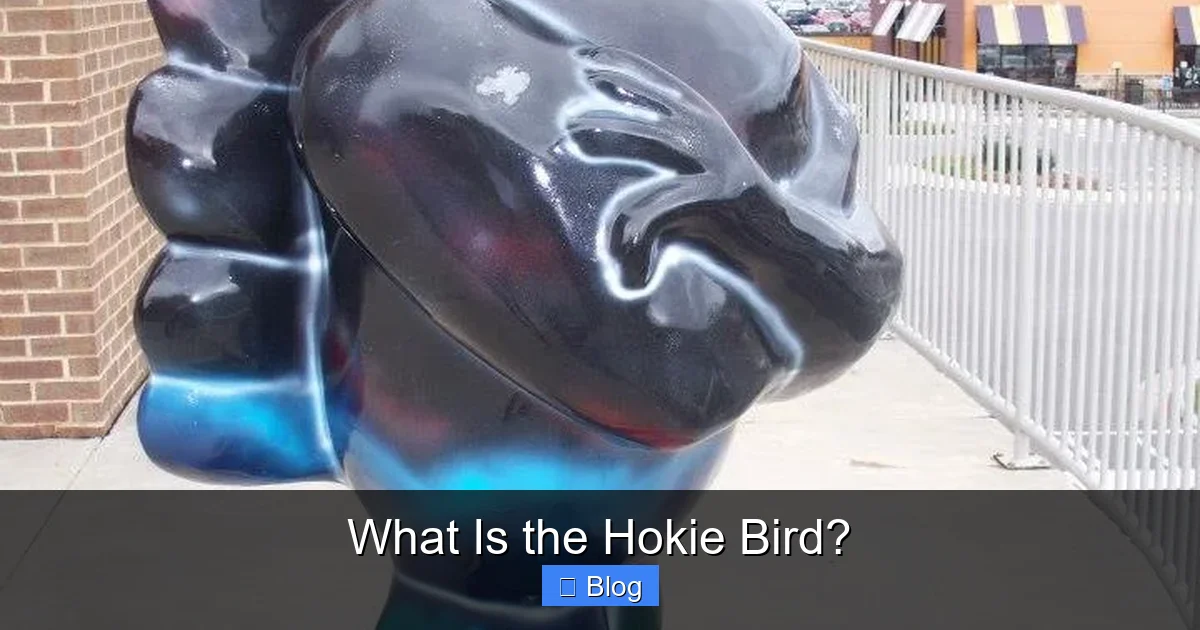
Visual guide about What Is the Hokie Bird?
Image source: s-media-cache-ak0.pinimg.com
The journey from “Fighting Gobblers” to the beloved Hokie Bird we know today wasn’t a straight line. It involved various interpretations, artistic changes, and a pivotal name change that cemented its modern identity.
The First Official Mascot
While “Fighting Gobblers” was the team nickname, a physical mascot didn’t immediately follow. In the early days, it was often just the students themselves, making gobbling noises and motions. However, as mascots became more common in college sports, Virginia Tech also sought a visual representation. The earliest “Gobbler” mascots were often actual turkeys, sometimes paraded around the field. Imagine trying to control a live turkey amidst a roaring crowd! It probably made for some memorable, if chaotic, moments.
Eventually, the impracticality of live animals led to the creation of costumed mascots. These early Gobbler costumes varied greatly, often resembling a generic, somewhat fierce-looking turkey. They were designed to instill fear in opponents and rally the home crowd.
From Gobbler to Hokie Bird
The true transformation occurred in the 1980s. As the “Hokie” identity became more pervasive and the official term for Virginia Tech students and alumni, it felt natural to align the mascot with this unique name. In 1987, the official mascot was formally renamed the “Hokie Bird.” This move helped to distinguish it, emphasizing that it wasn’t just *any* turkey, but a “Hokie” turkey – a symbol specific to Virginia Tech.
The visual design also evolved significantly. The Hokie Bird adopted a more stylized, friendly, and energetic appearance. The colors were solidified as the distinctive Chicago Maroon and Burnt Orange. It became less about being a realistic turkey and more about being a unique, spirited character that could interact dynamically with fans. This evolution allowed the Hokie Bird to become the animated, high-fiving, crowd-surfing personality we recognize today.
Anatomy of an Icon: Describing the Hokie Bird
Now that we understand its history, let’s zoom in on what makes the Hokie Bird so distinctive in appearance and personality.
Distinctive Features
The Hokie Bird is a large, upright, bipedal (two-legged) avian creature. While it clearly has turkey-like features—a prominent beak, a wattle, and tail feathers—it’s important to note it’s not a literal turkey. It’s an anthropomorphic, stylized character.
* Colors: The most striking feature, beyond its bird form, is its vibrant color scheme. The Hokie Bird is decked out in Virginia Tech’s official colors: Chicago Maroon and Burnt Orange. These colors are deeply symbolic of the university and its rich traditions.
* Head and Face: It has a large, rounded head with a friendly, slightly mischievous expression. A prominent orange beak and a red wattle (the fleshy growth under the chin) are key turkey-like identifiers. Its eyes are typically large and expressive, often with white highlights.
* Body and Tail: The body is stout and powerful, designed for running, jumping, and dancing. Its tail feathers are a magnificent fan of maroon and orange, often fanned out during celebrations.
* Feet: Large, clawed feet, usually yellow or orange, provide stability and help with its energetic movements.
* Attire: While the Hokie Bird’s “skin” is maroon and orange, it often sports an athletic jersey with the number “1” or “Hokies” emblazoned on it, further cementing its role as an athletic ambassador.
The Costume and Performers
Bringing the Hokie Bird to life is no easy feat. The costume itself is large and can be quite warm, especially during warm weather games. The person inside, typically a Virginia Tech student, needs incredible stamina, enthusiasm, and a knack for non-verbal communication.
Performers are selected through a rigorous audition process, often requiring them to demonstrate athletic ability, dance skills, and an understanding of the Hokie Bird’s personality. The identity of the students who portray the Hokie Bird is a closely guarded secret, adding to the mystique and magic of the character. This secrecy allows the Hokie Bird to be seen as a consistent, singular entity, rather than a rotating cast of students. It’s a demanding but incredibly rewarding role, offering students a unique way to contribute to their university’s spirit and legacy.
More Than Just a Mascot: The Hokie Bird’s Role and Impact
The Hokie Bird is far more than just a costumed character that appears at games. It’s a cornerstone of Virginia Tech’s brand, a source of endless entertainment, and a living embodiment of the university’s values.
Energizing the Crowd
Perhaps the Hokie Bird’s most visible role is at Virginia Tech sporting events. From football games in Lane Stadium to basketball games in Cassell Coliseum, the Hokie Bird is a constant source of energy and excitement.
* Game Day Antics: You’ll see the Hokie Bird running across the field, leading cheers, doing push-ups after scores, and interacting directly with fans in the stands. Its boundless energy is infectious, helping to pump up the crowd and create a truly electric atmosphere.
* The “Enter Sandman” Tradition: One of the most iconic moments in college football is when Virginia Tech runs out onto the field to Metallica’s “Enter Sandman.” The Hokie Bird is always at the forefront, jumping and head-banging with the team and the entire stadium. This tradition perfectly showcases the mascot’s role in uniting and energizing the Hokie Nation.
* Fan Interaction: The Hokie Bird high-fives children, poses for countless photos, and engages in playful antics that delight fans of all ages. It creates memorable experiences and fosters a personal connection between the university and its supporters.
Representing Virginia Tech Everywhere
The Hokie Bird’s influence extends far beyond the athletic fields. It’s a tireless ambassador for Virginia Tech in numerous capacities:
* Community Events: The Hokie Bird frequently appears at local parades, charity events, school visits, and other community gatherings, bringing joy and a sense of connection to the wider Blacksburg community and beyond.
* University Functions: From orientation events for new students to alumni gatherings and fundraising campaigns, the Hokie Bird is often present, reinforcing school pride and heritage.
* Symbol of Unity: For alumni living across the country or around the world, seeing the Hokie Bird evokes powerful memories and a strong sense of belonging to the Hokie Nation. It’s a visible reminder of their shared experience and pride in their alma mater. It truly is a unifying force.
The Spirit of a Hokie
The Hokie Bird embodies the very spirit of Virginia Tech. The university’s motto, “Ut Prosim” (That I May Serve), is reflected in the mascot’s tireless dedication to engaging with the community and inspiring others. Its friendly, approachable nature reflects the welcoming atmosphere often found at Virginia Tech. The Hokie Bird serves as a physical manifestation of the camaraderie, resilience, and unique identity that defines being a Hokie.
Fun Facts and Unique Traditions Involving the Hokie Bird
The Hokie Bird has been part of many memorable moments and traditions throughout Virginia Tech’s history. Here are a few more insights into its unique place.
The Gobbler and the Game
As mentioned, live turkeys were once brought to games. This tradition, while charming in retrospect, was eventually discontinued for practical and humane reasons. Imagine the challenge of keeping a turkey calm and on display during a raucous football game! The transition to a costumed mascot was a much-needed upgrade, allowing for greater interaction and spectacle without stressing an actual bird.
The Hokie Bird’s Travels
The Hokie Bird isn’t just confined to Blacksburg. It travels with athletic teams to away games, bowl games, and national championships, spreading Hokie spirit wherever Virginia Tech competes. It has appeared on national television, at major sporting events, and even in promotional materials around the world, truly making it an international ambassador for the university.
The Hokie Hand Signal
While not directly *made* by the Hokie Bird, the “Hokie Hand” signal is a popular tradition deeply associated with the university and its mascot. Fans form a turkey-like shape with their hand, extending their thumb and forefinger to mimic a gobbler’s head and wattle, while curling the other fingers. It’s a simple, universal sign of Hokie pride that you’ll see everywhere Virginia Tech fans gather. This hand signal further solidifies the beloved turkey-like image of the Hokie Bird in the collective consciousness.
Conclusion
From humble beginnings as a spirit yell and a “Fighting Gobbler” nickname, the Hokie Bird has soared to become an unparalleled icon of Virginia Tech. It’s a character born of tradition, shaped by evolving identity, and sustained by the passionate spirit of an entire university. The Hokie Bird isn’t a mythological creature or a specific animal; it’s a unique, turkey-like mascot that encapsulates everything it means to be a Hokie.
It embodies the energy of game day, the warmth of community service, and the steadfast pride of Virginia Tech’s students and alumni. Whether it’s leading the “Enter Sandman” jump-around or offering a comforting high-five to a child, the Hokie Bird brings joy, unity, and an undeniable sense of belonging to everyone who encounters it. Long live the Hokie Bird—a true legend and the vibrant heart of the Hokie Nation!
Frequently Asked Questions
What does “Hokie” mean?
The word “Hokie” doesn’t have a literal meaning; it was a made-up word coined for a spirit yell by a Virginia Tech student in 1896. Over time, it became the informal term for students, alumni, and fans of the university, embodying its unique identity and spirit.
Why is the Hokie Bird important to Virginia Tech?
The Hokie Bird is incredibly important to Virginia Tech because it serves as a powerful symbol of school pride, tradition, and unity. It energizes crowds, represents the university at events, and embodies the unique “Hokie” spirit, fostering a strong sense of belonging among students, alumni, and fans.
Who performs as the Hokie Bird?
The Hokie Bird is performed by Virginia Tech students who undergo a rigorous audition process. Their identities are kept confidential to maintain the mascot’s mystique and ensure it is seen as a singular, consistent character representing the university.
What were Virginia Tech’s teams called before the Hokies?
Before adopting “Hokies” more broadly, Virginia Tech’s athletic teams were known as the “Fighting Gobblers.” This nickname stemmed from the prevalence of turkey farming in the region and the gobbling sounds students made to cheer during games.
Does the Hokie Bird attend all sporting events?
The Hokie Bird is a prominent fixture at most major Virginia Tech sporting events, especially football and basketball games, both home and away. It also makes appearances at many other university and community functions throughout the year.
How does the Hokie Bird contribute to community service?
In alignment with Virginia Tech’s motto “Ut Prosim” (That I May Serve), the Hokie Bird frequently participates in community outreach. It makes appearances at local schools, charity events, and parades, bringing joy and embodying the university’s commitment to serving others.