
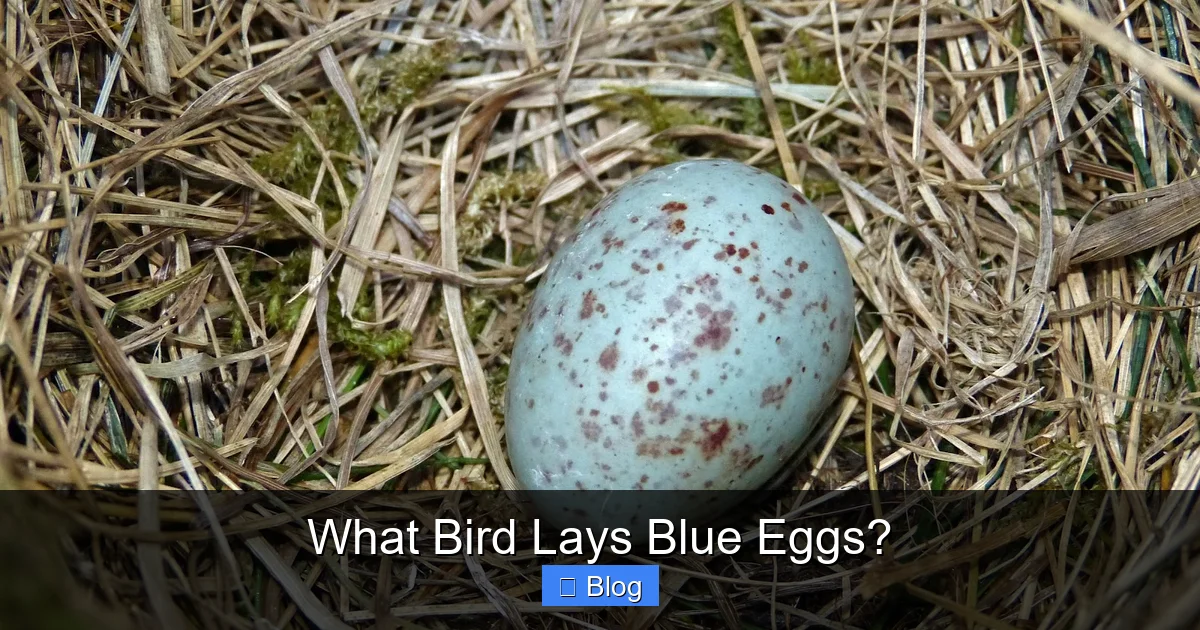
Have you ever wondered what bird lays blue eggs? This captivating phenomenon is often associated with the American Robin, but many other species also produce stunning blue or blue-green eggs. The vibrant hue comes from a pigment called biliverdin, offering potential benefits like camouflage or signaling female health.
What Bird Lays Blue Eggs? Unraveling the Mystery of Nature’s Colorful Creations
Imagine strolling through your garden or taking a walk in a local park. Suddenly, you spot a bird’s nest tucked away safely in a bush or tree. Peeking inside, you might be greeted by a sight that truly stands out: a clutch of eggs boasting a stunning, vibrant blue hue. It’s a moment that often sparks curiosity, leading many to ask, “What bird lays blue eggs?” This isn’t just a simple question; it opens up a fascinating world of avian biology, chemistry, and evolutionary mysteries.
The answer to what bird lays blue eggs is more diverse than you might think! While one particular backyard favorite often comes to mind, nature is full of surprises. These beautiful blue eggs aren’t just a treat for the eyes; their color tells a story about the bird itself, its environment, and even its health. Understanding the science behind these colorful creations can deepen your appreciation for the natural world right outside your window. Let’s embark on a journey to discover the birds behind these captivating blue jewels and uncover the secrets their eggs hold.
Key Takeaways
- The Biliverdin Pigment: Blue eggshells get their color from a pigment called biliverdin, which is a byproduct of hemoglobin breakdown in the bird’s body.
- American Robin is Famous: The American Robin is perhaps the most well-known bird to lay bright blue eggs, often nicknamed “robin’s-egg blue.”
- Many Species Lay Blue Eggs: Beyond robins, numerous other birds, including European Starlings, Dunnocks, House Finches, and various thrushes, also lay blue or blue-tinted eggs.
- Purpose of Coloration: Scientists believe blue eggs may serve several purposes, such as camouflage in open nests, a signal of the female’s health and genetic quality, or protection against UV radiation.
- Egg Color Varies: Even within species, the exact shade of blue can vary due to factors like diet, age, stress levels, and individual genetic differences.
- Observing Ethically: When trying to spot blue eggs, always observe from a distance to avoid disturbing nesting birds, as interference can lead to nest abandonment.
- Not Always Pure Blue: Some birds lay eggs that are blue with spots or speckles, adding further unique patterns to their clutch.
Quick Answers to Common Questions
What gives bird eggs their blue color?
Bird eggs get their blue color from a pigment called biliverdin, which is deposited onto the eggshell during its formation in the female bird’s oviduct.
Is it only robins that lay blue eggs?
No, while American Robins are famous for their bright blue eggs, many other bird species also lay blue or blue-green eggs, including European Starlings, Eastern Bluebirds, and Dunnocks.
What is the purpose of blue egg coloration?
The purpose of blue egg coloration is still debated, but theories suggest it could aid in camouflage, signal the female’s health and genetic quality to her mate, or provide protection against UV radiation.
Do all blue eggs look the same?
No, the exact shade and intensity of blue can vary greatly between species and even within a single species due to factors like genetics, diet, and the female’s health. Some blue eggs may also have speckles or spots.
Are blue eggs rarer than other colored eggs?
While blue eggs are certainly striking, they are not necessarily rarer than other egg colors. Many common backyard birds lay blue eggs, making them a relatively frequent find for observant nature enthusiasts.
📑 Table of Contents
The Iconic Blue Egg Layers: Meet the Usual Suspects
When the question “What bird lays blue eggs?” pops up, one species almost immediately springs to mind for most people in North America: the American Robin. And for good reason! Its eggs are perhaps the most famous example of bright, pure blue eggs, so much so that the color itself is often called “robin’s-egg blue.” But the robin is far from the only avian artist in this category.
The Beloved American Robin
The Turdus migratorius, or American Robin, is a ubiquitous sight across North America. Known for its cheerful song and distinctive red breast, this bird builds sturdy, cup-shaped nests often reinforced with mud. Inside, you’ll find a clutch of three to five eggs, each a beautiful, unspotted sky-blue. Robins are very adaptable, nesting in suburban yards, parks, and forests alike, making their blue eggs a common and cherished discovery for many.
European Starling: A Common Visitor with Blue Eggs
Often overlooked because they are an introduced species in North America, European Starlings (Sturnus vulgaris) also lay eggs with a distinctive blue tint. Their eggs are usually a pale blue or blue-green, sometimes with very faint speckles, and are slightly smaller and paler than a robin’s. Starlings are cavity nesters, often choosing tree holes, nest boxes, or even crevices in buildings. Despite their invasive status, their eggs certainly contribute to the spectrum of blue found in nature.
Other Thrushes: Robin Relatives with Blue Eggs
The American Robin belongs to the thrush family (Turdidae), and many of its relatives also lay blue eggs. For instance, the Eastern Bluebird (Sialia sialis), as its name suggests, is another delightful bird known for its brilliant blue plumage and, fittingly, its pale blue eggs. They are cavity nesters, often using abandoned woodpecker holes or nest boxes. Other thrushes, such as the Mountain Bluebird (Sialia currucoides) and Western Bluebird (Sialia mexicana), also lay stunning blue eggs, although the shade can vary slightly between species.
Dunnocks: The “Hedge Sparrow” of Europe
If you’re in Europe, you might encounter the eggs of the Dunnock (Prunella modularis), also known as the Hedge Sparrow. These small, rather unassuming birds build neat nests in dense bushes and lay a clutch of four to five eggs that are a beautiful, spotless turquoise-blue. They are a common garden bird across much of Europe and a wonderful example of what bird lays blue eggs on that continent.
The Science Behind the Hue: Why Are Eggs Blue?
The vibrant blue color of certain bird eggs isn’t just a random act of nature; it’s the result of specific biological processes. The secret lies in a pigment called biliverdin. Understanding this pigment helps us answer not just what bird lays blue eggs, but why they are blue.
Introducing Biliverdin: The Blue-Green Pigment
Biliverdin is an organic pigment derived from the breakdown of hemoglobin, the protein in red blood cells that carries oxygen. During egg formation in the female bird’s oviduct, biliverdin is deposited onto the eggshell, giving it its characteristic blue or blue-green color. The amount and concentration of this pigment determine the intensity of the blue. Interestingly, biliverdin is also responsible for the greenish color sometimes seen in bruises on human skin as hemoglobin breaks down!
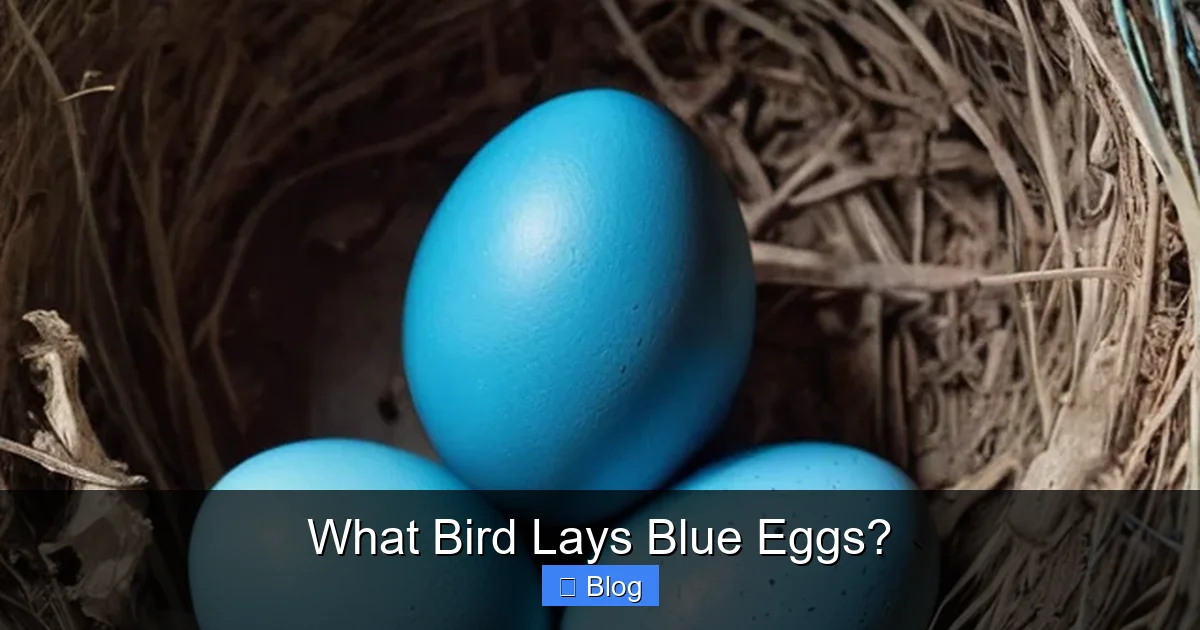
Visual guide about What Bird Lays Blue Eggs?
Image source: canarycanopy.com
The Role of Protoporphyrins: Browns and Reds
While biliverdin creates blues, another set of pigments called protoporphyrins are responsible for the reddish-brown colors, speckles, and blotches seen on many other bird eggs. Eggs with both biliverdin and protoporphyrins can appear greenish, olive, or even spotted blue-brown. For example, some species like House Finches (Haemorhous mexicanus) lay pale blue or blue-green eggs with dark speckles.
Genetic and Environmental Influences on Color
The specific shade and intensity of blue can vary even within the same species. Genetics certainly play a role, determining how much biliverdin a female bird produces and deposits. However, environmental factors like diet, stress levels, and the female’s age and health can also influence the egg’s color. A healthier, well-fed female might produce more vibrant blue eggs, which some scientists believe could be a signal of her fitness.
Theories on the Evolutionary Purpose of Blue Eggs
Why would evolution favor blue eggs over other colors? This question has puzzled ornithologists for decades, and several compelling theories attempt to explain the adaptive advantages of this striking coloration. It’s not just about what bird lays blue eggs, but what benefit does that color provide?
Camouflage and Nest Protection
One prominent theory suggests that blue eggs offer a form of camouflage. While a bright blue egg might seem conspicuous to a human eye, in certain lighting conditions, especially within the dappled sunlight filtering through a leafy canopy, blue can actually blend in with the shadows and sky. For open-cup nesters like robins, this could make the eggs less visible to predators looking down into the nest.
Another aspect of camouflage relates to the surrounding nest materials. Many birds use materials like moss, lichen, or twigs that have greenish or bluish tones, helping the eggs blend into their immediate environment.
Signaling Female Health and Fitness
A fascinating hypothesis, particularly relevant for species where males play a significant role in incubation or chick rearing, is that egg color serves as a signal of the female’s quality. Producing biliverdin requires metabolic energy, and a female in excellent health, with a good diet and low parasite load, might be able to produce more vibrant blue eggs. This bright blue could signal to her mate that she is a strong, healthy partner capable of producing viable offspring, encouraging him to invest more in the clutch.
For example, studies on certain species have shown a correlation between the blueness of eggs and the mother’s immune response or antioxidant levels. A healthier female means healthier chicks, which is a desirable trait for any mate.
Ultraviolet (UV) Protection
Some researchers propose that egg coloration, including blue, might offer protection against harmful ultraviolet (UV) radiation. Just as sunscreen protects our skin, pigments in eggshells could shield the developing embryo from sun damage, especially in nests exposed to direct sunlight. This theory is still being explored but offers another intriguing possibility for the evolutionary advantage of specific egg colors.
Beyond Pure Blue: Speckled and Blue-Tinted Eggs
While some birds lay uniformly blue eggs, many others produce eggs that are blue as a base color but feature intricate patterns of speckles, blotches, or streaks. This adds another layer of artistic complexity to the question of what bird lays blue eggs.
House Finch Eggs: Blue with Artistic Specks
The House Finch (Haemorhous mexicanus), a common backyard bird across North America, lays pale blue or bluish-white eggs adorned with fine dark speckles, often concentrated at the larger end. These small, cup-shaped nests are typically found in dense shrubs or hanging baskets.
Catbirds and Thrashers: Blue-Green Variants
The Gray Catbird (Dumetella carolinensis), known for its cat-like mewing call, lays deep greenish-blue eggs that are typically unspotted. Its nests are often found in dense tangles of vegetation. Similarly, the Brown Thrasher (Toxostoma rufum), a superb mimic with a rich reddish-brown plumage, lays pale blue to greenish-white eggs, often covered with fine reddish-brown speckles.
American Kestrel: Pale Blue-Green and Speckled
Even some raptors contribute to the blue egg spectrum! The American Kestrel (Falco sparverius), North America’s smallest falcon, lays eggs that can range from creamy white to pale blue-green, often with varying degrees of fine brown speckles or blotches. They are cavity nesters, often utilizing old woodpecker holes or nest boxes.
Ethical Bird Watching and Protecting Nests
Discovering a nest with blue eggs is an exciting moment, but it’s crucial to approach such observations with respect and caution. Our enjoyment of nature should never come at the expense of the birds’ well-being.
Observe from a Distance
The most important rule when observing bird nests is to keep a safe distance. Birds are incredibly sensitive to disturbance, especially during nesting season. Getting too close can cause the parents to abandon their eggs or young, or inadvertently draw predators’ attention to the nest. Use binoculars or a camera with a good zoom lens to get a closer look without intruding.
Avoid Touching Nests or Eggs
Never touch a bird’s nest or its contents. Human scent can deter parent birds, and simply touching eggs can damage their delicate shells or introduce harmful bacteria. If you find a fallen nest or a baby bird, it’s generally best to leave it alone or contact a local wildlife rehabilitator for advice rather than intervening yourself.
Provide a Safe Environment
You can encourage birds that lay blue eggs, like robins and bluebirds, to nest in your yard by providing a bird-friendly habitat. This includes planting native shrubs and trees for shelter and nesting sites, offering a fresh water source, and minimizing pesticide use. For cavity nesters like bluebirds, installing specially designed nest boxes can be incredibly beneficial.
Remember, a healthy environment helps birds thrive, ensuring that future generations can continue to lay their beautiful, colorful eggs for us to marvel at.
Conclusion: The Enduring Charm of Blue Eggs
The question “What bird lays blue eggs?” leads us on a delightful journey into the intricate world of avian life. From the iconic American Robin to the more subtle hues of a European Starling or the speckled beauty of a House Finch, nature’s palette for egg coloration is truly awe-inspiring. These blue gems are more than just pretty objects; they are a testament to complex biological processes and clever evolutionary strategies.
Whether it’s the biliverdin pigment at play, the strategic camouflage, or the subtle signals of health and vitality, each blue egg tells a story. As we continue to learn more about our feathered friends, our appreciation for these tiny miracles only grows. So, the next time you spot that striking robin’s-egg blue, take a moment to reflect on the wonder and wisdom of the birds that lay them, and remember to admire them respectfully from afar, allowing nature to unfold undisturbed.
Frequently Asked Questions
Are blue eggs a sign of a healthy bird?
Some scientific theories suggest that the vibrancy of blue eggs can be an indicator of a female bird’s health and genetic quality. Producing the biliverdin pigment requires metabolic resources, so a brighter blue might signal a healthier bird to her mate.
Can I touch a bird’s nest or blue eggs if I find them?
No, it’s strongly advised not to touch a bird’s nest or eggs. Human scent can deter parent birds, potentially causing them to abandon the nest. It can also introduce harmful bacteria or damage the delicate eggs.
What time of year can I expect to see blue eggs?
Most birds, including those that lay blue eggs like robins and bluebirds, typically nest in the spring and early summer. Depending on your location, you might start seeing nests with eggs from March through July.
Do blue eggs taste different than white or brown eggs?
No, the color of a bird’s eggshell has no bearing on its taste or nutritional value. The shell color is determined by pigments deposited during formation, while the contents inside are genetically consistent for the species.
What should I do if I find a blue egg that has fallen out of a nest?
If you find a fallen egg, it’s generally best to leave it undisturbed. Returning it to the nest might not be effective as parents are unlikely to resume incubation if it’s been out of the nest for long or if the nest itself is damaged. Contact a local wildlife rehabilitator if you’re concerned.
Do all robin species lay blue eggs?
While the American Robin is famous for its blue eggs, not all species within the larger thrush family (which includes robins) lay exactly the same shade or even consistently blue eggs. However, many thrush relatives do lay eggs with a significant blue or blue-green component.