
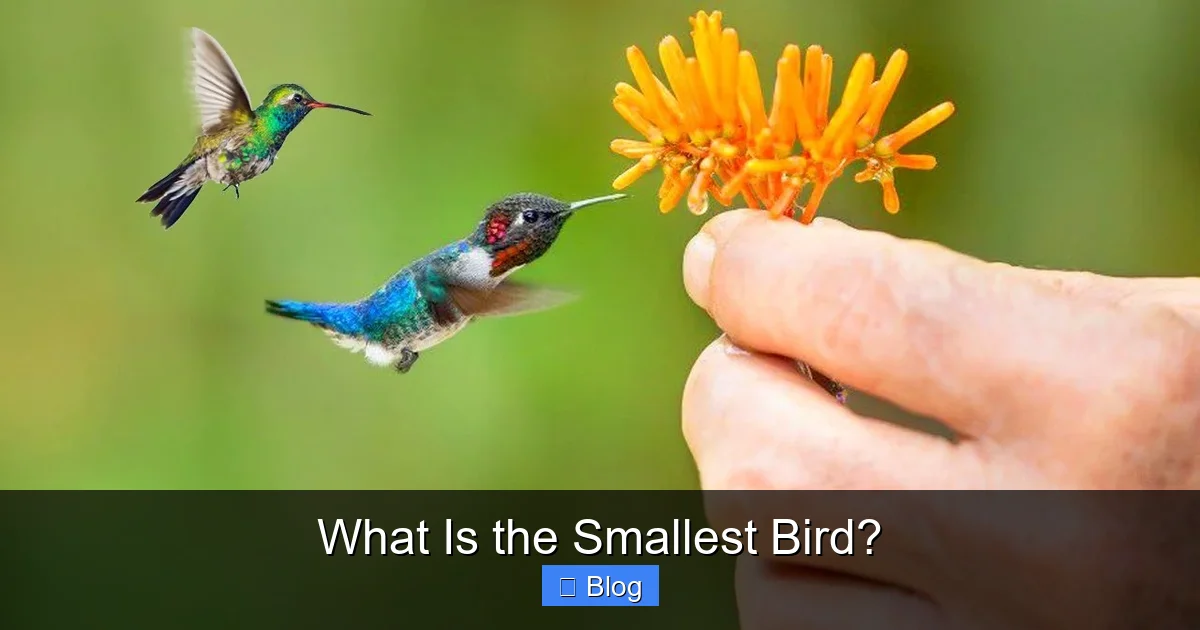
The smallest bird in the world is unequivocally the Bee Hummingbird (Mellisuga helenae), a minuscule marvel native to Cuba. Weighing less than a penny and barely larger than a bumblebee, this iridescent gem represents an extreme in avian evolution, showcasing incredible adaptations for survival despite its unbelievably tiny stature.
Have you ever paused to wonder about the absolute smallest things in the natural world? We often marvel at the giants – the blue whales, the elephants, the towering sequoias. But what about the tiny titans, the miniature miracles that defy belief with their sheer tininess? Among these, one creature stands out, a living jewel that makes even a bumblebee look robust. We’re talking, of course, about the smallest bird on our planet.
Imagine a bird so small it could perch comfortably on your fingertip, a flash of iridescent color that zips past like an oversized insect. This isn’t a creature of myth or a figment of imagination; it’s a very real, incredibly delicate inhabitant of our world. Its existence challenges our perceptions of what’s possible in terms of avian size and survival, pushing the boundaries of biological design to an extreme. This article will take you on a journey to discover the identity of this feathered marvel, explore its incredible adaptations, and understand the unique life it leads in its native home.
So, buckle up for a deep dive into the fascinating world of the teeniest, most delicate bird known to science. Get ready to have your mind boggled by the sheer brilliance of evolution and the wonders it can produce, proving that sometimes, the smallest packages truly hold the greatest wonders. Let’s uncover the secrets of the smallest bird!
Key Takeaways
- The Smallest Bird: The Bee Hummingbird (Mellisuga helenae) holds the undisputed title of the world’s smallest bird, both in length and weight.
- Miniscule Dimensions: Adults typically measure just 2.24 inches (5.7 cm) from beak to tail and weigh a mere 0.07 ounces (2 grams), lighter than a U.S. penny.
- Extreme Metabolism: Due to its tiny size, the Bee Hummingbird possesses one of the highest metabolic rates among warm-blooded animals, requiring constant feeding on nectar.
- Exclusive Habitat: This smallest bird is endemic to Cuba, meaning it’s found nowhere else naturally, preferring dense forests and coastal areas with abundant flowering plants.
- Unique Adaptations: Its rapid wing beats (up to 80 times per second), long tongue for nectar, and efficient hovering flight are crucial for its survival and energy needs.
- Reproduction in Miniature: The female builds a tiny, cup-shaped nest, often smaller than a thimble, laying only two pea-sized eggs, demonstrating nature’s precision.
- Conservation Concerns: Despite its resilience, habitat loss due to deforestation and agricultural expansion poses significant threats to the survival of this remarkable smallest bird.
Quick Answers to Common Questions
What is the scientific name of the smallest bird?
The scientific name of the smallest bird is Mellisuga helenae, commonly known as the Bee Hummingbird.
How much does the smallest bird weigh?
The smallest bird weighs approximately 0.07 ounces (2 grams), which is less than the weight of a U.S. penny.
Where does the smallest bird live?
The smallest bird, the Bee Hummingbird, is endemic to Cuba and Isla de la Juventud.
How fast do the smallest bird’s wings beat?
The smallest bird’s wings beat at an incredible rate of about 80 times per second during normal flight, and up to 200 times per second during courtship displays.
What does the smallest bird eat?
The smallest bird primarily feeds on nectar from various flowering plants, supplementing its diet with tiny insects and spiders for protein.
📑 Table of Contents
The Uncontested Champion: The Bee Hummingbird
There’s no debate, no contenders, no close seconds. The title of the world’s smallest bird belongs exclusively to one magnificent species: the **Bee Hummingbird** (Mellisuga helenae). This tiny avian wonder isn’t just the smallest hummingbird; it’s the smallest bird, period. It truly redefines what we consider “small” in the bird kingdom, making even other tiny birds look positively enormous by comparison.
A Featherweight Champion by the Numbers
When we talk about the smallest bird, the numbers are almost unbelievable. An adult Bee Hummingbird measures, on average, just 2.24 inches (5.7 centimeters) from the tip of its beak to the end of its tail. To put that into perspective, it’s roughly the length of an average human thumb! Now, let’s talk weight. This little marvel tips the scales at an astonishing 0.07 ounces (2 grams). Think about that for a moment: two grams is less than the weight of a U.S. penny. Yes, the smallest bird is lighter than one cent!
Why the Name “Bee Hummingbird”?
The name itself gives you a strong clue about its size. “Bee” refers not just to its size comparison to a large bee, but also to its active, darting flight pattern. When you see a Bee Hummingbird flitting among flowers, it can easily be mistaken for a large insect due to its rapid wing beats and diminutive stature. “Hummingbird” is, of course, derived from the distinct humming sound produced by their incredibly fast-flapping wings, a trait shared by all members of the hummingbird family, only amplified by the Bee Hummingbird’s miniature scale.
Anatomy of a Featherweight: How the Smallest Bird Works
Visual guide about What Is the Smallest Bird?
Image source: i.redd.it
Being the smallest bird in the world isn’t just a fun fact; it comes with profound biological implications. Every aspect of the Bee Hummingbird’s anatomy and physiology is finely tuned to cope with the challenges and advantages of its minute size. It’s a masterclass in efficiency and adaptation.
The Incredible Metabolism of the Smallest Bird
Life at such a small scale demands a super-charged engine. The Bee Hummingbird has one of the highest metabolic rates of any warm-blooded animal. Think of it like a tiny, high-performance sports car always running at maximum RPMs. To maintain its body temperature and fuel its incredible flight, this smallest bird needs to consume a staggering amount of energy. It can eat up to half its body weight in nectar each day, visiting hundreds of flowers to do so. This constant need for fuel means it spends most of its waking hours foraging.
Wings That Defy Gravity
The flight of the Bee Hummingbird is nothing short of miraculous. Its wings beat at an astonishing rate of 80 times per second during normal flight, and can reach up to 200 beats per second during courtship displays! This rapid wing movement allows for their characteristic hovering ability, enabling them to drink nectar while suspended in mid-air. Unlike other birds that generate lift primarily on the downstroke, hummingbirds, including the smallest bird, generate lift on both the downstroke and upstroke, essentially “swimming” through the air.
A Tongue for Sweet Success
To access the nectar deep within flowers, the Bee Hummingbird possesses a specially adapted tongue. It’s long, thin, and bifurcated (forked) at the tip, with tiny hairs that help it efficiently lap up nectar. This specialized feeding tool is crucial for its survival, as nectar is its primary food source, providing the essential sugars needed to power its demanding metabolism. The ability to hover precisely and extract nectar effectively is a testament to the smallest bird’s evolutionary success.
A Cuban Jewel: Habitat and Home of the Smallest Bird
The Bee Hummingbird isn’t found just anywhere; it’s a truly special resident of a particular island nation. Its home is as unique as the bird itself, providing the specific conditions it needs to thrive.
Endemic to Cuba and Isla de la Juventud
The smallest bird in the world is endemic to Cuba and its adjacent island, Isla de la Juventud (Isle of Youth). This means it naturally occurs nowhere else on Earth. This exclusivity makes it a national treasure for Cuba and a significant point of interest for ornithologists and conservationists worldwide. Its limited range also makes it particularly vulnerable to habitat changes within this specific region.
Preferred Habitats: Where to Find a Tiny Gem
Bee Hummingbirds prefer specific types of habitats within Cuba. They are typically found in dense forests, often near coastal areas, forest edges, and even in gardens and cultivated lands, as long as there’s a rich supply of flowering plants. They favor areas with a good mix of shrubs and trees that provide both nectar sources and protective cover. Their camouflage, often iridescent green on the back and grayish-white on the belly, helps them blend seamlessly into the lush Cuban foliage. Spotting the smallest bird in its natural environment can be a challenge, not just because of its size, but also due to its speedy movements among dense vegetation.
Life in Miniature: Daily Habits and Reproduction
Despite its incredibly small size, the Bee Hummingbird leads a life packed with activity, precision, and the fundamental drive to reproduce, ensuring the continuation of its unique lineage.
A Day in the Life of the Smallest Bird
The daily routine of a Bee Hummingbird is dominated by the relentless pursuit of sustenance. From dawn till dusk, it’s a whirlwind of feeding. They dart from flower to flower, sipping nectar, and occasionally catching tiny insects or spiders for protein. When not feeding, they might rest briefly, perched on a thin twig, constantly alert. Given their high metabolism, they can only go without food for short periods, and cold temperatures can be especially dangerous, forcing them into a state of torpor (a type of temporary hibernation) to conserve energy during the night or in unusually cold spells.
Nesting and Raising the Next Generation
Reproduction for the smallest bird is a delicate affair. The female Bee Hummingbird is responsible for building the nest and raising the young entirely on her own. Her nest is an engineering marvel in miniature. It’s a tiny, cup-shaped structure, often smaller than a thimble, constructed from spider silk, bits of bark, and lichen, skillfully camouflaged to blend with its surroundings. These nests are typically placed on thin twigs or branches, well-hidden from predators.
Inside this minuscule home, she lays just two tiny eggs, each about the size of a coffee bean or a pea. Incubation lasts around 14-16 days. Once hatched, the altricial (helpless) chicks are fed by the mother, primarily with regurgitated nectar and small insects, until they fledge (learn to fly) after about 18-24 days. It’s a testament to the incredible dedication and resilience of the female Bee Hummingbird that she manages this entire arduous process alone.
Threats and Conservation: Protecting the Smallest Bird
Even the most perfectly adapted creatures face challenges, and the Bee Hummingbird is no exception. Its unique existence makes it particularly sensitive to changes in its environment. Understanding these threats is the first step towards protecting this tiny treasure.
Natural Predators
Despite their agility, Bee Hummingbirds are vulnerable to a variety of natural predators. Larger birds, snakes, frogs, and even large insects like praying mantises or spiders can pose a threat to these tiny birds, their eggs, or their chicks. Their small size makes them quick, but also delicate targets.
The Looming Threat of Habitat Loss
The most significant threat to the smallest bird, as with many species, is habitat loss. Cuba’s landscape is undergoing changes due to deforestation for agriculture (especially sugar cane), urban development, and logging. As forests are cleared, the specific flowering plants that the Bee Hummingbird relies on for nectar disappear, along with the protective cover they need for nesting and roosting. This direct destruction of their limited habitat puts immense pressure on their populations.
Climate Change and its Potential Impact
While not as immediately visible as habitat destruction, climate change also poses a long-term threat. Changes in temperature and rainfall patterns can affect the flowering cycles of the plants the Bee Hummingbird depends on. If flowers bloom earlier or later, or if certain species decline, it can disrupt the delicate balance between the bird and its food sources, making it harder for this high-energy creature to find enough sustenance.
Conservation Efforts for the Smallest Bird
Conservation efforts in Cuba and internationally are focused on protecting the remaining habitats of the Bee Hummingbird. This includes establishing protected areas, promoting sustainable land use practices, and educating local communities about the importance of biodiversity. Replanting native flowering species and creating “hummingbird-friendly” gardens can also play a small but crucial role in providing food sources. Research into their population dynamics and specific ecological needs continues to inform these conservation strategies, ensuring that future generations can also marvel at the world’s smallest bird.
In conclusion, the Bee Hummingbird stands as a profound reminder of nature’s boundless creativity and the incredible diversity of life on Earth. Its minute size, vibrant colors, and astonishing physiology make it a true wonder. From its lightning-fast wings to its thimble-sized nest, every aspect of this smallest bird’s life is a testament to its evolutionary brilliance. However, its very existence is now fragile, threatened by the impacts of human activity. By understanding and appreciating this tiny jewel, we are reminded of our responsibility to protect not just the giants of the animal kingdom, but also the smallest, most delicate, and equally vital components of our planet’s rich biodiversity. Let the Bee Hummingbird inspire us to cherish and safeguard all the wonders, big and small, that call Earth home.
Frequently Asked Questions
How does the smallest bird manage to stay warm with such a tiny body?
The Bee Hummingbird has an extremely high metabolic rate, which generates a lot of body heat. However, to conserve energy, especially during cold nights or when food is scarce, it can enter a state of torpor, drastically reducing its metabolic rate and body temperature.
Are male and female Bee Hummingbirds different in appearance?
Yes, there is sexual dimorphism. Males are slightly smaller than females and boast iridescent red-pink feathers on their heads and throats during mating season, while females have more subdued green and white plumage.
How many eggs does the smallest bird lay?
The female Bee Hummingbird typically lays only two tiny eggs per clutch, each about the size of a coffee bean or a pea. These eggs are laid in a minuscule, cup-shaped nest.
What kind of flowers does the smallest bird prefer for nectar?
The Bee Hummingbird feeds on nectar from a wide variety of native Cuban flowering plants. They are opportunistic feeders, often preferring flowers with tubular shapes that match their long, slender beaks and tongues.
Is the smallest bird endangered?
While not classified as critically endangered, the Bee Hummingbird is listed as “Near Threatened” by the IUCN. Its populations are declining primarily due to habitat loss from deforestation and agricultural expansion in Cuba.
How does the smallest bird hover so effectively?
The Bee Hummingbird, like all hummingbirds, has a unique wing structure and muscle arrangement that allows its wings to rotate almost 180 degrees. This enables them to generate lift on both the forward and backward strokes, giving them precise control and the ability to hover stationary in the air.