
The question of “What is the biggest flying bird?” is more complex than it seems! While the Wandering Albatross boasts the largest wingspan, heavyweights like the Great Bustard and Trumpeter Swan take the prize for sheer mass. We’ll explore these magnificent creatures, their incredible adaptations, and the fascinating physics that limit how enormous a bird can truly get in the sky.
What Is the Biggest Flying Bird?
Have you ever looked up at the sky and wondered just how big a bird can get? It’s a question that sparks curiosity in many of us. From tiny hummingbirds to majestic eagles, birds come in an incredible array of shapes and sizes. But when it comes to finding the absolute largest bird that can actually fly, the answer isn’t as straightforward as you might think. It’s a fascinating journey into the world of avian giants, where different birds hold different “biggest” titles depending on how you measure them.
Imagine a bird with a wingspan wider than a small car, or one so heavy it looks like it belongs on the ground more than in the air. These aren’t creatures from fantasy novels; they are real, living birds that push the boundaries of what’s physically possible in flight. Join us as we explore the magnificent contenders for the title of the biggest flying bird, delve into their incredible adaptations, and understand the science behind how such enormous creatures manage to conquer the skies.
The quest to identify the biggest flying bird involves looking at a few different criteria. Is it the one with the longest wings, the heaviest body, or perhaps the largest overall volume? Each measure points to a different champion, revealing the diverse strategies nature employs for powerful aerial locomotion. So, prepare to be amazed as we introduce you to the true titans of the avian world.
Key Takeaways
- No Single “Biggest” Title: The “biggest flying bird” depends on whether you’re measuring by wingspan, weight, or overall size, as different species excel in different categories.
- Wandering Albatross Reigns by Wingspan: The Wandering Albatross (Diomedea exulans) holds the undisputed record for the largest wingspan among living birds, often exceeding 11 feet, allowing it to effortlessly soar over vast oceans.
- Great Bustard is a Top Weight Contender: For sheer body mass, the male Great Bustard (Otis tarda) is generally considered the heaviest flying bird, sometimes weighing over 40 pounds, though it spends much of its time on the ground.
- Other Notable Heavyweights: The Trumpeter Swan and Marabou Stork are also significant contenders for the heaviest flying bird title, with impressive weights despite their ability to fly.
- Extinct Giants dwarf Modern Birds: Ancient birds like Argentavis magnificens were far larger than any living bird, with estimated wingspans of up to 23 feet, pushing the absolute limits of flight.
- Physics Limits Bird Size: The physical constraints of lift, muscle power, and bone structure dictate how large a bird can grow while still maintaining the ability to take flight.
- Conservation is Crucial: Many of the world’s largest flying birds face significant threats from habitat loss, climate change, and human activity, making conservation efforts vital for their survival.
Quick Answers to Common Questions
Which bird has the largest wingspan?
The Wandering Albatross (Diomedea exulans) holds the record for the largest wingspan among living birds, often exceeding 11 feet (3.5 meters).
What is the heaviest flying bird?
The male Great Bustard (Otis tarda) is generally considered the heaviest flying bird, with some individuals weighing over 40 pounds (18 kg).
Are there any extinct birds that were larger than modern flying birds?
Yes, extinct birds like Argentavis magnificens had wingspans estimated up to 23 feet (7 meters), making them far larger than any living flying bird.
Why can’t birds get infinitely larger and still fly?
There are physical limits related to the strength of flight muscles, bone structure, and the energy required to generate enough lift to counteract increasing body weight. As a bird gets larger, its weight increases much faster than its wing surface area.
Where do Wandering Albatrosses live?
Wandering Albatrosses live in the southern oceans, spending most of their lives at sea and only coming to remote islands in the Southern Hemisphere to breed.
📑 Table of Contents
- Defining “Biggest”: Wingspan vs. Weight
- The Undisputed Wingspan Champion: The Wandering Albatross
- The Heavyweights: Who’s the Heaviest Flying Bird?
- The Physics of Flight: Why Birds Don’t Get Even Bigger
- Extinct Giants: The True Record Holders
- Conservation and the Future of Giant Birds
- Conclusion: A Sky Full of Giants
Defining “Biggest”: Wingspan vs. Weight
When you ask “What is the biggest flying bird?”, the first challenge is defining “biggest.” Do we mean the bird with the longest wings? Or the one that tips the scales with the most impressive weight? These two metrics often lead to different birds holding the crown, and understanding this distinction is key to appreciating the diversity of avian giants.
The Importance of Wingspan
Wingspan is arguably the most dramatic measure of a bird’s size. It’s the distance from the tip of one wing to the tip of the other when fully extended. A large wingspan is crucial for soaring birds, allowing them to glide effortlessly on air currents with minimal energy expenditure. Think of a glider plane; its long, slender wings are designed for maximum lift and efficiency. For birds that spend much of their lives aloft, especially over vast oceans, an impressive wingspan is not just a feature, but a necessity for survival.
For example, a wider wingspan allows a bird to catch more air and generate more lift, which is particularly useful for sustained flight without constant flapping. This is why many seabirds, such as albatrosses, have incredibly long wings – they can cover immense distances across the open ocean, riding on the wind for days or even weeks.
The Significance of Body Weight
On the other hand, body weight is a direct measure of a bird’s mass. A heavier bird requires more muscle power to take off and stay airborne. There’s a delicate balance here: enough weight to carry sufficient muscle and energy reserves, but not so much that it becomes impossible to fly. Birds that are heavy often have powerful wing beats and rely on specific conditions, like strong updrafts, to get off the ground.
Birds that are primarily ground-dwellers but still fly, like bustards, often develop significant body mass. They might use their flight more for escaping predators or moving between feeding grounds rather than long-distance migrations. Their powerful legs also help them in taking off, almost like a running start before they become airborne.
The Undisputed Wingspan Champion: The Wandering Albatross
If you’re asking about the biggest flying bird by wingspan, there’s one clear answer that stands above the rest: the Wandering Albatross (Diomedea exulans). This magnificent seabird truly lives up to its name, wandering across the vast southern oceans with an awe-inspiring grace that belies its massive size.

Visual guide about What Is the Biggest Flying Bird?
Image source: cdn.mos.cms.futurecdn.net
A Wingspan Beyond Belief
The Wandering Albatross boasts the largest wingspan of any living bird, regularly reaching over 10 feet (3 meters) and sometimes exceeding an incredible 11.5 feet (3.5 meters). To put that into perspective, imagine a bird whose outstretched wings are wider than a typical compact car! This extraordinary adaptation allows them to soar for hours, even days, without a single flap, using dynamic soaring to harness the energy of the wind and ocean waves.
These birds are built for efficiency. Their long, narrow wings are perfectly designed to generate maximum lift with minimal drag. This allows them to cover immense distances with very little effort. They can circumnavigate the globe several times during their long lives, traveling tens of thousands of miles each year in search of food, mostly squid and fish.
Life on the Open Ocean
Wandering Albatrosses spend most of their lives at sea, only coming ashore to breed on remote islands. Their ability to fly effortlessly for so long means they rarely touch land. This lifestyle has led to incredible adaptations, not just in their wings, but also in their physiology. They have specialized salt glands to deal with drinking saltwater, and their keen sense of smell helps them locate prey across vast distances.
Witnessing a Wandering Albatross in flight is an unforgettable experience. They move with such elegance and power, seemingly defying gravity as they ride the ocean winds. They are truly the kings of the open sky when it comes to wingspan, and a testament to the marvels of natural engineering.
The Heavyweights: Who’s the Heaviest Flying Bird?
While the Wandering Albatross dominates in wingspan, the title of the heaviest flying bird is a different competition entirely. Here, we look at birds that possess significant body mass while still being capable of flight, even if their aerial maneuvers are less graceful or sustained than their slender-winged counterparts.
The Great Bustard: Europe’s Ground-Based Giant
The male Great Bustard (Otis tarda) is widely regarded as the heaviest flying bird. These impressive birds, found across parts of Europe and Asia, can weigh an astonishing 22 to 46 pounds (10 to 21 kg), with some exceptional individuals reaching even higher. Their large, robust bodies make takeoff a considerable effort, often requiring a running start.
Great Bustards are primarily ground-dwelling birds, feeding on seeds, insects, and small vertebrates. Their flight, while powerful, is generally reserved for escaping predators or moving between foraging areas. They are a magnificent sight, especially during their elaborate courtship displays where males puff up their feathers, making themselves look even larger.
The Marabou Stork: An African Contender
Another strong contender for the heaviest flying bird is the Marabou Stork (Leptoptilos crumenifer). These unique-looking birds, native to sub-Saharan Africa, can weigh up to 20 pounds (9 kg) and stand over 5 feet tall. While not as heavy as the largest Great Bustards, their combination of height, bulk, and a wide wingspan (up to 10.5 feet) makes them a formidable presence in the African skies.
Marabou Storks are primarily scavengers, often seen near carcasses or refuse dumps. Despite their somewhat ungainly appearance on the ground, they are surprisingly graceful and powerful fliers, often soaring high on thermals with very little effort. Their large size helps them dominate feeding sites.
The Trumpeter Swan: North America’s Heavy Flyer
North America has its own heavy flying champion in the Trumpeter Swan (Cygnus buccinator). These elegant white birds are the largest waterfowl in the world, with adults commonly weighing between 20 to 30 pounds (9 to 13.6 kg), and some exceptionally large males exceeding 38 pounds (17 kg). Their immense weight means they need a long “runway” across the water to gain enough speed for takeoff, paddling powerfully until they lift into the air.
Once airborne, Trumpeter Swans fly with strong, deliberate wing beats, their long necks stretched forward. They are migratory birds, capable of covering long distances between their breeding and wintering grounds. Their sheer size, combined with their ability to fly, makes them a truly majestic sight in the wetlands they inhabit.
The Physics of Flight: Why Birds Don’t Get Even Bigger
Given the existence of these massive flying birds, you might wonder why there aren’t even larger ones. Why don’t we see flying birds the size of small airplanes? The answer lies in the fundamental physics of flight and the biological limitations of an animal body designed for aerial locomotion.
The Weight Limit and Muscle Power
Flight is an incredibly energy-intensive activity. To generate lift, a bird needs to push enough air downwards with its wings to counteract its own weight. As a bird gets larger, its weight increases at a much faster rate than its wing surface area. This means exponentially more muscle power is required to generate the necessary lift for takeoff and sustained flight.
Bird muscles are incredibly efficient, but there’s a limit to how much power they can produce relative to their body size. The largest flying birds, like the Great Bustard, are already at or near this theoretical maximum. Any heavier, and the bird simply wouldn’t be able to generate enough force to get off the ground, or sustain flight for any meaningful duration.
Skeletal Adaptations and Respiratory Systems
Birds also have remarkable skeletal adaptations. Their bones are hollow and lightweight, yet incredibly strong, designed to withstand the stresses of flight. They also possess an incredibly efficient respiratory system with air sacs that push air through the lungs in a one-way flow, extracting maximum oxygen. This high metabolic rate fuels their powerful flight muscles.
However, even with these adaptations, there are limits. Larger bones become heavier, and larger respiratory systems take up more space and require more energy to operate. At a certain point, the benefits of increased size are outweighed by the energetic costs and structural demands of flight.
Think about it like this: if a bird doubled its size, its weight might increase by eight times (cubed), but its wing area would only increase by four times (squared). This imbalance makes flight increasingly difficult. This is why flightless birds, like ostriches and emus, can grow much larger – they’ve shed the energetic and structural constraints of flying, dedicating their massive size to powerful legs and robust bodies.
Extinct Giants: The True Record Holders
While the modern birds we’ve discussed are impressive, they are mere dwarfs compared to some of the flying giants that once roamed our planet. Paleontologists have uncovered fossils of birds that truly pushed the limits of flight, making our current “biggest” contenders seem rather modest.
Argentavis Magnificens: The Mythical Soarer
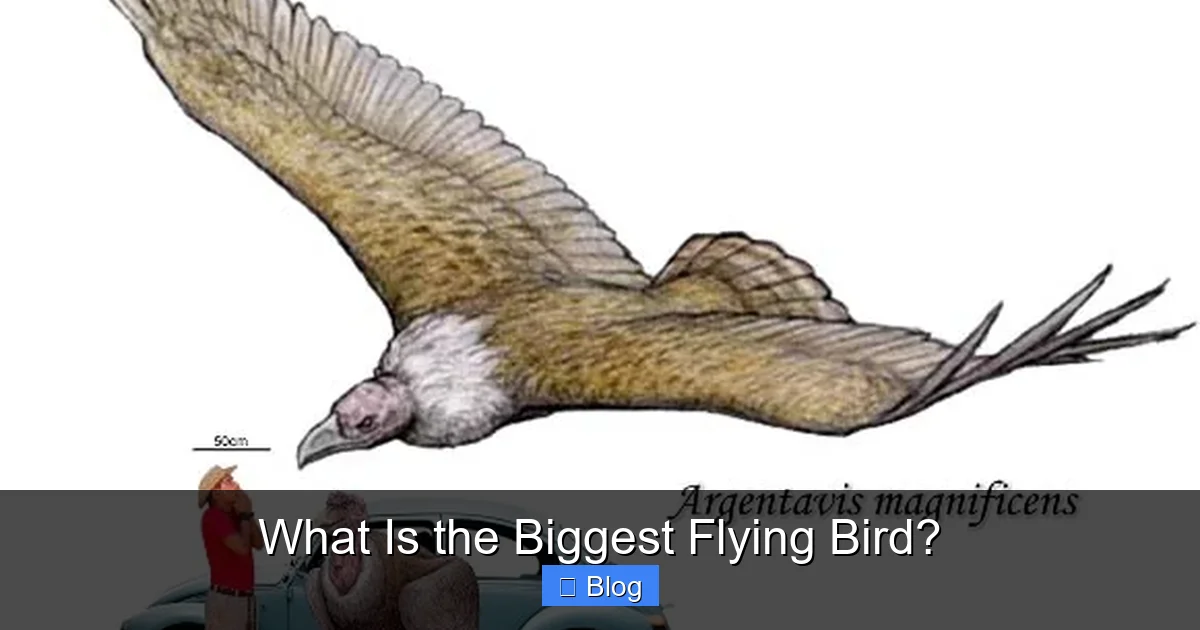
Perhaps the most famous of these extinct mega-birds is Argentavis magnificens, which lived about 6 million years ago in what is now Argentina. This bird is widely considered the largest flying bird of all time. Estimates suggest it had an incredible wingspan of up to 23 feet (7 meters)! That’s more than twice the wingspan of a Wandering Albatross and easily wider than a school bus.
Scientists believe Argentavis was primarily a scavenger, much like modern-day condors, using its immense wings to soar on thermal updrafts and winds over ancient South American landscapes. Its huge size would have made sustained flapping flight almost impossible, so it relied heavily on rising air currents, like modern condors and albatrosses, but on a much grander scale.
Pelagornis Sandersi: The Toothy Marvel
Another contender from the ancient world is Pelagornis sandersi, which lived about 25 to 28 million years ago. This bird had an estimated wingspan of around 20 to 24 feet (6.1 to 7.4 meters), potentially even rivaling Argentavis. What’s particularly fascinating about Pelagornis is its unique “pseudoteeth” – bony projections on its beak that resembled teeth, used for gripping slippery prey like fish.
Like Argentavis, Pelagornis was an expert glider, likely spending most of its life soaring over ancient oceans, much like a giant albatross. These ancient giants remind us of the incredible evolutionary paths life has taken and the sheer scale of some of Earth’s past inhabitants.
Conservation and the Future of Giant Birds
Sadly, many of the world’s largest flying birds, both by wingspan and weight, face significant threats in the modern world. Their impressive size and often specialized habitats make them particularly vulnerable to environmental changes and human pressures.
Threats to Large Bird Populations
Habitat loss and degradation are major concerns. Wetlands, grasslands, and remote islands, which are crucial for species like Trumpeter Swans, Great Bustards, and Wandering Albatrosses, are constantly being altered or destroyed by agriculture, development, and pollution. Climate change also plays a role, impacting food availability, breeding grounds, and migration patterns.
Other threats include direct human impacts such as hunting (historically, for many species), lead poisoning (from consuming shot in game), entanglement in fishing gear (a huge problem for albatrosses), and collisions with power lines or wind turbines. Their long lifespans and slow reproductive rates mean that even small increases in mortality can have devastating effects on populations.
Why We Need to Protect Them
Protecting these magnificent birds is not just about preserving individual species; it’s about maintaining healthy ecosystems. Large birds often sit at the top of their food chains or play vital roles as scavengers, indicators of environmental health. Their presence enriches our planet and inspires awe and wonder. Losing them would mean losing an irreplaceable part of Earth’s biodiversity and a vital connection to the wild.
What You Can Do to Help
So, what can you do? Even small actions can make a difference. Supporting conservation organizations that work to protect bird habitats and reduce human-wildlife conflicts is crucial. Reducing your own environmental footprint, making sustainable choices, and advocating for policies that protect natural spaces can help. Educating yourself and others about these incredible creatures and the challenges they face is also a powerful step. By understanding and appreciating the biggest flying bird, in all its forms, we can contribute to securing a future where they continue to soar.
Conclusion: A Sky Full of Giants
The question “What is the biggest flying bird?” has led us on a truly global adventure, from the windswept oceans where the Wandering Albatross reigns supreme to the grasslands of Europe where the Great Bustard takes to the air with a powerful heave. We’ve seen how size is measured in different ways, each revealing a different champion among the feathered giants.
Whether by colossal wingspan or impressive weight, these birds are living marvels, pushing the boundaries of what is possible in the realm of flight. They remind us of the incredible diversity and adaptability of life on Earth, and the elegant dance between biology and physics that allows such enormous creatures to defy gravity. As we look to the future, it’s clear that protecting these magnificent aviators is not just a scientific endeavor but a shared responsibility. May these titans of the sky continue to inspire us for generations to come.
Frequently Asked Questions
Is the Ostrich the biggest bird?
While the Ostrich is indeed the largest and heaviest bird on Earth, it is flightless. This article specifically focuses on birds that are capable of actual flight, so the Ostrich is not considered in the “biggest flying bird” category.
How do large birds manage to take off?
Large flying birds use various strategies for takeoff. Many require a running start, either on land or water, to gain sufficient speed for lift. Others, especially those with very long wings, rely on strong headwinds or thermal updrafts to help them get airborne with less effort.
Do all birds with large wingspans also have heavy bodies?
Not necessarily. Birds like the Wandering Albatross have incredibly long wingspans but are relatively lightweight for their size, optimized for efficient soaring. Conversely, birds like the Great Bustard are very heavy but have comparatively shorter, powerful wings for their mass.
What makes a bird a “good” flyer?
A “good” flyer often refers to a bird’s efficiency and agility in the air. This includes factors like sustained flight capability, ability to maneuver, speed, and energy conservation. Birds like albatrosses are excellent at soaring efficiently, while a hummingbird is excellent at agile, hovering flight.
Are biggest flying birds endangered?
Many of the world’s largest flying birds, including the Wandering Albatross, Great Bustard, and Trumpeter Swan, are indeed considered threatened or endangered. They face significant challenges such as habitat loss, climate change, pollution, and direct human impact like fishing bycatch.
How long do the biggest flying birds live?
Many of the largest flying birds have impressive lifespans. The Wandering Albatross, for instance, can live for 50 years or even longer. Trumpeter Swans typically live for 20-30 years in the wild, showcasing that large body size often correlates with a longer life in the avian world.