
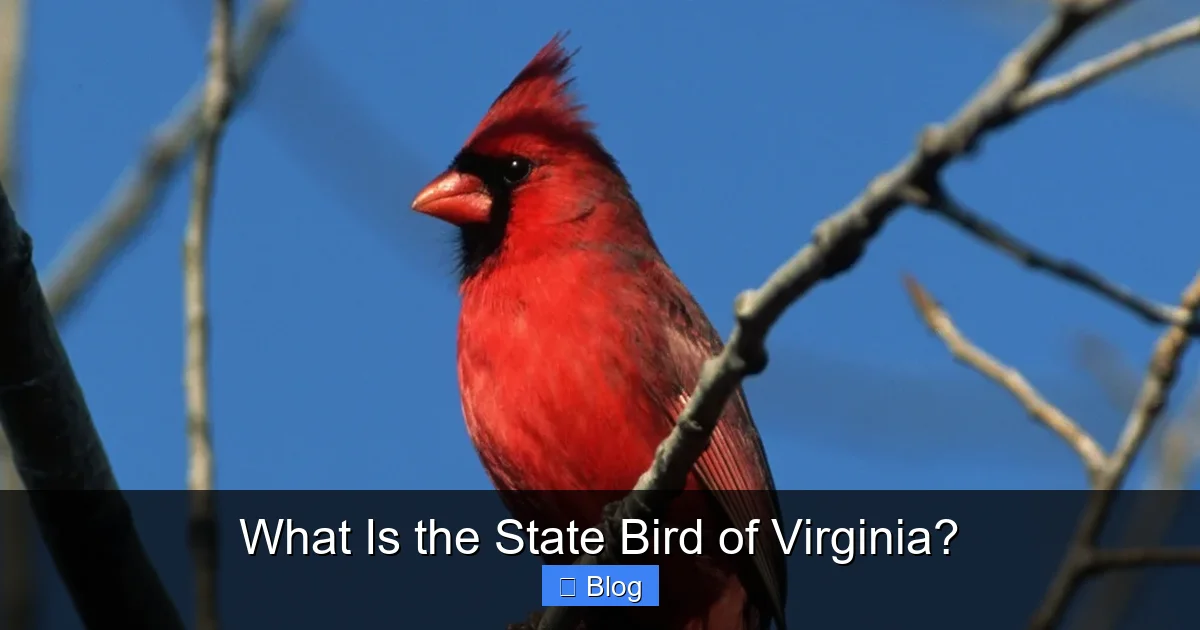
The Northern Cardinal is the official state bird of Virginia, recognized for its striking beauty and cheerful song. This iconic red bird is a year-round resident across the Old Dominion, symbolizing warmth, hope, and the vibrant spirit of the state. Its widespread presence and distinctive features make it a beloved emblem, easily spotted in backyards and natural landscapes alike.
What Is the State Bird of Virginia?
Have you ever looked out your window on a crisp Virginia morning and seen a flash of brilliant red against the green trees or white snow? Or perhaps you’ve heard a distinctive, cheerful whistle emanating from a nearby bush? If you have, you’ve likely encountered one of the Commonwealth’s most iconic and beloved feathered residents. It’s a bird so widely recognized and cherished that it holds a special place in the heart of Virginians, officially representing the state itself.
State symbols are more than just pretty pictures or catchy slogans; they embody the spirit, history, and natural beauty of a place. From the state flower to the state tree, each symbol tells a story. And when it comes to avian ambassadors, Virginia chose a true gem. This article will take you on a journey to discover not just what is the state bird of Virginia, but also why this particular bird was chosen, what makes it so special, and how you can get to know it better in its natural habitat. Prepare to fall in love with a bird that perfectly encapsulates the charm and vibrancy of the Old Dominion.
So, let’s not keep you in suspense any longer! If you’re wondering what is the state bird of Virginia, the answer is the magnificent Northern Cardinal. This stunning creature brings life and color to every season, making it a truly deserving emblem for the state. Now, let’s dive deeper into the world of Virginia’s official avian symbol.
Key Takeaways
- Official State Bird: The Northern Cardinal is the designated state bird of Virginia, a title it shares with six other states, highlighting its widespread appeal and recognition across the eastern United States.
- Distinctive Appearance: Male Northern Cardinals are easily identified by their brilliant crimson red plumage, black face masks, and prominent crests, while females feature a more muted brownish-red with red accents.
- Year-Round Resident: Unlike many bird species, the Northern Cardinal does not migrate, making it a constant, cheerful presence in Virginia’s landscapes throughout all seasons, including winter.
- Ubiquitous and Visible: Its common presence in diverse habitats, from deep forests to suburban backyards, makes it one of the most frequently observed and beloved birds by Virginians.
- Melodious Vocalizations: Cardinals are known for their varied and clear whistling songs, which are often heard year-round, adding a delightful soundtrack to Virginia’s natural environment.
- Symbolic Significance: Beyond its beauty, the Northern Cardinal symbolizes warmth, hope, love, and cheer, resonating deeply with the values and spirit of the Commonwealth of Virginia.
- Attracting Cardinals: You can easily attract these beautiful birds to your backyard in Virginia by providing black-oil sunflower seeds, a source of water, and dense shrubbery for shelter and nesting.
Quick Answers to Common Questions
What year was the Northern Cardinal designated as Virginia’s state bird?
The Northern Cardinal was officially adopted as the state bird of Virginia on March 4, 1950.
Do both male and female Northern Cardinals sing?
Yes, both male and female Northern Cardinals are known to sing, which is less common among bird species where singing is typically a male-dominated activity.
What do Northern Cardinals primarily eat?
Northern Cardinals primarily eat seeds, especially black-oil sunflower seeds, but they also consume insects, wild fruits, and berries.
Are Northern Cardinals migratory birds?
No, Northern Cardinals are non-migratory birds, meaning they remain in Virginia year-round, even through the winter months.
What is the most distinctive feature of the male Northern Cardinal?
The most distinctive feature of the male Northern Cardinal is its brilliant crimson red plumage, along with its black face mask and prominent crest.
📑 Table of Contents
- Unveiling Virginia’s Feathered Ambassador: The Northern Cardinal
- Getting to Know the Northern Cardinal: Virginia’s Brightest Jewel
- The Cardinal in Virginia’s Ecosystem: A Vital Resident
- Why the Northern Cardinal Was Chosen: More Than Just a Pretty Face
- Observing and Attracting Cardinals to Your Virginia Home
- Conclusion
Unveiling Virginia’s Feathered Ambassador: The Northern Cardinal
The Northern Cardinal (Cardinalis cardinalis) stands as the undisputed state bird of Virginia. Its official designation came many years ago, solidifying its place as a symbol of the Commonwealth. This isn’t just a casual observation; it’s a matter of state law, reflecting a deep appreciation for this particular species among Virginians. The choice was not made lightly, and it speaks volumes about the bird’s inherent qualities and its ubiquitous presence across the landscape.
A Legacy of Symbolism: Why State Birds Matter
State birds, much like state flags or anthems, serve as unifying symbols. They often represent a species native to the region, one that captures the imagination and reflects the natural heritage of the land. For Virginia, selecting a state bird meant choosing a creature that resonated with its citizens, a bird that was both beautiful and familiar. The process of designating a state bird often involves public input, legislative debates, and a desire to pick an animal that truly embodies the state’s character. When it comes to what is the state bird of Virginia, the Northern Cardinal easily met these criteria.
The Cardinal’s Reign: When It Became Official
The Northern Cardinal was officially adopted as the state bird of Virginia on March 4, 1950. This decision cemented its role as an enduring icon. It’s interesting to note that Virginia is not alone in its admiration for the Northern Cardinal; it is also the state bird of six other states: Illinois, Indiana, Kentucky, North Carolina, Ohio, and West Virginia. This widespread recognition across the eastern United States underscores the bird’s popularity and commonality, making it an excellent choice for what is the state bird of Virginia, a state deeply rooted in eastern American history and nature. Its long tenure as Virginia’s feathered ambassador means generations have grown up recognizing this vibrant bird as a symbol of home.
Getting to Know the Northern Cardinal: Virginia’s Brightest Jewel
Once you know what is the state bird of Virginia, you’ll want to learn more about it. The Northern Cardinal is truly a showstopper, especially the male. Its striking appearance and cheerful vocalizations make it one of the easiest and most enjoyable birds to identify. Understanding its characteristics helps us appreciate why it was chosen to represent Virginia.
Distinctive Features: Appearance and Coloration
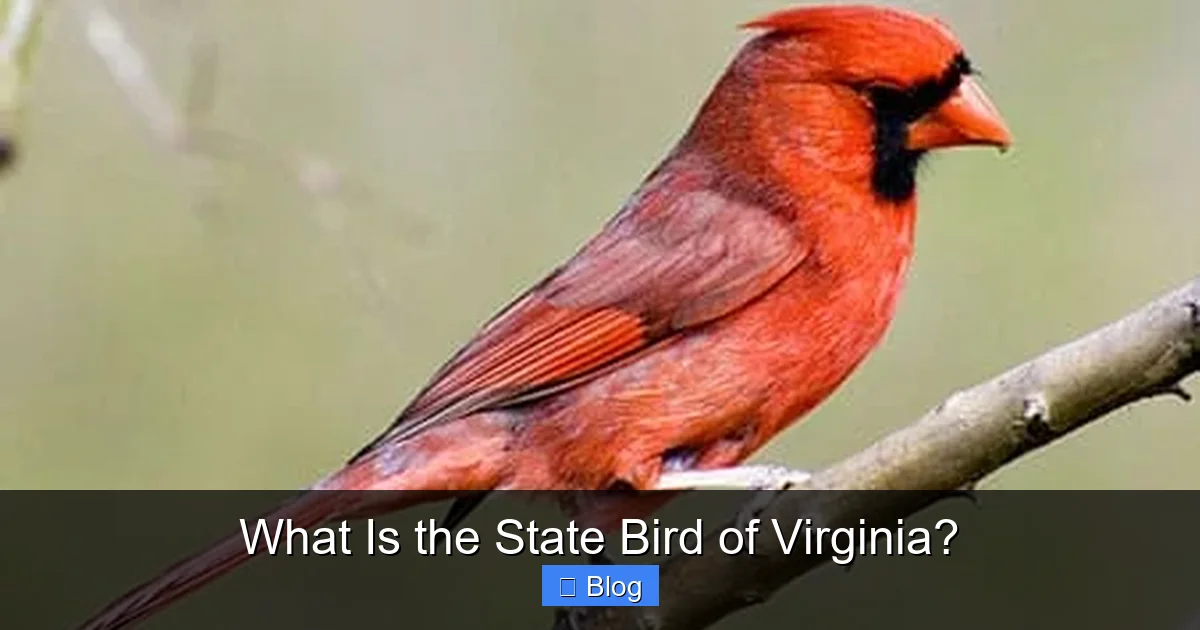
The most striking feature of the Northern Cardinal, particularly the male, is its brilliant, unmistakable color. Males are an intense, fiery crimson red from beak to tail. They sport a distinctive black mask around their eyes and a prominent, pointed crest on their heads, giving them an almost regal appearance. This vibrant coloration is especially eye-catching against a snowy backdrop in winter or amongst the green foliage of summer.
Female cardinals, while not as brilliantly red as their male counterparts, are beautiful in their own right. They exhibit a more subdued brownish-red plumage, with reddish tinges on their wings, tail, and crest. They also have the characteristic crest and a faint black mask, though less pronounced than the male’s. Both sexes share a thick, conical, reddish-orange bill, perfectly adapted for cracking seeds. Juvenile cardinals resemble the females but have a darker, grayish bill that gradually turns orange. Their distinct appearance ensures that once you’ve seen a cardinal, you’ll never forget it.
Its Melodious Call: Sounds and Communication
Beyond their stunning looks, Northern Cardinals are also known for their rich and varied vocalizations. They have a repertoire of clear, whistling songs and sharp calls. One common song is a series of clear, distinct whistles that often sound like “cheer-cheer-cheer,” “birdie-birdie-birdie,” or “what-cheer-what-cheer.” Both males and females sing, which is somewhat unusual in the bird world where singing is typically a male-dominated activity.
Cardinals use different calls for various purposes, such as an alarm call – a sharp “chip!” – to warn others of predators, or softer contact calls to communicate with their mate. You can often hear their songs throughout the year, even on cold winter days, adding a welcome burst of sound to the quiet landscape. This year-round vocal presence further cements its status as what is the state bird of Virginia, a constant and comforting presence.
Habitat and Range: Where They Live in Virginia and Beyond
Northern Cardinals are incredibly adaptable birds, thriving in a variety of habitats across Virginia. You can find them in woodlands, forest edges, suburban gardens, parks, and even urban areas, as long as there’s sufficient shrubbery and trees for cover. They prefer dense foliage for nesting and roosting, which provides protection from predators and the elements.
Their range extends throughout the eastern United States, southeastern Canada, and parts of Mexico. In Virginia, they are widely distributed from the coastal plains to the Appalachian mountains. Their ability to adapt to human-altered landscapes means they are a common sight in backyards and neighborhoods throughout the Commonwealth. This ubiquity makes it easy for almost any Virginian to connect with their state bird.
The Cardinal in Virginia’s Ecosystem: A Vital Resident
Understanding the role the Northern Cardinal plays in its environment helps us appreciate its significance beyond just being what is the state bird of Virginia. These birds are active members of the ecosystem, contributing to seed dispersal and providing a food source for some predators.
Diet and Foraging Habits: What They Eat
Northern Cardinals are primarily seed-eaters, but their diet is quite varied, especially during breeding season. They particularly love sunflower seeds, safflower seeds, and cracked corn, which is why they are frequent visitors to bird feeders. Their strong, conical bills are perfectly designed for cracking open tough seed shells.
In addition to seeds, they also consume a variety of insects, including beetles, grasshoppers, cicadas, and caterpillars, especially when feeding their young, as insects provide essential protein for growing chicks. They also eat wild fruits and berries, such as those from dogwood, sumac, and wild grape vines. This diverse diet makes them flexible survivors and important contributors to the ecosystem, helping to control insect populations and disperse plant seeds.
Breeding and Nesting: Family Life
Northern Cardinals are monogamous, with pairs often staying together year-round, especially in areas with mild winters like Virginia. Breeding season typically runs from March to September. The female builds a cup-shaped nest, usually in dense shrubs, small trees, or vines, typically 3 to 15 feet off the ground. The nest is made from twigs, leaves, grass, and bark, lined with fine grasses or hair.
She usually lays 2 to 5 eggs, which are grayish-white with brown speckles. The female does most of the incubation, which lasts about 12 to 13 days. Once the chicks hatch, both parents share the responsibility of feeding them. Cardinal pairs can raise two to four broods in a single breeding season in Virginia, thanks to the mild climate and abundant resources. The sight of a male cardinal bringing food to his mate on the nest or to their hungry chicks is a heartwarming display of parental care.
Year-Round Resident: Not a Migrator
One of the most appealing aspects of the Northern Cardinal, particularly for those in Virginia, is that they are non-migratory. Unlike many songbirds that fly south for the winter, cardinals remain in their territories year-round. This means Virginians can enjoy their vibrant presence even on the coldest, snowiest days, providing a much-needed splash of color and cheer during the starker months. Their ability to withstand the winter makes them a truly resilient and constant symbol, further reinforcing why it is what is the state bird of Virginia.
Why the Northern Cardinal Was Chosen: More Than Just a Pretty Face
The decision of what is the state bird of Virginia wasn’t just based on aesthetics. There are several compelling reasons why the Northern Cardinal was deemed the perfect representative for the Commonwealth. Its characteristics align beautifully with the natural and cultural landscape of Virginia.
Ubiquity and Visibility: A Common Sight
One of the primary reasons for the cardinal’s selection is its sheer ubiquity. Northern Cardinals are incredibly common across Virginia. Whether you live in a bustling city, a quiet suburb, or a rural farmhouse, you are very likely to see a cardinal. They are comfortable in various habitats, from dense forests to your own backyard, making them accessible to virtually everyone in the state. This widespread presence ensures that the state bird is not some rare, elusive creature but a familiar, friendly face that Virginians can easily connect with.
Striking Beauty: Aesthetic Appeal
Let’s be honest, the male Northern Cardinal is stunning. Its brilliant red plumage is unmistakable and adds a vibrant burst of color to any landscape. This visual appeal makes it an instant favorite for birdwatchers and casual observers alike. The sheer joy of spotting a cardinal, especially in the winter, is undeniable. Its beauty is a source of pride and a testament to the natural wonders found in Virginia.
Cultural Significance: A Symbol of Hope and Cheer
Beyond its physical attributes, the Northern Cardinal carries significant symbolic weight. It is often associated with warmth, hope, and cheer. Many cultures and individuals believe that seeing a cardinal signifies a visit from a loved one who has passed away, bringing comfort and peace. Its cheerful song, even in winter, can lift spirits. For Virginians, the cardinal embodies resilience, vibrancy, and the enduring beauty of nature, offering a message of hope and optimism, qualities fitting for what is the state bird of Virginia.
A Unifying Symbol: Represents the State Well
By being widely recognized, visually appealing, and symbolically rich, the Northern Cardinal serves as an excellent unifying symbol for the state. It represents the natural beauty of Virginia, its diverse ecosystems, and the simple joys that nature can bring to its residents. The cardinal is a symbol that transcends demographic lines, appealing to children and adults, urban dwellers and rural residents alike. It’s a symbol that truly brings Virginians together.
Observing and Attracting Cardinals to Your Virginia Home
Now that you know what is the state bird of Virginia and why it’s so special, you might be eager to see more of these delightful birds. Fortunately, attracting Northern Cardinals to your backyard in Virginia is relatively easy.
Best Times and Places for Birdwatching
Cardinals are active throughout the day, but they are often most visible during dawn and dusk. Their bright red color makes them easy to spot against foliage, especially in winter. Look for them in areas with dense shrubs, along forest edges, or near bird feeders. They are also known to frequent parks and gardens, so even if you live in a more urban area of Virginia, you still have a good chance of spotting one. Listen for their distinctive whistle; it’s often heard before you see them!
Creating a Cardinal-Friendly Backyard: Food, Water, and Shelter
To encourage Northern Cardinals to visit your yard, focus on providing their basic needs:
1. Food: Cardinals absolutely love black-oil sunflower seeds. These seeds have thinner shells and higher oil content, making them easier to crack and more nutritious. Platform feeders or tray feeders are good choices, as cardinals prefer to perch on a flat surface rather than cling. You can also offer safflower seeds, which cardinals enjoy but squirrels tend to avoid.
Visual guide about What Is the State Bird of Virginia?
Image source: birdzilla.com
2. Water: A bird bath is a magnet for cardinals, especially during dry spells or in winter when natural water sources might be frozen. Ensure the water is clean and fresh, and consider a bird bath heater for winter use.
3. Shelter: Cardinals prefer dense shrubs and small trees for nesting, roosting, and hiding from predators. Planting native shrubs like dogwood, holly, or wild rose can provide ideal cover. Evergreen bushes are particularly valuable in winter.
4. Nesting Sites: While cardinals build their nests in dense vegetation, providing a variety of shrubbery and small trees at different heights will encourage them to nest in your yard. Avoid pruning dense shrubs during nesting season (spring and early summer).
By creating a welcoming environment, you’ll not only attract the state bird of Virginia but also contribute to the local ecosystem and enjoy the beauty of nature right outside your door.
Ethical Birdwatching Practices: Do’s and Don’ts
When observing cardinals or any wildlife, it’s important to practice ethical birdwatching. Always maintain a respectful distance to avoid disturbing the birds, especially during nesting season. Never try to touch a wild bird or its nest. Avoid using playback calls excessively, as this can stress the birds. Focus on quiet observation and appreciation, allowing the birds to behave naturally. Remember, your goal is to enjoy their presence without causing them any harm or undue stress. The joy of observing what is the state bird of Virginia is in seeing it thrive naturally.
Conclusion
The Northern Cardinal truly embodies the spirit and natural splendor of the Commonwealth. Its brilliant red plumage, cheerful song, and year-round presence make it an unmistakable and deeply cherished symbol. From its official adoption in 1950 to its everyday appearances in backyards across the state, the cardinal consistently reminds Virginians of the beauty that surrounds them.
So, the next time you spot that flash of crimson or hear that distinctive whistle, you’ll know you’re observing not just any bird, but what is the state bird of Virginia – a vibrant, resilient, and utterly charming ambassador for the Old Dominion. Its story is a testament to the power of nature to inspire, unite, and bring joy, cementing its place as a true treasure of Virginia’s natural heritage. Embrace the beauty of the Northern Cardinal, and let it brighten your days in the same way it brightens the landscape of Virginia.
Frequently Asked Questions
What other states share the Northern Cardinal as their state bird?
In addition to Virginia, the Northern Cardinal is also the state bird for Illinois, Indiana, Kentucky, North Carolina, Ohio, and West Virginia, making it one of the most popular state birds in the eastern U.S.
How can I tell the difference between a male and female Northern Cardinal?
Male Northern Cardinals are a striking bright red with a black face mask, while females have more muted brownish-red plumage with reddish accents on their wings and tail, and a less prominent black mask.
What kind of nest does a Northern Cardinal build?
A female Northern Cardinal builds a cup-shaped nest, typically in dense shrubs or small trees, using twigs, leaves, grass, and bark, and lining it with finer materials like grasses or hair.
Why are Northern Cardinals so commonly seen in backyards?
Northern Cardinals are commonly seen in backyards because they are highly adaptable to human-altered landscapes and are readily attracted to bird feeders offering sunflower seeds, as well as dense shrubs for shelter.
What does the Northern Cardinal symbolize?
The Northern Cardinal often symbolizes warmth, hope, love, and cheer. Many people also associate seeing a cardinal with a visit from a loved one who has passed away.
Is the Northern Cardinal’s conservation status a concern?
The Northern Cardinal is currently considered a species of “Least Concern” by conservation organizations. Its populations are stable and widespread, largely due to its adaptability to various habitats, including suburban areas.