
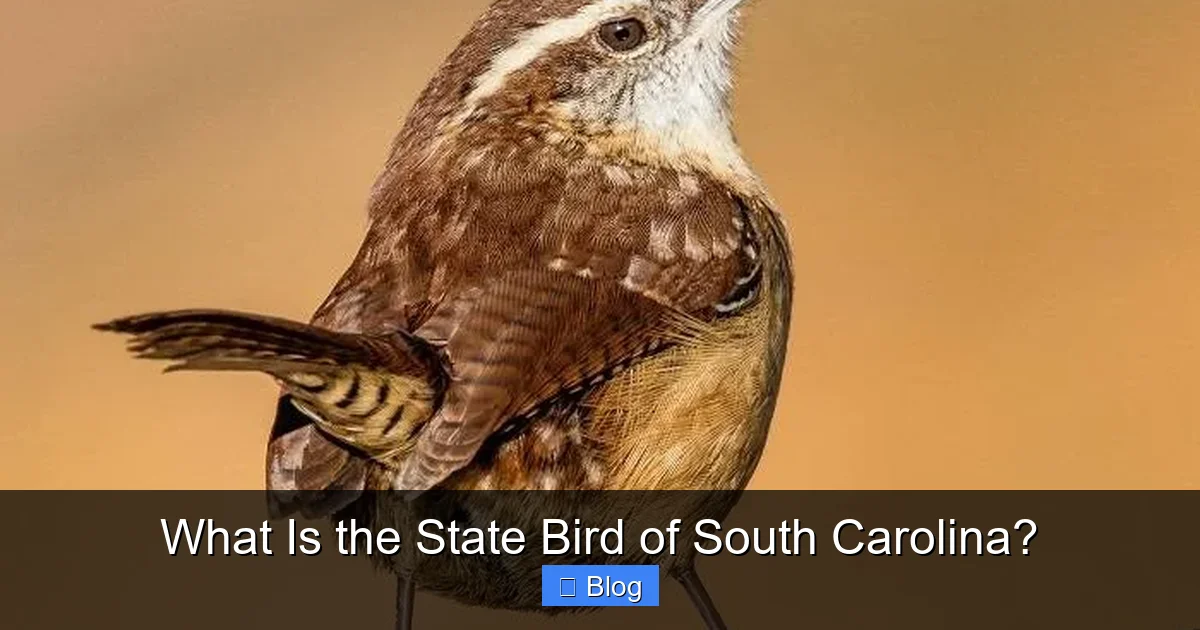
South Carolina’s state bird is the spirited Carolina Wren. This small, energetic bird, known for its loud, cheerful song and distinctive upturned tail, was officially designated in 1948. It perfectly embodies the state’s vibrant natural beauty and resilient spirit, making it a beloved symbol across the Palmetto State.
What Is the State Bird of South Carolina?
Have you ever wondered about the unique symbols that represent each state in the U.S.? Every state has its own flag, flower, tree, and, of course, a bird that embodies its spirit and natural beauty. These symbols often tell a story about the state’s history, environment, and culture. For visitors and residents alike, knowing these emblems can deepen your connection to the place. When you think of South Carolina, with its majestic coastline, historic cities, and lush landscapes, what kind of bird comes to mind? Is it a coastal seabird, a majestic raptor, or perhaps something smaller but equally significant?
South Carolina, affectionately known as the Palmetto State, boasts a rich biodiversity that makes it a paradise for birdwatchers and nature enthusiasts. From the barrier islands teeming with shorebirds to the maritime forests echoing with woodland calls, the state is home to a remarkable array of avian life. But among all these feathered wonders, one particular bird stands out, officially recognized as the cherished emblem of the state. It’s a creature whose presence is felt and heard throughout the year, truly embodying the essence of South Carolina. So, let’s embark on a journey to uncover the identity of this special bird and understand why it holds such a distinguished place in the heart of the Palmetto State.
Are you ready to find out what is the state bird of South Carolina? Get ready to be introduced to a small but mighty avian resident, a bird whose vibrant personality and unforgettable song make it an unmistakable and beloved symbol. We’re talking about a bird that can be found hopping through gardens, serenading from thickets, and generally brightening up the South Carolina soundscape. Join us as we explore the fascinating world of South Carolina’s state bird, delving into its history, characteristics, and why it’s such a perfect representative for this charming southern state.
Key Takeaways
- The Carolina Wren is South Carolina’s Official State Bird: Officially designated in 1948, it replaced the previous unofficial state bird, the Mockingbird, which was shared with several other states.
- Known for Its Powerful Song: Despite its small size, the Carolina Wren possesses one of the loudest and most cheerful songs in North America, often described as “teakettle, teakettle, teakettle.”
- Distinctive Appearance: It’s a small, reddish-brown bird with a prominent white stripe above its eye (supercilium) and a characteristically cocked tail, making it easy to identify.
- Common Resident Across the State: Unlike many migratory birds, the Carolina Wren is a year-round resident throughout South Carolina, thriving in various habitats from forests to suburban backyards.
- Feeds on Insects and Spiders: This insectivorous bird plays a crucial role in controlling pest populations, contributing to the health of its local ecosystem.
- Nests in Unique Locations: Carolina Wrens are known for building their dome-shaped nests in diverse and often unusual places, including hanging baskets, mailboxes, and old boots, demonstrating their adaptability.
- A Symbol of Resilience and Spirit: Its cheerful disposition and constant presence make the Carolina Wren a fitting and beloved symbol, representing the enduring spirit and natural charm of the Palmetto State.
Quick Answers to Common Questions
What is the official state bird of South Carolina?
The official state bird of South Carolina is the Carolina Wren (Thryothorus ludovicianus).
When was the Carolina Wren designated as South Carolina’s state bird?
The Carolina Wren was officially designated as South Carolina’s state bird on April 12, 1948.
What does the Carolina Wren’s song sound like?
The Carolina Wren is famous for its loud, cheerful song often described as “teakettle, teakettle, teakettle” or “cheerily, cheerily, cheerily.”
Is the Carolina Wren a migratory bird?
No, the Carolina Wren is a non-migratory bird, meaning it is a year-round resident throughout South Carolina.
What are some key identifying features of the Carolina Wren?
Key identifying features include its reddish-brown plumage, a prominent white stripe above its eye, and a distinctively cocked tail.
📑 Table of Contents
Unveiling South Carolina’s Feathered Jewel: The Carolina Wren
For many, the question, “What is the state bird of South Carolina?” evokes an immediate image of a small, energetic brown bird with a striking white eyebrow and an impressively loud voice. Indeed, the official state bird of South Carolina is the delightful Carolina Wren (Thryothorus ludovicianus). This charming little bird was officially designated on April 12, 1948, marking a significant moment in the state’s efforts to define its unique natural identity. Before its official adoption, South Carolina, like several other states, unofficially claimed the Mockingbird as its state bird. However, with the Mockingbird already chosen by five other states, there was a clear desire to select a bird that was distinctively and authentically South Carolinian.
The Story Behind the Choice
The journey to formally adopt the Carolina Wren as South Carolina’s state bird began with a growing sentiment among naturalists and citizens that the state needed its own unique avian emblem. The Mockingbird, while a beautiful and melodious bird, was simply too common a choice. The push for the Carolina Wren gained momentum due to several factors. Firstly, its name itself — “Carolina” Wren — tied it directly to the region. Secondly, it is a non-migratory bird, meaning it is present in South Carolina year-round, a constant presence in the state’s natural tapestry. This makes it a familiar and reliable symbol, unlike birds that only pass through during certain seasons.
Why the Wren?
The selection of the Carolina Wren wasn’t just about uniqueness; it was also about embodying qualities that resonated with the people and landscape of South Carolina. The wren is known for its tireless energy, its cheerful disposition, and its remarkable ability to thrive in various habitats, from dense forests to bustling suburban backyards. Its loud, persistent song, often heard even on the chilliest winter days, symbolizes resilience and a vibrant spirit that perfectly reflects the Palmetto State. This little bird, despite its diminutive stature, commands attention and admiration, much like South Carolina itself – a state that might be smaller than some, but boasts a rich character and strong identity. Thus, the Carolina Wren became the undisputed answer to “What is the state bird of South Carolina?”
Meet the Carolina Wren: A Closer Look
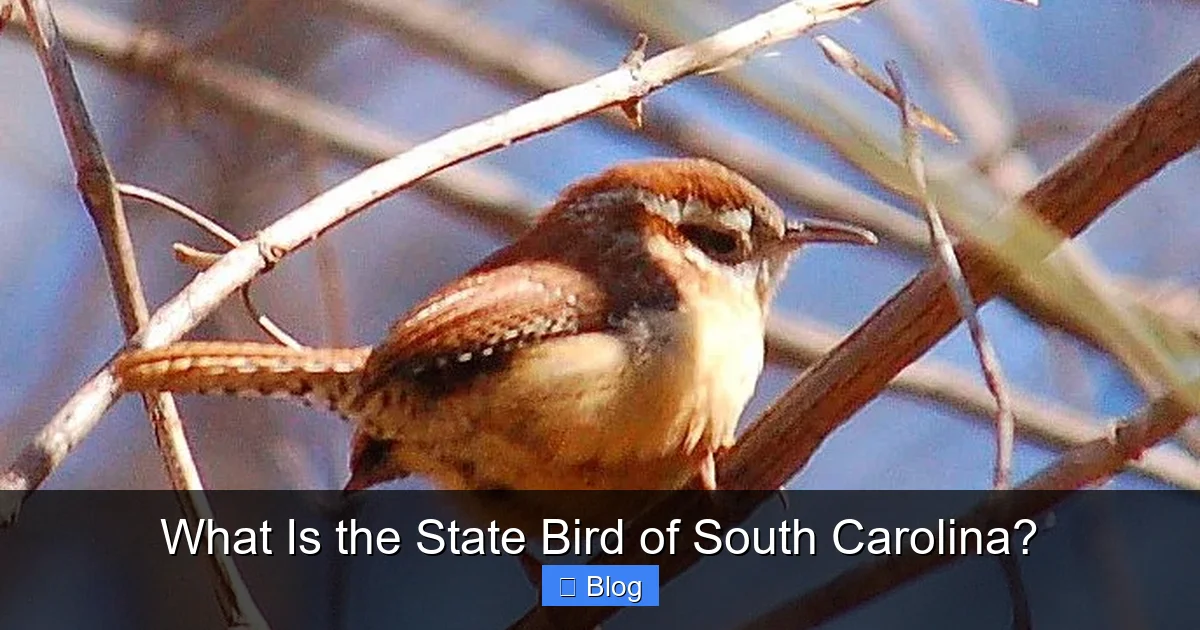
Visual guide about What Is the State Bird of South Carolina?
Image source: statesymbolsusa.org
Once you know what is the state bird of South Carolina, the next step is learning how to recognize it! The Carolina Wren is a small songbird, but what it lacks in size, it certainly makes up for in personality and vocal prowess. Understanding its physical attributes and behaviors will help you spot this feathered friend in your own backyard or during a stroll through any of South Carolina’s beautiful natural areas.
Physical Characteristics
The Carolina Wren is easily identifiable by its warm, reddish-brown plumage on its back and wings, which contrasts with a paler, buffy-orange underbelly. It typically measures about 5.5 inches (14 cm) in length, with a wingspan of about 7.5 inches (19 cm), making it larger than many other wren species but still a relatively small bird. One of its most distinctive features is the prominent white stripe, known as a supercilium, located just above its eye. This “eyebrow” gives the bird a perpetually alert and curious expression. Its long, slender bill is slightly decurved, perfect for probing into crevices for insects.
Identifying Marks
Beyond its coloring and size, the Carolina Wren has a couple of other key identifying marks. Its tail, a medium length for a wren, is frequently held cocked upwards, often at a sharp angle to its body. This jaunty posture is characteristic of many wren species, but it’s particularly noticeable in the Carolina Wren. Its legs are relatively long and strong, allowing it to navigate dense undergrowth with ease. Both male and female Carolina Wrens look alike, which is common among many songbird species. Their similar appearance means you’ll need to rely on their distinctive calls or behaviors to tell them apart, rather than plumage differences. When you’re out exploring South Carolina, keeping an eye out for this specific combination of features will quickly help you identify the state bird.
The Song of the Palmetto State
While its appearance is charming, it’s truly the Carolina Wren’s voice that sets it apart and makes it an unforgettable presence in the South Carolina soundscape. When people ask, “What is the state bird of South Carolina?” many immediately think of its song. For such a small creature, the Carolina Wren possesses an astonishingly powerful and melodious vocal range, making it one of the most recognized bird songs in the eastern United States.
A Melodious Messenger
The Carolina Wren is famous for its loud, ringing song, which is often described with phrases like “teakettle, teakettle, teakettle” or “cheerily, cheerily, cheerily.” This distinctive three-part phrase is repeated vigorously and can carry surprisingly far, often dominating the dawn chorus in many areas. What’s even more impressive is that the Carolina Wren sings throughout the year, not just during breeding season. You can hear its cheerful tunes on a crisp winter morning just as easily as on a warm spring day. This constant musical presence adds a vibrant backdrop to life in South Carolina, serving as a delightful reminder of the state’s natural beauty.
Beyond its primary song, the Carolina Wren also has a wide repertoire of calls and chattering notes. These include alarm calls, contact calls between mates, and various scolding sounds, especially if an intruder approaches their nest. This vocal versatility not only helps them communicate within their species but also allows birdwatchers to identify their presence even when the bird itself is hidden in dense foliage. The sheer volume and complexity of its vocalizations are truly remarkable for a bird of its size, underscoring its energetic and assertive nature.
Listening for the Wren
To truly appreciate what is the state bird of South Carolina, you need to hear its song. Listening for the Carolina Wren is relatively easy, as it prefers to sing from a prominent perch, though often concealed within a thicket or shrub. It is most active vocally at dawn and dusk but can be heard throughout the day. If you live in South Carolina or are visiting, simply step outside, especially in an area with some shrubbery or trees, and listen. You’ll likely be treated to its characteristic song, a sound that is as integral to the Palmetto State as the rustle of palmetto fronds. Many bird enthusiasts use apps or online resources to learn its song, which can greatly enhance the experience of identifying birds in the wild. Once you learn the “teakettle” song, you’ll start hearing Carolina Wrens everywhere!
Habitat and Habits: Where Does it Live?
Understanding the lifestyle of the Carolina Wren provides even deeper insight into what is the state bird of South Carolina and why it thrives here. This hardy little bird is a year-round resident, perfectly adapted to the varied landscapes of the Palmetto State, from its coastal regions to its piedmont and mountain areas.
Preferred Ecosystems
Carolina Wrens are incredibly adaptable when it comes to habitat. They prefer environments with dense undergrowth, which provides ample cover for nesting and foraging, and protection from predators. This includes deciduous and mixed forests, suburban gardens, parks, overgrown fields, and even riparian areas along streams and rivers. You’ll often find them hopping and flitting through tangles of vines, brush piles, and low branches. They are not shy of human habitation and will readily make themselves at home in backyards if suitable cover and food sources are available. This widespread presence makes them a familiar and accessible symbol for all South Carolinians.
Diet and Foraging
The Carolina Wren is primarily insectivorous, meaning its diet consists mainly of insects and spiders. They are meticulous foragers, meticulously exploring tree bark, leaf litter, and dense vegetation in search of their prey. Their diet includes beetles, caterpillars, grasshoppers, crickets, flies, and various other invertebrates. This makes them natural pest controllers in gardens and agricultural areas. Occasionally, they will supplement their diet with small fruits or berries, especially during the colder months when insect populations are lower. Their active foraging style, darting and hopping with their tail cocked, is a joy to observe. Providing natural insect habitats in your yard is a great way to encourage these beneficial birds.
Nesting and Reproduction
Carolina Wrens are known for their somewhat unconventional and highly adaptable nesting habits. They build dome-shaped nests with a side entrance, constructed from a variety of materials including twigs, leaves, moss, bark, and even artificial debris like string or plastic. What truly makes their nesting interesting is their choice of location. While they will use natural cavities in trees or dense shrubs, they are equally famous for nesting in unusual human-made structures. You might find a Carolina Wren nest in a hanging basket, an old boot, a mailbox, a deserted flowerpot, a shed, or even the engine compartment of a parked car!
They typically lay 3-7 eggs, which are incubated by the female for about 12-14 days. Both parents participate in feeding the young, which fledge (leave the nest) within 12-14 days after hatching. Carolina Wrens can raise multiple broods in a single breeding season, especially in the warm South Carolina climate. This successful reproductive strategy contributes to their widespread presence and makes them a common and cherished sight throughout the state.
The Carolina Wren’s Role in Ecosystems and Culture
Beyond its charming appearance and melodious song, the Carolina Wren plays a vital role in its ecosystem and holds a special place in the cultural fabric of South Carolina. Understanding these facets further solidifies why it is the perfect answer to “What is the state bird of South Carolina?”
Ecological Contributions
As we discussed, the Carolina Wren’s diet primarily consists of insects and spiders. This makes them incredibly important in controlling pest populations within their habitats. By consuming large quantities of insects, they help maintain a natural balance in gardens, forests, and other ecosystems. This natural pest control benefits plants and other wildlife, contributing to the overall health and biodiversity of South Carolina’s environment. Their presence is often an indicator of a healthy, thriving habitat with a good food supply.
Cultural Significance in South Carolina
The Carolina Wren’s year-round presence, cheerful song, and adaptability have endeared it to the people of South Carolina. It’s a familiar sight and sound, connecting residents to the natural world right outside their windows. Its energetic nature and resilience, particularly its ability to sing even in colder weather, symbolize a persistent and cheerful spirit that many associate with the state itself. It is a symbol of home, a constant companion that reminds everyone of the vibrant life that pulses through the Palmetto State. It frequently appears in local art, literature, and educational materials, reinforcing its status as a beloved symbol.
Conservation Status and Efforts
Currently, the Carolina Wren is listed as “Least Concern” by the International Union for Conservation of Nature (IUCN), meaning its global population is stable and not facing immediate threats. In South Carolina, they are abundant. However, like all wildlife, they can be impacted by habitat loss and pesticide use. Encouraging native plant growth, providing brush piles, and avoiding chemical pesticides in your yard can help support healthy Carolina Wren populations. Local conservation groups and state parks in South Carolina often promote initiatives to protect bird habitats, which indirectly benefits the state bird and many other species.
How to Attract and Observe Carolina Wrens
If you’re eager to get a closer look at what is the state bird of South Carolina, you’re in luck! Carolina Wrens are relatively easy to attract to your yard and are fascinating to observe. Their active nature and loud songs make them excellent subjects for birdwatching, even for beginners.
Creating a Wren-Friendly Yard
* Provide Dense Cover: Carolina Wrens love dense shrubbery, brush piles, tangled vines, and evergreen bushes. These offer protection from predators and harsh weather, as well as prime foraging spots. Don’t be too quick to “tidy up” every corner of your garden; a little wildness can go a long way.
* Offer Food Sources: While they primarily eat insects, you can supplement their diet with suet feeders, especially during winter. They also appreciate peanuts (unsalted, shelled or unshelled) and mealworms. Avoid chemical pesticides, as this removes their natural food source.
* Water Source: A shallow bird bath with fresh water is always a welcome addition for all birds, including wrens, for drinking and bathing.
* Nesting Opportunities: Consider putting up a wren nesting box, typically a small, enclosed box with a small entrance hole. Place it in a sheltered area, perhaps under the eaves of a shed or within dense foliage. They might also use hanging baskets or other unconventional spots, so keep an eye on anything that offers a secluded, protected cavity.
Best Practices for Observation
Observing Carolina Wrens is a joy. They are active and often quite bold.
* Listen First: You’ll often hear them before you see them. Learn their “teakettle” song, and follow the sound.
* Be Patient: Wrens move quickly through dense vegetation. Find a comfortable spot near a shrub or brush pile, and remain still. They will often pop out into the open momentarily.
* Binoculars: While they can be seen with the naked eye, binoculars will enhance your view, allowing you to appreciate their distinct features, like the white supercilium and cocked tail.
* Respect Their Space: Especially during nesting season, observe from a distance to avoid disturbing them. Their nests are often well-hidden, so try not to peek too closely if you suspect one is nearby.
By creating a welcoming environment and practicing respectful observation, you can enjoy the constant presence and cheerful melodies of South Carolina’s state bird right in your own outdoor space.
Conclusion
So, what is the state bird of South Carolina? It is, without a doubt, the charismatic Carolina Wren. This small, yet incredibly vibrant bird embodies the very essence of the Palmetto State. From its distinctive reddish-brown plumage and prominent white eyebrow to its characteristic upturned tail, the Carolina Wren is a visual delight. More than just its looks, it is the bird’s incredibly loud and cheerful song, often described as a resounding “teakettle, teakettle, teakettle,” that truly captures the heart and soul of South Carolina. This song is a constant, year-round soundtrack to the state’s natural beauty, echoing from dense forests to suburban gardens.
The adoption of the Carolina Wren in 1948 was a deliberate choice to select a unique symbol that truly represented the spirit of South Carolina. Its non-migratory nature means it’s a familiar and constant presence, a resilient and energetic creature that thrives in diverse habitats across the state. This little bird, with its tireless foraging for insects and its adaptable nesting habits in often surprising locations, plays an important ecological role while simultaneously endearing itself to the human population. Its lively demeanor and powerful voice symbolize a cheerful persistence and a deep connection to the land that resonates deeply with the people of South Carolina.
Whether you’re a long-time resident or a curious visitor, taking a moment to listen for its song or catch a glimpse of this busy bird offers a wonderful connection to the natural heritage of the Palmetto State. The Carolina Wren is more than just an official emblem; it’s a living, breathing testament to South Carolina’s vibrant wildlife and enduring charm. Next time you hear that unmistakable “teakettle” call, you’ll know you’re experiencing the authentic voice of South Carolina’s cherished state bird.
Frequently Asked Questions
What makes the Carolina Wren unique among state birds?
Its powerful, year-round song, distinctive appearance with a white eyebrow and upturned tail, and its non-migratory nature make the Carolina Wren a unique and constant symbol for South Carolina, unlike state birds that might only be present seasonally or shared with many other states.
Why was the Carolina Wren chosen over other birds in South Carolina?
It was chosen because its name directly links it to the region (“Carolina”), it is a year-round resident, and its cheerful, energetic personality and loud song perfectly embody the spirit and natural beauty of the state, providing a unique emblem distinct from other states.
What kind of habitat does the Carolina Wren prefer?
Carolina Wrens prefer habitats with dense undergrowth for cover and foraging, such as forests, suburban gardens, parks, and overgrown fields. They are highly adaptable and often found close to human habitation.
What does the Carolina Wren eat?
The Carolina Wren is primarily insectivorous, feeding on a wide variety of insects and spiders like beetles, caterpillars, and grasshoppers. Occasionally, they will consume small fruits or berries.
Where do Carolina Wrens typically build their nests?
Carolina Wrens are known for their adaptable nesting habits, building dome-shaped nests in natural cavities, dense shrubs, and often in unusual human-made structures like hanging baskets, mailboxes, and sheds.
How can I attract Carolina Wrens to my yard in South Carolina?
You can attract Carolina Wrens by providing dense shrubbery and brush piles for cover, offering a shallow bird bath, avoiding chemical pesticides to maintain natural insect populations, and considering a wren nesting box.