
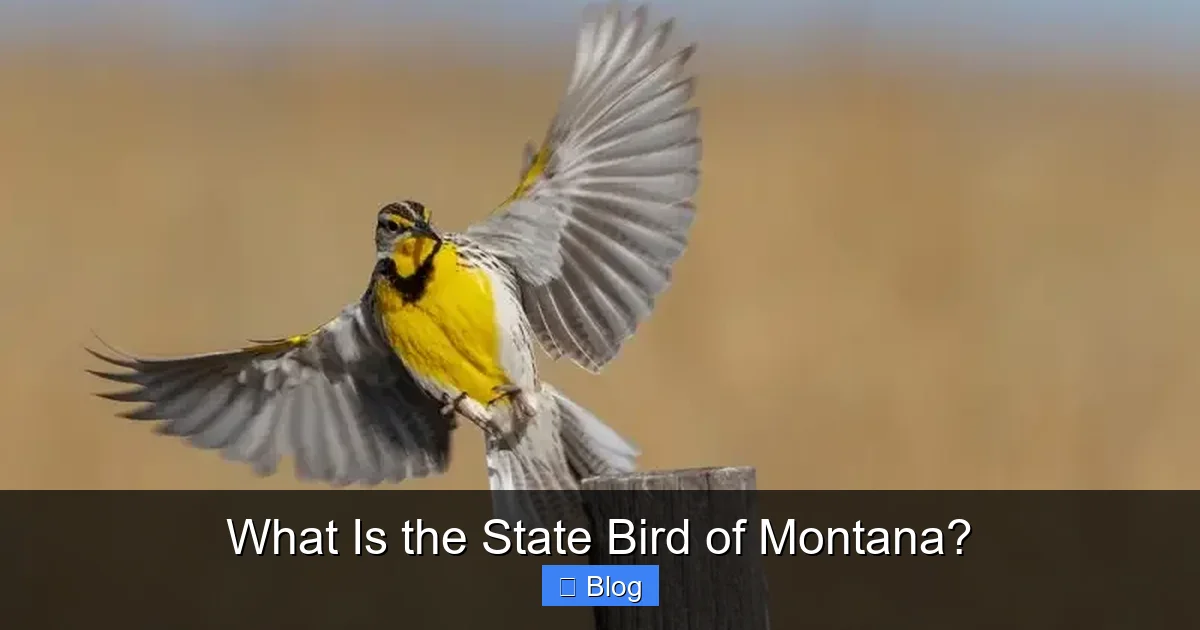
The state bird of Montana is the iconic Western Meadowlark, a vibrant and melodious songbird. Recognized for its bright yellow breast, distinctive black ‘V’ mark, and famously beautiful flute-like song, this bird embodies the wild and open spirit of Big Sky Country. It was officially designated in 1931, symbolizing Montana’s rich natural heritage and abundant prairie landscapes and captivating all who encounter its presence.
What Is the State Bird of Montana?
Montana. The very name conjures images of majestic mountains, sweeping prairies, and vast, unspoiled wilderness. It’s a land where the sky truly feels bigger, and nature reigns supreme. In a state so rich with natural beauty, it’s only fitting that its official symbols reflect this grandeur and spirit. Just as the grizzly bear embodies strength and the Ponderosa pine symbolizes resilience, Montana’s state bird holds a special place in the hearts of its residents and visitors alike.
Have you ever wondered what is the state bird of Montana? It’s a question that connects us to the unique natural heritage of the Big Sky Country. While many birds grace Montana’s diverse landscapes, one particular species stands out, not just for its striking appearance but for its unforgettable song that perfectly captures the essence of wide-open spaces. This avian emblem is more than just a symbol; it’s a living, breathing testament to the wild heart of Montana.
So, let’s embark on a journey to discover the official feathered ambassador of Montana. We’ll explore its characteristics, its history, and why this particular bird was chosen to represent such a magnificent state. Prepare to learn about a bird whose presence and song are as iconic to Montana as its mountains and rivers.
Key Takeaways
- Identity: The Western Meadowlark is the official state bird of Montana, chosen for its beauty and widespread presence.
- Distinctive Appearance: This bird is easily identified by its bright yellow underparts, a striking black ‘V’ shape on its chest, and a brown, streaky back.
- Melodious Song: The Western Meadowlark is renowned for its clear, flute-like, and complex song, often heard echoing across Montana’s open landscapes.
- Historical Significance: It was officially designated as Montana’s state bird in 1931, following a popular vote by school children, highlighting its cultural connection to the state.
- Habitat and Diet: It thrives in grasslands, prairies, and agricultural fields, primarily feeding on insects during summer and seeds in winter.
- Conservation Importance: While generally common, preserving its grassland habitat is crucial due to ongoing threats like habitat loss and pesticide use.
- Symbol of Montana: The Western Meadowlark represents the vastness, natural beauty, and agricultural spirit of Montana, making it a beloved avian ambassador.
Quick Answers to Common Questions
What is the official state bird of Montana?
The official state bird of Montana is the Western Meadowlark.
When was the Western Meadowlark designated as Montana’s state bird?
The Western Meadowlark was officially designated as Montana’s state bird in 1931.
What is unique about the Western Meadowlark’s song?
The Western Meadowlark is known for its clear, flute-like, and complex song, often described as one of the most beautiful sounds in North America.
What does the Western Meadowlark look like?
It has a bright yellow breast with a distinctive black ‘V’ mark, a brown and black streaky back, and white outer tail feathers visible in flight.
Where can you typically find Western Meadowlarks in Montana?
You can typically find Western Meadowlarks in open grasslands, prairies, pastures, and agricultural fields throughout Montana.
📑 Table of Contents
The Western Meadowlark: Montana’s Melodious Emblem
To answer the question, what is the state bird of Montana, we turn our attention to the magnificent Western Meadowlark (Sturnella neglecta). This charming bird is a beloved icon, chosen to represent Montana’s spirit and natural beauty. Its vibrant colors and enchanting song make it an unmistakable presence across the state’s vast plains and prairies.
A History Forged by Young Voices
The Western Meadowlark wasn’t chosen by some distant committee. Its designation as the state bird of Montana came from a grassroots movement, driven by the enthusiasm of the state’s schoolchildren. In 1931, students across Montana cast their votes, overwhelmingly choosing the Western Meadowlark. This democratic process reflects a deep-seated connection Montanans have with their wildlife, starting from a young age. The state legislature officially recognized their choice, solidifying the Meadowlark’s place in Montana’s heritage. This historical fact adds a layer of charm to the story of what is the state bird of Montana.
Why the Western Meadowlark?
Why did the children and subsequently the legislature choose this particular bird? Several factors contributed to its popularity. Firstly, the Western Meadowlark is widely distributed throughout Montana, making it a familiar sight and sound to most residents. Its preference for open grasslands aligns perfectly with Montana’s vast prairie ecosystems. Secondly, its striking appearance and, most notably, its beautiful, flute-like song, make it an undeniable avian star. The Meadowlark’s song is often described as one of the most beautiful and evocative in North America, perfectly symbolizing the serene yet wild nature of the state. It’s a sound that defines the Montana landscape, making it an excellent answer to what is the state bird of Montana.
Identifying the Western Meadowlark in the Wild
Spotting the Western Meadowlark is a delightful experience for any nature enthusiast or birdwatcher. Knowing what to look for will greatly enhance your chances of identifying this remarkable bird, which is, of course, what is the state bird of Montana.
Distinctive Appearance
The Western Meadowlark is instantly recognizable. It’s a medium-sized songbird, roughly 8-10 inches long with a wingspan of about 16 inches. Its most prominent feature is its brilliant yellow breast and belly, starkly contrasted by a bold black ‘V’ shaped band across its chest. This black ‘V’ is like a natural signature. Its back and wings are a mottled brown and black, providing excellent camouflage against the grassy plains. You’ll also notice white outer tail feathers, which are particularly visible during flight. Its head is striped with brown and yellow markings, adding to its distinctive look.
The Song: An Unforgettable Melody
While its appearance is striking, it’s the Western Meadowlark’s song that truly sets it apart. Often described as a clear, pure, gurgling, and flute-like melody, its song is a complex series of whistles that carry far across open fields. It’s typically a series of seven to ten clear, slurred whistles that descend in pitch. Many birdwatchers describe it as one of the most beautiful sounds in the North American wilderness. Learning to identify its song is perhaps the easiest way to know if you’re in the presence of what is the state bird of Montana.
Tip for Birdwatchers: If you’re trying to spot a Meadowlark, listen first! Their song is much easier to detect than their often-camouflaged bodies in tall grass. They typically sing from prominent perches like fence posts, telephone wires, or the tops of shrubs, giving them a clear stage for their performance.
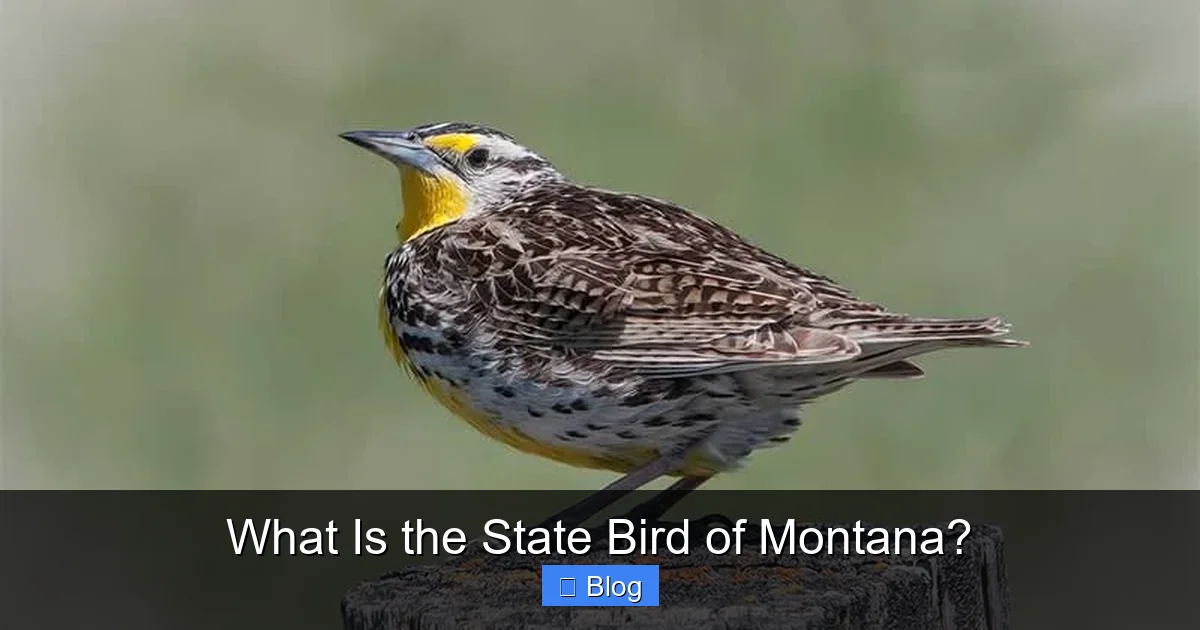
Visual guide about What Is the State Bird of Montana?
Image source: birdzilla.com
Distinguishing from its Eastern Cousin
It’s worth noting that there is also an Eastern Meadowlark. While very similar in appearance, their songs are distinct. The Western Meadowlark’s song is generally more complex and melodious, often described as “flute-like” or “like trickling water.” The Eastern Meadowlark’s song is simpler, often a two or three-note whistle, sometimes described as “spring-of-the-year.” While their ranges overlap in some central states, the Western Meadowlark is the predominant species in Montana and the clear answer to what is the state bird of Montana.
The Meadowlark’s Life and Habits
Understanding the daily life and routines of the Western Meadowlark helps us appreciate why it’s such a perfect symbol for Montana. Its habits are deeply intertwined with the landscape it calls home.
Habitat and Diet
Western Meadowlarks are birds of the open country. They thrive in grasslands, prairies, pastures, hayfields, and even large agricultural fields. They prefer areas with a mix of tall and short grasses, providing both cover and foraging opportunities. This type of habitat is abundant across much of Montana.
Their diet is varied and changes with the seasons. During the warmer months, they are primarily insectivores, feasting on grasshoppers, crickets, beetles, caterpillars, and other invertebrates. These insects provide essential protein for raising their young. In the colder months, when insects are scarce, their diet shifts to seeds and waste grains found in fields. This adaptability in diet is key to their survival in a state with such distinct seasons.
Nesting and Reproduction
Meadowlarks are ground nesters, which is somewhat unique among songbirds. The female builds a dome-shaped nest, often with a tunnel-like entrance, skillfully woven into the dense grass. This camouflage is crucial for protecting the eggs and chicks from predators. She typically lays 3-7 eggs, which are white with brown and purple spots.
Both parents are involved in raising the young, though the female does most of the incubation. The chicks hatch after about 13-14 days and fledge (leave the nest) surprisingly quickly, usually within 10-12 days after hatching. Their rapid development is another adaptation to life on the open plains, where exposure to predators is a constant threat. In Montana, it’s not uncommon for a pair to raise two broods in a single breeding season.
Migration Patterns
While some Western Meadowlarks are year-round residents in milder parts of their range, many populations, including those in the northern parts of Montana, are migratory. They will typically migrate south for the winter to warmer climates, returning to Montana in early spring to breed. Their arrival often coincides with the melting snow and the first signs of green, marking the true beginning of spring in Big Sky Country. Hearing their first songs of the season is a cherished event for many Montanans.
Conservation Status and Challenges for the State Bird of Montana
While the Western Meadowlark is still a relatively common bird across its range, like many grassland species, it faces significant challenges. Understanding these issues is vital for ensuring the continued presence of what is the state bird of Montana for future generations.
Population Declines and Threats
Over the past few decades, Western Meadowlark populations have experienced a decline across much of their range, including parts of Montana. The primary driver of this decline is habitat loss and degradation. As grasslands are converted to agricultural monocultures, urban development, or suffer from poor grazing practices, the Meadowlark loses its essential breeding and foraging grounds.
Pesticide use in agriculture also poses a threat. By reducing insect populations, pesticides eliminate a crucial food source for Meadowlarks, especially during the breeding season when protein-rich insects are vital for growing chicks. Climate change is another emerging concern, potentially altering weather patterns and habitat availability.
What Can Be Done?
Protecting the Western Meadowlark requires a multi-faceted approach:
* Habitat Preservation: Supporting efforts to conserve and restore native grasslands is paramount. This includes advocating for responsible land use policies and participating in habitat restoration projects.
* Sustainable Agriculture: Encouraging farmers and ranchers to adopt bird-friendly practices, such as reduced pesticide use and maintaining grassy buffer zones, can make a significant difference.
* Community Awareness: Educating the public about the importance of grassland ecosystems and the birds that depend on them, like what is the state bird of Montana, fosters a sense of stewardship.
* Citizen Science: Participating in bird counts and monitoring programs (like Audubon’s Christmas Bird Count or Cornell Lab of Ornithology’s eBird) helps scientists track populations and identify areas of concern.
Many organizations in Montana, such as the Montana Audubon Society and local land trusts, are actively working on these issues. By supporting these groups, individuals can contribute directly to the conservation of the Western Meadowlark and Montana’s broader avian diversity.
Beyond the Bird: Montana’s Rich Avian Diversity
While the Western Meadowlark proudly holds the title of what is the state bird of Montana, it’s just one star in a vast constellation of avian life that calls Big Sky Country home. Montana is a birder’s paradise, boasting an incredible array of species, thanks to its diverse habitats ranging from mountains to wetlands, forests to prairies.
Other Notable Montana Birds
Beyond the distinctive yellow and black of the Meadowlark, you can find:
* Majestic Raptors: Look to the skies for the iconic Bald Eagle, a symbol of national pride, or the graceful Osprey, often seen diving for fish near rivers and lakes. You might also spot various hawks, falcons, and owls, like the impressive Great Horned Owl.
* Waterfowl and Shorebirds: Montana’s numerous lakes, rivers, and wetlands attract a wide variety of ducks, geese, swans, and shorebirds like avocets and stilts.
* Forest Dwellers: In the evergreen forests, you might encounter woodpeckers, nuthatches, jays, and a multitude of warblers during migration.
* Mountain Specialists: High in the Rockies, unique species such as the Clark’s Nutcracker and various grouse species thrive.
Embracing Birdwatching in Montana
If the Western Meadowlark has piqued your interest in Montana’s birds, birdwatching is a fantastic hobby to pursue. It’s a peaceful way to connect with nature, learn about local ecosystems, and enjoy the outdoors.
Tips for Beginner Birdwatchers in Montana:
- Get a Field Guide: A good regional field guide (or a bird identification app) specific to the Rocky Mountains or Northern Plains will be invaluable.
- Binoculars: A decent pair of binoculars will bring distant birds into clear view.
- Start Local: Begin by observing birds in your backyard, local parks, or nearby nature trails.
- Visit State Parks and Wildlife Refuges: Montana has numerous state parks and wildlife management areas that are excellent for birding.
- Join a Local Birding Group: The Montana Audubon Society chapters often host guided bird walks, which are great for learning from experienced birders.
Discovering what is the state bird of Montana is just the beginning of a fascinating journey into the state’s rich avian world. Each bird you encounter tells a story about the health of its habitat and the intricate web of life in Big Sky Country.
Conclusion
So, what is the state bird of Montana? It is, without a doubt, the splendid Western Meadowlark. This beautiful bird, with its vibrant yellow plumage, distinctive black ‘V’ on its chest, and unforgettable flute-like song, is more than just an official symbol. It is a living embodiment of Montana’s vast prairies, its wild spirit, and its natural harmony. Chosen by the voices of schoolchildren, the Meadowlark has resonated with Montanans for nearly a century, representing the enduring beauty and resilience of the Big Sky Country.
From its ground nests hidden in the tall grasses to its soaring melodies that fill the air, the Western Meadowlark reminds us of the importance of preserving our natural landscapes. It’s a testament to the magic that unfolds when nature is allowed to thrive. Whether you’re a long-time resident or a first-time visitor, take a moment to look and listen for this remarkable bird. Its presence is a gentle reminder of the wild heart beating strong in Montana, and its song is an invitation to appreciate the simple yet profound wonders of the natural world around us. May the song of the Western Meadowlark continue to echo across Montana’s prairies for generations to come.
Frequently Asked Questions
How was the Western Meadowlark chosen as Montana’s state bird?
The Western Meadowlark was chosen following a popular vote by Montana schoolchildren in 1931. Their overwhelming preference for the Meadowlark was then officially recognized and enacted into law by the state legislature.
Do Western Meadowlarks migrate from Montana?
Yes, many Western Meadowlarks that breed in the northern parts of Montana migrate south for the winter to warmer climates. However, some populations in milder areas of their range can be year-round residents.
What do Western Meadowlarks eat?
Their diet changes seasonally. During warmer months, they primarily eat insects such as grasshoppers, crickets, and beetles. In winter, their diet shifts to seeds and waste grains found in open fields.
Where do Western Meadowlarks build their nests?
Western Meadowlarks are ground nesters. The female builds a well-camouflaged, dome-shaped nest, often with a hidden entrance, woven into dense grass to protect her eggs and chicks from predators.
How can I distinguish a Western Meadowlark from an Eastern Meadowlark?
While visually similar, the primary distinction is their song. The Western Meadowlark has a more complex, flute-like, gurgling song, whereas the Eastern Meadowlark’s song is typically simpler, a two or three-note whistle.
Are Western Meadowlark populations declining?
Yes, like many grassland bird species, Western Meadowlark populations have experienced declines in recent decades. This is primarily due to habitat loss from agricultural conversion and development, as well as pesticide use impacting their food sources.