
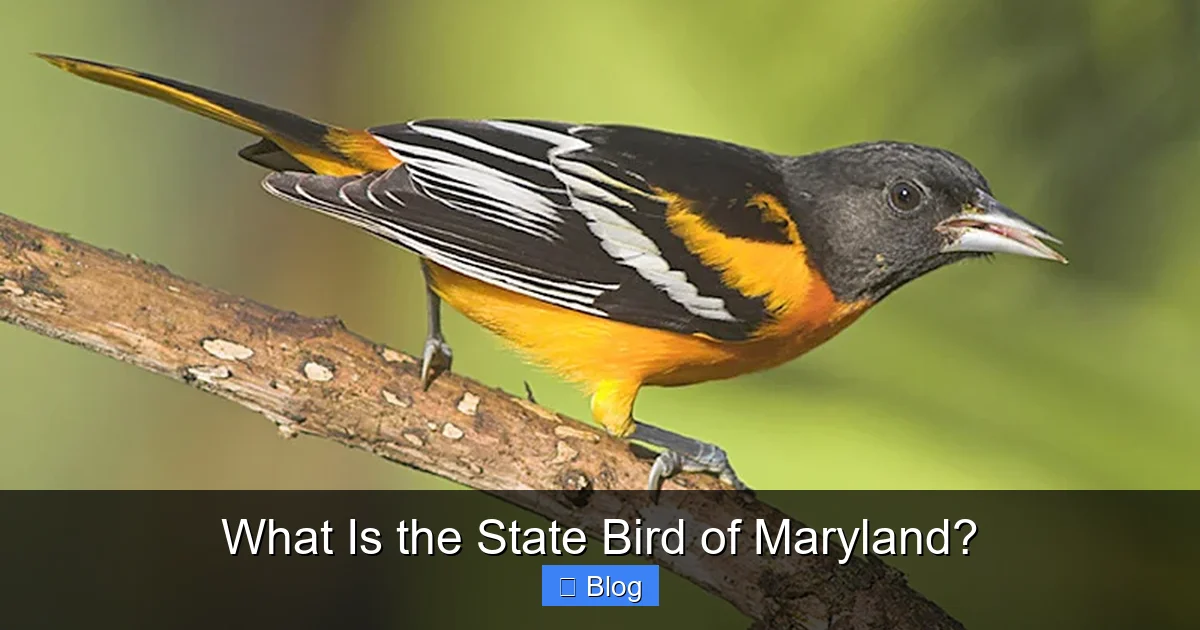
Maryland proudly claims the Baltimore Oriole as its official state bird. This stunning bird, known for its brilliant orange and black plumage, was designated in 1947, reflecting its deep ties to the state’s history and culture. From its namesake baseball team to its annual migratory visits, the Oriole embodies the spirit and natural beauty of Maryland.
When you think of Maryland, many images might come to mind: delicious blue crabs, the historic Inner Harbor, or perhaps even the exciting crack of a baseball bat. But for those who appreciate nature and local symbols, one vibrant creature truly stands out. It’s a bird whose colors echo the very flag of the state, and whose presence brings a flash of brilliant beauty to Maryland’s trees and skies. So, what is the state bird of Maryland? Let’s dive in and discover the fascinating story behind this iconic feathered friend.
The answer, as many Marylanders proudly know, is the magnificent Baltimore Oriole. This isn’t just any bird; it’s a creature steeped in history, culture, and natural wonder, perfectly embodying the spirit of the Old Line State. From its striking appearance to its migratory journeys, the Baltimore Oriole is more than just a state symbol; it’s a living piece of Maryland’s identity.
Join us as we explore everything there is to know about this cherished avian resident. We’ll uncover why it was chosen, where you can spot one, what makes it so special, and how it continues to captivate the hearts of Marylanders and bird enthusiasts alike. Get ready to learn all about the bird that proudly represents Maryland!
Key Takeaways
- Maryland’s State Bird: The official state bird of Maryland is the Baltimore Oriole (Icterus galbula), designated in 1947.
- Distinctive Appearance: Baltimore Orioles are easily recognizable by their striking bright orange and black feathers, especially the males, which mirror the colors of the Calvert family crest and Maryland flag.
- Historical Significance: The bird’s name, “Baltimore Oriole,” directly links to Lord Baltimore, the first Proprietor of the Province of Maryland, whose family colors were orange and black.
- Cultural Icon: Beyond its natural presence, the Baltimore Oriole is a powerful cultural symbol in Maryland, most famously lending its name to the Major League Baseball team, the Baltimore Orioles.
- Migratory Nature: These birds are migratory, spending their summers nesting and breeding in Maryland and other eastern U.S. states before heading to Central and South America for the winter.
- Habitat and Diet: Orioles prefer open woodlands, forest edges, and suburban areas with tall trees. Their diet primarily consists of insects, fruits, and nectar, often attracting them to backyard feeders with oranges or jelly.
- Conservation and Appreciation: While not currently endangered, understanding and preserving their habitats, along with providing backyard resources, are key to ensuring the Baltimore Oriole continues to thrive in Maryland.
Quick Answers to Common Questions
What year did the Baltimore Oriole become Maryland’s state bird?
The Baltimore Oriole was officially designated as the state bird of Maryland on April 4, 1947.
What colors are on the male Baltimore Oriole?
Male Baltimore Orioles are distinguished by their brilliant orange undersides, rump, and shoulder patches, contrasting with a glossy black head, back, and wings, often with white wing bars.
Do Baltimore Orioles stay in Maryland all year?
No, Baltimore Orioles are migratory birds. They spend their summers breeding in Maryland and other eastern U.S. states, then migrate to Central and South America for the winter.
What type of nest does a Baltimore Oriole build?
Female Baltimore Orioles build an intricate, pendulous, sock-like nest woven from various plant fibers, hair, or even synthetic materials, hanging from slender tree branches.
What is the most common way people attract Baltimore Orioles to their yards?
The most common ways to attract Baltimore Orioles are by offering orange halves or grape jelly in feeders, especially during their spring arrival.
📑 Table of Contents
- Meet the Baltimore Oriole: A Splash of Maryland Colors
- Why the Oriole? The History of Maryland’s State Bird
- Oriole Life and Habitat in Maryland
- The Oriole in Maryland Culture and Sports
- Protecting Our Feathered Friend: Conservation Efforts
- Enjoying the Baltimore Oriole: Tips for Birdwatching and Attraction
- Conclusion
Meet the Baltimore Oriole: A Splash of Maryland Colors
The Baltimore Oriole (Icterus galbula) is a true showstopper. If you’ve ever seen one, you’ll immediately understand why it’s such a beloved symbol. Its name itself offers a big clue to its connection with Maryland, which we’ll explore shortly. But first, let’s talk about its stunning looks.
A Striking Appearance
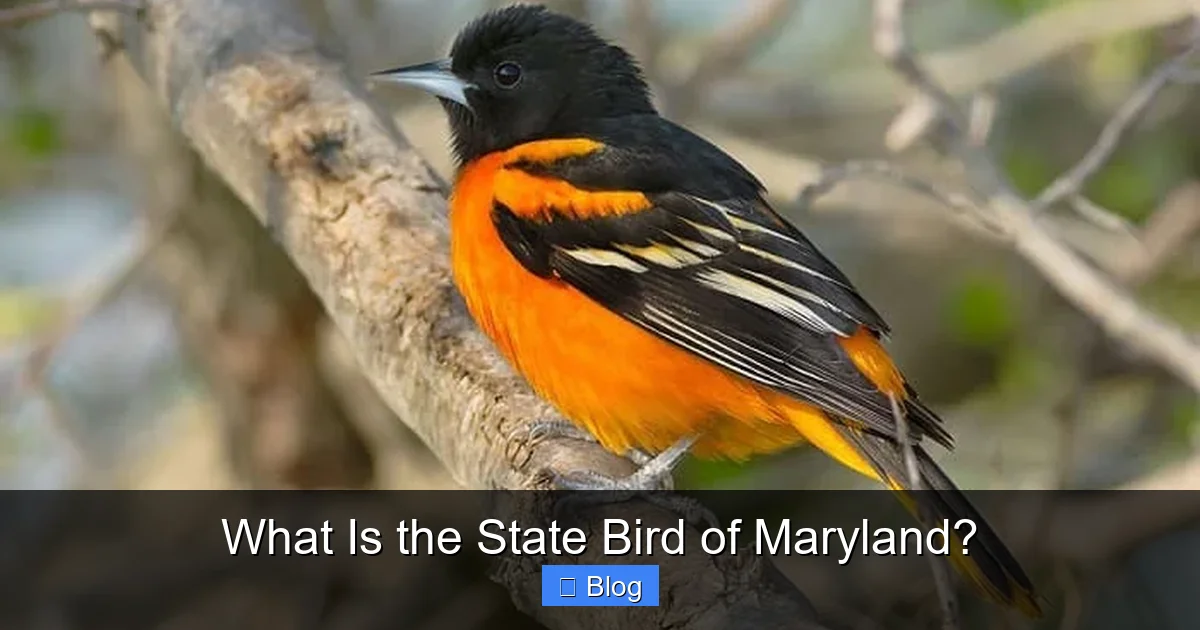
Male Baltimore Orioles are unmistakable. They boast a brilliant, fiery orange plumage on their undersides, rump, and shoulder patches, contrasting sharply with their glossy black head, back, and wings. A distinct white bar often graces their black wings, adding to their elegance. Females are a bit more subdued, typically a duller orange or yellowish-orange, sometimes with streaky brown on their backs and less defined black markings. Their colors are still beautiful, just a little less flamboyant than their male counterparts. Both sexes have pointed, sharply conical bills that are perfect for sipping nectar or snatching insects. They are medium-sized songbirds, roughly 7-8 inches long with a wingspan of about 11-12 inches.
Identifying Features and Song
Beyond their visual appeal, Baltimore Orioles have a distinctive voice. Their song is a series of clear, flute-like whistles, often described as rich and deliberate, with varying patterns. It’s a joyful sound that announces their presence from the treetops. Listen for their melodic tunes during spring and early summer; once you learn it, you’ll recognize it every time. When it comes to their flight, they often move with an undulating pattern, a bit like a rollercoaster, which can make them quite agile as they navigate through branches.
Why the Oriole? The History of Maryland’s State Bird
Visual guide about What Is the State Bird of Maryland?
Image source: thayerbirding.com
The question of what is the state bird of Maryland isn’t just about identifying a species; it’s about understanding a long-standing historical and cultural bond. The Baltimore Oriole’s connection to Maryland dates back centuries, making it a natural choice for official recognition.
A Name Tied to Nobility
The name “Baltimore Oriole” itself is a direct nod to Maryland’s history. It was named in honor of Lord Baltimore (George Calvert), the first Proprietor of the Province of Maryland. Lord Baltimore’s family crest featured vibrant orange and black colors, which are strikingly mirrored in the male Baltimore Oriole’s plumage. This deep connection made the bird a prominent symbol long before its official designation. Early settlers quickly recognized the parallel between the bird’s colors and those of their proprietor, thus solidifying its place in Maryland’s identity.
Official Designation in 1947
While the bird had been informally associated with Maryland for generations, it wasn’t until April 4, 1947, that the Baltimore Oriole was officially designated as the state bird of Maryland. The Maryland General Assembly passed a resolution declaring the Icterus galbula as the state’s feathered emblem. This formal recognition simply solidified a bond that had existed for centuries, cementing its status as a cherished part of Maryland’s heritage. The decision was widely celebrated, recognizing the bird’s beauty, historical ties, and widespread presence throughout the state.
Oriole Life and Habitat in Maryland
Understanding what is the state bird of Maryland also involves knowing where and how these beautiful creatures live. Baltimore Orioles are migratory birds, meaning they don’t stay in Maryland all year round, but their summer presence is a highlight for many.
Migratory Journeys
Baltimore Orioles are neotropical migrants. They spend their winters primarily in Central and South America, particularly in countries like Colombia and Venezuela. As spring approaches, typically in April and May, they embark on an incredible journey northward to their breeding grounds, which span across the eastern United States, including a significant portion of Maryland. By late summer, usually August or September, they begin their southward migration again. This cyclical return makes their arrival a much-anticipated event for birdwatchers and nature lovers in Maryland.
Preferred Habitats
In Maryland, Baltimore Orioles favor open woodlands, forest edges, riverine forests, and suburban areas with mature deciduous trees. They particularly enjoy cottonwoods, elms, maples, and oaks, using them for both nesting and foraging. You’re less likely to find them in dense, unbroken forests. Instead, look for them where there’s a good mix of trees and open spaces, often near water sources. Parks, golf courses, and even large backyards with tall trees can be excellent spots for sighting these vibrant birds.
Nesting Habits
One of the most fascinating aspects of Baltimore Oriole behavior is their unique nesting strategy. The female Oriole constructs an elaborate, pendulous, sock-like nest. This incredible feat of avian architecture is woven from long, thin fibers such as grass, plant material, hair, yarn, or even fishing line. The nest hangs securely from the slender tips of tree branches, often high up, providing protection from predators like snakes and raccoons. It’s an engineering marvel, typically built over several days, and can be quite deep to keep the eggs and chicks safe from strong winds and weather. They usually lay 3-7 pale blue or gray eggs with dark markings.
Diet and Foraging
Baltimore Orioles have a varied diet that changes with the seasons. During their breeding season in Maryland, their diet is rich in insects, which are crucial for feeding their fast-growing chicks. They particularly enjoy caterpillars, beetles, grasshoppers, and spiders. They are also fond of fruits, especially ripe, dark-colored berries like mulberries, cherries, and serviceberries. Nectar and tree sap are also important, and they are known to visit flowering plants or even drink from hummingbird feeders. This diverse diet is why they can be attracted to backyard feeders offering specific treats.
The Oriole in Maryland Culture and Sports
The significance of what is the state bird of Maryland extends far beyond its natural habitat. The Baltimore Oriole has deeply permeated the cultural fabric of the state, most notably in the world of sports.
Baltimore Orioles Baseball Team
Perhaps the most famous cultural connection for the Baltimore Oriole is its namesake Major League Baseball team, the Baltimore Orioles. The team, affectionately known as “the O’s,” adopted the bird as its symbol, proudly wearing its orange and black colors. This isn’t just a recent phenomenon; the team has a long and storied history tied to the bird. The original Baltimore baseball teams in the 1800s were also called the “Orioles.” When the St. Louis Browns moved to Baltimore in 1954, they officially became the Baltimore Orioles, further cementing the bird’s status as a sporting icon and a source of immense state pride. Attending an Orioles game at Camden Yards is an experience steeped in Maryland tradition, with the vibrant bird logo everywhere.
Local Lore and Art
Beyond baseball, the Baltimore Oriole frequently appears in local art, literature, and folklore throughout Maryland. Its striking colors and cheerful song make it a popular subject for painters, photographers, and poets. You’ll find Oriole imagery on souvenirs, local business names, and even in school mascots. This widespread recognition ensures that even those less familiar with birdwatching instantly recognize Maryland’s official state bird. It serves as a beautiful, natural emblem that connects residents to their state’s unique identity and natural heritage.
Protecting Our Feathered Friend: Conservation Efforts
As we appreciate what is the state bird of Maryland, it’s also important to consider its well-being. While the Baltimore Oriole is not currently listed as endangered, its populations face challenges, and conservation efforts are crucial for its continued thriving presence.
Threats to Oriole Populations
Like many migratory birds, Baltimore Orioles face threats both on their breeding grounds in Maryland and along their migration routes. Habitat loss and fragmentation are major concerns. As natural woodlands and forest edges are developed, the availability of suitable nesting and foraging sites decreases. Pesticide use can reduce their insect food sources and expose them to harmful chemicals. Window collisions and predation by domestic cats also pose significant risks. Climate change, which can alter food availability and migration timing, is another emerging challenge.
How You Can Help
There are several practical steps individuals can take to support Baltimore Orioles:
- Plant Native Trees and Shrubs: Create a bird-friendly yard by planting native trees (like oaks, maples, and serviceberry) that provide food and nesting sites.
- Provide Food Sources: Offer orange halves, grape jelly, and specialized Oriole nectar feeders (similar to hummingbird feeders but with larger perches and openings) during their migratory and breeding seasons.
- Reduce Pesticide Use: Minimize or eliminate pesticides in your yard to ensure a healthy insect population for orioles and other birds.
- Prevent Window Collisions: Make your windows bird-safe by applying decals, tapes, or screens to reduce reflections.
- Keep Cats Indoors: Domestic cats are a major predator of birds. Keeping cats indoors, especially during peak bird activity, helps protect orioles and other wildlife.
- Support Conservation Organizations: Donate to or volunteer with organizations that work to protect bird habitats and promote sustainable land practices.
By taking these actions, we can ensure that the Baltimore Oriole remains a vibrant part of Maryland’s natural landscape for generations to come.
Enjoying the Baltimore Oriole: Tips for Birdwatching and Attraction
Experiencing the beauty of what is the state bird of Maryland firsthand is a rewarding experience. Here are some tips for finding and attracting these stunning birds to your own space.
Best Times and Places to Spot Them
The best time to spot Baltimore Orioles in Maryland is during their breeding season, typically from late April through August. Early mornings are often the most active times for foraging and singing. Look for them in:
- Parks and Large Gardens: Areas with mature deciduous trees, especially along the edges.
- Riverbanks and Forest Edges: Orioles often favor areas near water.
- Orchards and Berry Patches: Where their favorite fruits are abundant.
Keep your eyes on the upper branches of trees, as they often forage high up. Listen for their distinctive flute-like song; once you hear it, it’s easier to locate them.
Attracting Orioles to Your Backyard
If you want to bring the state bird of Maryland closer to home, you can create an inviting environment in your backyard. Orioles are primarily attracted by food and water.
- Oranges: This is a classic Oriole magnet. Cut an orange in half and place it on a feeder platform or hang it from a branch on a nail or hook. They love the sweet fruit.
- Grape Jelly: Another highly effective treat. Offer a small amount of grape jelly in a shallow dish, ensuring it’s not too deep for them to get stuck.
- Nectar Feeders: While they don’t exclusively drink nectar, Orioles will visit specialized Oriole feeders (often orange-colored with larger perches) filled with a sugar-water solution (1 part sugar to 4 parts water). Avoid red dyes.
- Water Source: A bird bath or a shallow dish of water can be very appealing, especially on hot days.
- Planting Choices: Consider planting native plants that provide their natural food sources, such as serviceberry, mulberry, or black cherry trees.
Remember to place feeders in visible but safe locations, away from potential predators, and clean them regularly to prevent mold and bacteria buildup. Patience is key; it might take a few days or weeks for them to discover your offerings.
Conclusion
So, what is the state bird of Maryland? It is, without a doubt, the striking and historically significant Baltimore Oriole. This magnificent bird, with its brilliant orange and black plumage, not only adds immense beauty to Maryland’s natural landscapes but also serves as a living symbol of the state’s rich history, culture, and enduring spirit. From its namesake connection to Lord Baltimore to its iconic representation in sports, the Oriole truly embodies the heart of Maryland.
Its annual return each spring is a cause for celebration, a reminder of nature’s cycles and the vibrant life that thrives within the Old Line State. By understanding its habits, appreciating its beauty, and actively participating in conservation efforts, we can all play a part in ensuring that the Baltimore Oriole continues to grace Maryland’s skies for generations to come. So next time you see a flash of orange and black in the trees, take a moment to appreciate this truly special symbol – Maryland’s own Baltimore Oriole.
Frequently Asked Questions
What does the name “Baltimore Oriole” mean?
The “Baltimore” in Baltimore Oriole refers to Lord Baltimore (George Calvert), the first Proprietor of the Province of Maryland. His family crest featured orange and black, colors strikingly similar to the male bird’s plumage, thus linking the bird to Maryland’s founding history.
What do Baltimore Orioles eat?
Baltimore Orioles have a varied diet, primarily consisting of insects like caterpillars, beetles, and grasshoppers, especially during breeding season. They also enjoy fruits, berries, nectar, and tree sap, which is why they are attracted to backyard feeders with oranges and grape jelly.
Where can I best observe Baltimore Orioles in Maryland?
You can best observe Baltimore Orioles in Maryland during their breeding season from late April to August. Look for them in open woodlands, forest edges, suburban parks, and large gardens with mature deciduous trees, especially near water sources. Listen for their distinctive flute-like song.
Are Baltimore Orioles endangered?
Currently, Baltimore Orioles are not listed as endangered or threatened. However, like many migratory birds, they face challenges such as habitat loss, pesticide use, and window collisions. Conservation efforts are important to maintain their populations.
How do Baltimore Orioles contribute to the Maryland ecosystem?
Baltimore Orioles contribute to the Maryland ecosystem primarily as insectivores, helping to control insect populations, particularly during their breeding season. They also play a role in seed dispersal through their fruit consumption, aiding in plant reproduction and forest health.
Why is the Baltimore Oriole such a significant symbol in Maryland culture?
The Baltimore Oriole is a significant symbol due to its historical connection to Lord Baltimore’s colors, its official designation as the state bird, and its deep cultural ties. Most famously, it’s the namesake of the beloved Baltimore Orioles Major League Baseball team, making it a proud emblem of state identity and sports pride.