
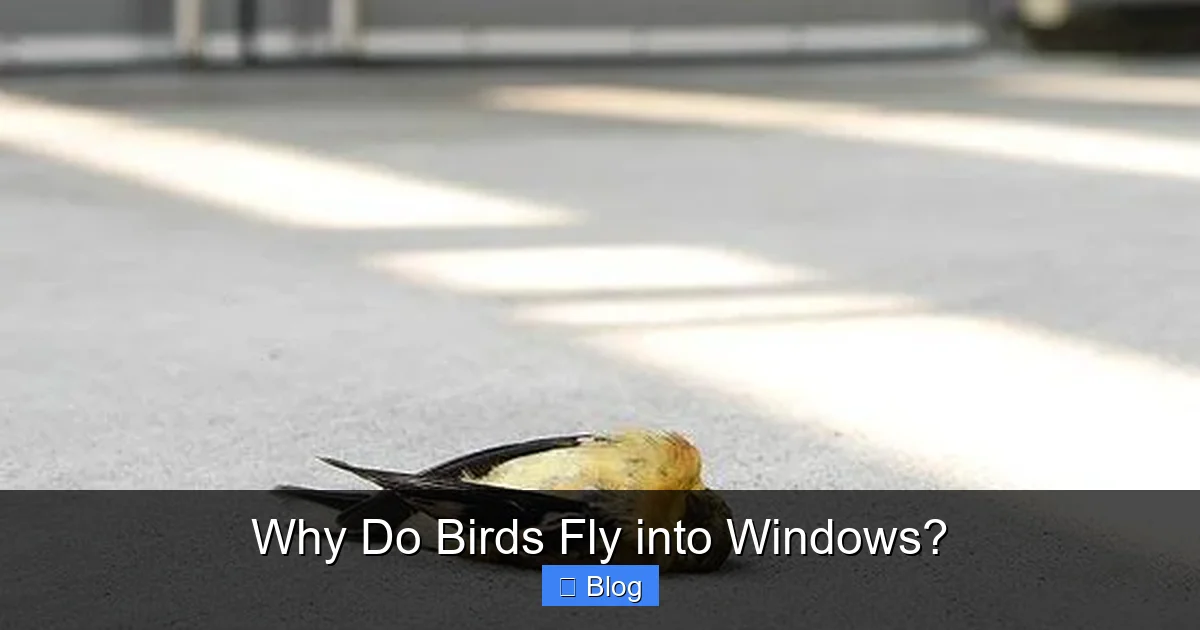
It’s a distressing sight: a bird flying into a window. This common occurrence is primarily due to birds misunderstanding reflections as open sky or transparent glass as an unobstructed path. Birds simply don’t perceive glass as a barrier, leading to often fatal collisions. Understanding these perceptual illusions and implementing simple preventative measures are key to protecting our feathered friends.
Have you ever heard that sudden, heart-stopping thud against your window? It’s a sound that most homeowners have unfortunately experienced – the sound of a bird striking glass. Often, what follows is a moment of frantic flapping, or worse, a still, silent bundle of feathers lying motionless on the ground below. It’s a truly distressing sight, and it leaves many of us wondering: Why do birds fly into windows? What makes these agile, airborne creatures, so adept at navigating complex environments, crash into something so seemingly obvious?
The truth is, birds aren’t intentionally flying into your windows to annoy you or test their limits. They’re victims of a fundamental misunderstanding of their environment, specifically the properties of glass. What appears to us as a clear barrier is often invisible or misleading to a bird’s unique vision and perception. Understanding the science behind these tragic collisions is the first step toward finding effective solutions and making our homes safer for our feathered neighbors.
This common problem isn’t just an occasional occurrence; it’s a widespread ecological issue. Bird window strikes account for an estimated hundreds of millions, possibly even a billion, bird deaths annually in North America alone. That’s a staggering number, impacting bird populations from common sparrows to rare migratory species. So, let’s dive deeper into the fascinating, yet heartbreaking, reasons why birds fly into windows and, more importantly, what we can all do to prevent it.
Key Takeaways
- Misperception of Glass: Birds often fly into windows because they cannot perceive glass as a solid barrier. They either see reflections of the sky and trees as open space or look through clear glass to vegetation on the other side, believing it’s a safe path.
- Reflections and Transparency are Key Causes: The two primary reasons for collisions are reflections (windows acting like mirrors, showing sky/habitat) and transparency (birds seeing through a window to the environment beyond it).
- Environmental Factors Increase Risk: Window size, proximity to feeders or dense vegetation, and even indoor plants or lighting can significantly increase the likelihood of bird strikes.
- Consequences Are Serious: Even if a bird flies into a window and appears to fly away, it may have suffered internal injuries, concussions, or broken bones, leading to delayed mortality.
- Prevention is Effective: Many simple, low-cost solutions exist to make windows visible to birds, such as applying decals, tapes, screens, or netting, or even adjusting landscaping around your home.
- Act Gently After a Strike: If a bird strikes your window and is stunned, approach with caution, place it in a dark, quiet box, and contact a local wildlife rehabilitator if it doesn’t recover within an hour or shows signs of serious injury.
Quick Answers to Common Questions
How many birds die from window collisions each year?
Estimates suggest hundreds of millions, possibly up to a billion, birds die annually in North America alone due to window collisions, making it a significant threat to bird populations.
Do birds see glass?
No, birds generally do not perceive glass as a solid barrier. They are primarily tricked by reflections of their habitat or by seeing clear through glass to vegetation on the other side, mistaking it for an open path.
Are certain types of windows more dangerous for birds?
Yes, large windows, corner windows, and those that heavily reflect the sky or dense vegetation are typically more dangerous. Windows with clear views through a building to the outside are also high-risk.
What’s the easiest thing I can do to prevent bird strikes?
One of the simplest and most effective solutions is to apply bird-friendly decals, tape, or hang cords (like Acopian BirdSavers) on the outside of your windows, spaced no more than 2-4 inches apart.
What if a bird hits my window and flies away? Is it okay?
Unfortunately, often not. Even if a bird flies away, it may have sustained internal injuries, a concussion, or broken bones that can lead to delayed mortality due to disorientation, inability to find food, or vulnerability to predators.
📑 Table of Contents
The Invisible Barrier: Understanding Bird Perception
For us humans, glass is an everyday part of life. We see it, understand its properties, and know that it creates a transparent or reflective barrier. Birds, however, perceive the world very differently. Their visual systems are optimized for detecting food, predators, and mates, and for navigating complex natural landscapes. Glass, in its modern architectural ubiquity, is a relatively new phenomenon in their evolutionary history, and they simply haven’t evolved to recognize it as a threat. So, why do birds fly into windows? It boils down to two main optical illusions created by glass: reflection and transparency.
Reflection: A Sky-Like Illusion
Think about your window on a sunny day. What do you see? Often, it’s a mirror image of the sky, the trees, and the surrounding landscape. To a bird, this reflection looks exactly like more sky, more trees, or an extension of their habitat. They see an inviting, unobstructed path to fly through, not a solid surface. This is particularly true for windows facing open spaces or reflecting nearby vegetation.
Imagine being a bird, flying through a forest canopy, seeing endless branches and sky. Suddenly, you encounter what appears to be another patch of open sky, perfectly reflecting the trees you just passed. Your instincts tell you to fly towards it, perhaps to reach a perceived perch or to continue on your migratory path. There’s no evolutionary precedent for a solid, invisible wall reflecting the world back at them. The reflection is so convincing that birds, even with their sharp eyesight, simply don’t register it as a solid object until it’s too late. This is a primary reason why birds fly into windows, especially larger ones that create a more expansive “illusion.”
Transparency: The “Pass-Through” Trap
Another major culprit is transparency. If you have two windows or a window and a glass door on opposite sides of a room, a bird flying outside might see right through your home to the trees, shrubs, or open space on the other side. They perceive a clear flight path, an open tunnel, with no barrier in between. They simply don’t register the glass as a solid object.
This transparency effect is especially dangerous in houses with many large windows or glass structures, like sunrooms or glass railings on decks. A bird flying by sees an enticing bit of habitat on the other side and aims for it, only to collide with the invisible glass wall. It’s a tragic consequence of our desire for natural light and open views, clashing with the natural instincts and visual perception of our avian friends. This helps explain why birds fly into windows that might not even be reflecting anything specific, but just appear to be an open corridor.
Factors That Increase the Risk of Window Strikes
Visual guide about Why Do Birds Fly into Windows?
Image source: 0.academia-photos.com
While reflections and transparency are the fundamental reasons why birds fly into windows, several environmental and situational factors can significantly increase the likelihood of these collisions. Understanding these can help you identify high-risk areas around your own home.
Window Placement and Size
Larger windows, especially those that offer panoramic views or are positioned at corners, create more expansive reflective surfaces or transparent pathways, making them greater collision risks. Windows located near natural flight paths, like those connecting two patches of trees, are also more dangerous. Think about how birds move through your yard; if a window is in a frequently used flight corridor, it’s a hotspot for strikes.
Nearby Vegetation and Bird Feeders
This is a huge factor. If your windows reflect dense foliage or have actual plants growing very close, birds might try to fly into the reflection or fly directly towards the real plants visible through the glass. Similarly, placing bird feeders too close to windows (within 3 feet) can be dangerous because startled birds may fly directly into the window when spooked. Paradoxically, feeders placed very *far* from windows (over 30 feet) can also be risky, as birds build up more speed before hitting the glass if they misjudge the distance. The safest spot is either very close or very far away.
Lighting and Time of Day
Artificial light at night can disorient migratory birds, causing them to fly off course and become attracted to brightly lit buildings, including homes with illuminated windows. This is particularly problematic during peak migration seasons in spring and fall. Even during the day, specific angles of sunlight can enhance reflections or glare, making windows even harder for birds to perceive.
Bird Species and Behavior
Some bird species are more prone to window strikes than others. Ground-foraging birds might be tricked by reflections of the ground or low-lying shrubs. Migratory species, especially when exhausted or disoriented, are at higher risk. Young birds, lacking experience, may also be more susceptible. Territorial birds, seeing their own reflection, might aggressively fly into the glass to challenge what they perceive as an intruder, leading to repeated strikes.
The Devastating Impact: What Happens After a Strike?
When a bird flies into a window, the immediate impact can be visually shocking. But the consequences often extend far beyond what we initially see. It’s important to understand the full scope of harm caused by these collisions.
Immediate Injury and Mortality
The primary injury from a window strike is a concussion. The force of hitting a hard, unforgiving surface like glass can cause severe head trauma, leading to disorientation, loss of consciousness, and internal bleeding. This can be instantly fatal. Studies show that a significant percentage of birds that strike windows die immediately. Their delicate skull structure offers little protection against such a forceful impact.
Delayed Effects and Vulnerability
Even if a bird appears to fly away after a strike, it’s often not truly “fine.” Many birds suffer non-lethal injuries like concussions, internal bleeding, broken bones, or eye damage. A stunned bird may recover enough to fly off but then succumb to its injuries hours or even days later, often falling prey to predators because it’s disoriented and unable to fly effectively, or unable to find food or shelter. It’s a cruel irony that even a seemingly minor hit can spell a slow, agonizing end for a bird. This is why addressing why birds fly into windows is so crucial for conservation.
Practical Solutions: How to Prevent Bird Window Collisions
The good news is that preventing bird window strikes is possible, and many solutions are relatively simple, inexpensive, and effective. You don’t need to live in a dark, windowless box to keep birds safe!
Making Windows Visible to Birds
The key principle here is to break up the reflection or transparency of the glass, making it recognizable as a solid barrier.
- Window Decals or Tapes: Apply stickers, decals, or tapes to the outside of your windows. The trick is to apply them densely enough: spaced no more than 2-4 inches apart for maximum effectiveness. You can buy specialized bird-friendly decals, or even use regular window clings in patterns.
- Acopian BirdSavers or “Zen Curtains”: These are parallel cords spaced about 4 inches apart, hung vertically in front of the window. They are highly effective, virtually invisible from inside, and allow light through while creating a visible barrier for birds.
- Window Screens: Installing exterior insect screens significantly reduces reflections and cushions any impact, often preventing serious injury. If you don’t have full screens, consider adding half-screens or even temporary ones during migratory seasons.
- Tempera Paint or Soap: For a temporary solution, especially during migration, you can use tempera paint or even soap to create patterns or cover parts of your windows. It washes off easily.
- UV Markings: Some products use UV-reflective patterns that are nearly invisible to humans but highly visible to birds, who can see in the ultraviolet spectrum.
Managing Your Yard to Reduce Risk
Strategic landscaping and feeder placement can make a big difference in preventing why birds fly into windows.
- Move Feeders: Place bird feeders either very close (within 3 feet) or very far (over 30 feet) from windows. Close feeders mean birds can’t build up much speed. Far feeders give them more space to react and avoid the glass.
- Prune Trees and Shrubs: If dense vegetation directly reflects in your windows, prune it back to reduce the illusion of “more habitat” or create a clearer sightline for birds to see the glass.
- Avoid Glass Railings: If you have a deck, consider alternatives to clear glass railings, which are essentially horizontal windows and pose a significant collision risk.
Addressing Interior Factors
What’s inside your home can also play a role.
- Indoor Plants: If you have plants visible through a window, birds might try to reach them. Move them away from windows or obscure the window with curtains.
- Close Curtains/Blinds: When you’re away or at night, closing curtains, blinds, or shades can reduce both transparency and reflections, making windows less appealing or confusing to birds.
- Turn Off Unnecessary Lights: Especially during migration seasons, turn off interior lights at night or use motion sensors, particularly on upper floors.
New Technologies and Bird-Friendly Design
For new construction or renovations, bird-friendly glass and building designs are becoming more available. These include fritted glass (glass with ceramic patterns baked into it), etched glass, or glass with UV-patterned coatings. Advocating for these standards in your community can have a broad positive impact.
What To Do If a Bird Strikes Your Window
Despite your best efforts, a bird might still occasionally strike a window. Knowing how to react calmly and appropriately can save a life.
Immediate Care for Stunned Birds
If you find a bird that has just flown into a window and is stunned but alive:
- Observe from a Distance: First, ensure it’s safe to approach. If there are predators (like cats) nearby, secure them.
- Gentle Approach: Carefully approach the bird. If it’s lying still, it might be in shock or concussed.
- Prepare a Safe Space: Find a cardboard box (with air holes) or a paper bag. Line it with a soft cloth or paper towel.
- Gently Place the Bird Inside: Using gloved hands if possible, or a soft towel, gently scoop the bird and place it into the box. Avoid handling it more than necessary.
- Dark, Quiet Recovery: Close the box and place it in a warm, quiet, dark location, away from pets and children. Darkness and quiet help reduce stress and aid recovery from shock.
- Check Periodically: Check on the bird every 15-30 minutes. If it appears to have recovered and is alert and trying to fly, take the box outside to a safe, quiet spot and open it. Allow the bird to fly away on its own.
When to Contact Wildlife Rehabilitators
If the bird doesn’t recover and fly away within an hour or two, or if you notice any of these signs, contact a local licensed wildlife rehabilitator immediately:
- Visible injuries like bleeding, drooping wings, or obvious broken bones.
- Constant shivering or inability to stand.
- Difficulty breathing or unusual sounds.
- If the bird is a baby bird that fell from a nest (and you can’t locate the nest).
- Any signs of aggression or extreme distress.
Do not attempt to give the bird food or water, as this can often do more harm than good for an injured bird. Your local humane society or a quick online search for “wildlife rehabilitator near me” should provide contact information.
Understanding why birds fly into windows is the critical first step towards becoming part of the solution. These beautiful creatures enhance our lives and play vital roles in our ecosystems. By making a few simple adjustments to our homes and being prepared to help when needed, we can significantly reduce the number of tragic bird window strikes and help ensure a safer world for our avian companions. Let’s make our windows bird-friendly, one pane at a time.
Frequently Asked Questions
What is the main reason why birds fly into windows?
The main reason birds fly into windows is due to an optical illusion. They either see reflections of the sky and trees in the glass, mistaking it for open habitat, or they see clear through transparent glass to vegetation on the other side, believing it to be a safe flight path.
Does putting a single bird decal on a window help prevent collisions?
A single bird decal is generally not effective. For decals or tape to work, they need to be applied densely, spaced no more than 2-4 inches apart across the entire glass surface, to create a visible pattern that birds can recognize as a barrier.
Should I move my bird feeder if birds are hitting my window?
Yes, adjusting your bird feeder’s placement can help. Either move it very close (within 3 feet) to the window so birds can’t build up speed, or very far away (over 30 feet) to give them ample space to perceive and avoid the window.
Are specific times of day or year more dangerous for bird window strikes?
Yes, window strikes can be more common during dawn and dusk when reflections are stronger, or during spring and fall migration periods when large numbers of birds are moving and may be disoriented by artificial light.
Can indoor plants or lighting contribute to bird strikes?
Absolutely. Indoor plants visible through a window can entice birds to fly towards them, thinking they are accessible. Similarly, bright interior lighting at night, especially during migration, can attract and disorient birds, increasing collision risk.
If I find a stunned bird after a window strike, what should I do?
Gently place the stunned bird in a dark, quiet cardboard box with air holes, and place it in a safe, warm, undisturbed spot. Check on it after an hour or two; if it recovers, release it outdoors. If it shows signs of injury or doesn’t recover, contact a local wildlife rehabilitator.