
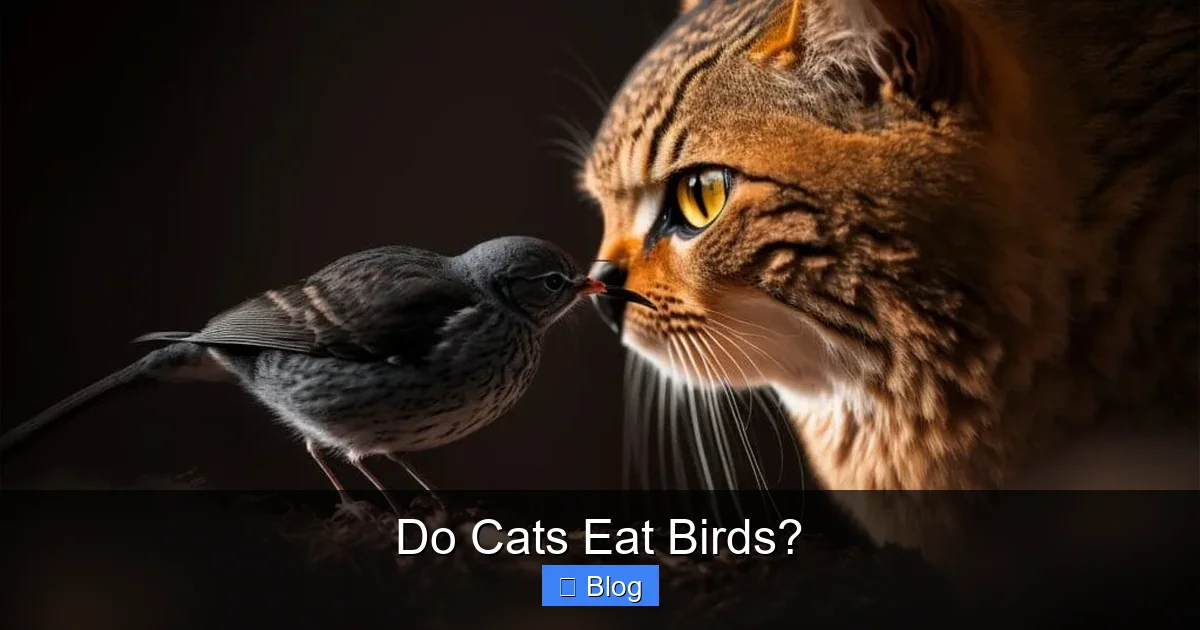
Yes, cats do eat birds, driven by their natural predatory instincts, even when well-fed. While not every hunt ends in consumption, domestic cats are responsible for a significant decline in wild bird populations globally. Understanding this behavior and taking preventative measures is crucial for responsible pet ownership and wildlife conservation.
Have you ever looked out your window to see your beloved feline friend intently stalking a robin, or worse, witnessed the aftermath of a successful hunt? It’s a sight that can make any cat owner feel a pang of conflict. On one hand, you adore your cuddly companion; on the other, you care deeply about the natural world around you. The question inevitably arises: “Do cats eat birds?”
It’s a topic surrounded by myths, strong opinions, and often, a lack of clear understanding. Many cat owners believe their well-fed indoor cat couldn’t possibly be a threat, or that if their cat does catch a bird, it’s just playing. However, the reality is far more complex and has significant implications for both our pets and the fragile ecosystems they interact with. Understanding the truth about why cats hunt, what they do with their prey, and the broader impact of their actions is crucial for responsible pet ownership.
In this comprehensive guide, we’re going to dive deep into the world of feline predation. We’ll explore the natural instincts that drive cats to hunt, debunk common misconceptions about their eating habits, and shed light on the serious environmental consequences of cat predation on bird populations. More importantly, we’ll equip you with practical knowledge and actionable steps to help protect both your furry friend and the beautiful birds that share our planet. Let’s uncover the full story.
Key Takeaways
- Cats are Natural Predators: Despite domestication, cats retain strong hunting instincts, viewing birds as prey, even if they aren’t hungry.
- Consumption Varies: While some cats will eat their prey, others may only play with or kill birds without fully consuming them. Partial consumption is common.
- Significant Environmental Impact: Domestic cats, especially outdoor cats, are a leading cause of wild bird mortality, impacting biodiversity and even driving some species toward extinction.
- Health Risks for Cats: Eating birds can expose cats to parasites, diseases (like toxoplasmosis), and potential injuries from the hunt or toxins in the bird.
- Responsible Ownership is Key: Keeping cats indoors, providing stimulating environments, and using enclosures like “catios” are the most effective ways to prevent feline predation on birds.
- Bell Collars Have Limited Effectiveness: While often suggested, bell collars are not a foolproof solution and may not significantly reduce hunting success for all cats.
- What to Do if Your Cat Hunts: Safely separate your cat from the bird, check for injuries, and contact a wildlife rehabilitator if the bird is hurt. Focus on long-term prevention.
Quick Answers to Common Questions
Do outdoor cats always eat the birds they catch?
No, outdoor cats do not always eat the birds they catch. While their predatory instinct drives them to hunt, they might play with the bird, kill it and leave it, or only partially consume it, depending on factors like hunger, the size of the prey, and their individual habits.
Are bell collars effective at stopping cats from hunting birds?
The effectiveness of bell collars is debated. While they might reduce hunting success in some instances, many cats learn to move silently despite the bell, and studies show mixed results regarding their overall impact on bird mortality rates.
Can cats get sick from eating birds?
Yes, cats can get sick from eating birds. Wild birds can carry parasites (like tapeworms), bacteria (like Salmonella), and diseases (like toxoplasmosis), all of which can be transmitted to a cat that consumes an infected bird, potentially causing gastrointestinal issues or more serious health problems.
What is the best way to prevent my cat from hunting birds?
The best way to prevent your cat from hunting birds is to keep them indoors. If indoor-only is not an option, providing a secure outdoor enclosure like a “catio” or supervising them closely while outside are effective alternatives to protect local wildlife.
Do well-fed cats still hunt birds?
Yes, well-fed cats still hunt birds. Hunting is driven by a strong, innate predatory instinct in cats, not just hunger. It provides mental stimulation and physical exercise that a full belly cannot satisfy.
📑 Table of Contents
The Instinctual Hunter: Why Cats Prey on Birds
To truly understand if cats eat birds, we first need to appreciate the deeply ingrained instincts that govern their behavior. Despite thousands of years of domestication, the domestic cat (Felis catus) is still a highly effective predator at heart.
Natural Predatory Drive
Cats are obligate carnivores, meaning their bodies are designed to derive nutrients primarily from animal tissue. Hunting is not just about hunger for them; it’s a fundamental part of their biology. From the moment they are kittens, cats practice hunting behaviors – stalking, pouncing, batting – even with toys. These are not mere games; they are rehearsals for the real thing. Birds, with their sudden movements and flight patterns, are often irresistible targets that trigger this ancient predatory sequence.
This drive is so strong that even a well-fed cat will hunt. Think of it like a human enjoying a hobby; you might be full after dinner, but you can still enjoy a game of basketball. For cats, hunting *is* their hobby, their natural sport. It provides mental stimulation and physical exercise, fulfilling an evolutionary need that a bowl of kibble simply cannot replicate.
Play vs. Prey
It’s common to hear owners say, “My cat just plays with them, it doesn’t really kill them.” While it’s true that cats sometimes appear to play with their prey, this “play” is often a crucial part of their hunting strategy. A cat might bat a bird around, release it, and then pounce again. This isn’t necessarily malice; it’s a way for the cat to wear down and incapacitate its prey while minimizing risk to itself. Unfortunately, for the bird, this often means a prolonged and terrifying end. Even if the cat doesn’t deliver the killing blow, the stress and injuries sustained during this “play” are often fatal.
The Thrill of the Chase
Beyond the nutritional aspect, there’s a strong element of thrill and stimulation in hunting for cats. The chase, the stealth, the successful capture – these all provide a rush of dopamine and other neurochemicals that are highly rewarding for a cat. Birds, being agile and quick, present a particular challenge that many cats find exhilarating. This explains why some cats might bring their prey home as a “gift” or display; they’re showing off their success, driven by their natural instincts.
Do Cats Eat Birds? The Reality of Consumption
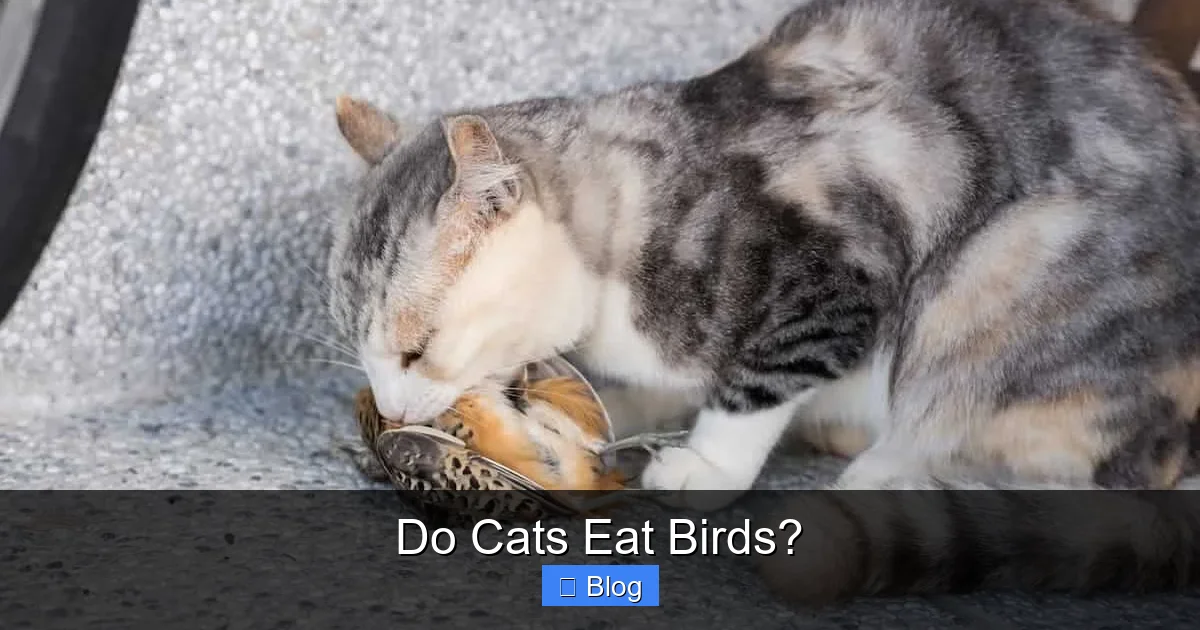
Visual guide about Do Cats Eat Birds?
Image source: faqcats.com
So, with all this talk of instinct and play, does it actually lead to consumption? The straightforward answer is: yes, cats do eat birds. However, the extent and frequency can vary significantly from one cat to another.
Partial Consumption vs. Full Meal
It’s rare for a cat to fully consume an entire bird, especially if it’s a larger species. Often, what you might find are remnants: a few feathers, a wing, or just a small pile of bones. Cats are opportunistic eaters, and while they might eat a significant portion of a small bird, they might leave larger parts of bigger prey. This partial consumption often leads owners to believe their cat didn’t “really” eat the bird, when in fact, it consumed enough to satisfy part of its predatory drive or hunger.
Studies using “prey cams” (tiny cameras on cat collars) have shown that cats often consume more of their prey than owners realize, especially smaller birds. The evidence simply disappears into their digestive system.
Why Some Cats Eat, Others Don’t
Several factors influence whether a cat eats its prey:
- Hunger Level: A truly hungry cat is more likely to eat its catch. However, as discussed, even well-fed cats hunt.
- Size of Prey: Smaller birds are easier to consume entirely. Larger birds might be too much effort or too risky to fully devour.
- Opportunity and Security: If a cat feels safe and undisturbed, it’s more likely to take its time and eat. If startled or threatened, it might abandon the prey.
- Individual Preference: Just like people, cats have individual preferences. Some cats are more fastidious and might only consume certain parts, while others are less selective.
- Upbringing: Cats that learned to hunt from their mothers in a feral or semi-feral environment are often more adept at and inclined to consume their prey.
Nutritional Value (or lack thereof)
From a purely nutritional standpoint, a bird isn’t an ideal meal for a domestic cat. While it provides protein, wild birds can carry parasites, bacteria, and diseases. Moreover, cats typically need a balanced diet that their regular cat food provides. Eating a bird offers a fleeting moment of satisfaction but carries potential health risks that outweigh any marginal nutritional benefit compared to a balanced commercial diet.
The Environmental Impact of Feline Predation
The question “Do cats eat birds?” goes beyond individual pet habits; it has profound ecological implications. The impact of domestic cat predation on wildlife, particularly birds, is a serious concern for conservationists worldwide.
A Significant Threat to Wild Bird Populations
Multiple scientific studies have concluded that domestic cats are a leading cause of mortality for wild birds, especially in North America, Europe, and Australia. Estimates vary, but some studies suggest that outdoor cats kill billions of birds annually in the United States alone. These aren’t just isolated incidents; it’s a cumulative effect that puts immense pressure on avian populations.
It’s important to differentiate between feral cats (undomesticated cats living in the wild) and owned outdoor cats. Both contribute to the problem, but owned cats, who are often fed and housed by humans, still spend significant time outdoors hunting. They effectively create an artificially high predator population in areas where bird populations are already stressed by habitat loss, climate change, and other human activities.
Vulnerable Species
The impact is particularly devastating for ground-nesting birds, fledglings, and species that are already endangered or have declining populations. Birds that nest in shrubs or low branches are also highly susceptible. For example, in many island ecosystems, where birds evolved without ground predators, introduced cats have wiped out entire species. The common house cat, a beloved pet, becomes an apex predator in these delicate environments.
Scientific Studies and Statistics
Research from institutions like the Smithsonian Conservation Biology Institute and the U.S. Fish and Wildlife Service highlights the severity. One landmark study estimated that cats kill an average of 1.3–4 billion birds and 6.3–22.3 billion mammals annually in the United States. These numbers are staggering and demonstrate that the issue of whether cats eat birds is not trivial; it’s a major conservation challenge. The studies often rely on complex methodologies, including owner surveys, field observations, and the use of “critter cams,” to build a comprehensive picture of cat predation.
Health Risks for Cats Eating Birds
While the focus often shifts to the birds, it’s equally important to consider the health risks for our feline friends when they engage in such hunting behavior. When cats eat birds, they expose themselves to a range of potential dangers.
Parasites and Diseases
Wild birds can carry a host of parasites and diseases that can be transmitted to cats.
- Internal Parasites: Birds can host tapeworms, roundworms, and other intestinal parasites. If a cat eats an infected bird, these parasites can transfer to the cat’s digestive system, leading to issues like diarrhea, vomiting, weight loss, and general ill health.
- Toxoplasmosis: While less common from birds than rodents, toxoplasmosis is a parasitic disease that can be transmitted if a cat eats an infected bird. Although many cats show no symptoms, toxoplasmosis can be serious, particularly for pregnant women or immunocompromised individuals who might come into contact with cat feces.
- Bacterial Infections: Birds can carry bacteria like Salmonella or Campylobacter. Ingesting these can cause gastrointestinal upset in cats, ranging from mild to severe.
- Avian Flu: While not a widespread risk to domestic cats currently, the potential for avian influenza transmission exists. Cats could potentially contract the virus by consuming infected birds, though confirmed cases in domestic cats are rare.
Injuries During the Hunt
The act of hunting itself can be dangerous for cats. Birds, especially larger ones, can fight back, causing scratches or pecks to a cat’s eyes, face, or paws. Even smaller birds can put up a struggle, and a cat might incur minor injuries that could become infected if not properly cleaned. A fall from a tree or a collision with an object during the chase can also lead to more serious injuries, such as broken bones or internal trauma.
Pesticide Exposure
Birds in suburban or agricultural areas might have ingested insects or seeds treated with pesticides. If a cat eats a bird that has been exposed to these chemicals, the cat could indirectly ingest the toxins. This can lead to pesticide poisoning, with symptoms ranging from neurological issues to gastrointestinal distress, depending on the type and amount of chemical involved.
Preventing Feline Predation: Responsible Pet Ownership
Given the significant impact on bird populations and the health risks to cats, preventing feline predation is a cornerstone of responsible pet ownership. It’s about finding a balance that keeps your cat safe and happy while protecting local wildlife.
Keeping Cats Indoors: The Golden Rule
The most effective and universally recommended method to prevent your cat from hunting birds (and to protect your cat from numerous outdoor dangers) is to keep them indoors. Indoor cats live longer, healthier lives, free from traffic accidents, fights with other animals, exposure to diseases, and of course, the temptation to hunt. This single act can dramatically reduce feline predation on birds.
Enclosures and “Catios”
If you feel your cat absolutely needs some outdoor stimulation, a “catio” (cat patio) or a secure outdoor enclosure is an excellent compromise. These structures allow your cat to experience fresh air, sunshine, and the sights and sounds of the outdoors without posing a threat to wildlife or exposing themselves to dangers. Catios can range from simple window boxes to elaborate, multi-level enclosures connected to a house.
Bell Collars and Other Deterrents (Effectiveness and Controversy)
Bell collars are a popular solution, but their effectiveness is debated. While a bell might warn some birds, many cats learn to move silently even with a bell, or birds simply don’t associate the sound with danger until it’s too late. Studies on bell collars have shown mixed results, with some indicating a modest reduction in kills, while others find little significant impact, especially on skilled hunters. Furthermore, some cats may find bells irritating or even painful.
Other deterrents like colorful “BirdsBeSafe” collars (brightly colored fabric collars) have shown more promising results in some studies, as birds can more easily spot the cat. However, no deterrent is 100% effective, and they don’t address the underlying predatory drive or other outdoor risks to cats.
Enriching Indoor Environments
For indoor cats, providing a stimulating environment is key to satisfying their natural instincts without harming wildlife.
- Interactive Toys: Toys that mimic prey (feathers, mice on strings) can engage their hunting drive.
- Puzzle Feeders: These make mealtime a “hunt,” requiring cats to work for their food.
- Vertical Spaces: Cat trees, shelves, and window perches allow cats to climb and observe, fulfilling their desire for high vantage points.
- Regular Playtime: Dedicated play sessions with wand toys help burn energy and satisfy their need for “the chase.”
A well-enriched indoor environment can lead to a happier, healthier cat who is less inclined to seek external stimulation through hunting.
Spaying/Neutering
Spaying or neutering your cat is another crucial step in responsible pet ownership. While it doesn’t eliminate the predatory drive, it helps control cat overpopulation, which in turn reduces the number of free-roaming cats contributing to wildlife mortality.
What to Do If Your Cat Catches a Bird
Despite your best efforts, sometimes a quick or particularly determined cat might still manage to catch a bird. If this happens, here’s what you should do:
Safety First for Both
First and foremost, approach the situation calmly. Your cat might be possessive of its prey. Gently but firmly separate your cat from the bird. You might need to distract your cat with a favorite toy or a treat to get it to release the bird. Avoid putting your hands directly into a cat’s mouth or between a cat and its prey, as you could get bitten or scratched.
Handling Injured Birds
Once your cat is secured indoors, assess the bird.
- If the bird appears uninjured: It might be in shock. Gently pick it up with gloved hands (or using a towel) and place it in a quiet, dark, well-ventilated box away from pets and people. After an hour or so, check on it. If it seems to have recovered, release it in a safe, secluded spot like a dense bush, away from your cat.
- If the bird is injured: Do not attempt to treat it yourself. Birds are fragile, and untrained handling can cause more harm. Contact a local wildlife rehabilitator or animal rescue organization immediately. They are equipped to provide the specialized care injured wild birds need. Keep the bird warm and in a quiet, dark place until help arrives.
Discouraging Future Hunts
This incident should be a strong reinforcement of the need for preventative measures.
- Reinforce Indoor Habits: If your cat was outdoors, this is a clear sign that keeping them indoors or in a secure enclosure is paramount.
- Increase Indoor Enrichment: Ensure your cat has plenty of toys, playtime, and mental stimulation to redirect their predatory instincts.
- Review Deterrents: If you were using a bell collar, evaluate its effectiveness. Consider a BirdsBeSafe collar or, preferably, transition to indoor-only or catio living.
Understanding that cats eat birds and taking proactive steps is the most compassionate approach for all involved.
Conclusion
So, do cats eat birds? The answer is a resounding yes, though the extent of consumption varies. This isn’t a simple “yes” or “no” question; it opens up a complex dialogue about natural instincts, responsible pet ownership, and the delicate balance of our ecosystems. While our domestic cats are beloved companions, their predatory instincts remain incredibly strong, leading to significant impacts on wild bird populations and potential health risks for the cats themselves.
Understanding these realities isn’t about blaming our pets; it’s about empowering ourselves as owners to make informed choices. Keeping cats indoors, providing safe outdoor access through catios, and ensuring a rich, stimulating indoor environment are the most effective ways to protect both our furry friends and the beautiful birds that grace our skies. By taking these steps, we can foster a healthier coexistence, allowing our cats to thrive while safeguarding biodiversity for generations to come. It’s a small change for us, but a monumental difference for wildlife.
🎥 Related Video: Do Cats Eat Birds Whole? The Whole Truth!
📺 Charming Pet Guru Official
Ever wondered do cats eat birds whole? In this fascinating video, we delve into the dietary habits of our feline friends and …
Frequently Asked Questions
How many birds do cats kill annually?
Scientific studies estimate that domestic cats are responsible for killing billions of birds annually in the United States alone. These figures include predation by both feral and owned outdoor cats, making them a significant threat to avian populations.
Are some bird species more at risk from cat predation?
Yes, ground-nesting birds, fledglings, and species that inhabit low-lying shrubs are particularly vulnerable to cat predation. Endangered or already declining bird species are also disproportionately affected, as even a small number of kills can have a large impact on their survival.
Is it safe to let my cat outside if it doesn’t seem to hunt much?
It is generally not safe to let your cat outside unsupervised, regardless of whether you perceive them as frequent hunters. Even if you don’t witness kills, cats are opportunistic predators, and the cumulative impact of many cats that “don’t seem to hunt much” is still substantial. Outdoor environments also pose numerous risks to your cat’s safety.
What is a “catio” and how does it help?
A “catio” is a cat patio or an outdoor enclosure that allows cats to safely enjoy the outdoors without roaming freely. Catios help prevent cat predation on birds by keeping the cat contained, while also protecting the cat from traffic, predators, and exposure to diseases found outdoors.
Can providing indoor enrichment stop a cat from wanting to hunt?
While indoor enrichment won’t completely eliminate a cat’s natural predatory instincts, it can significantly reduce their desire to hunt outdoors. Providing plenty of interactive toys, puzzle feeders, vertical climbing spaces, and dedicated play sessions can fulfill their need for mental and physical stimulation in a safe, controlled environment.
Should I punish my cat if it brings home a bird?
No, you should not punish your cat if it brings home a bird. Your cat is simply acting on its natural instincts, and punishment will not deter this behavior; it will only confuse and scare your pet. Instead, focus on implementing preventative measures to keep your cat indoors or in a secure enclosure.