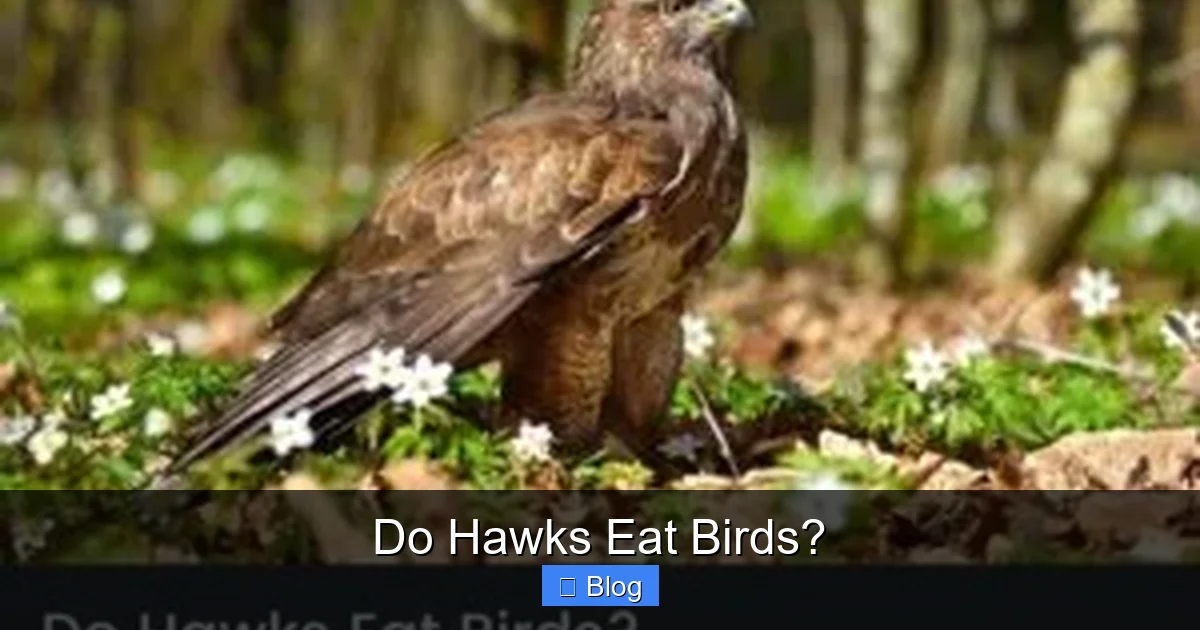
Yes, hawks do eat birds, and for many species, they form a significant part of their diet. These impressive raptors are highly skilled avian predators, using their keen eyesight, sharp talons, and powerful beaks to catch and consume a variety of feathered prey. Understanding their predatory habits helps us appreciate their crucial role in natural ecosystems.
Do Hawks Eat Birds?
Imagine a peaceful morning in your backyard. Birdsong fills the air as chickadees flit around the feeder, a robin pulls a worm from the lawn, and a cardinal splashes in the birdbath. Suddenly, a shadow passes overhead, a flurry of wings, and then silence. A hawk has swooped down, perhaps claiming one of your feathered friends. It’s a moment that can be both shocking and deeply impactful, leaving many of us to wonder: “Do hawks really eat birds?”
The answer, in no uncertain terms, is a resounding yes. Hawks, along with other raptors like falcons and owls, are apex predators in the avian world. Their entire biology is finely tuned for hunting, and for many hawk species, other birds form a significant, if not primary, part of their diet. It’s a fundamental aspect of their existence, an intricate part of the natural balance that keeps ecosystems healthy and vibrant.
Understanding this natural dynamic can be a bit unsettling for those of us who love feeding backyard birds, but it’s crucial for appreciating the full tapestry of nature. Hawks aren’t malicious; they are simply following their instincts, playing their part in the grand scheme of life. By exploring which hawks eat birds, how they hunt, and what impact they have, we can gain a deeper respect for these magnificent creatures and learn how to coexist with them in our shared environments.
Key Takeaways
- Hawks are Avian Predators: Many hawk species, particularly accipiters like Sharp-shinned and Cooper’s Hawks, regularly include other birds in their diet.
- Diet Varies by Species: While some hawks specialize in hunting birds, others like red-tailed hawks are more opportunistic generalists, preying on a wider range of animals including rodents and reptiles, but will also take birds.
- Specialized Hunting Techniques: Hawks employ various strategies, from ambush attacks in dense cover to high-speed aerial pursuits, to capture their agile avian prey.
- Ecological Role: Hawk predation plays a vital role in natural selection, helping to control bird populations and maintain ecosystem health by removing the weak or sick.
- Understanding Backyard Dynamics: Seeing a hawk hunt in your backyard is a natural event, but understanding their behavior can help you create safer environments for smaller birds.
- Coexisting with Raptors: Simple measures like providing ample cover near feeders and ensuring feeders are not too crowded can help backyard birds reduce their risk of predation.
Quick Answers to Common Questions
Do all types of hawks eat birds?
While most hawk species are opportunistic and will take birds if the chance arises, certain types like the accipiters (Sharp-shinned, Cooper’s, Northern Goshawk) specialize almost exclusively in hunting other birds.
How do hawks catch birds?
Hawks employ various methods, including surprise ambush attacks from hidden perches, high-speed aerial pursuits, and opportunistic hunting of vulnerable or injured birds.
Is it common to see a hawk hunting in a backyard?
Yes, especially with the increasing presence of Cooper’s Hawks and Sharp-shinned Hawks in suburban areas, it’s becoming more common to witness them hunting at bird feeders or in gardens.
Should I try to stop a hawk from eating a bird?
No, it is generally not recommended to intervene. Hawks are wild animals and protected species, and their hunting is a natural process essential to the ecosystem.
What is the primary weapon a hawk uses to catch birds?
A hawk’s primary weapons are its incredibly sharp and powerful talons, which are used to grip and hold onto prey with immense strength.
📑 Table of Contents
The Definitive Answer: Yes, Hawks Are Avian Predators
Let’s cut right to the chase: yes, hawks eat birds. It’s a core component of the diet for many species within the hawk family (Accipitridae). These impressive birds of prey are equipped with an array of adaptations that make them incredibly efficient hunters of avian prey, from tiny finches to larger game birds. The sight of a hawk hunting can be startling, but it’s a testament to their prowess and an essential part of the food web.
What Makes a Hawk a Hunter?
Hawks possess a suite of specialized tools that make them formidable predators. Their remarkable vision is perhaps their most famous asset, often cited as being up to eight times sharper than a human’s. This allows them to spot prey from incredible distances, whether soaring high above or perched quietly on a branch. Once prey is identified, the hunt begins.
Their powerful talons are their primary weapon. Each toe is tipped with a razor-sharp claw designed to grip, pierce, and hold prey with immense strength. Once a hawk has latched onto a bird, escape is nearly impossible. Following the capture, their sharp, hooked beaks are used to tear flesh, allowing them to consume their meal efficiently. These adaptations, honed over millennia, underscore why hawks are such effective hunters, and why birds are a natural target.
The Role of Birds in a Hawk’s Diet
For some hawk species, birds are their bread and butter, a dietary staple they actively seek out. For others, birds are more of an opportunistic meal, taken when available alongside a broader menu of small mammals, reptiles, or insects. The availability of prey, the habitat, and the season all play a role in what a hawk will choose to hunt. However, the capacity and readiness to hunt and eat birds is inherent to almost all hawk species. This dietary flexibility allows hawks to thrive in diverse environments, from dense forests to open grasslands, and even suburban backyards where smaller birds are often abundant.
Which Hawks Prey on Birds the Most?
Visual guide about Do Hawks Eat Birds?
Image source: misfitanimals.com
While most hawks will take a bird if the opportunity arises, certain species are particularly adapted and known for their bird-hunting prowess. These specialized hunters are often fascinating to observe, even if their targets are our beloved songbirds.
The Agile Accipiters: True Bird Hawks
When people think of hawks that eat birds, they are often thinking of the “accipiters.” This group includes some of North America’s most common and skilled avian predators:
- Sharp-shinned Hawk (Accipiter striatus): The smallest of the North American accipiters, the Sharp-shinned Hawk is a master of navigating dense cover. It preys almost exclusively on small birds, often ambushing them at feeders or in thickets. Its short, rounded wings and long tail allow for incredible maneuverability in tight spaces, making it a nightmare for unsuspecting finches, sparrows, and warblers.
- Cooper’s Hawk (Accipiter cooperii): Slightly larger than the Sharp-shinned Hawk, the Cooper’s Hawk is also a specialized bird hunter. It preys on a wider range of birds, from medium-sized songbirds like robins and jays to doves and even small pigeons. Cooper’s Hawks are increasingly common in suburban areas, where they often hunt at bird feeders, using surprise attacks from hidden perches. They are known for their strong pursuit flight and ability to weave through trees at high speed.
- Northern Goshawk (Accipiter gentilis): The largest and most powerful accipiter, the Northern Goshawk is a formidable predator of larger birds, including grouse, crows, and even small raptors. It’s a true forest hunter, known for its fierce demeanor and explosive pursuit. Goshawks are less common in populated areas than their smaller cousins but are incredibly efficient bird killers.
These accipiters are built for speed and agility, perfectly designed to chase down and capture other birds in complex environments.
Buteos and Other Hawks: Opportunistic Bird Eaters
While accipiters are bird specialists, other types of hawks, known as “buteos,” are more generalist predators. However, they will certainly take birds when the chance presents itself:
- Red-tailed Hawk (Buteo jamaicensis): One of the most common and recognizable hawks in North America, Red-tailed Hawks are often seen soaring high or perched on utility poles. Their primary diet consists of rodents like voles, mice, and gophers, and rabbits. However, they are highly opportunistic and will readily prey on larger birds such as pheasants, quails, and sometimes even smaller songbirds, especially if they are slow or injured.
- Red-shouldered Hawk (Buteo lineatus): Favoring woodland habitats near water, Red-shouldered Hawks primarily eat small mammals, amphibians, and reptiles. But like Red-tailed Hawks, they are not averse to hunting birds, particularly fledgling birds or those caught unaware.
Even Ospreys, primarily fish-eaters, have been known to occasionally prey on other birds, although it’s exceedingly rare. The key takeaway is that if a hawk is hungry and a bird is vulnerable, it becomes a potential meal.
The Hunt: How Hawks Catch Their Feathered Prey
The methods hawks employ to catch birds are as varied as the species themselves. They are intelligent and adaptable hunters, constantly refining their strategies based on the environment and the behavior of their prey. Witnessing a hawk hunt is a powerful, albeit sometimes dramatic, lesson in wildlife dynamics.
Surprise Attacks and Ambush Tactics
Many hawks, especially accipiters, excel at the element of surprise. They often perch silently and motionlessly in dense foliage, scanning their surroundings with their keen eyes. When an unsuspecting bird comes within striking distance, the hawk erupts from its perch with incredible speed, often catching the prey before it even realizes the danger. This strategy is particularly effective near bird feeders or dense shrubbery where small birds congregate. A Cooper’s Hawk might use the cover of a thick hedge to launch a lightning-fast attack on a robin on the lawn, leaving little time for escape.
Aerial Pursuits
While ambush is common, some hawks engage in spectacular aerial chases. Peregrine Falcons are world-renowned for their incredible diving speeds, but even some hawks, like the Cooper’s Hawk, can pursue prey through the air with astonishing agility. They might weave through branches or fly low over the ground, trying to flush out birds and then catch them in mid-flight. These pursuits often end in a dramatic burst of speed and a powerful grip from their talons. Imagine a Sharp-shinned Hawk chasing a finch through a tangled patch of grapevines – it’s a masterclass in aerial acrobatics.
Opportunistic Feeding
Hawks are also highly opportunistic. They are not above taking advantage of an easy meal. This means they might target sick, injured, very young, or elderly birds that are less capable of escaping. Fledglings, recently out of the nest and still learning to fly and forage, are particularly vulnerable. A hawk might patrol areas where nesting birds are active, waiting for an opportunity to snatch a young bird that has fallen from a nest or is clumsily taking its first flights. This opportunistic behavior is not laziness; it’s an energy-efficient hunting strategy that helps the hawk survive and keeps the population of prey birds strong by culling the weaker individuals.
Impact on Bird Populations and Ecosystems
The fact that hawks eat birds isn’t just an isolated event; it’s a fundamental process with significant ecological implications. Hawk predation plays a crucial role in maintaining healthy and balanced ecosystems.
Natural Selection and Population Control
Predation by hawks acts as a powerful force of natural selection. By preying on the weak, sick, or less alert individuals, hawks help to ensure that the strongest and most adaptable birds survive to reproduce. This strengthens the overall genetic fitness of the prey population, making them more resilient to diseases and environmental changes. Imagine a flock of sparrows where some are slower or less vigilant. These are the ones more likely to be caught by a hawk, ensuring that the swift and smart ones pass on their genes. This natural culling prevents overpopulation and helps keep resources available for the healthiest individuals.
The Backyard Ecosystem: A Microcosm
In our backyards, the sight of a hawk hunting can feel like a disruption, especially when it targets a bird we’ve grown fond of. However, even in these human-altered environments, the predator-prey dynamic is a natural and necessary part of the ecosystem. Backyard bird feeders concentrate birds in one area, making them more visible and potentially more vulnerable to passing hawks. This concentration can temporarily shift the local predator-prey balance, but it doesn’t fundamentally alter the hawk’s natural role. It simply highlights the constant dance between hunter and hunted that occurs everywhere in nature.
When Predation Becomes a Concern
While hawk predation is natural, there are rare instances where certain situations might warrant concern, though human intervention is almost never advised or necessary for wild raptors. For example, if a hawk is preying heavily on a critically endangered bird species in a specific, contained area, conservationists might monitor the situation. However, in typical backyard scenarios, a hawk taking a bird is a normal occurrence and a sign of a healthy ecosystem. Intervening can be harmful to both the hawk and the natural balance. Instead, understanding and appreciating this process is key.
Living Alongside Hawks: Protecting Backyard Birds
For many of us who enjoy watching and feeding backyard birds, the presence of a hawk can be a source of anxiety. While we cannot, and should not, try to stop a hawk from hunting, there are practical steps we can take to help our smaller feathered friends reduce their risk and coexist peacefully with these magnificent raptors.
Safe Feeding Practices
How you set up your bird feeders can make a big difference in the safety of your backyard birds.
- Provide Nearby Cover: Ensure there are dense shrubs, evergreen trees, or brush piles within 10-15 feet of your feeders. This provides immediate refuge for birds when a hawk approaches. Birds can quickly dart into this cover, making it difficult for the hawk to pursue.
- Consider Feeder Placement: Place feeders in open areas, rather than tucked into dense corners. This might seem counterintuitive, but it gives smaller birds a wider field of view to spot an approaching hawk. Once spotted, they can quickly retreat to nearby cover. Placing feeders too close to dense cover might allow a hawk to ambush birds with less warning.
- Use Multiple Feeders: Spreading out your feeders across the yard can reduce the concentration of birds in one spot, making them less of an obvious target.
- Keep Feeders Clean: While not directly related to hawk predation, clean feeders prevent disease, which keeps birds healthier and more alert, thus indirectly improving their chances of escaping predators.
Creating Bird-Friendly Habitats
Beyond feeders, creating a generally bird-friendly habitat is beneficial for all wildlife, including preventing excessive predation.
- Plant Native Species: Native trees, shrubs, and plants provide natural food sources (berries, seeds, insects) and crucial shelter. They offer places to hide and perch, reducing the birds’ reliance on feeders alone.
- Brush Piles: A simple brush pile made from fallen branches can offer excellent escape cover for small birds and mammals, making it a valuable addition to a wildlife-friendly yard.
- Water Sources: A bird bath attracts birds, but ensure it’s placed in an open area with nearby cover so birds can drink and bathe without being overly exposed.
Deterrents and Awareness
Directly deterring a hawk is generally ineffective and not recommended, as they are protected species and part of the natural ecosystem. However, you can make your backyard a less appealing hunting ground.
- Be Present: Your presence in the yard can often deter a hawk, as they are generally wary of humans. Simply being outside can make them think twice about hunting there.
- Understand Hawk Behavior: Learning to recognize the common hawks in your area and understanding their hunting patterns can help you anticipate their visits and adjust your backyard setup accordingly.
- Avoid Unnatural Concentrations: While feeders are great, avoid creating such an intense concentration of birds that it becomes an irresistible magnet for predators. Moderation is key.
Ultimately, witnessing a hawk take a bird can be a harsh reminder of nature’s raw beauty and brutal efficiency. However, it’s a vital part of the ecological balance. By taking proactive steps to create a safe environment for backyard birds, we can help them thrive while still respecting the natural role of hawks in our world.
Conclusion
So, do hawks eat birds? Absolutely, and it’s a fascinating, complex, and sometimes confronting aspect of the natural world. From the specialized agility of a Cooper’s Hawk pursuing a finch through dense branches to the opportunistic swoop of a Red-tailed Hawk on an unwary pigeon, hawk predation is a vital ecological process. It ensures the health and vitality of bird populations, culling the weak and strengthening the species over time.
While it can be difficult for us, as bird lovers, to witness such events, it’s important to remember that hawks are not villains. They are magnificent predators playing their essential role in the intricate web of life. By understanding their behaviors and natural history, we can foster a greater appreciation for these powerful raptors. By implementing simple, mindful practices in our backyards, we can help our smaller feathered friends thrive, providing them with safe havens while respecting the presence of their natural predators. Let’s continue to observe, learn, and marvel at the incredible balance of nature, even the parts that challenge our sentiments.
🎥 Related Video: Easiest Meal Of This Hawk's Life
📺 Nature Is Metal
Frequently Asked Questions
Are hawks a threat to endangered bird species?
Generally, no. Hawk predation is a natural part of ecosystem dynamics. While a hawk might occasionally prey on an endangered bird, this is usually not a primary factor in the species’ decline, which is more often due to habitat loss, pollution, or human activities.
Do hawks eat baby birds from nests?
Yes, hawks are opportunistic predators and will take eggs or nestlings from nests if they discover them, especially if the adult birds are unable to defend the nest effectively. Fledglings just learning to fly are also particularly vulnerable.
Can hawks distinguish between healthy and sick birds?
Hawks often target birds that appear weaker, slower, or less alert, which can include sick or injured individuals. This behavior helps in natural selection by removing less fit individuals from the population.
How can I tell if a hawk is specifically hunting birds in my yard?
If a hawk is primarily hunting birds, you’ll often see it perching stealthily in trees near feeders or dense cover, making sudden, fast dashes into a flock of birds, or engaging in quick, agile aerial pursuits.
Do urban hawks eat more birds than rural hawks?
Urban and suburban environments can offer a concentrated food source for bird-specializing hawks due to bird feeders. While rural hawks have a broader natural prey base, urban accipiters often adapt their diet to rely heavily on the abundant songbirds found in residential areas.
What is the difference between a hawk and a falcon in terms of eating birds?
Both hawks and falcons eat birds, but their hunting styles and primary targets can differ. Accipiter hawks are known for agile pursuit in dense cover, while falcons, like the Peregrine, are renowned for their incredible speed in open air, often taking birds in spectacular dives.