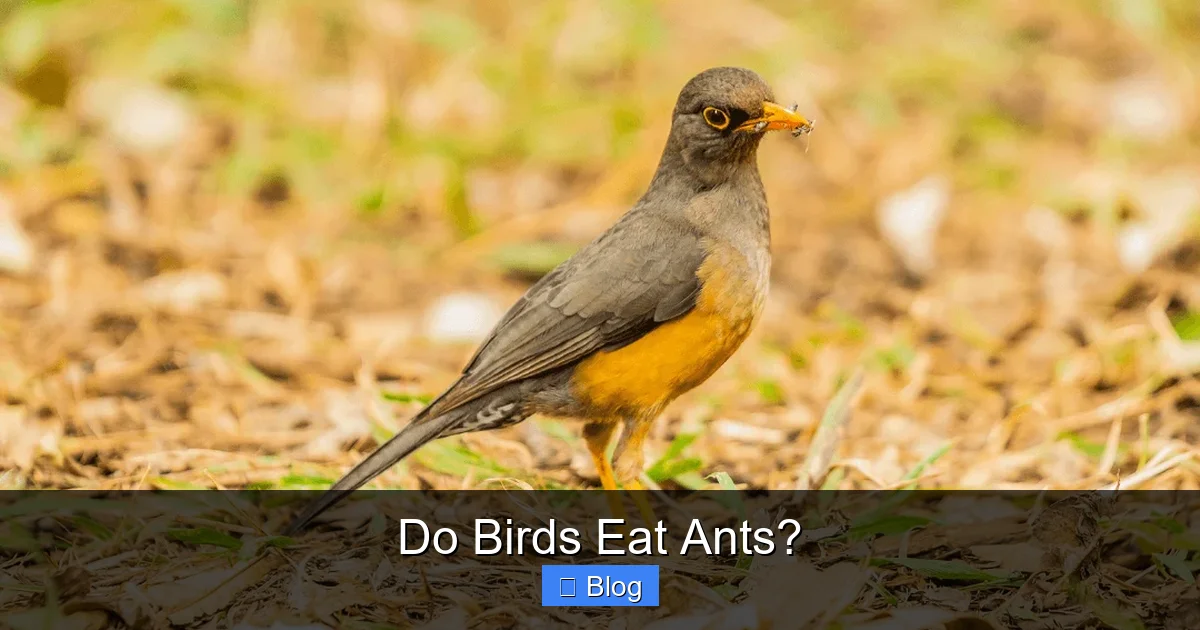
Yes, many species of birds absolutely eat ants! Ants are a valuable dietary component for a wide range of avian species, providing essential protein, fats, and even unique compounds like formic acid. From ground foragers to aerial acrobats, birds consume ants not just as a casual snack, but often as a significant part of their diet, showcasing a fascinating aspect of their natural foraging behaviors and ecological roles.
Have you ever been watching a bird hop around your garden, perhaps pecking at the ground or flitting through the branches, and a question pops into your mind: “Do birds eat ants?” It’s a perfectly natural thought. Ants are practically everywhere, from our kitchen counters to the deepest parts of the forest. And birds, well, they’re everywhere too, always on the lookout for their next meal.
The short answer, much to the surprise of many, is a resounding *yes*! Many species of birds absolutely do eat ants. While we might often think of birds feasting on seeds, berries, or larger insects like worms and caterpillars, ants are a surprisingly common and important part of the avian diet for a wide variety of birds across the globe. It’s a fascinating interaction between two of nature’s most ubiquitous creatures. Let’s delve into why these tiny insects are so appealing to our feathered friends and explore the intriguing world of birds eating ants.
The Surprising Truth: Yes, Many Birds Do Eat Ants!
It’s a common misconception that ants are too small, too fast, or simply not appealing enough for birds to bother with. However, the reality is quite different. Birds, being incredibly adaptable and opportunistic eaters, have long recognized the nutritional bounty that ants provide. Whether they’re foraging on the ground, probing into crevices, or catching insects mid-flight, ants frequently end up on the menu. So, when you ask, “Do birds eat ants?”, you’re asking about a widespread and vital part of avian ecology.
A Common Dietary Component
For many birds, ants aren’t just an accidental snack; they’re a regular and significant part of their diet. Think about the sheer abundance of ants in almost any environment. From tiny pavement ants to larger carpenter ants, they exist in staggering numbers. This makes them a readily available food source, especially when other prey might be scarce. A bird doesn’t have to expend a lot of energy to find a meal when ants are marching in columns or swarming a food source. This efficiency is key for birds that need to maintain high energy levels, particularly during nesting season or migration.
More Than Just a Snack
While some birds might pick up an ant here and there, for others, ants represent a substantial portion of their daily caloric intake. This is particularly true for insectivorous birds, but even omnivores, which typically eat a mix of seeds, fruits, and insects, will readily consume ants. The diverse range of ant species means there’s a buffet of options, from small, soft-bodied ants to larger, more substantial ones. Each offers a slightly different nutritional profile, contributing to a bird’s overall health and well-being.
Why Ants Are on the Menu: Nutritional Value and Unique Benefits
Why do birds go to the trouble of picking up these tiny insects? It all comes down to nutrition and some unique benefits that ants offer. Birds have incredibly high metabolic rates, meaning they need a constant supply of energy-rich food. Ants, despite their size, deliver quite a punch.
Protein Powerhouse
First and foremost, ants are an excellent source of protein. Protein is absolutely crucial for birds, especially for growth in young birds, muscle development, feather production, and egg laying. During breeding season, parent birds often seek out protein-rich insects like ants to feed their fast-growing chicks. The amino acids found in ant protein are essential building blocks for life, making them a premium food source.
Fat and Minerals
Beyond protein, ants also contain valuable fats, which provide concentrated energy, vital for long flights, cold weather, and sustaining energy during foraging. Additionally, ants supply various essential minerals like phosphorus, potassium, and magnesium, which are important for bone health, nerve function, and overall physiological processes. These micro-nutrients, though needed in smaller quantities, are just as critical as proteins and fats for a bird’s survival.
The Formic Acid Advantage
One of the most fascinating aspects of ants as food is their production of formic acid. This chemical is what gives some ants their characteristic bite or spray. While it might sound like a deterrent, birds have adapted to this. In fact, some ornithologists believe that ingesting formic acid might offer certain health benefits to birds, possibly acting as an internal antiseptic or contributing to overall gut health. This unique chemical compound is a differentiator when considering “Do birds eat ants?” versus other insects.
Hydration from Insects
While not their primary water source, insects like ants do contain some moisture. For birds in arid environments or during dry spells, this can contribute to their hydration needs, complementing water obtained from other food sources and direct drinking.
Who’s Dining on Ants? Common Ant-Eating Birds
It’s not just a select few birds that eat ants; the list is surprisingly long and diverse. You might even have some regular ant-eaters right in your own backyard!
Ground Foragers
Many birds that forage on the ground are regular ant consumers.
- Woodpeckers and Flickers: Northern Flickers, in particular, are renowned ant specialists. They have long, barbed tongues perfectly adapted for probing into ant nests and extracting large numbers of ants. Other woodpeckers may also eat ants opportunistically.
- Sparrows: House Sparrows and other sparrow species frequently peck around on lawns and disturbed ground, often picking up ants.
- Starlings: European Starlings are highly adaptable foragers and will readily eat ants found on the ground.
- Thrushes and Robins: American Robins, famous for pulling worms, will also snap up ants when they encounter them during their ground-hopping searches.
Aerial Acrobats
Not all ant-eating happens on the ground. Many species catch ants on the wing, especially during the nuptial flights of winged ants, which can occur in massive swarms.
- Swifts and Swallows: These masters of aerial foraging will swoop and dive through swarms of flying ants, gulping down hundreds of them in a short period. This is a common answer to “Do birds eat ants?” when considering flying insects.
- Flycatchers: Many species of flycatchers will sally forth from a perch to snatch individual winged ants out of the air.
Specialized Eaters
In the tropics, there are entire families of birds specifically named for their ant-eating habits, demonstrating just how crucial ants can be.
- Antpittas, Antshrikes, Antwrens, and Antthrushes: These birds, found in Central and South America, often follow army ant swarms, preying on the ants themselves or the other insects flushed out by the ants. They are prime examples of birds that heavily rely on ants.
Opportunistic Eaters
Beyond the specialists, many common garden birds are opportunistic ant-eaters. They might not seek out ants exclusively, but they won’t pass up a readily available meal.
- Warblers: Many warbler species, known for their insectivorous diets, will pick ants off leaves and bark.
- Wrens: Small and quick, wrens will explore nooks and crannies, often finding ants.
- Jays: Blue Jays and other corvids are highly intelligent and adaptable, eating a wide variety of foods, including ants.
- Nuthatches and Creepers: These birds that climb tree trunks often find ants hidden in bark crevices.
Anting: A Fascinating Avian Behavior
Beyond simply eating ants, some birds engage in a curious and fascinating behavior called “anting.” This is where the question “Do birds eat ants?” expands to include how they *use* ants.
What is Anting?
Anting involves a bird intentionally rubbing ants on its feathers, or allowing ants to crawl over its body. There are two main types:
- Active Anting: The bird picks up an ant in its beak and rubs it methodically over its feathers, particularly under the wings and on the tail. It often appears to be in a trance-like state during this process.
- Passive Anting: The bird finds an ant hill or a column of ants and deliberately sprawls or sits amongst them, allowing the ants to crawl over its body. This is less common but equally intriguing.
Why Do Birds Ant?
The exact reasons for anting are still debated by scientists, but several compelling theories exist:
- Parasite Control: The most widely accepted theory is that the formic acid and other chemicals produced by ants act as a natural insecticide. These chemicals could help kill or deter parasites like mites, ticks, and feather lice, which can be a nuisance and health hazard for birds.
- Feather Conditioning: Some researchers suggest that anting might help with feather maintenance, possibly aiding in the removal of old oils or stimulating preening.
- Soothing Skin: After molting, when new feathers are growing in, a bird’s skin can be itchy. The chemicals from ants might provide a soothing sensation.
- Pure Enjoyment: It’s also possible that birds simply enjoy the sensation, similar to how animals might roll around in certain scents.
Birds That Practice Anting
Many of the birds that eat ants also engage in anting. Common anting species include:
- Jays (Blue Jays, Steller’s Jays)
- Starlings
- Robins
- Woodpeckers
- Orioles
- Wrens
- Some species of warblers
Observing a bird anting is a special sight and a wonderful way to witness the complex interactions between birds and insects firsthand.
The Ecological Role of Birds and Ants: A Balanced Relationship
The relationship between birds and ants is more than just a simple predator-prey dynamic; it’s an integral part of the larger ecosystem. When we ponder “Do birds eat ants?”, we also touch upon the broader ecological implications.
Natural Pest Control
Birds that eat ants play a crucial role in regulating ant populations. Without natural predators, ant colonies could grow unchecked, potentially causing disruptions in their environment. By consuming significant numbers of ants, birds help maintain a healthy balance, preventing any single species from becoming overly dominant. This natural pest control is a valuable ecosystem service, reducing the need for artificial interventions.
Impact on Ecosystems
Ants are also important members of the food web, acting as decomposers, seed dispersers, and predators themselves. By eating ants, birds influence these roles, creating a ripple effect throughout the ecosystem. It highlights how seemingly small interactions can have significant impacts on environmental health and biodiversity.
Ants’ Defenses and Birds’ Adaptations
Ants aren’t entirely defenseless. Many species bite, sting, or spray formic acid as a deterrent. However, birds have developed various adaptations to overcome these defenses. Some birds have thicker skin around their mouths or eyes, while others employ quick pecking motions to minimize exposure. The ability to consume ants despite their defenses is a testament to the evolutionary adaptability of birds.
Attracting Ant-Eating Birds to Your Garden
If you’re fascinated by the question “Do birds eat ants?” and want to encourage these beneficial ant-eaters in your garden, there are several things you can do.
Provide Natural Habitat
Birds are most likely to forage where there is natural habitat.
- Native Plants: Plant native trees, shrubs, and flowers that support a healthy insect population, including ants. A diverse plant community provides food and shelter for insects, which in turn attracts birds.
- Leaf Litter: Allow a layer of leaf litter to remain under trees and shrubs. This creates a natural foraging ground for many ground-dwelling insects, including ants, and provides cover for birds.
- Brush Piles: A simple brush pile can offer shelter and attract insects, creating a micro-ecosystem that birds will explore.
Limit Pesticides
This is perhaps the most critical step. Pesticides, especially insecticides, don’t discriminate. They kill the ants you might be trying to get rid of, but they also kill the insects that birds rely on for food. By using organic gardening practices and tolerating a few ants, you create a healthier, more vibrant environment for birds and other wildlife. Remember, a thriving insect population is key to attracting insectivorous birds.
Water Sources
Provide a reliable source of fresh, clean water. A bird bath or a small pond will attract birds for drinking and bathing, making your garden a more appealing place for them to hang out and forage for ants.
Observe and Enjoy
Once you’ve created a bird-friendly environment, take the time to observe. You might be surprised to see which birds are picking up ants, and perhaps even witness the intriguing behavior of anting. Understanding that “Do birds eat ants?” isn’t just a simple yes or no, but a complex ecological interaction, makes birdwatching even more rewarding.
Conclusion
So, the next time you wonder, “Do birds eat ants?”, you can confidently say yes! This widespread behavior is a testament to the adaptability and opportunistic nature of birds. Ants provide a rich source of protein, fats, and unique chemical benefits like formic acid, making them an important part of the diet for many avian species around the world. From the ground-foraging flickers to the aerial acrobat swifts, and even the mysterious ritual of anting, birds and ants share a fascinating and vital ecological relationship. By understanding and appreciating this connection, we can better support our feathered friends and the delicate balance of nature right in our own backyards.
Key Takeaways
- Yes, Birds Eat Ants: A vast number of bird species, both generalist and specialist insectivores, include ants in their diet as a valuable food source.
- Nutritional Value: Ants are packed with protein and fat, crucial for a bird’s energy, growth, and overall health, especially during breeding seasons.
- Formic Acid Benefits: The formic acid produced by ants can be beneficial, potentially acting as an anti-parasitic agent when birds engage in a behavior called “anting.”
- Diverse Ant-Eating Birds: From woodpeckers and flickers foraging on the ground to swifts and swallows catching flying ants, many common garden birds are opportunistic ant-eaters.
- “Anting” Behavior: Some birds intentionally rub ants on their feathers (active anting) or allow ants to crawl on them (passive anting), which is thought to help remove parasites or condition feathers.
- Ecological Importance: Birds play a significant role in controlling ant populations, contributing to the natural balance of their ecosystems without the need for chemical intervention.
- Attracting Ant-Eaters: You can encourage ant-eating birds by maintaining a natural garden habitat, avoiding pesticides, and providing fresh water sources.
Quick Answers to Common Questions
Do all birds eat ants?
No, not all bird species eat ants. While many birds are opportunistic insectivores and will consume ants, specialized feeders like hummingbirds (nectar) or raptors (mammals/larger birds) typically do not include ants in their diet.
Are ants good for birds?
Yes, ants are generally good for birds! They are a rich source of protein and fat, essential for a bird’s energy and overall health. The formic acid they contain may also offer anti-parasitic benefits.
What is “anting” and why do birds do it?
“Anting” is a behavior where birds intentionally rub ants on their feathers or allow ants to crawl over their bodies. It is believed to help remove external parasites like mites and lice, condition feathers, or potentially soothe itchy skin.
Can birds get sick from eating ants with formic acid?
Birds generally do not get sick from the formic acid in ants. Their digestive systems are adapted to handle it, and in fact, it’s often considered beneficial, possibly acting as a natural antiseptic or parasite deterrent.
How can I encourage ant-eating birds in my garden?
To encourage ant-eating birds, create a natural habitat with native plants, allow leaf litter to accumulate, and most importantly, avoid using pesticides that harm insect populations. Providing a clean water source also helps attract birds.
🎥 Related Video: Birds Have Learned a Secret about Ants!
📺 Animal Doozy
Did you know birds use ants to protect their feathers? This fascinating behavior, called anting, helps birds get rid of bacteria, fungi, …
Frequently Asked Questions
Are ants a main food source for any bird species?
Yes, for some species like the Northern Flicker, ants can be a primary food source, making up a significant portion of their diet. Tropical birds with “ant” in their names, such as Antpittas and Antshrikes, are also highly specialized ant-eaters.
Do birds eat all types of ants?
Birds are opportunistic and will eat many types of ants, including small pavement ants, larger carpenter ants, and even the winged reproductive ants during their swarming flights. Their preference might depend on the ant’s size, defensive capabilities, and local abundance.
What time of year do birds eat the most ants?
Birds tend to eat more ants during the warmer months when ants are most active and abundant. This is especially true during breeding season when adult birds need extra protein for their chicks and during migration to fuel long journeys.
Do birds eat ant eggs or larvae?
Yes, birds will also consume ant eggs, larvae, and pupae if they manage to access an ant nest. These immature ant forms are often soft-bodied and rich in nutrients, providing an easy and concentrated food source for birds.
Can ants sting or bite birds that eat them?
Yes, ants can sting or bite birds. However, birds are quick and have developed ways to minimize exposure. They often peck rapidly or select smaller ants. The benefit of the nutrition typically outweighs the minor discomfort of a few ant bites.
Is it safe to put out ants for birds to eat?
It is generally not recommended to intentionally “put out” ants for birds, as this could disrupt natural foraging behaviors or introduce other issues. The best approach is to create a healthy, pesticide-free garden that naturally supports a diverse insect population, including ants, allowing birds to forage as they naturally would.