
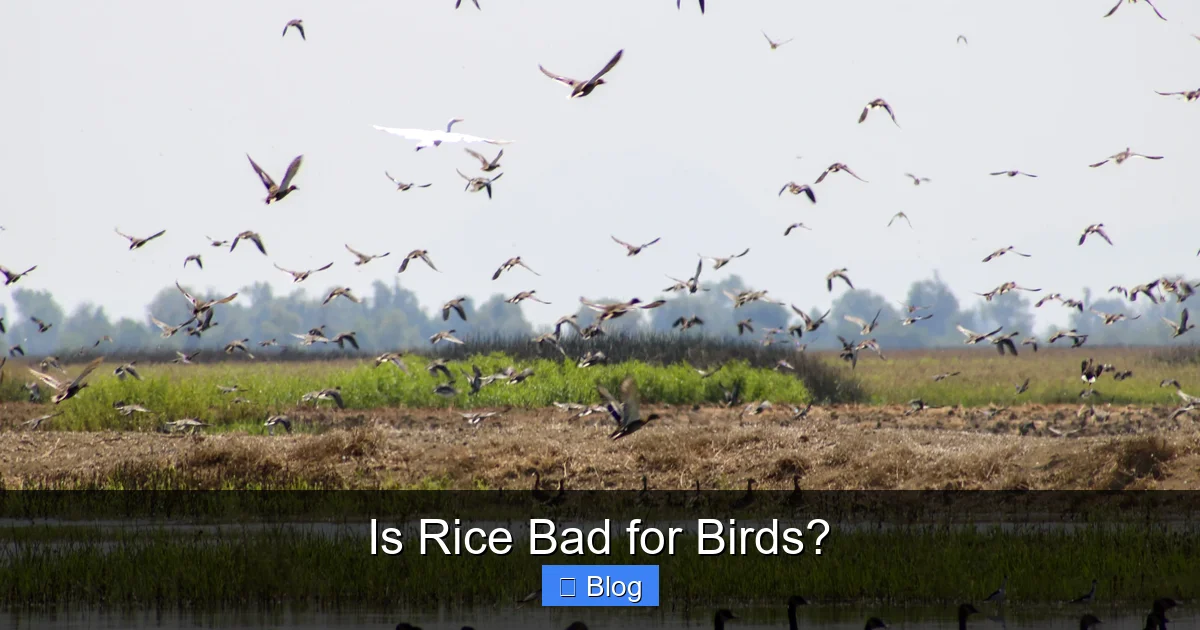
The popular belief that raw rice explodes in birds’ stomachs is a widespread myth with no scientific basis. While rice isn’t inherently toxic to birds, it offers limited nutritional value compared to their natural diets. Feeding birds rice, especially in large quantities or as their primary food source, can lead to imbalanced nutrition and potential health issues. Opt for healthier, specially formulated bird feeds instead.
Ah, the classic wedding tradition! A happy couple exits the ceremony, showered with a flurry of white grains. For generations, this scene was accompanied by a hushed warning: “Don’t throw rice! It’s bad for birds! It will explode in their stomachs!” This concern, passed down through whispers and well-meaning advice, has become almost legendary. But have you ever stopped to wonder if there’s any truth to it?
As lovers of nature and our feathered friends, it’s natural to want to do what’s best for them. The idea of inadvertently harming a bird by offering a simple grain can be quite unsettling. So, let’s put on our investigative hats and delve deep into this widespread belief. Is rice truly a hidden danger for birds, or is it just another urban legend flying around? We’re about to uncover the real story behind rice and our avian companions, separating fact from fiction once and for all.
In this comprehensive guide, we’ll explore the science (or lack thereof) behind the “exploding rice” myth, discuss the actual nutritional content of rice for birds, and weigh the potential benefits against any possible risks. We’ll also provide you with clear, practical advice on what you should feed your backyard birds to ensure they thrive. By the end of this article, you’ll have all the information you need to make informed decisions about feeding birds and contribute to their well-being.
Key Takeaways
- The Exploding Rice Myth is False: The long-standing belief that rice swells and explodes in a bird’s stomach is a complete myth; birds’ digestive systems are well-equipped to process grains.
- Rice Has Limited Nutritional Value: While not toxic, rice (especially white rice) lacks essential proteins, fats, vitamins, and minerals that birds need for a balanced diet, making it a poor primary food source.
- Potential Health Concerns: Over-reliance on rice can lead to nutritional deficiencies, while uncooked rice can be hard to digest and potentially pose a choking hazard for smaller birds.
- Cooked Rice is Safer, But Still Not Ideal: Cooked, plain rice is easier for birds to digest than raw rice but still doesn’t provide comprehensive nutrition. Avoid seasoned or instant rice.
- Better Alternatives Exist: A diverse diet of quality bird seeds (black oil sunflower, millet, nyjer), suet, unsalted nuts, fresh fruits, and mealworms offers far superior nutrition.
- Moderation and Observation are Key: If you choose to offer rice, do so sparingly and observe the birds for any adverse reactions. It should never replace their primary, natural food sources.
- Responsible Bird Feeding Practices: Always prioritize food safety, feeder hygiene, and offering a variety of appropriate foods to support local bird populations effectively.
Quick Answers to Common Questions
Can birds eat cooked rice?
Yes, birds can eat cooked rice, provided it is plain, unsalted, and unseasoned. Cooked rice is softer and easier for them to digest than raw rice, but it still offers limited nutritional value.
Is raw rice dangerous for birds?
Raw rice is not dangerous in the sense that it won’t explode or cause immediate severe harm. However, it’s hard to digest, offers poor nutrition, and could potentially be a very slight choking hazard for smaller birds compared to softer, cooked grains.
What happens if a bird eats rice?
If a bird eats a small amount of plain rice, it will likely digest it without issue, gaining some temporary energy from the carbohydrates. However, if rice is a significant part of its diet, the bird may suffer from nutritional deficiencies over time.
Do birds get sick from eating rice?
Birds generally do not get sick from eating small amounts of plain rice. However, heavily processed, seasoned, or salted rice can be harmful and lead to health problems due to the additives.
What is a healthier alternative to rice for birds?
Healthier alternatives include black oil sunflower seeds, nyjer seeds, millet, suet, unsalted nuts, and fresh fruits or berries. These provide a much better balance of fats, proteins, vitamins, and minerals essential for bird health.
📑 Table of Contents
The Age-Old Myth: Does Rice Really Explode in Birds?
Let’s address the elephant in the room, or rather, the rice in the bird’s stomach myth, right away. The notion that uncooked rice swells dramatically inside a bird, causing it to explode, is 100% false. It’s one of those persistent myths that has been debunked countless times by ornithologists, veterinarians, and animal experts, yet it still pops up regularly. It’s time to lay this particular concern to rest.
Understanding Bird Digestion
Birds are incredibly efficient at digesting food. Their digestive systems are uniquely designed to process a wide variety of grains, seeds, fruits, insects, and more. When a bird eats a grain of rice, it first passes through their esophagus into a pouch called the crop. The crop serves as a temporary storage area, where food begins to soften and moisten.
From the crop, the food moves into the proventriculus, which is the glandular stomach where digestive enzymes begin to break down the food. Finally, it enters the gizzard, a powerful, muscular organ. The gizzard, often aided by small stones or grit ingested by the bird, grinds tough foods like seeds and grains into a digestible pulp. This entire process is highly effective and happens relatively quickly. Rice, like any other grain, is ground down and digested long before it could swell to any dangerous size, let alone explode.
Consider the foods birds naturally eat. Many birds consume various seeds and grains that are much harder and denser than rice. If those didn’t cause issues, why would rice? The idea likely stemmed from a misunderstanding of how rice expands when cooked in boiling water, mistakenly applying that effect to a bird’s internal environment.
The Truth About Cooked vs. Uncooked Rice
Whether the rice is cooked or uncooked doesn’t change the fact that it won’t explode. However, there are some differences in how birds might interact with them. Uncooked rice grains are hard and dry. For smaller birds, these hard grains could be a bit more challenging to digest or potentially a very slight choking hazard if they try to swallow a large, unbroken piece. Think of it like a tiny, hard pebble. While most birds can handle it, it’s not the easiest thing to process.
Cooked rice, on the other hand, is much softer and easier to swallow and digest. If you were to offer rice to birds, cooked and plain rice (without any seasoning or butter) would be the safer option. But even then, we’re moving into the realm of nutritional value, which is a whole other consideration. The key takeaway here is clear: is rice bad for birds because it explodes? Absolutely not. That myth is busted.
Nutritional Value of Rice for Birds
Now that we’ve debunked the explosion myth, let’s shift our focus to the more important question: is rice a good food source for birds? The answer here is a bit more nuanced. While rice isn’t toxic, its nutritional profile leaves a lot to be desired when it comes to meeting the comprehensive dietary needs of most birds.
Visual guide about Is Rice Bad for Birds?
Image source: flashmuseum.org
Good Points: Energy and Carbohydrates
Rice is primarily composed of carbohydrates. These carbohydrates provide birds with energy, which is essential for flight, foraging, and maintaining body temperature. In this regard, rice can offer a quick energy boost. It’s similar to how we humans might eat rice for energy. However, that’s where the significant benefits largely stop, especially with common white rice.
Bad Points: Low Protein, Vitamins, and Minerals
The main drawback of rice, particularly white rice, is its lack of essential nutrients. Birds require a diverse diet rich in proteins, fats, vitamins (like Vitamin A and D), and minerals (like calcium). These nutrients are crucial for strong bones, healthy feathers, proper organ function, and successful reproduction.
- Protein: Rice has very little protein. Birds need protein for muscle development, feather growth, and enzyme production. A diet lacking in protein can lead to weakness and poor feather quality.
- Fats: Fats are a concentrated source of energy, vital for birds, especially during cold weather or migration. Rice contains minimal fat.
- Vitamins & Minerals: While some rice varieties have trace amounts of certain B vitamins, they generally fall short of providing the broad spectrum of vitamins and minerals birds require. For example, calcium is critical for eggshell formation, and rice offers almost none.
Think of it this way: feeding a bird a diet heavy in rice is like a human trying to live solely on white bread. You’d get some energy, but you’d quickly become malnourished because you’d be missing out on vital nutrients found in fruits, vegetables, and proteins. So, while a bird can technically eat rice and derive some energy, it’s a far cry from a balanced, healthy meal.
Different Types of Rice: A Quick Look
There are various types of rice, and their nutritional profiles differ slightly:
- White Rice: This is the most common type and the least nutritious. It’s polished, meaning the husk, bran, and germ (which contain most of the nutrients) are removed. It’s mostly starch.
- Brown Rice: Brown rice retains the bran and germ, making it more nutritious than white rice. It has more fiber, some B vitamins, and minerals. If offering rice, plain, cooked brown rice would be the “best” of the rice options, but still not ideal as a primary food.
- Wild Rice: Despite its name, wild rice isn’t actually rice but a type of aquatic grass seed. It’s generally more nutritious than white rice, offering more protein and fiber. However, it’s also harder and often needs to be cooked thoroughly to be digestible for birds.
Regardless of the type, the main answer to “is rice bad for birds” from a nutritional standpoint is that it’s largely inadequate. It’s a filler food, not a foundation for a healthy diet.
Potential Risks and Concerns When Feeding Rice to Birds
While we’ve established that rice won’t explode, and it’s not acutely toxic, there are still some legitimate concerns and risks associated with feeding rice to birds, especially if it becomes a significant part of their diet or is offered improperly.
Choking Hazards (Especially Uncooked)
Although birds are skilled at eating seeds, uncooked rice grains, being small and hard, could potentially pose a choking hazard, particularly for very small bird species. When a bird gulps down a hard grain, there’s always a slight risk, however small, that it might get lodged. While unlikely for most common backyard birds, it’s a consideration, especially for smaller, less experienced fledglings.
Digestive Upset and Bloating
Uncooked rice, being hard and fibrous, can be more challenging for a bird’s digestive system to break down completely. While their gizzards are powerful, a sudden influx of hard, uncooked grains that aren’t part of their natural diet could lead to digestive upset or discomfort. Even cooked rice, if consumed in very large quantities, might lead to a feeling of fullness without providing adequate nutrition, potentially making birds less likely to seek out more appropriate, nutrient-dense foods.
Additionally, some birds, particularly those not accustomed to eating grains like rice, might experience temporary bloating or indigestion. This isn’t a life-threatening issue, but it certainly isn’t pleasant for the bird.
The Problem with Processed Rice
This is a big one. Many human-grade rice products are entirely unsuitable for birds. Avoid these at all costs:
- Instant Rice: Often processed and may contain additives that are not good for birds.
- Seasoned Rice: Rice often comes seasoned with salt, sugar, spices, or artificial flavorings. Salt, in particular, is very harmful to birds and can cause dehydration and kidney problems.
- Fried Rice: Contains oils, soy sauce, and other ingredients that are unhealthy and potentially toxic for birds.
- Rice Cakes: While seemingly benign, these are often high in sodium and lack nutritional value.
Always remember that if you’re offering any human food, it should be plain, unsalted, unsweetened, and free of any additives.
Pesticides and Contaminants
Another concern, especially if you’re offering rice that wasn’t specifically grown for animal consumption, is the presence of pesticides or other contaminants. Agricultural rice can be treated with chemicals during growth or storage that are safe for human consumption in small amounts but could be harmful to smaller, more sensitive bird systems. When providing food for wild birds, it’s always best to use products intended for them, as these are generally grown and processed with bird safety in mind.
So, while the myth of exploding rice is false, the question “is rice bad for birds?” still warrants a cautious “yes” if it’s fed improperly or as a staple. The risks are primarily nutritional deficiency and potential digestive issues rather than acute toxicity.
Better Alternatives: What Should You Feed Birds Instead?
The good news is that there are numerous excellent and safe food options that will truly benefit your backyard birds. Instead of wondering “is rice bad for birds?”, let’s focus on what’s genuinely good for them. Providing a diverse and nutritious food source will attract a wider variety of birds and support their health and well-being.
Seeds Galore: The Bird’s Natural Diet
Seeds are the cornerstone of most backyard bird diets. They are packed with essential fats, proteins, and carbohydrates. Here are some top choices:
- Black Oil Sunflower Seeds: These are the undisputed champions. Their thin shells are easy for most birds to crack, and they are high in fat and protein, providing excellent energy. They attract a wide range of species, from cardinals and chickadees to finches and titmice.
- Nyjer (Thistle) Seeds: Tiny and rich in oil, nyjer seeds are a favorite of finches (like goldfinches and house finches). They require special feeders with small openings.
- Millet: White millet is particularly popular with ground-feeding birds such as sparrows, juncos, and doves.
- Safflower Seeds: A good option if you’re trying to deter squirrels or larger nuisance birds, as many of them don’t like safflower. Cardinals, grosbeaks, and titmice enjoy it.
A good quality mixed seed blend, primarily containing these ingredients, is far superior to any rice offering.
Fruits and Berries: Sweet Treats
Many birds enjoy fresh or dried fruits and berries, which provide vitamins, minerals, and natural sugars. Always ensure they are plain and unsweetened.
- Apple Pieces: Remove seeds, as they contain cyanide. Small, bite-sized pieces are best.
- Grapes: Halve them for easier consumption.
- Oranges: Oriole and tanagers love oranges cut in half.
- Berries: Blueberries, raspberries, blackberries, and mulberries are highly attractive to many species.
- Raisins: Offer unsweetened, seedless raisins, ideally soaked in water first to soften them.
Nuts and Suet: High Energy Boosts
For high-energy needs, especially during winter months, nuts and suet are fantastic.
- Peanuts: Offer unsalted, shelled or unshelled peanuts. They are a favorite of jays, woodpeckers, chickadees, and nuthatches. Never use flavored or roasted peanuts for humans.
- Suet: Blocks of rendered beef fat are a powerhouse of energy. You can buy plain suet cakes or those mixed with seeds, nuts, or mealworms. Woodpeckers, nuthatches, and chickadees are big fans.
Specialty Bird Foods: Tailored Nutrition
Beyond seeds, fruits, and nuts, there are other excellent options:
- Mealworms: Live or dried mealworms are a protein-rich treat, especially favored by insect-eating birds like bluebirds, robins, and wrens.
- Nectar: For hummingbirds, a simple solution of sugar water (one part sugar to four parts water, boiled and cooled) is ideal. Never use artificial sweeteners or red dye.
By offering a variety of these appropriate foods, you’ll not only avoid asking “is rice bad for birds?” but also ensure your visitors receive a truly beneficial and wholesome diet.
Responsible Bird Feeding Practices
Feeding birds is a wonderful hobby that connects us with nature, but it comes with responsibilities. Beyond choosing the right foods, how you maintain your feeding station plays a crucial role in the health of your backyard birds.
Hygiene is Key
A dirty bird feeder is more harmful than an empty one. Food left out can quickly spoil, grow mold, or become contaminated with bacteria, leading to illness for birds. Regular cleaning is essential:
- Clean Feeders Weekly: Use a solution of one part bleach to nine parts hot water, or a specialized bird feeder cleaner. Scrub thoroughly, rinse completely, and allow feeders to dry before refilling.
- Rake Under Feeders: Seed hulls and uneaten food can accumulate on the ground, attracting rodents and promoting the spread of disease. Regularly rake and clean the area beneath your feeders.
- Prevent Contamination: Store bird food in rodent-proof containers in a cool, dry place. Discard any food that smells musty, looks moldy, or has been exposed to pests.
Variety and Moderation
Just like humans, birds thrive on a varied diet. While a specific seed might be a favorite, offering a range of suitable foods ensures they get a broader spectrum of nutrients. Remember, your feeders should supplement their natural foraging, not replace it entirely.
Moderation is also important. Don’t overfill feeders to the point where food sits out for weeks. Offer amounts that birds can consume within a few days to maintain freshness and minimize waste. If you’re experimenting with a new food item, like plain cooked brown rice (which we still advise against as a staple), offer it in very small quantities to see if birds show interest and how they react.
Observing Bird Behavior
Become a keen observer of your feathered visitors. Watch what they eat, how they interact with the food, and if any particular food item seems to cause problems. Healthy birds are active, alert, and have clean, vibrant plumage. If you notice any signs of illness (e.g., lethargy, ruffled feathers, lesions, difficulty flying), clean your feeders immediately and consider temporarily removing them to prevent disease transmission.
Responsible bird feeding is about creating a safe, healthy, and inviting environment. By focusing on appropriate, nutritious foods and maintaining impeccable hygiene, you’ll ensure your efforts truly benefit the birds, making your backyard a haven for them. The answer to “is rice bad for birds” isn’t just about toxicity, but about providing the best possible support for their lives.
Conclusion
The long-standing myth about rice exploding in a bird’s stomach is, thankfully, just that—a myth. Birds’ digestive systems are perfectly capable of breaking down grains like rice without any dramatic, catastrophic consequences. So, if you’ve been avoiding rice at weddings for the sake of birds, you can relax on that front!
However, the question “is rice bad for birds?” extends beyond mere explosion myths. While rice isn’t toxic, it’s far from an ideal food source for our avian friends. Especially white rice, it offers very limited nutritional value, primarily providing carbohydrates without the essential proteins, fats, vitamins, and minerals that birds need for a balanced and healthy life. Over-reliance on rice could lead to malnutrition and a less robust bird population.
For the well-being of your backyard birds, it’s always best to prioritize foods that mimic their natural diet and provide comprehensive nutrition. High-quality bird seeds like black oil sunflower, nyjer, and millet, along with suet, unsalted nuts, fresh fruits, and mealworms, are far superior choices. These options ensure birds receive the diverse nutrients they require for energy, feather growth, reproduction, and overall vitality.
So, next time you’re thinking about what to offer your feathered visitors, remember that while rice won’t cause them to burst, there are much better, more beneficial options available. By choosing wisely and practicing responsible feeding habits, you can truly contribute to the health and happiness of the beautiful birds in your garden.
🎥 Related Video: Can Birds Eat Rice? – Bird Watching Diaries
📺 Bird Watching Diaries
Can Birds Eat Rice? In this informative video, we’ll discuss the topic of birds and their relationship with rice. Many people wonder …
Frequently Asked Questions
Is it true that rice swells in a bird’s stomach?
The idea that rice swells and explodes in a bird’s stomach is a common myth. Birds have very efficient digestive systems, including a muscular gizzard that grinds down hard foods like seeds and grains, preventing any such dramatic expansion.
Does rice provide any nutritional benefit to birds?
Rice primarily offers carbohydrates, which provide birds with energy. However, it is very low in essential proteins, fats, vitamins, and minerals that birds need for a balanced diet, making it a poor nutritional choice as a main food source.
Are certain types of rice better for birds than others?
Plain, cooked brown rice might be marginally better than white rice as it retains more fiber and some nutrients. Wild rice (which is a grass seed) also offers more protein. However, even these types are not ideal and should only be offered very sparingly, if at all, in favor of more nutritious options.
Can feeding birds rice attract pests?
Yes, leaving any type of human food, including rice, out for birds can attract unwanted pests like rodents (rats and mice) and insects. These pests can spread diseases and become a nuisance, so it’s best to offer only designated bird food in clean feeders.
What should I do if I accidentally fed birds rice?
If you’ve accidentally offered plain rice to birds, don’t worry too much, especially if it was a small amount. They will likely digest it without ill effects. The best course of action is to stop offering rice and switch to appropriate, nutritious bird food immediately.
Why is it better to avoid feeding birds human-grade seasoned or instant rice?
Human-grade seasoned or instant rice often contains salt, sugar, spices, oils, or other additives that are harmful to birds. Salt can cause dehydration and kidney damage, while other ingredients can lead to digestive upset or toxicity. Always stick to plain, unprocessed options if considering human foods, though dedicated bird feed is always superior.