
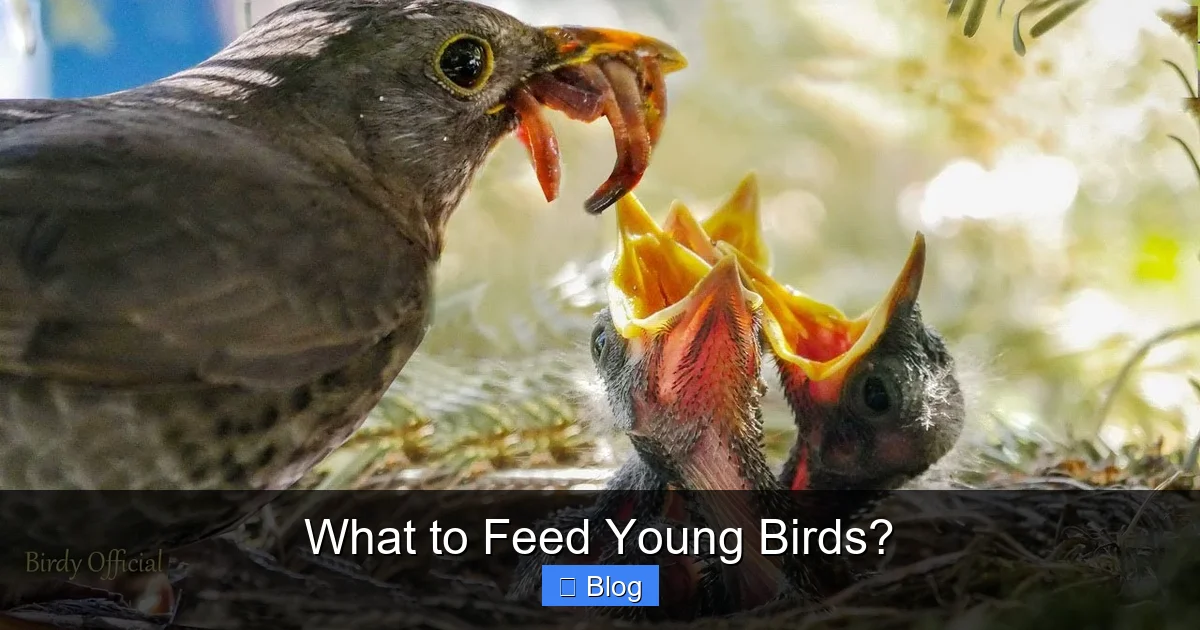
Finding a young bird can spark a powerful desire to help, but knowing what to feed young birds is critical for their survival and often more complex than it seems. This guide emphasizes that parental care is always best and professional wildlife rehabilitators are the primary resource. It details the essential high-protein diet most young birds need, outlines safe temporary food options only if advised by an expert, and strictly warns against common harmful foods like bread or milk.
What to Feed Young Birds?
Imagine you’re out for a stroll, enjoying a beautiful day, when you spot a tiny bundle of feathers—or perhaps not even feathers yet—alone on the ground. Your heart melts, and your first instinct is likely, “Oh no, a baby bird! It needs help! What do I feed young birds?” This is a natural, compassionate reaction, and it’s commendable. However, the world of young birds is far more nuanced than it appears, and our well-meaning interventions can sometimes do more harm than good.
Understanding what to feed young birds isn’t just about offering any scraps you have. It’s about respecting their delicate biology, their rapid developmental needs, and the crucial role their natural parents play. Most young birds found on the ground are not actually abandoned; they are fledglings, learning to fly, with their parents often nearby, observing and guiding them. But what if it’s truly a nestling, or clearly injured? That’s when informed action becomes vital, and knowing *what to feed young birds* correctly can make all the difference, though it usually involves professional help.
This comprehensive guide will walk you through everything you need to know about caring for and, if absolutely necessary, what to feed young birds. We’ll cover their unique nutritional demands, when to intervene (and, more importantly, when not to), safe temporary food options, and the critical substances to avoid at all costs. Our goal is to empower you with the knowledge to act responsibly and give these vulnerable creatures the best possible chance at survival.
Key Takeaways
- Prioritize Professional Help: If you find a young bird that truly needs intervention (not just a healthy fledgling), the absolute best course of action is to contact a licensed wildlife rehabilitator immediately. They have the expertise and resources to provide proper care.
- Parental Care is Best: Most “abandoned” fledglings are actually being watched by their parents from a distance. Unless a bird is clearly injured, in imminent danger, or a featherless nestling on the ground, observe first before intervening.
- High Protein is Essential: Young birds, especially nestlings and fledglings, have incredibly rapid growth rates and require a diet extremely high in protein, fat, and specific nutrients, primarily obtained from insects in the wild.
- Avoid Harmful Foods: Never feed young birds bread, milk, human junk food, avocado, chocolate, or cat food (unless specifically instructed by a rehabilitator and it’s a high-quality, unseasoned variety). These can cause severe digestive issues, malnutrition, or be toxic.
- Temporary Emergency Feeding: If absolutely necessary and under direct guidance from a wildlife expert, temporary foods might include specific softened, unseasoned cat/dog food (high quality, specific types), or live, cut mealworms. These are *not* long-term solutions.
- Hydration is Crucial: Young birds also need proper hydration, but it should never be forced or given via a dropper directly down the throat, as this can lead to aspiration. Water should be offered carefully under expert guidance.
- Do Your Research & Observe: Before touching or attempting to feed any young bird, verify if it’s a nestling (featherless or few feathers, eyes closed, in a nest) or a fledgling (mostly feathered, hopping on the ground, parents usually nearby). This distinction is vital for knowing how to respond.
Quick Answers to Common Questions
What should I do if I find a baby bird?
First, determine if it’s a nestling (no feathers, eyes closed, on the ground) or a fledgling (mostly feathered, hopping around, parents often nearby). If it’s a fledgling, observe from a distance for at least an hour; parents usually return. If it’s a nestling or an injured bird, contact a licensed wildlife rehabilitator immediately.
Can I feed a young bird bread or milk?
Absolutely not. Bread offers no nutritional value and can cause malnutrition or blockages. Milk contains lactose, which birds cannot digest, leading to severe digestive upset and dehydration.
What is the best thing to feed a young bird in an emergency?
If instructed by a wildlife rehabilitator for temporary emergency care, they might recommend tiny, cut pieces of live mealworms or specific high-quality, unseasoned puppy/kitten food softened with water. However, this is only for emergencies and under professional guidance.
Do young birds need water? How do I give it to them?
Yes, young birds need hydration. Never force water with a dropper, as they can aspirate. If advised by a rehabilitator, you might offer a tiny drop on the side of their beak or let them sip from a moist toothpick tip. Do not use milk or sugary drinks.
How often do young birds need to eat?
Young birds have extremely fast metabolisms and require very frequent feeding, often every 15-30 minutes from dawn until dusk. This intensive schedule is why professional rehabilitation is almost always necessary for true orphans.
📑 Table of Contents
Understanding the Unique Nutritional Needs of Young Birds
Young birds are not simply smaller versions of adult birds. They are growing at an astonishing rate, sometimes doubling their weight in just a few days. This rapid development demands a very specific and intense diet, far different from what many people might assume.
Rapid Growth and Development Requires Specific Diets
Think about it: a baby robin hatches blind, naked, and helpless. Within a couple of weeks, it’s a fully feathered, albeit clumsy, fledgling ready to leave the nest. This incredible transformation requires an immense amount of energy and building blocks. For almost all songbirds, this means a diet exceptionally rich in protein and fats, predominantly sourced from insects. Insects provide the essential amino acids, vitamins, and minerals critical for bone growth, feather development, and muscle formation. Without these precise nutrients, young birds can suffer from developmental issues, weakened immune systems, and even stunted growth, severely impacting their long-term survival.
Different Stages, Different Diets (and Behaviors)
The term “young bird” itself can be misleading, as there are distinct stages with different needs and behaviors:
- Nestlings: These are birds still in the nest, usually featherless or with only sparse down. Their eyes might still be closed. Nestlings are completely dependent on their parents, who bring food directly to their gaping mouths. If you find a nestling out of the nest, it needs immediate intervention – ideally by carefully placing it back in its nest if safe to do so, or contacting a rehabilitator. They cannot forage for themselves and are extremely vulnerable. What to feed young birds at this stage is a specialized task.
- Fledglings: These are young birds that have left the nest but are not yet fully capable of sustained flight. They are mostly feathered, can hop and flutter, and often spend time on the ground or in low bushes. Their parents are typically nearby, still feeding them and teaching them how to find food and evade predators. This is the most common “young bird” people find, and often the most misunderstood. If you see a fledgling, unless it’s in immediate danger (like in a busy road) or clearly injured, the best action is usually no action at all. The parents are probably just out of sight.
Understanding this distinction is paramount before even considering what to feed young birds.
When and How to Intervene: A Crucial First Step
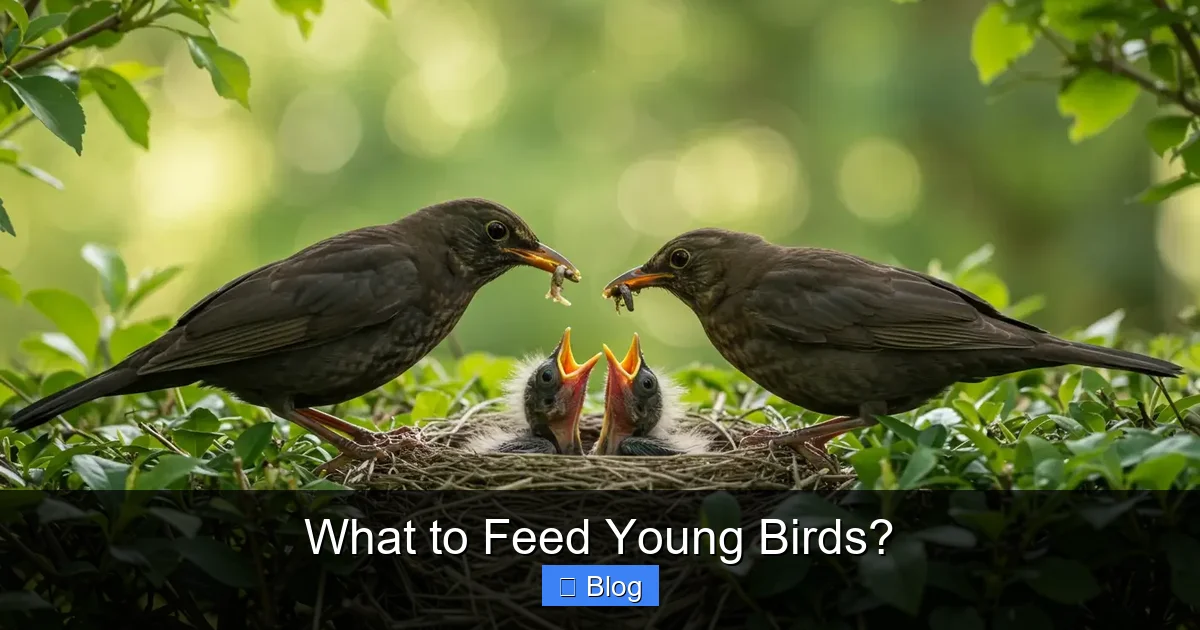
Visual guide about What to Feed Young Birds?
Image source: mostbeautifulbirds.com
Before you even think about what to feed young birds, you need to determine if your intervention is genuinely necessary. Often, the kindest thing you can do is nothing at all.
Is it Truly Orphaned or Injured?
This is the golden question. As mentioned, most fledglings are not abandoned. Their parents are often nearby, gathering food or watching over them.
- Nestling on the Ground: If you find a featherless or barely feathered nestling on the ground, it likely fell from its nest. If you can safely locate the nest and place the bird back in it, do so. Bird parents do not abandon their young because of human scent.
- Fledgling on the Ground: If the bird is mostly feathered and hopping, it’s a fledgling. Watch it for at least an hour from a distance. You’ll likely see parents returning to feed it. Only intervene if the bird is in clear, immediate danger (e.g., in a road, threatened by a cat), or if you’ve observed for an extended period and no parents appear.
- Injured Bird: If a young bird, regardless of stage, has visible injuries (broken wing, bleeding, cat bite wounds), it needs professional help immediately.
The “Hands-Off” Approach is Often Best
It’s hard, but often the best “help” you can offer a fledgling is to leave it alone. Human intervention, even with the best intentions, can be stressful for the bird and separate it from its parents, who are far better equipped to teach it survival skills and provide the perfect diet. Your desire to know what to feed young birds is admirable, but their natural parents already have the answer.
Contacting Wildlife Rehabilitators: The Primary Recommendation
If you’ve determined that a young bird truly needs help (it’s an orphaned nestling, an injured fledgling, or demonstrably abandoned), your very next step should be to contact a licensed wildlife rehabilitator. These professionals are trained to provide species-specific care, diets, and medical treatment. They have the knowledge of what to feed young birds of different species and stages, which is critical for success. Look up local wildlife rescue organizations or your state’s wildlife agency. They are the experts, and they will give you the best advice on what to do next, including whether temporary feeding is needed and *what to feed young birds* in that specific situation.
What to Feed Young Birds (If Advised by a Professional)
Let’s be absolutely clear: the following information on what to feed young birds is ONLY for emergency, temporary care, and ONLY if you have been advised and instructed by a licensed wildlife rehabilitator. Attempting to raise a young bird yourself without expert guidance often leads to malnourishment, improper development, and eventual death.
The Golden Rule: Mimic Natural Diet Closely
The best approach, even in emergency feeding, is to try and replicate the bird’s natural diet. For most songbirds, this means insects.
High-Protein Insect-Based Diets
If you are told by a rehabilitator to provide food temporarily:
- Live Mealworms: These are often the go-to for many insectivorous young birds. You can buy them at pet stores. Crucially, they should be *cut into small, manageable pieces* appropriate for the bird’s size. Whole mealworms can be too tough to digest or a choking hazard. Dusting them lightly with a calcium supplement (available at pet stores) can also be beneficial, but again, only if advised.
- Crickets: Similar to mealworms, these can be good, but must be small and cut up. Remove the hard parts like legs and heads.
These are living, wriggling foods, which also stimulate the bird’s natural feeding response.
Specific Examples of Acceptable Temporary Foods (Under Guidance ONLY)
In situations where insects are not available, a rehabilitator might suggest a very specific, temporary alternative:
- High-Quality, Unseasoned Dog or Cat Food (Specific Types): This is a highly debated topic, and often misunderstood. ONLY use high-quality, dry puppy or kitten food that has been softened with warm water (until it’s a mushy consistency, not dripping wet). It must be unseasoned and contain no dyes or other additives. Even then, it’s a temporary, incomplete diet. It provides some protein, but lacks crucial insect-derived nutrients. This is absolutely a last resort and should not be used long-term. The rehabilitator will specify the exact brand and type if they recommend it.
- Hard-Boiled Egg Yolk: Cooked and crumbled hard-boiled egg yolk can offer some protein and fat. Again, this is a supplementary, temporary food and not a complete diet.
- Small Pieces of Cooked Meat (No Seasoning): Tiny, tiny pieces of cooked lean ground beef or chicken, with absolutely no seasoning, might be used as a last resort for very specific species, but this is highly uncommon and carries risks.
- Specialized Bird Formulas: Some rehabilitators may instruct you to use a specific commercial hand-rearing formula designed for baby birds. These are usually powdered and mixed with water. Follow instructions precisely.
Hydration is Key
Young birds also need water. However, you should NEVER force-feed water with a dropper into a bird’s mouth, as it can easily aspirate (inhale water into its lungs) and drown. If a rehabilitator advises hydration, they might suggest:
- Dipping the tip of a toothpick or a small paintbrush into water and letting the bird sip from it.
- Very carefully placing a tiny drop of water on the side of its beak, allowing it to sip.
- Some rehabilitators may instruct on rehydration fluids like unflavored Pedialyte, but this is highly specific.
Never offer milk or dairy products. Birds are lactose intolerant.
Foods to Strictly Avoid: What NOT to Feed Young Birds
Just as important as knowing what to feed young birds is knowing what to absolutely never, ever give them. Many common human foods are detrimental, or even fatal, to young birds.
Bread and Crackers: Empty Calories
This is one of the most common mistakes people make. Bread, crackers, and similar baked goods offer almost no nutritional value to a rapidly growing young bird. They fill the bird’s stomach, making it feel full, but provide only empty calories and virtually no protein, vitamins, or minerals. This leads to severe malnutrition, weakness, and can even cause digestive blockages. If you’re wondering what to feed young birds, bread is never the answer.
Milk and Dairy Products: Lactose Intolerance
Birds, like many other animals, are lactose intolerant. They lack the enzymes needed to digest milk sugars. Feeding milk or other dairy products will cause severe digestive upset, diarrhea, and dehydration, which can quickly become fatal for a vulnerable young bird.
Human Foods with Spices, Salt, or Sugar
Anything processed for human consumption, especially items high in salt, sugar, artificial sweeteners, or spices, is toxic to birds. Their tiny systems cannot process these ingredients, leading to organ damage, neurological issues, and death. This includes chips, cookies, candies, seasoned meats, and sugary drinks.
Avocado, Chocolate, Caffeine: Highly Toxic
These are potent toxins for birds. Avocado contains persin, which can cause heart damage. Chocolate and caffeine contain methylxanthines, which can cause hyperactivity, tremors, seizures, and death. Keep these far away from any bird.
Uncooked Rice, Large Seeds, Whole Nuts: Choking and Digestion Hazards
While adult birds might eat seeds or nuts, young birds have different digestive systems. Uncooked rice can expand, causing internal issues. Large seeds and whole nuts are choking hazards and can be incredibly difficult for a young bird’s underdeveloped digestive system to process, potentially leading to blockages.
General Best Practices for Temporary Care
If you are under the direct guidance of a wildlife rehabilitator and are providing temporary care, here are some general best practices to follow alongside instructions on what to feed young birds.
Creating a Safe Environment
While waiting to transport the bird to a rehabilitator, provide a safe, warm, and quiet environment:
- Container: Use a small box (like a shoebox) lined with a soft, clean cloth (like an old t-shirt or paper towels). Do not use stringy materials like old towels with loops, as the bird’s feet can get tangled.
- Warmth: Young birds cannot regulate their body temperature well. Provide a heat source, such as a heating pad set on low (placed *under* half of the box so the bird can move away if too warm) or a bottle filled with warm water wrapped in a cloth. Avoid direct contact with the heat source.
- Quiet: Keep the bird in a quiet, dark place away from pets, children, and loud noises. Stress can be as detrimental as lack of food.
Feeding Techniques and Frequency (Under Professional Guidance)
If you are advised on what to feed young birds and how to do it:
- Tools: Use small tweezers, a blunt toothpick, or even a clean paintbrush to offer food.
- Small Amounts: Offer tiny pieces of food at a time. The bird should be able to swallow it easily.
- Frequency: Young birds have incredibly fast metabolisms and need to eat very frequently, often every 15-30 minutes from dawn to dusk. This intensive feeding schedule is why professional care is almost always required.
- Stimulate Gaping: Gently tapping the edge of the container or making a soft chirping sound can sometimes encourage the bird to gape (open its mouth) for food. Never force-feed a closed beak.
The Ultimate Goal: Rehabilitation and Release
Remember, your temporary care is just that – temporary. The ultimate goal is to get the bird to a professional rehabilitator who can provide the complete, species-specific diet, medical care, and specialized environment needed for it to grow strong enough for release back into the wild. Knowing what to feed young birds is a small, but critical, part of a much larger, expert-driven effort.
In conclusion, finding a young bird can be a heartwarming experience, but it comes with a significant responsibility. While the instinct to help is strong, the most beneficial action is often to step back and observe, allowing the natural parents to do their job. If intervention is truly necessary, prioritize contacting a licensed wildlife rehabilitator. They are the true experts on what to feed young birds and how to provide them with the best chance for a healthy life back in nature. Your compassion, coupled with informed action, makes all the difference.
🎥 Related Video: What to feed a baby BIRD | Homemade hand feeding formula recipe #babybird #birds #aviary
📺 Paradise Aviary
In this video ill show you a very simple way of making some homemade handfeeding formula for your baby birds incase of an …
Frequently Asked Questions
What’s the difference between a nestling and a fledgling?
A nestling is a very young bird, usually featherless or with sparse down, eyes possibly closed, and completely dependent on its parents in the nest. A fledgling is older, mostly feathered, has left the nest, and can hop or flutter, but is still learning to fly and is fed by its parents, who are usually nearby.
Is it true that bird parents will abandon their young if a human touches them?
No, this is a common myth. Most bird species do not have a strong sense of smell and will not abandon their young simply because a human has touched them. If you can safely return a fallen nestling to its nest, it’s generally safe to do so.
What should I do if a cat brings home a young bird?
If a cat has caught a young bird, even if it appears unharmed, it should always be taken to a wildlife rehabilitator immediately. Cat saliva contains bacteria that can cause fatal infections in birds, even from the smallest puncture wounds.
Can I just leave out bird seed for a young bird I found?
Leaving out bird seed is generally not appropriate for most young birds, especially nestlings and fledglings. Most songbirds primarily eat insects at this stage, and hard seeds are difficult for their underdeveloped digestive systems to process and pose a choking hazard. Soaked, finely crushed seeds might be offered to some specific species if advised by a rehabilitator, but never as a primary diet.
How do I find a licensed wildlife rehabilitator in my area?
You can typically find licensed wildlife rehabilitators by searching online for “wildlife rescue,” “bird rehabilitator,” or “animal sanctuary” followed by your city or state. Your local humane society, animal control, or veterinarian might also be able to provide contact information or direct you to the correct resources.
What kind of insects are safe to feed young birds if advised by a professional?
If advised by a professional, live mealworms or crickets (available at pet stores) are often recommended. It’s crucial to cut them into small, manageable pieces appropriate for the bird’s size, and remove any hard outer parts or legs to prevent choking or digestive issues.