
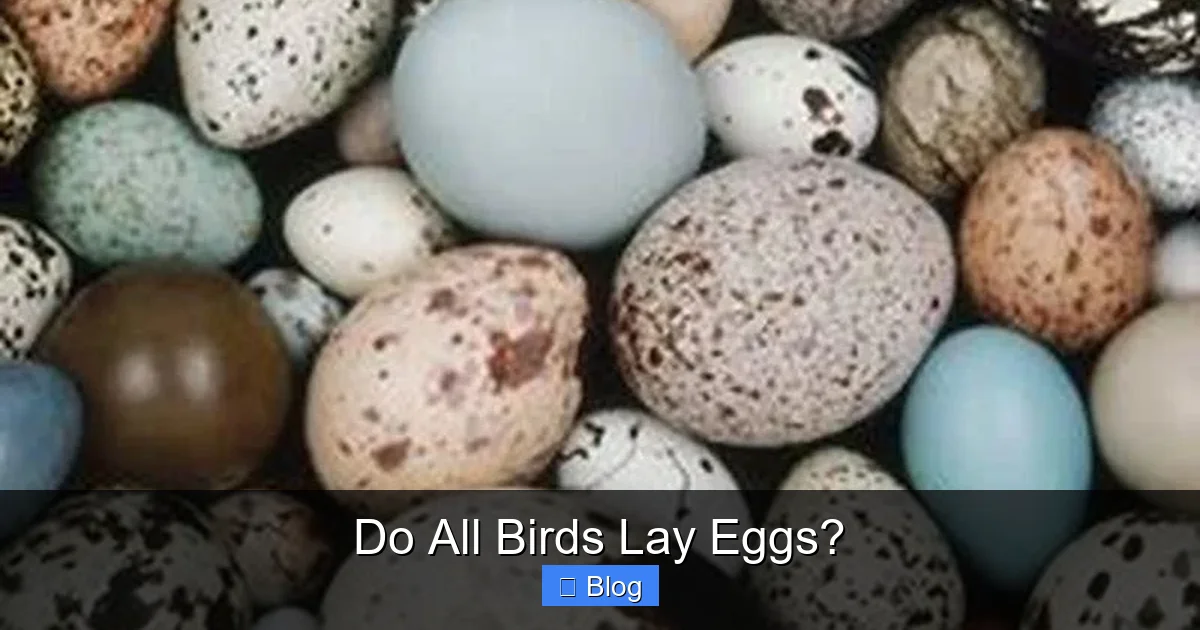
Yes, every single bird species on Earth lays eggs! This fundamental biological trait, known as oviparity, unites the entire avian class. From the smallest hummingbird to the largest ostrich, all birds reproduce by developing their offspring externally within a protective shell, a testament to an ancient and highly successful evolutionary strategy.
Have you ever paused to wonder about the incredible diversity of life around us? From soaring eagles to tiny hummingbirds, the avian world is full of wonder. But when it comes to reproduction, a fascinating question often pops into people’s minds: “Do all birds lay eggs?” It’s a simple question, but one that leads us to a core biological truth about our feathered friends.
The answer, in short, is a resounding yes! Every single species of bird on planet Earth reproduces by laying eggs. This isn’t just a common practice; it’s a universal and defining characteristic of the entire class Aves. From the largest ostrich egg to the smallest bee hummingbird egg, this method of reproduction is what unites them all, a testament to an ancient and remarkably successful evolutionary strategy.
But why is this the case? What makes egg-laying such a crucial and unchanging aspect of bird biology? Join us as we dive into the fascinating world of avian reproduction. We’ll explore the biological reasons behind this universal trait, marvel at the incredible diversity of eggs, understand the intricate process of egg formation, and appreciate the evolutionary advantages that make laying eggs a masterpiece of nature.
Key Takeaways
- Universal Biological Trait: All birds, without exception, lay eggs as their sole method of reproduction. This is a defining characteristic of the entire avian class.
- Oviparous Nature: Birds are fundamentally oviparous, meaning they reproduce by laying eggs where the embryo develops outside the mother’s body.
- Incredible Diversity in Eggs: While all birds lay eggs, there’s enormous variation in egg size, shape, color, shell texture, and clutch size across different species, adapted to their specific environments and lifestyles.
- Complex Formation Process: The creation of a bird’s egg is a marvel of biology, involving a precise sequence of yolk formation, albumen addition, and shell development within the female reproductive tract.
- Evolutionary Advantages: Laying eggs offers several benefits, including providing a protected, portable environment for the developing embryo and allowing the parent bird to remain lighter for flight during gestation.
- Parental Care is Crucial: Laying an egg is just the beginning. Eggs typically require incubation and subsequent parental care, highlighting the significant investment birds make in their offspring.
Quick Answers to Common Questions
Do birds ever give birth to live young?
No, birds never give birth to live young. They are exclusively oviparous, meaning they always reproduce by laying eggs.
Are there any exceptions to birds laying eggs?
There are no known exceptions. All 10,000+ species of birds lay eggs. It is a defining characteristic of the entire avian class.
Why do birds lay eggs instead of giving live birth?
Birds lay eggs primarily due to their evolutionary history (descended from egg-laying reptiles) and anatomical adaptations (lack of uterus/placenta). Laying eggs also keeps the female light for flight.
What is the smallest bird egg?
The smallest bird egg belongs to the bee hummingbird, which is about the size of a coffee bean.
What is the largest bird egg?
The largest bird egg is laid by the ostrich, which can be about 6 inches long and weigh up to 3 pounds.
📑 Table of Contents
The Unifying Trait: Why Oviparity is Universal for Birds
To understand why all birds lay eggs, we need to talk about a scientific term: oviparity. Oviparous animals are those that lay eggs, with little or no embryonic development occurring inside the mother. Birds are classic examples of oviparous creatures, a trait they share with most fish, amphibians, reptiles, and insects.
An Ancestral Connection and Anatomical Truths
The roots of avian egg-laying go way back, deep into their evolutionary history. Birds are direct descendants of reptiles, and reptiles primarily reproduce by laying eggs. So, in a sense, birds have simply carried on a very ancient and successful reproductive strategy. Over millions of years, this method became deeply ingrained in their biology.
More specifically, birds lack the complex internal reproductive structures, like a uterus and placenta, that are necessary for live birth (known as viviparity) in mammals. Instead, the female bird’s reproductive system is perfectly adapted for producing and laying eggs. The egg, complete with all the nutrients the embryo needs (the yolk and albumen) and a protective shell, is designed to develop outside the mother’s body.
A Lightweight Strategy for Flight
There’s also a strong argument to be made for egg-laying being highly beneficial, perhaps even essential, for flight. Carrying multiple developing embryos internally, as mammals do, can add significant weight and change a creature’s center of gravity. For birds, masters of the sky, maintaining a lightweight and streamlined body is crucial for efficient flight. By laying eggs, the female bird can deposit her offspring and their complete developmental resources into an external package. This frees her body from the burden of carrying developing young for weeks or months, allowing her to continue flying, foraging, and escaping predators effectively.
So, when you ask, “Do all birds lay eggs?”, remember that it’s not just a casual choice. It’s a fundamental part of their biology, their evolutionary heritage, and a key adaptation that supports their incredible ability to fly.
A Kaleidoscope of Life: The Incredible Diversity of Bird Eggs
While the act of laying eggs is universal, the eggs themselves are anything but uniform. The variety among bird eggs is astonishing, showcasing nature’s boundless creativity and adaptation. Each species has evolved eggs perfectly suited to its environment, nesting habits, and the needs of its developing chicks.
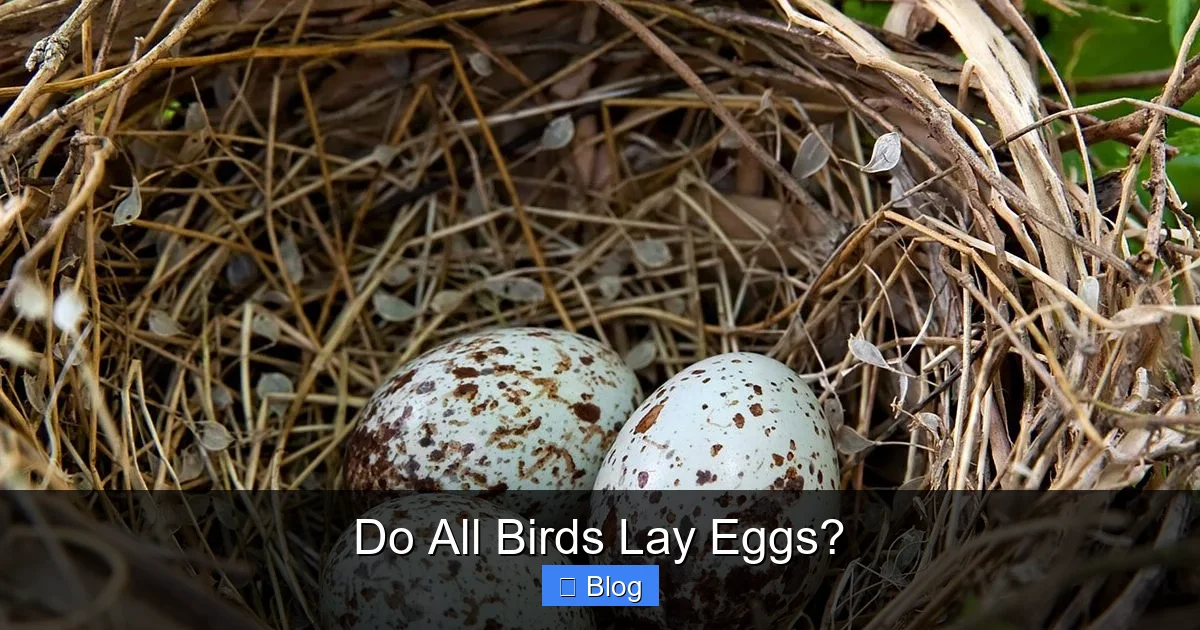
Visual guide about Do All Birds Lay Eggs?
Image source: images.birdfact.com
Size Matters: From Tiny to Titanic
The size of an egg is often proportional to the size of the bird that lays it. The smallest bird egg belongs to the bee hummingbird, barely larger than a coffee bean and weighing less than a gram. In stark contrast, the largest egg is laid by the ostrich, measuring around 6 inches long and weighing up to 3 pounds – equivalent to about two dozen chicken eggs!
- Hummingbird Eggs: Small and delicate, often a creamy white.
- Chicken Eggs: Familiar to us, typically oval and various shades of brown or white.
- Ostrich Eggs: Massive, thick-shelled, and remarkably strong to withstand the weight of incubating parents.
Shapes and Shades: More Than Just Oval
Most eggs are oval, a shape that helps them roll in a tight circle if disturbed, preventing them from falling out of a nest. However, some birds lay eggs with unique shapes:
- Pear-shaped or Conical Eggs: Birds that nest on narrow cliff ledges, like murres and guillemots, lay highly pointed or pear-shaped eggs. This prevents them from rolling straight off the ledge; instead, they roll in a tight circle, keeping them safe.
- Round Eggs: Owls often lay nearly spherical eggs. This might be because their nests are typically in enclosed spaces (tree hollows), so the eggs are less likely to roll out.
Egg color is equally diverse and serves vital functions:
- Camouflage: Ground-nesting birds, like plovers and sandpipers, often lay speckled or mottled eggs that blend seamlessly with their surroundings, protecting them from predators.
- UV Protection: Some birds lay blue or green eggs, thought to protect the developing embryo from harmful UV radiation.
- Identification: For parasitic birds like cuckoos, their eggs often mimic the color and pattern of the host bird’s eggs, fooling the unsuspecting parents into raising a chick that isn’t their own.
- Chemical Signaling: Some egg colors might even signal the health and genetic quality of the female to her mate.
Clutch Size and Shell Texture
The number of eggs a bird lays in a single nesting attempt (known as the clutch size) also varies greatly. Some seabirds, like albatrosses, lay only one egg, while ground-nesting game birds, like quails, can lay clutches of a dozen or more. This is often linked to the survival rate of the chicks and the amount of parental care needed.
Shell textures can range from smooth and glossy to rough and chalky. Some eggs even have a slightly porous texture, which is important for gas exchange for the developing embryo inside.
This incredible variation underscores how specialized and adapted bird eggs are. Each feature, from color to shape to size, is a result of millions of years of evolution, ensuring the best possible chance of survival for the next generation.
The Miracle of Creation: How a Bird Egg Forms
The formation of a bird’s egg is a truly intricate biological process, a marvel of efficiency and precision that happens inside the female bird. It’s not just a matter of putting a shell around a yolk; it’s a carefully orchestrated sequence of events.
From Ovulation to Albumen
The journey begins in the female bird’s ovary, where the yolk (the nutrient-rich part of the egg) develops. Once mature, an ovum (yolk) is released in a process called ovulation. This yolk then enters the oviduct, a long, coiled tube.
As the yolk travels down the oviduct, it passes through different sections, each contributing to the egg’s final structure:
- Magnum: Here, layers of albumen (egg white), primarily protein and water, are added around the yolk. This provides additional nutrients and shock absorption.
- Isthmus: Next, two shell membranes (inner and outer) are formed around the albumen, providing another layer of protection.
The Shell and Pigmentation
The partially formed egg then moves into the shell gland, also known as the uterus. This is where the magic of the hard shell happens. Calcium carbonate is deposited around the membranes, forming the rigid outer shell. This process can take many hours.
Finally, in the last hours before the egg is laid, pigments are added to the shell in the shell gland. These pigments, derived from the bird’s blood, create the diverse array of colors and patterns we see on bird eggs. The precise location and timing of pigment deposition determine the intricate spots, speckles, and streaks that make each egg unique.
Once the shell is complete and pigmented, the egg is ready to be laid. This entire process, from ovulation to laying, can take anywhere from 24 hours to several days, depending on the species. It’s a testament to the biological sophistication that allows all birds to lay eggs effectively.
Eggs: An Evolutionary Masterpiece with Advantages and Challenges
Laying eggs isn’t just a quirky feature of birds; it’s a highly successful evolutionary strategy that comes with both significant advantages and some inherent challenges. Understanding these helps us appreciate why all birds continue to rely on this method of reproduction.
The Benefits of External Development
For birds, the advantages of oviparity are numerous:
- Protection: The hard shell provides excellent physical protection for the delicate developing embryo inside. It shields it from impacts, desiccation (drying out), and many potential predators.
- Portability of Resources: All the necessary nutrients for the embryo’s development—proteins, fats, vitamins, and minerals—are packaged within the yolk and albumen. This means the mother doesn’t need to continuously feed the developing young from within her body.
- Reduced Maternal Burden: As mentioned earlier, once the egg is laid, the female bird is no longer physically carrying the burden of development. This allows her to remain agile for flight, forage more efficiently, and escape threats. She can also begin laying the next egg in a clutch while the previous one is still developing, optimizing reproductive output.
- Multiple Offspring: Many bird species can lay multiple eggs in a clutch, sometimes several in quick succession. This increases the chances of at least some offspring surviving to adulthood, compensating for potential losses to predation or other environmental factors.
- Adaptability to Environment: Eggs can be adapted to various environments, from being buried in sand to being carefully insulated in a nest. The external nature allows for greater flexibility in nesting sites.
The Challenges Eggs Face
Despite these advantages, eggs also come with their own set of vulnerabilities:
- Vulnerability to Predation: Once laid, eggs are stationary and cannot escape predators. Many animals, from snakes and raccoons to other birds, actively seek out and consume bird eggs.
- Environmental Exposure: Eggs are exposed to the elements—temperature fluctuations, rain, and direct sunlight. They require careful incubation by a parent to maintain a stable temperature and humidity crucial for development.
- Parental Investment: Laying eggs requires significant energy from the female bird to produce the yolk and shell. Furthermore, parents must invest considerable time and energy in incubating the eggs and protecting the nest, which can leave them vulnerable.
- Immobility: Unlike live-born young that can move shortly after birth, an egg cannot escape danger or seek resources on its own. It is entirely dependent on its parents for protection and hatching.
Despite these challenges, the fact that all birds lay eggs underscores that for avian life, the benefits far outweigh the drawbacks. It is a reproductive strategy that has proven incredibly successful over millions of years, enabling birds to diversify and thrive in nearly every habitat on Earth.
Beyond the Laying: Incubation, Hatching, and Early Life
The act of laying an egg is, in many ways, just the beginning of the journey. Once the egg is safely deposited, the next critical phase begins: incubation. This is where parental care truly comes into play, highlighting the deep investment birds make in their offspring.
The Warmth of Incubation
For the embryo inside the egg to develop properly, it needs a stable, warm temperature. This is achieved through incubation, where one or both parent birds sit on the eggs. Birds develop a specialized patch of featherless skin on their belly called a “brood patch,” which is rich in blood vessels and can transfer body heat directly to the eggs. Parents meticulously turn the eggs regularly to ensure even heating and prevent the embryo from sticking to the shell.
- Temperature Control: Incubation keeps the embryo within a narrow temperature range, vital for its development.
- Humidity Regulation: Parents also help regulate humidity, which is important for gas exchange through the shell and prevents the egg from drying out.
- Protection from Elements: The parent’s body shields the eggs from rain, wind, and direct sunlight.
The Great Escape: Hatching
After days, weeks, or even months of incubation, depending on the species, the moment of hatching arrives. The chick inside develops a specialized projection on its beak called an “egg tooth.” Using this temporary tool, the chick meticulously chips away at the inside of the shell, creating a small hole. This process, known as “pipping,” can take hours or even days. Eventually, with immense effort, the chick pushes its way out of the shell, often completely exhausted.
Life After Hatching: A Spectrum of Care
Once hatched, young birds fall into two main categories:
- Altricial Chicks: These are born helpless, often featherless, blind, and unable to move or feed themselves. They require intensive parental care, constant feeding, and warmth. Most songbirds have altricial young.
- Precocial Chicks: These are more developed at hatching, often covered in down, with open eyes, and able to walk or swim shortly after birth. They can often feed themselves with some parental guidance. Ducks, chickens, and shorebirds are examples of birds with precocial young.
Regardless of whether the chicks are altricial or precocial, the parents continue to provide care, protecting them from predators, teaching them to forage, and guiding them until they are independent enough to fledge and begin their own lives. This entire cycle, from the laying of the egg to the independence of the young, is a remarkable example of nature’s reproductive success.
Conclusion
So, do all birds lay eggs? The answer is an unequivocal and fascinating yes! This fundamental biological characteristic is more than just a fact; it’s a window into the incredible evolutionary journey of birds. It’s a trait that connects the smallest hummingbird to the mightiest ostrich, underscoring the universal ingenuity of nature.
From the precise biological process of egg formation within the female bird to the stunning diversity in size, shape, and color of eggs across species, the avian reproductive strategy is a masterpiece. Laying eggs offers a protective, resource-rich, and efficient way to reproduce, perfectly adapted for the demands of flight and a life in varied environments. While challenging, this method has allowed birds to thrive and colonize nearly every corner of the globe.
The next time you spot a bird’s nest or simply see a bird flying overhead, take a moment to appreciate this universal truth. Every bird you encounter, and every bird that has ever existed, began its life inside an egg. It’s a powerful reminder of the consistency and brilliance of life’s most basic processes, inviting us to marvel at the wonder and resilience of the natural world.
🎥 Related Video: cuckoo eggs in other birds nests | #birds |#biology | #nature | #facts
📺 Root Cause
cuckoo eggs in other birds nests. #birds #biology #nature #facts Why do cuckoo birds put their eggs in other nests? Which bird …
Frequently Asked Questions
Are bird eggs fertilized when they are laid?
Not necessarily. Eggs can be laid whether they are fertilized or not. For an egg to develop into a chick, it must have been fertilized by a male bird before the shell formed in the female’s reproductive tract.
How long does it take for a bird egg to hatch?
The incubation period varies greatly among species. It can range from about 10 days for some small songbirds to over 80 days for large seabirds like albatrosses. Factors like egg size and ambient temperature influence the duration.
Do male birds help with egg-laying or incubation?
Male birds do not help with the actual laying of the egg, as that is a female biological process. However, in many species, male birds play a crucial role in incubation, either sharing duties with the female or taking on the entire responsibility themselves.
Can you tell what kind of bird an egg belongs to just by looking at it?
Often, yes. Experienced ornithologists and bird enthusiasts can identify bird species by their eggs due to unique characteristics like size, shape, color, and specific markings. However, some eggs can look very similar, making identification challenging.
Why do some bird eggs have spots or colors?
The spots and colors on bird eggs serve several important functions, including camouflage to protect them from predators, protection from harmful UV radiation, and in some cases, communication or signaling within the species.
What is a clutch of eggs?
A “clutch” refers to all the eggs laid by a female bird during a single nesting attempt. The number of eggs in a clutch varies widely among different bird species, ranging from a single egg to a dozen or more.