
Many bird owners and enthusiasts ponder if their feathered friends can taste the heat of spicy foods. The fascinating truth is that, unlike mammals, birds are largely immune to capsaicin, the compound responsible for the burning sensation in chilies. This evolutionary advantage means they don’t experience the “spice” as pain, allowing them to enjoy chili-laden fruits and disperse seeds without discomfort.
Imagine biting into a fiery jalapeño. That immediate warmth, the tingling sensation, and perhaps even a burning feeling – it’s a distinct experience most of us are familiar with. This “heat” is what we typically mean when we ask, “Can birds taste spice?” For humans and many other mammals, chili peppers deliver a memorable punch thanks to a special compound. But what about our feathered friends? Do they recoil from a hot pepper with the same intensity, or do they approach it with indifference?
It’s a common question that piques the curiosity of bird watchers, pet bird owners, and nature enthusiasts alike. The answer, as it turns out, is a fascinating dive into avian biology and evolution. Birds experience the world of taste in a fundamentally different way than we do, especially when it comes to the compounds that make certain foods spicy. Understanding this difference not only satisfies our curiosity but also provides valuable insights into how birds interact with their environment and what kinds of foods are safe and even beneficial for them.
Today, we’re diving into the fascinating world of avian taste perception to uncover the truth. We’ll explore the science behind why birds don’t feel the burn, what this means for their diet, and how this unique ability plays a crucial role in ecosystems. So, let’s peck into the details and find out exactly what happens when a bird encounters a chili pepper, and definitively answer the question: can birds taste spice?
Key Takeaways
- Birds do not feel the burning sensation from capsaicin: Unlike mammals, birds lack the specific receptors in their sensory nerves that respond to capsaicin, the active compound in chili peppers.
- Evolutionary advantage for seed dispersal: This immunity allows birds to consume chili fruits without discomfort, aiding in seed dispersal while deterring mammals who would destroy the seeds through digestion.
- Avian taste buds are different from mammals: Birds generally possess fewer taste buds than humans and have different sensitivities, though they can still distinguish between sweet, sour, and bitter flavors.
- They can taste other “spices” as flavors: While they don’t perceive capsaicin as heat, birds can taste the distinct flavors of other non-capsaicin spices like cinnamon or turmeric, which are not inherently “spicy” in the burning sense.
- Spicy foods can be safely offered to birds: Given their immunity to capsaicin, fresh chili peppers (without added salt or other harmful ingredients) are safe for birds to consume and can even be a source of vitamins.
- Chili-infused birdseed deters mammals: A practical application of this knowledge is using capsaicin-treated birdseed to discourage squirrels and other mammals from feeders, as birds will remain unaffected.
- Always prioritize overall diet and safety: While capsaicin isn’t harmful, a bird’s diet should always be balanced and free from unhealthy additives like excessive salt, sugar, or artificial ingredients.
Quick Answers to Common Questions
Do birds feel chili heat?
No, birds do not feel the burning sensation from chili heat. They lack the specific receptors (TRPV1) that mammals use to detect capsaicin, the compound responsible for the heat.
Why are birds immune to capsaicin?
Birds are immune to capsaicin due to genetic differences in their pain receptors. This immunity is an evolutionary adaptation that allows them to eat chili fruits and disperse seeds without being deterred by the “spice.”
Can birds taste other flavors like sweet or sour?
Yes, birds can taste other flavors such as sweet, sour, and bitter. Nectar-feeding birds often have a strong preference for sweet tastes, and many birds use bitter tastes as a warning sign for toxins.
Is it safe to feed birds spicy peppers?
Yes, it is generally safe to feed birds fresh, raw chili peppers (without any added salt, sugar, or other seasonings). Peppers can be a good source of vitamins for birds, who will not perceive them as spicy.
What benefits do birds get from not tasting capsaicin?
The primary benefit is enabling them to be effective seed dispersers for chili plants. By eating chili fruits unaffected, birds help spread the plant’s seeds over wide areas, contributing to ecological balance.
📑 Table of Contents
The Avian Palate – A Different World of Taste
When we think about taste, our human experience often dictates our assumptions about other animals. We have thousands of taste buds, each finely tuned to detect sweet, sour, salty, bitter, and umami. Birds, however, operate with a much simpler setup. Their sense of taste, while present, isn’t as complex or as varied as ours, particularly when compared to mammals.
Fewer Taste Buds, Different Sensitivities
One of the first things to understand about the avian palate is the sheer number of taste buds. Humans boast between 2,000 and 10,000 taste buds. Chickens, by contrast, have fewer than 50. Parrots, while more sophisticated than chickens, still have only a few hundred. This disparity immediately suggests that their perception of taste is not as nuanced as ours. These taste buds are often located differently too, sometimes on the roof of their mouth or at the back of their throat, rather than predominantly on the tongue tip.
While birds can distinguish between the basic taste categories – sweet, sour, bitter, and salty – their sensitivity to each might vary depending on the species and its dietary needs. For example, nectar-feeding birds often show a strong preference for sweet tastes, while seed-eaters might be more attuned to bitter compounds that could signal toxins. This specialized sensitivity is key to answering questions like “can birds taste spice?” because it points to unique adaptations.
The Role of Other Senses
With a less developed sense of taste, birds often rely more heavily on other senses to identify food and determine its palatability. Vision plays a huge role; birds are known for their excellent color vision, which helps them spot ripe fruits and berries. Smell, though often considered weak in birds, is actually quite good in some species, like kiwis or vultures, helping them locate food sources. The texture of food, its temperature, and even its sound can all contribute to a bird’s decision to eat something. So, while the immediate question is “can birds taste spice,” their entire sensory experience of food is multi-faceted.
Capsaicin – The Spice Culprit
To truly understand why birds don’t feel the heat, we need to talk about capsaicin. This compound is the star of the show when it comes to spicy foods and holds the key to the question, “can birds taste spice?”
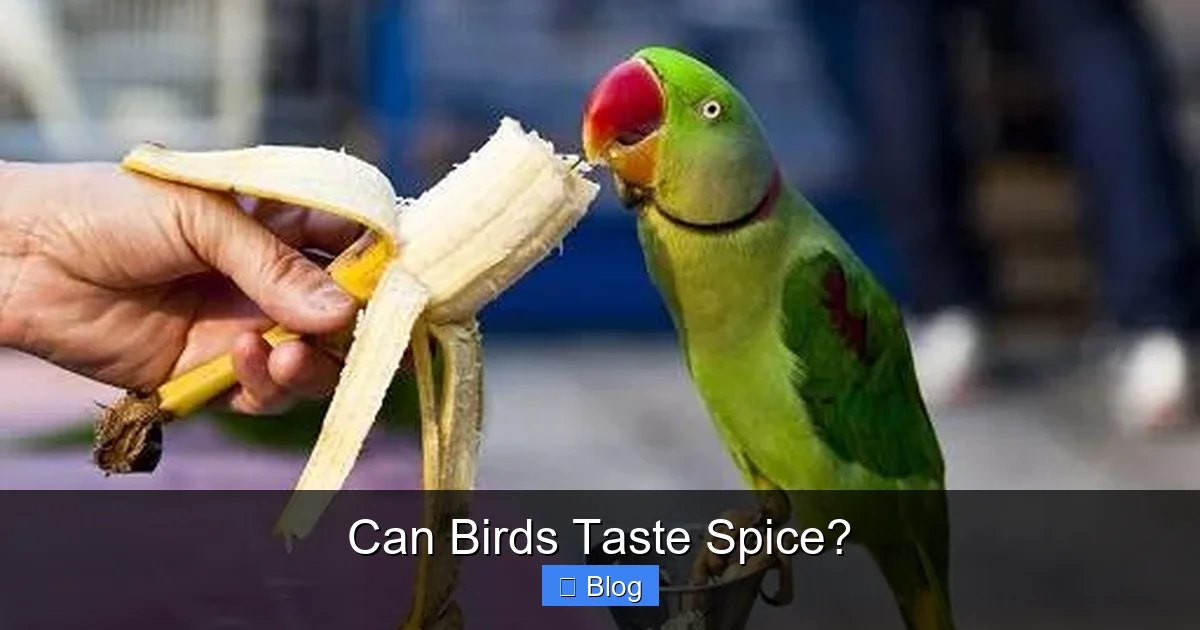
Visual guide about Can Birds Taste Spice?
Image source: birdswave.com
Understanding Capsaicin
Capsaicin is a chemical compound found in chili peppers, and it’s responsible for the burning sensation you feel when you eat something hot. It’s not actually a flavor in the traditional sense, like sweet or sour. Instead, it’s a chemical irritant that interacts with pain receptors in mammals. The Scoville scale, used to measure the pungency (spiciness) of chili peppers, is actually a measure of the concentration of capsaicin.
From mild bell peppers (which have no capsaicin) to eye-watering ghost peppers, the level of capsaicin dictates the heat. Plants evolved to produce capsaicin as a defense mechanism, a way to deter predators from eating their fruits and seeds. But this defense isn’t universally effective, especially when we ask, “can birds taste spice?”
The TRPV1 Receptor – Our Pain Pathway
The reason humans and other mammals experience the burning sensation from capsaicin lies in a specific protein receptor called TRPV1 (Transient Receptor Potential Vanilloid 1). This receptor is located on our nerve cells, particularly in the mouth and throat. When capsaicin binds to the TRPV1 receptor, it triggers a pain signal, making your brain think that the area is actually burning or getting too hot. This is why chili peppers can make you sweat and tear up – it’s your body’s natural response to perceived heat and pain.
This receptor is crucial for mammals, as it also helps detect harmful heat levels, acting as a warning system. For us, capsaicin effectively hijacks this system, creating a sensation of intense heat even when there’s no actual temperature change. This fundamental mechanism explains why the question “can birds taste spice?” leads to such a different answer for them.
Birds’ Evolutionary Advantage
Now, here’s where it gets interesting for birds. While mammals possess the TRPV1 receptor that reacts to capsaicin, birds do not have this same receptor or, if they do, it’s structured differently in a way that prevents capsaicin from activating it. This means that when a bird ingests a chili pepper, the capsaicin literally has no receptor to bind to that would signal “pain” or “heat.” Therefore, birds simply don’t experience the burning sensation.
This isn’t a random quirk; it’s a brilliant evolutionary adaptation. Chili plants want their seeds dispersed, not destroyed. Mammals (like rodents) often chew seeds, damaging them beyond germination. Birds, however, tend to swallow seeds whole, passing them through their digestive system largely intact, ready to sprout elsewhere. By making their fruits spicy to mammals but not to birds, chili plants ensure their reproductive success. It’s a perfect example of co-evolution, and it’s the core reason why “can birds taste spice?” is answered with a resounding “no” when it comes to the heat.
Why Birds Don’t Feel the Burn
The science behind why birds are immune to capsaicin’s fiery embrace is quite precise and showcases a remarkable example of natural selection at work. It’s not just a casual indifference; it’s a deep-seated biological difference that sets them apart from most other creatures.
Genetic Differences in Receptors
The primary reason birds don’t feel the burn comes down to genetics. The specific TRPV1 receptor that reacts to capsaicin in mammals is either absent in birds or structurally different enough that capsaicin cannot bind to it. Think of it like a lock and key. Capsaicin is the key, and the mammalian TRPV1 receptor is the lock. They fit perfectly, causing a reaction. In birds, the “lock” (their equivalent receptor, if any) simply doesn’t have the right shape for the capsaicin “key” to turn it. This means no signal is sent to their brain indicating heat or pain when they consume chili peppers.
This isn’t to say birds don’t have *any* pain receptors, or that they can’t feel other forms of pain or irritation. They absolutely can. But the specific pathway that capsaicin uses to cause pain in mammals is simply not present or active in avian physiology. So, when you ask, “can birds taste spice?” specifically the burning kind, the answer is a firm negative because their nervous system isn’t wired for it.
A Clever Survival Tactic
This immunity isn’t just a happy accident; it’s a crucial part of the survival strategy for chili plants. Peppers are fruits designed for seed dispersal. Mammals, particularly rodents, have teeth that grind up seeds, effectively killing them. They also tend to stay localized, not spreading seeds over a wide area. Birds, on the other hand, swallow seeds whole. Their digestive systems are often less destructive to seeds, and they fly long distances, depositing seeds (along with a bit of fertilizer!) far from the parent plant.
By producing capsaicin, chili plants essentially put up a “Do Not Disturb” sign for mammals, while giving birds a free pass. This ensures that the plant’s genes are spread efficiently and effectively. It’s a classic example of co-evolution, where both the plant and the bird species benefit from this unique interaction. This ecological relationship fundamentally answers why “can birds taste spice?” is so significant for their role in nature.
Implications for Birds in the Wild and at Home
Understanding that birds don’t perceive capsaicin as “spice” has significant implications, both in natural ecosystems and for how we interact with birds, especially pet birds.
Seed Dispersal and Plant Protection
In the wild, this immunity is a cornerstone of ecological balance. Birds act as vital seed dispersers for chili plants. A bird might eat a handful of hot peppers, fly miles away, and then excrete the seeds, unharmed and ready to germinate in a new location. This helps plants colonize new areas and maintain genetic diversity. Without birds’ ability to eat spicy foods without discomfort, many chili plant species might not be as widespread as they are today.
It’s a perfect symbiotic relationship: the plant gets its seeds spread, and the bird gets a nutritious meal. This dynamic highlights the profound ecological impact of the answer to “can birds taste spice?”
Spice as a Mammal Deterrent
For humans, this unique avian trait offers a clever solution to a common problem: keeping squirrels and other mammals away from bird feeders. If you’ve ever tried to feed wild birds, you know the frustration of squirrels raiding the feeder, eating all the expensive seed, and scaring away smaller birds. Since squirrels (being mammals) *do* feel the burn of capsaicin, birdseed treated with chili powder or flakes becomes an effective deterrent.
You can purchase commercially available “hot” birdseed, or even lightly coat your own with a small amount of cayenne pepper. The birds will happily eat it, completely unaffected by the spice, while the squirrels will take one bite and quickly learn to stay away. This practical application directly stems from the understanding of “can birds taste spice?”
Spicy Food for Pet Birds? (Cautious Approach)
What about your pet parrot or finch? Given that birds don’t feel the heat, is it safe to offer them chili peppers? The answer is generally yes, with some important caveats. Fresh chili peppers, such as jalapeños, serranos, or even habaneros, can be a great source of vitamins A and C for your pet bird. They provide a novel texture and flavor (non-spicy to them!) that can enrich their diet. Many bird owners report their parrots happily munching on even the hottest peppers.
However, it’s crucial to ensure that any peppers offered are fresh, clean, and free from pesticides. Avoid anything that has been prepared for human consumption with added salt, sugar, oils, or other seasonings, as these can be harmful to birds. Stick to plain, raw chili peppers. As with any new food, introduce it gradually and observe your bird for any unusual reactions, though adverse effects from the capsaicin itself are highly unlikely. So, if you’re asking, “can birds taste spice” and considering offering them some, rest assured they won’t feel the burn you do.
Beyond Capsaicin – What About Other Flavors?
While the focus on “can birds taste spice” primarily revolves around capsaicin, it’s worth exploring their broader taste perception. Birds don’t just eat bland food; they interact with a range of flavors, though perhaps not with the same complexity as humans.
Sweet and Sour Sensitivities
Birds generally can taste sweet and sour. Nectar-feeding birds, like hummingbirds and lorikeets, have a well-developed sweet receptor that helps them identify sugar-rich flowers. Their survival depends on it! Similarly, many fruit-eating birds appreciate sweet fruits. Sour tastes can also be detected, and for some birds, a slightly sour taste might indicate unripe fruit or a particular nutrient profile. The ability to discern these basic tastes is essential for their foraging behaviors and helps them choose nutritious foods.
Bitter – A Crucial Warning Sign
Bitter taste is particularly important for birds, just as it is for many animals. In nature, a bitter taste often signals the presence of toxins or harmful chemicals. Birds have evolved to be sensitive to bitter compounds, acting as a crucial defense mechanism to avoid poisonous plants or spoiled food. While they might not show the same dramatic aversion to all bitter things as a human might, it’s a taste they certainly detect and respond to. This protective sense underscores the sophistication of even a limited avian palate.
Umami – The Savory Element
The “fifth taste,” umami, which describes a savory, meaty flavor, is also believed to be detectable by some bird species. While research is ongoing and it might not be as universally recognized as sweet or bitter, it makes sense that birds would evolve to identify protein-rich foods, which often carry umami notes. For insectivorous birds, being able to detect umami could lead them to nutrient-dense prey. So, while “can birds taste spice” gets a clear answer, their palate for other flavors is surprisingly nuanced for their number of taste buds.
Practical Advice for Bird Owners
Armed with the knowledge that birds are immune to capsaicin, what does this mean for practical bird care and feeding? It opens up some interesting possibilities and reinforces standard safety practices.
Safe and Healthy Bird Diets
For pet birds, the primary goal is always a balanced and varied diet. While you now know that birds don’t feel the heat of chili peppers, it doesn’t mean peppers should become their sole food source. A healthy bird diet should consist of high-quality pellets, fresh vegetables, fruits, and a small amount of healthy seeds. Chili peppers can be a wonderful addition to this mix, providing vitamins and enrichment. Remember to always serve them raw and clean, free from any human-added ingredients.
Other non-capsaicin spices like cinnamon (in moderation), turmeric, or oregano can also be offered, as birds will perceive their unique flavors, not heat. These can sometimes offer mild health benefits and add variety to their diet, as long as they are plain, unsalted, and used sparingly. The key is balance and natural forms.
When Spice *Might* Be Used (But with Caveats)
Beyond feeding pet birds, the knowledge that “can birds taste spice” in terms of capsaicin has another important application: pest control at wild bird feeders. As mentioned, adding cayenne pepper to birdseed is a safe and effective way to deter squirrels and other rodent pests without harming the birds themselves. This is a widely recommended practice by birding enthusiasts.
However, it’s important to be mindful of how you apply this. Don’t use excessive amounts of pepper that might irritate other animals, and ensure it’s specifically food-grade chili powder. Always observe the local wildlife to ensure no unintended harm is being caused. While birds are immune, other creatures in your garden might not be, so use common sense and moderation.
Always Prioritize Safety
While the answer to “can birds taste spice?” is clear regarding capsaicin, always prioritize your bird’s overall health and safety. Never feed birds processed foods, sugary treats, salty snacks, avocado (toxic to many birds), chocolate, or alcohol. Even if a bird doesn’t feel the heat from a pepper, feeding it a chili that’s been drenched in salt or cooked in unhealthy oils would be detrimental to its health.
Consult with an avian veterinarian or reputable bird care resources if you have any doubts about what to feed your specific bird species. Their dietary needs can vary significantly, and personalized advice is always best. Understanding their unique sensory world is part of being a responsible and caring bird owner.
Conclusion
So, can birds taste spice? When it comes to the burning sensation caused by capsaicin in chili peppers, the definitive answer is no. This fascinating biological quirk is not an oversight but a brilliant evolutionary adaptation that benefits both birds and chili plants in the wild. Birds possess different taste receptors, allowing them to consume spicy fruits without discomfort, thus aiding in the dispersal of seeds and ensuring the survival of chili plant species.
While their palate for capsaicin is non-existent, birds can still discern other fundamental tastes like sweet, sour, bitter, and potentially umami. This unique sensory profile plays a vital role in their foraging behaviors and helps them navigate their food choices in the environment. For bird owners, this means that fresh, raw chili peppers can be a safe and nutritious addition to a balanced diet, offering vitamins without the fiery kick we humans experience.
This knowledge also provides practical solutions, like using capsaicin to deter bothersome mammals from bird feeders, making bird feeding a more enjoyable experience for both the birds and their human admirers. The world of avian taste is a testament to the incredible diversity of life on Earth, reminding us that other creatures perceive their reality in wonderfully different ways. So next time you see a bird pecking at a pepper, you’ll know they’re enjoying a tasty treat, completely oblivious to the “spice” we know and love (or fear!).
🎥 Related Video: Can Birds Taste Spicy Food
📺 Health Is Wealth
The five most well known classes of vertebrates (animals with backbones) are mammals, birds, fish, reptiles, amphibians.
Frequently Asked Questions
Are all bird species immune to capsaicin?
While research primarily focuses on common bird species, the general scientific consensus is that avian species universally lack the specific TRPV1 receptors that detect capsaicin in mammals. Therefore, it is highly likely that all bird species are immune to the burning sensation of capsaicin.
Can feeding birds spicy foods harm them in other ways?
Pure, fresh chili peppers are not harmful to birds. However, spicy foods prepared for human consumption, often containing high levels of salt, sugar, unhealthy fats, or artificial ingredients, can be very detrimental to a bird’s health. Always offer plain, raw peppers.
What is the main difference between bird and human taste buds?
The main difference lies in the number and specific receptor types. Humans have thousands of taste buds, while birds have significantly fewer (tens to a few hundred). Crucially, birds lack the specific TRPV1 receptors that respond to capsaicin, which humans possess.
Do birds have a strong sense of smell?
Generally, birds have a less developed sense of smell compared to their excellent vision, but it varies by species. Some birds, like vultures, kiwis, and some seabirds, have an acute sense of smell crucial for locating food or navigating, while others rely more on sight and taste.
Why do some bird feeders use spicy coatings?
Bird feeders use spicy coatings or chili-infused seeds as a humane deterrent for mammals like squirrels and raccoons. Since birds don’t taste the capsaicin heat, they can eat the seeds normally, while the “spicy” taste repels mammals from raiding the feeder.
If birds don’t taste spice, why do they still prefer certain non-spicy foods?
Even without tasting capsaicin’s heat, birds still have a sense of taste for sweet, sour, and bitter, and they rely heavily on vision, texture, and nutritional value. They develop preferences based on what is readily available, nutritious, and appealing to their other senses, much like how we prefer certain non-spicy foods.