
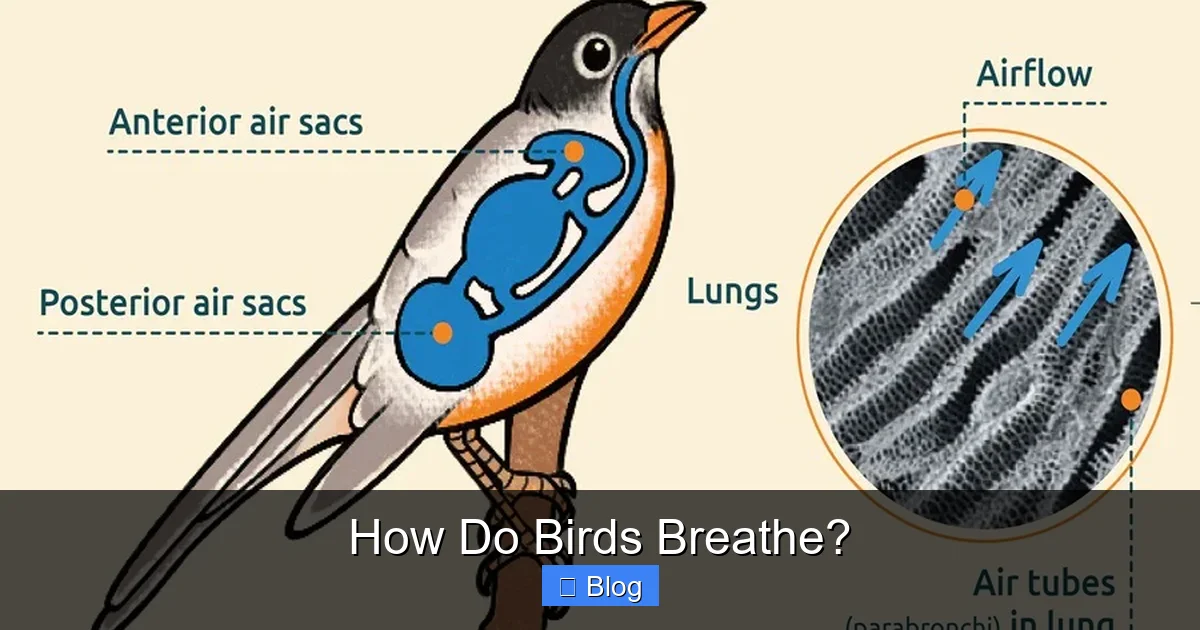
Birds breathe in a remarkably unique and efficient way, vastly different from mammals. They possess a system of small, rigid lungs and numerous air sacs that create a unidirectional airflow, ensuring a constant supply of fresh oxygen. This two-breath cycle, where air moves through their bodies in one direction, allows for incredible metabolic efficiency, essential for the demanding act of flight.
Have you ever looked up at a soaring eagle or watched a hummingbird zip by and wondered about the incredible feats of endurance they perform? Birds can fly for thousands of miles, migrate across continents, and even survive in the thin air of towering mountain peaks. These amazing abilities demand an absolutely top-tier respiratory system. If you’ve ever paused to consider how birds breathe, you’re in for a fascinating discovery! Their method is a true marvel of evolution, vastly different and far more efficient than our own.
For us humans, breathing is pretty straightforward: we inhale, our lungs fill with air, we extract oxygen, and then we exhale the “spent” air. It’s a two-way street, like a cul-de-sac where air comes in and then goes back out the same way. But birds? They’ve got a super-highway for air, a one-way path that ensures a constant supply of fresh, oxygen-rich air is always flowing through their tiny but mighty lungs. This unique design is the secret behind their unparalleled stamina and ability to thrive in challenging environments.
So, how do birds breathe? Let’s dive deep into the extraordinary world of avian respiration. We’ll explore their specialized anatomy, the amazing two-breath cycle, and why their system is such an incredible adaptation for life on the wing. Get ready to be impressed by one of nature’s most efficient breathing machines!
Key Takeaways
- Unique Unidirectional Airflow: Unlike mammals with their bidirectional (in and out) breathing, birds maintain a continuous, unidirectional flow of air through their lungs, maximizing oxygen uptake.
- Rigid Lungs and Flexible Air Sacs: Birds have compact, non-expanding lungs where gas exchange occurs, complemented by a system of 9 (sometimes 7 or 10) flexible air sacs that act as bellows to move air, but do not participate in gas exchange themselves.
- Two-Breath Cycle: Air passes through a bird’s respiratory system in two complete inhalation/exhalation cycles, ensuring that fresh, oxygen-rich air is always moving across the lung surface.
- Highly Efficient Oxygen Extraction: The unidirectional flow and unique cross-current exchange mechanism in avian lungs allow birds to extract significantly more oxygen from each breath compared to mammals, vital for the high metabolic demands of flight.
- No Diaphragm: Birds do not have a diaphragm; instead, muscles attached to their ribs and sternum expand and compress their body cavity, driving air movement through the air sacs.
- Adaptation for Flight and High Altitudes: This advanced respiratory system enables birds to sustain intense aerobic activity like flying for long periods and thrive in low-oxygen environments, such as high mountain altitudes.
- Thermoregulation: The large surface area of the air sacs also plays a crucial role in dissipating excess heat generated during flight, helping birds regulate their body temperature.
Quick Answers to Common Questions
How many air sacs do birds typically have?
Birds typically have nine air sacs, though some species may have seven or ten. These sacs act like bellows, moving air through the respiratory system.
Do bird lungs expand and contract like human lungs?
No, bird lungs are relatively small, compact, and rigid. They do not expand and contract significantly. Instead, the air sacs are responsible for the movement of air.
What is “unidirectional airflow” in birds?
Unidirectional airflow means that air moves through a bird’s lungs in one continuous direction, rather than flowing in and out of the same passages, ensuring a constant supply of fresh oxygen.
How many breaths does it take for air to fully cycle through a bird’s system?
It takes two full inhalation-exhalation cycles for a single breath of air to completely pass through a bird’s respiratory system.
Do birds have a diaphragm?
No, birds do not have a diaphragm. Instead, muscles attached to their ribs and sternum expand and compress their body cavity to move air.
📑 Table of Contents
The Avian Breathing Blueprint: More Than Just Lungs
When we think about breathing, we usually imagine lungs expanding and contracting. While birds certainly have lungs, their system is far more complex and involves a crucial set of additional structures: air sacs. These sacs are the real workhorses for moving air, while the lungs themselves are specialized for gas exchange.
Small, Rigid Lungs
Unlike the spongy, elastic lungs of mammals that inflate and deflate with each breath, a bird’s lungs are relatively small, compact, and quite rigid. They don’t expand or contract much. Instead, they are fixed against the backbone, nestled tightly within the ribcage. This means that the actual gas exchange – where oxygen enters the bloodstream and carbon dioxide is removed – happens within a network of tiny tubes called parabronchi, which are packed into these compact lungs.
The Marvel of Air Sacs
This is where things get really interesting! Birds don’t have a diaphragm like we do. Instead, they have a system of usually nine (though sometimes 7 or 10, depending on the species) flexible, thin-walled air sacs. These air sacs are spread throughout their body cavity, extending even into some of their bones (which is why many bird bones are hollow – a fantastic adaptation for lightness, too!).
Think of these air sacs not as lungs, but as bellows. They act like pumps, moving air through the rigid lungs. They don’t have blood vessels for gas exchange, so they don’t directly absorb oxygen. Their job is simply to store and push air in a specific, highly organized direction. This distinction is absolutely key to understanding how birds breathe.
The Trachea and Bronchi
Air enters through the nostrils (nares) or mouth and travels down the trachea, which is a tube similar to our windpipe. At the base of the trachea, birds have a unique voice box called the syrinx, which allows them to produce their incredible array of songs and calls. The trachea then divides into two primary bronchi, one leading to each lung. From there, the air takes a complex journey involving the air sacs.
The Two-Breath Cycle: A Unidirectional Journey
Visual guide about How Do Birds Breathe?
Image source: images.birdfact.com
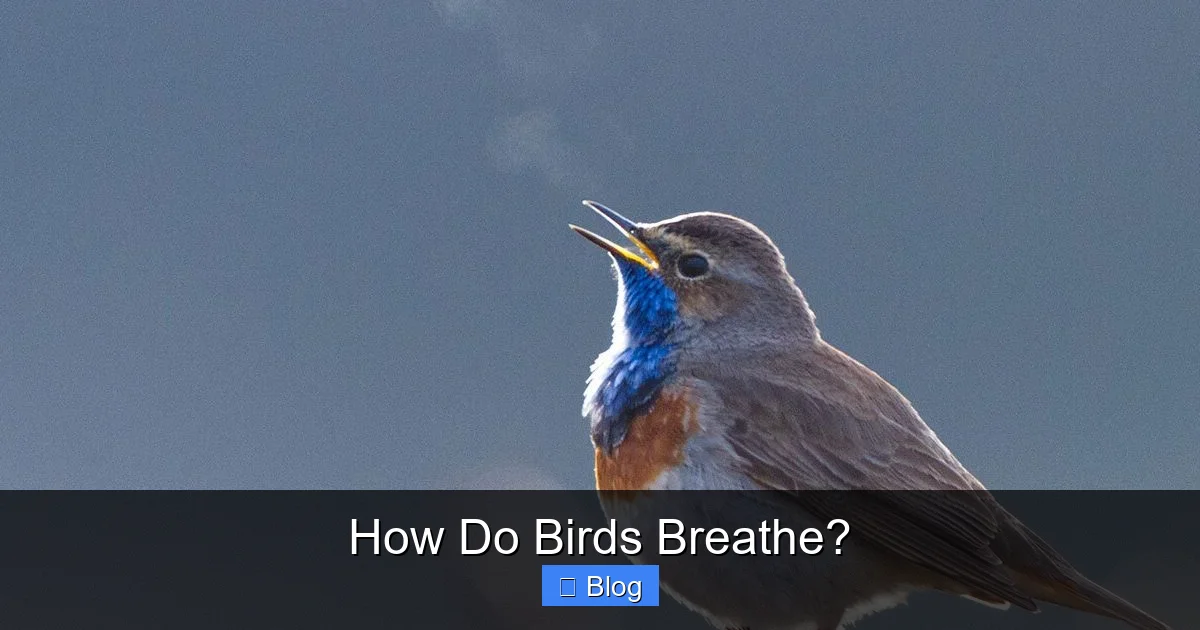
This is the heart of avian respiration. Instead of air flowing in and out of the same lung passages, air moves through a bird’s system in one continuous, forward direction. It takes two full inhalation-exhalation cycles for a single breath of air to pass completely through a bird’s respiratory system. Let’s break down this incredible process step-by-step.
First Inhalation: Filling the Posterior Sacs
When a bird takes its first breath in, muscles attached to its ribs and sternum contract, causing the chest cavity to expand. This expansion creates negative pressure, drawing fresh, oxygen-rich air in through the trachea. This incoming air bypasses the lungs almost entirely during this first inhalation. Instead, it flows directly into the posterior (rear) air sacs. Imagine sucking air into a balloon that’s behind another smaller, fixed balloon.
First Exhalation: Air to the Lungs
Now, the bird exhales. The muscles relax, compressing the chest cavity. This pushes the air from the posterior air sacs forward, into the lungs. This is the crucial step where gas exchange occurs! The fresh air that just came in during the first inhalation now flows through the parabronchi in the lungs, allowing oxygen to be absorbed into the blood and carbon dioxide to be released. What’s amazing here is that even during exhalation, fresh air is moving *through* the lungs.
Second Inhalation: From Lungs to Anterior Sacs
As the bird takes its second breath in (another inhalation), the chest cavity expands again. This draws the “spent” air (now rich in carbon dioxide) from the lungs into the anterior (front) air sacs. Simultaneously, during this same second inhalation, a *new* batch of fresh, oxygen-rich air is drawn into the posterior air sacs, ready for its turn.
Second Exhalation: Expelling Spent Air
Finally, the bird exhales for the second time. The chest cavity compresses, pushing the carbon dioxide-rich air from the anterior air sacs, up the trachea, and out of the body. At the same time, the fresh air that entered the posterior sacs during the second inhalation is now pushed into the lungs, ready for gas exchange.
The brilliance of this system is that during *both* inhalation and exhalation, fresh, oxygen-rich air is continuously flowing in one direction across the gas exchange surfaces of the lungs. This means birds don’t have “dead air” lingering in their lungs, as mammals do, where oxygen levels are lower. This constant, unidirectional flow is the core of how birds breathe so efficiently.
Why This System is a Marvel: Efficiency for Flight
The unique avian respiratory system is not just an interesting biological quirk; it’s an absolute necessity for the demanding lifestyle of birds, particularly for flight.
High Metabolic Demands of Flight
Flying requires an enormous amount of energy. To sustain flight, birds need a constant and efficient supply of oxygen to fuel their powerful flight muscles. Their metabolic rate can be incredibly high, especially for smaller birds like hummingbirds, which have some of the highest metabolic rates in the animal kingdom. The unidirectional airflow and continuous oxygen uptake provide the necessary fuel.
Superior Oxygen Extraction
Birds can extract a far greater percentage of oxygen from the air they breathe compared to mammals. This is partly due to the unidirectional flow, but also because of a mechanism called cross-current gas exchange within the parabronchi of their lungs. In this system, the blood flows in a direction that’s roughly perpendicular to the airflow. This arrangement is highly efficient at maximizing the diffusion of oxygen into the bloodstream, even when oxygen levels in the air are low.
Thriving at High Altitudes
Many bird species, like geese or vultures, routinely fly at altitudes where oxygen levels are significantly reduced. The Andes condor, for instance, can soar at over 18,000 feet! Their super-efficient respiratory system, with its ability to extract more oxygen from thinner air, is a key adaptation that allows them to survive and even thrive in these extreme environments where many other animals would struggle.
Thermoregulation
Beyond oxygen exchange, the extensive network of air sacs also plays a vital role in cooling. Flight generates a lot of heat, and birds can’t sweat. The air sacs, with their large surface area, help dissipate this excess heat through evaporative cooling, acting like an internal air conditioner.
Beyond the Basics: Control and Adaptations
The story of how birds breathe doesn’t end with just the mechanics; there are also fascinating aspects of control and further adaptations.
Voluntary and Involuntary Control
While the breathing cycle is largely an involuntary process controlled by the brainstem, birds can also exert some voluntary control over their breathing, for example, during vocalization or diving. The respiratory rate is adjusted based on activity levels, oxygen demand, and carbon dioxide levels in the blood, much like in mammals. During intense flight, a bird’s breathing rate will skyrocket to meet the increased demand for oxygen.
Breathing and Vocalization: The Syrinx
As mentioned earlier, birds have a syrinx, their unique voice box, located at the bottom of the trachea where it branches into the bronchi. Unlike our larynx, which sits at the top of the windpipe, the syrinx is much lower. This allows birds to breathe and vocalize almost simultaneously, and some species can even produce two different sounds at once, thanks to having two separate vibratory membranes in their syrinx! This anatomical placement means their breathing mechanics are finely tuned to also support their incredible vocal abilities.
Adaptations for Diving Birds
For birds that dive underwater, like penguins or ducks, their respiratory system has additional adaptations. They can hold their breath for extended periods and have specialized circulatory responses that conserve oxygen by redirecting blood flow to vital organs. While their basic breathing mechanism is the same, these diving specialists have evolved further physiological tricks to maximize their time submerged. Their ability to efficiently load oxygen into their blood, coupled with these diving reflexes, allows them to hunt underwater.
Avian Health and Respiratory Challenges
Because their respiratory system is so complex and interconnected, birds can be particularly susceptible to respiratory illnesses. Anything that impairs airflow, from environmental dust and pollutants to infections, can quickly become serious. Understanding how birds breathe is crucial for avian veterinarians and bird owners to diagnose and treat these issues, ensuring the health and well-being of our feathered friends.
Conclusion: A Breath of Fresh Air in Evolution
The question of how do birds breathe reveals one of the most sophisticated and efficient respiratory systems in the animal kingdom. Far from a simple back-and-forth process, avian respiration is a masterpiece of unidirectional airflow, involving small, rigid lungs and a network of flexible air sacs. This intricate two-breath cycle ensures a continuous, high-volume supply of fresh oxygen, fueling their incredible feats of flight, migration, and survival in diverse, often challenging, environments.
Every time you see a bird gracefully gliding through the sky or hear its cheerful song, take a moment to appreciate the biological wonder that allows it to do so. Their breathing system is a powerful reminder of nature’s ingenious solutions to the demands of life, showcasing an evolutionary triumph that continues to inspire awe and scientific study. It’s a truly breathtaking design!
🎥 Related Video: How do Birds Breathe? | Avian Respiration Animation
📺 CableMuseum
Birds have a unique respiratory system that allows for unidirectional airflow and high efficiency.
Frequently Asked Questions
What is the main difference between bird and mammal breathing?
The main difference is the airflow direction. Mammals have bidirectional airflow, meaning air goes in and out of the same passages. Birds have unidirectional airflow, where air moves continuously through their lungs in one direction, making their system much more efficient for oxygen extraction.
What is the function of the air sacs in birds?
The air sacs in birds act as bellows, storing and moving air through the rigid lungs. They do not participate in gas exchange themselves, but they are crucial for maintaining the unidirectional flow of air required for efficient respiration.
How does a bird’s respiratory system help it fly at high altitudes?
The avian respiratory system is highly efficient at extracting oxygen from the air. Its unidirectional flow and cross-current gas exchange mechanism allow birds to absorb more oxygen per breath, even in the thinner, oxygen-poor air found at high altitudes, which is vital for sustained flight.
Do birds extract more oxygen from the air than humans?
Yes, birds are significantly more efficient at extracting oxygen from the air compared to humans and other mammals. Their unique respiratory anatomy and two-breath cycle enable them to absorb a higher percentage of available oxygen from each breath.
Can birds hold their breath?
Yes, birds, particularly diving species, can hold their breath for extended periods. They have evolved specialized physiological adaptations, such as altered heart rates and blood flow redirection, to conserve oxygen and maximize their time underwater.
What is the syrinx and how does it relate to breathing?
The syrinx is a bird’s unique voice box, located at the bottom of the trachea where it branches to the lungs. While primarily for vocalization, its position means that the mechanics of breathing also support sound production, allowing some birds to even sing while inhaling or produce two distinct sounds simultaneously.