
Have you ever pondered, “Are birds reptiles or mammals?” The answer might surprise you! While sharing some surface-level traits with both, birds are actually classified as a distinct class, Aves, which is scientifically understood to be a lineage within reptiles, specifically avian dinosaurs. They are definitively not mammals.
Have you ever stopped to really look at a bird – perhaps a robin hopping in your yard or a majestic eagle soaring high above? They’re incredible creatures, full of vibrant life and astounding abilities. But then a thought might pop into your head: where do birds actually fit in the grand scheme of the animal kingdom? It’s a common question that often sparks curiosity: “Are birds reptiles or mammals?”
It’s an excellent question, and it’s one that delves deep into the fascinating world of biological classification and evolution. At first glance, birds seem to have a mix of traits. They’re warm-blooded like us mammals, yet they lay eggs like many reptiles. They have scales on their legs, just like a lizard, but also soft, insulating feathers that are unlike anything a mammal or typical reptile possesses. This blend of characteristics can certainly make things confusing, leading many to ponder their true biological identity.
Let’s embark on a journey to unravel this mystery. We’ll explore the defining features of mammals, reptiles, and birds, tracing their evolutionary paths and examining the scientific evidence that provides a definitive answer. By the end, you’ll have a clear understanding of why birds are classified the way they are, and perhaps even a newfound appreciation for their unique place in the animal kingdom.
Key Takeaways
- Birds are Not Mammals: Birds lack key mammalian characteristics like mammary glands for milk production, hair (having feathers instead), and live birth (they lay eggs).
- Birds Share a Deep Ancestry with Reptiles: Scientific evidence, particularly from paleontology and genetics, firmly places birds within the larger Reptilia clade, descending directly from avian dinosaurs.
- Feathers and Flight are Unique Avian Traits: While their reptilian ancestry is clear, birds possess unique adaptations like feathers, beaks, and highly specialized skeletal structures for flight, setting them apart.
- They are Warm-Blooded: Unlike most reptiles (which are cold-blooded), birds are endothermic, meaning they can internally regulate their body temperature, a trait shared with mammals.
- Aves is a Distinct Class: While nested within the reptilian lineage cladistically, birds are traditionally recognized as their own distinct biological class, Aves, due to their unique features.
- Scales and Egg-Laying are Reptilian Remnants: Birds exhibit reptilian traits such as scales on their legs and feet, and they reproduce by laying hard-shelled amniotic eggs, much like many reptiles.
Quick Answers to Common Questions
Are all dinosaurs extinct if birds are dinosaurs?
No, not all dinosaurs are extinct. While the non-avian dinosaurs (like Tyrannosaurus Rex) died out, the lineage of avian dinosaurs survived and evolved into all the bird species we see today. So, birds are considered living dinosaurs.
Do birds share any DNA with reptiles?
Yes, birds share a significant amount of DNA with reptiles due to their common ancestry. Genetic studies strongly support the classification of birds within the reptilian clade, highlighting shared genetic markers.
Are bats mammals or birds?
Bats are mammals. Despite their ability to fly, bats possess all the key characteristics of mammals: they have fur, give birth to live young, produce milk to feed their offspring, and are warm-blooded.
Why are birds warm-blooded if most reptiles are cold-blooded?
Birds evolved endothermy (warm-bloodedness) to support their high metabolism, which is necessary for sustained flight and active lifestyles. While most reptiles are ectothermic, some dinosaur ancestors of birds might have exhibited some level of metabolic heat production, which was further developed in birds.
What is the difference between a cloaca and separate openings?
A cloaca is a single posterior opening in birds and reptiles (and amphibians/some fish) that serves as the exit for digestive waste, urine, and reproductive products. Mammals, in contrast, have separate openings for these functions (e.g., anus for waste, urethra for urine, and distinct reproductive organs).
📑 Table of Contents
- Understanding the Basics: What Defines a Mammal, a Reptile, and a Bird?
- Why Birds Are Definitely NOT Mammals
- The Reptilian Connection: Tracing Birds’ Ancestry
- What Makes Birds Unique: Their Avian Adaptations
- The Modern Classification: Birds as a Branch of Reptilia
- Debunking Misconceptions and Appreciating Avian Diversity
- Conclusion: The Surprising Truth About Avian Identity
Understanding the Basics: What Defines a Mammal, a Reptile, and a Bird?
Before we can answer the big question, it’s helpful to quickly recap the fundamental characteristics that define these major vertebrate groups. This will give us a framework for comparison.
What Makes a Mammal a Mammal?
We belong to the mammal family, so we might think we know this one best! Mammals are typically characterized by a few key traits:
- Hair or Fur: Almost all mammals have some form of hair or fur covering their bodies for insulation.
- Mammary Glands: Females produce milk to nourish their young. This is where the name “mammal” comes from!
- Live Birth: Most mammals give birth to live young (though there are exceptions like monotremes, such as the platypus, which lay eggs, but still produce milk).
- Warm-Blooded (Endothermic): Mammals can regulate their own body temperature internally, allowing them to stay warm even in cold environments.
- Four-Chambered Heart: This efficient heart design supports a high metabolism.
Think of dogs, cats, whales, humans, and bats – all clearly mammals.
What Makes a Reptile a Reptile?
Reptiles often evoke images of scaly, slithering, cold-blooded creatures. Their defining traits include:
- Scales or Scutes: Their bodies are covered in tough, dry scales or bony plates called scutes, which help prevent water loss.
- Egg-Laying (Oviparous): Most reptiles lay amniotic eggs with leathery or hard shells on land. Some give live birth (viviparous), but these young develop internally without a placenta.
- Cold-Blooded (Ectothermic): Reptiles rely on external sources (like the sun) to regulate their body temperature. They often bask in the sun to warm up.
- Three-Chambered Heart: Most reptiles have a three-chambered heart (though crocodilians have a four-chambered heart).
Lizards, snakes, turtles, and crocodiles are all classic examples of reptiles.
What Makes a Bird a Bird?
Birds are immediately recognizable, but what sets them apart scientifically?
- Feathers: Birds are the only animals to possess feathers, which are crucial for flight, insulation, and display.
- Beaks: They have toothless beaks or bills, which vary greatly in shape depending on their diet.
- Hard-Shelled Eggs: All birds lay hard-shelled eggs.
- Warm-Blooded (Endothermic): Like mammals, birds can maintain a constant internal body temperature.
- Hollow Bones: Many birds have lightweight, hollow bones, which are an adaptation for flight.
- Four-Chambered Heart: Similar to mammals, birds have a four-chambered heart.
This quick overview already highlights some overlaps and distinct differences, especially when considering “Are birds reptiles or mammals?”
Why Birds Are Definitely NOT Mammals
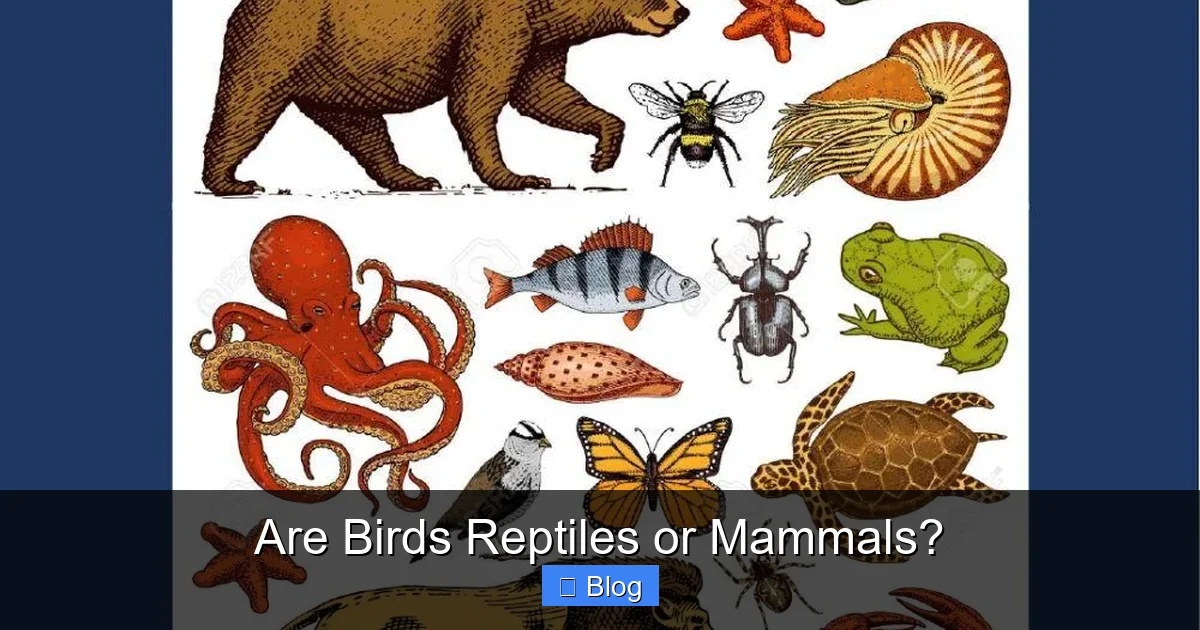
Visual guide about Are Birds Reptiles or Mammals?
Image source: worksheets.clipart-library.com
Let’s start by definitively ruling out one option. Despite their shared warm-blooded nature and four-chambered heart, birds simply do not fit the mammalian definition.
No Hair, No Milk, No Live Birth
The most glaring differences are immediate and obvious. Birds have no hair or fur; they have feathers. They do not possess mammary glands and therefore cannot produce milk to feed their young. Instead, they lay eggs, an entirely different reproductive strategy than the vast majority of mammals. These three fundamental characteristics alone are enough to firmly place birds outside the mammalian class.
Skeletal and Respiratory Differences
Beyond the surface, there are deep anatomical differences. Birds have highly specialized skeletons adapted for flight, featuring fused bones, a prominent keel on the breastbone for muscle attachment, and often hollow bones for lightness. Their respiratory system is also unique and incredibly efficient, involving air sacs that allow for a continuous flow of fresh air through their lungs, a far cry from the mammalian diaphragm and tidal breathing. So, when asking “Are birds reptiles or mammals?”, the answer for mammals is a resounding “no.”
The Reptilian Connection: Tracing Birds’ Ancestry
Now, let’s explore the more surprising and scientifically accurate answer: birds have a very deep and undeniable connection to reptiles. In fact, modern science largely considers birds to *be* reptiles in an evolutionary sense.
The Dinosaur Link: A Bird’s True Heritage
This is the big reveal! Paleontological evidence, particularly from fossil discoveries over the last few decades, has shown unequivocally that birds evolved directly from small, feathered dinosaurs. Think of famous feathered dinosaurs like *Archaeopteryx* or *Velociraptor* (yes, many raptors had feathers!). Birds are, quite literally, the surviving lineage of dinosaurs. They are often referred to as “avian dinosaurs.” This makes the question “Are birds reptiles or mammals?” lead straight to reptiles through their ancient ancestors.
Shared Anatomical Features with Reptiles
Even today, birds retain several characteristics that clearly link them to their reptilian ancestors:
- Scales on Legs and Feet: Take a close look at a chicken’s leg or a pigeon’s foot. You’ll see distinct scales, structurally similar to those found on lizards or crocodiles. These are a clear reptilian inheritance.
- Egg-Laying: Like most reptiles, all birds lay amniotic eggs. While bird eggs have hard, calcareous shells (unlike many reptile’s leathery ones), the fundamental structure and reproductive strategy are shared. Both birds and reptiles lay eggs on land, providing protection and nourishment for the developing embryo.
- Cloaca: Birds, like reptiles, possess a cloaca – a single posterior opening that serves as the exit for fecal matter, urine, and reproductive products (eggs/sperm). Mammals, by contrast, have separate openings for these functions.
- Skeletal Similarities: While birds’ skeletons are highly modified for flight, underlying structural similarities can be found, particularly in the skull and jaw articulation, which align more closely with reptiles than mammals.
These shared traits are not just coincidences; they are powerful evidence of a common ancestry, strengthening the argument that birds are fundamentally reptilian in origin.
What Makes Birds Unique: Their Avian Adaptations
While their reptilian lineage is clear, birds have also evolved an astonishing array of unique features that set them apart, earning them their own distinct biological class: Aves. These adaptations are primarily centered around their ability to fly and their high-energy lifestyle.
The Miracle of Feathers
Feathers are the undisputed hallmark of birds. No other animal has them. They are complex structures made of keratin (the same protein in your hair and fingernails) and serve multiple critical functions:
- Flight: They create lift and thrust, allowing birds to navigate the skies.
- Insulation: Feathers trap air, providing excellent insulation to help birds maintain their warm body temperature.
- Display: Brightly colored or intricately patterned feathers are used for courtship, camouflage, and communication.
Specialized Beaks and High Metabolism
Birds have evolved diverse beak shapes, perfectly suited to their diets – from the strong, tearing beak of an eagle to the delicate, probing beak of a hummingbird. The absence of heavy teeth further lightens the skull for flight.
Their internal systems are also finely tuned. Birds have an incredibly high metabolism to fuel their energetic lifestyle and maintain their constant body temperature. Their four-chambered heart and unique respiratory system, with its network of air sacs, are highly efficient, ensuring a continuous supply of oxygen to their hardworking muscles.
Warm-Blooded Evolution
One significant departure from most reptiles is that birds are warm-blooded (endothermic). This ability to generate and regulate internal body heat is crucial for sustained flight and allows birds to thrive in a vast range of environments, from the scorching desert to the freezing poles. This trait, shared with mammals, often confuses people asking “Are birds reptiles or mammals?” It’s a prime example of convergent evolution in some aspects, and in others, an inherited trait from certain dinosaur lineages.
The Modern Classification: Birds as a Branch of Reptilia
So, given all this, how do scientists actually classify birds? This is where modern evolutionary biology, known as cladistics, comes into play.
Clades and Phylogenetic Trees
In cladistics, organisms are grouped based on shared derived characteristics – traits that evolved in a common ancestor and were passed down to its descendants. These groups are called clades. When we construct a “family tree” (a phylogenetic tree) of life, we see branches.
When you look at the branch containing reptiles, you find that birds (Class Aves) are nested *within* that branch. This means that birds are technically a subgroup of reptiles, just as crocodiles are a subgroup, or snakes are a subgroup.
Aves: A Distinct Class Within a Larger Clade
Traditionally, biology has recognized five distinct classes of vertebrates: Fish, Amphibians, Reptiles, Birds (Aves), and Mammals. This classification is still widely used in common language and introductory biology because birds *do* have so many unique features that set them apart from what we typically think of as a “reptile.”
However, from an evolutionary or cladistic perspective, to truly reflect their ancestry, the Reptilia clade *must* include birds. If it didn’t, the group “Reptilia” would be what scientists call “paraphyletic” – it would exclude some descendants of its common ancestor (in this case, birds). To be a natural, monophyletic group (one that includes an ancestor and *all* its descendants), Reptilia must encompass Aves.
So, when we ask “Are birds reptiles or mammals?”, the precise answer is that birds belong to their own class, Aves, but evolutionarily and cladistically, they are considered a specialized branch *within* the larger reptilian lineage. They are definitively not mammals.
Debunking Misconceptions and Appreciating Avian Diversity
Understanding this classification helps us appreciate the incredible journey of life on Earth. Birds are not just “like” reptiles; they *are* a surviving, highly evolved lineage of reptiles that have mastered flight and developed unique adaptations.
Why We Still Call Them “Birds” Separately
Even though birds are technically reptiles in an evolutionary sense, it’s practical and useful to continue referring to them as “birds” or “Class Aves.” Their unique adaptations for flight, feathers, and endothermy make them functionally very different from a lizard or a snake. Common language and traditional classification systems reflect these significant biological distinctions, making it easier to talk about their specific biology and ecological roles.
So, while a biologist might tell you that a bird is an avian reptile, you’ll still learn about them in separate chapters in a textbook – one for reptiles, and one for birds – because their distinct characteristics warrant individual study.
Tips for Understanding Classification
The key takeaway here is that biological classification isn’t always neat and tidy, especially when dealing with millions of years of evolution. It’s a dynamic field that continually updates as new evidence emerges. The question “Are birds reptiles or mammals?” helps illustrate how scientific understanding refines our categories.
Next time you see a bird, instead of simply thinking “bird,” you might also think “modern-day dinosaur” or “highly evolved feathered reptile.” It adds another layer of wonder to these already magnificent creatures! They are a testament to evolutionary success, thriving in almost every corner of our planet, from the highest mountains to the deepest oceans.
Conclusion: The Surprising Truth About Avian Identity
The question, “Are birds reptiles or mammals?” leads us to a fascinating conclusion rooted in evolutionary history. While birds possess some traits that might seem mammalian, like being warm-blooded and having a four-chambered heart, their fundamental biological blueprint clearly aligns them with reptiles. They lay eggs, have scales on their legs, and, most compellingly, are direct descendants of dinosaurs – making them, in a very real sense, avian reptiles.
Ultimately, birds occupy their own distinct class, Aves, but they are nested firmly within the larger reptilian family tree. They represent a stunning example of evolutionary adaptation, demonstrating how life can take an ancient lineage and transform it with innovative features like feathers and flight, while still carrying the echoes of its ancient past. So, the next time you spot a bird, remember you’re not just seeing a bird; you’re witnessing a living dinosaur, a truly remarkable piece of our planet’s rich evolutionary tapestry.
🎥 Related Video: Birds are Reptiles? @mndiaye_97
📺 TheDinoFax
Frequently Asked Questions
Are all egg-laying animals reptiles?
No, not all egg-laying animals are reptiles. While reptiles are well-known for laying eggs, many other animal groups also lay eggs, including birds, amphibians, most fish, insects, and monotreme mammals (like the platypus).
Do birds have scales?
Yes, birds do have scales. While their bodies are covered in feathers, if you look closely at a bird’s legs and feet, you will see distinct scales that are structurally similar to the scales found on reptiles, serving as a clear link to their reptilian ancestry.
How is a bird egg different from a reptile egg?
Bird eggs typically have hard, calcified shells, providing rigidity and protection. Many reptile eggs, conversely, have leathery and more flexible shells. Both are amniotic eggs, meaning they contain membranes that protect and nourish the embryo.
Is a crocodile a mammal or a reptile?
A crocodile is definitively a reptile. It possesses key reptilian characteristics such as a body covered in scales (scutes), being cold-blooded, and laying eggs on land. They are part of the Archosauria group, which also includes dinosaurs and birds.
If birds are reptiles, why do they have feathers and most reptiles don’t?
Feathers are a unique evolutionary adaptation that developed within the dinosaur lineage, specifically in the theropod dinosaurs that are ancestral to modern birds. While ancestral reptiles had scales, feathers evolved later in certain dinosaur branches for insulation, display, and eventually, flight. Most other reptile lineages did not develop feathers.
Does being warm-blooded make an animal a mammal?
No, being warm-blooded (endothermic) does not exclusively make an animal a mammal. While mammals are warm-blooded, birds are also warm-blooded, and some fish (like tuna) and insects exhibit forms of endothermy. It’s one characteristic, not the sole defining factor for a class.